Electric Motocross vs Electric Enduro: What’s the Difference?
Electric motocross and electric enduro motorcycles can look very similar, and in some cases they even share the same motor,

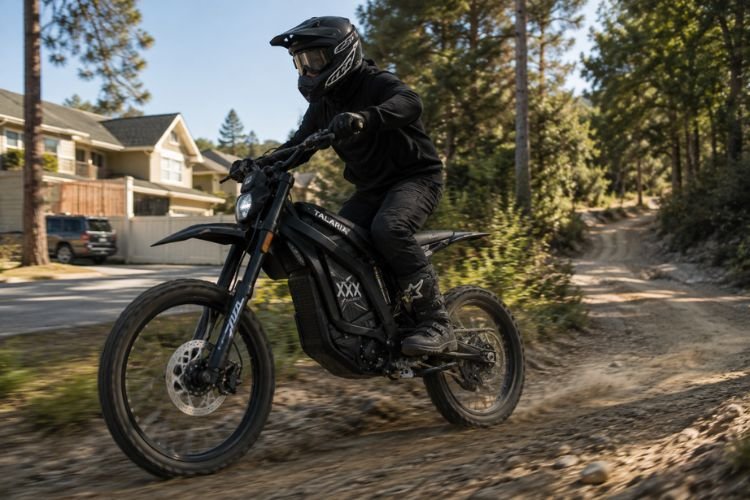
The electric dirt bike market has moved quickly. Buyers who once considered a Sur Ron Light Bee X or Talaria Sting powerful can now find factory-built electric motorcycles producing substantially more output, running higher-voltage battery systems, and reaching speeds that would have required extensive modifications only a few years ago.
That makes the Talaria XXX, also commonly called the Talaria X3, an interesting motorcycle to review in 2026. It isn’t trying to win the horsepower war. There are faster and more capable electric dirt bikes available today, including models higher up Talaria’s own lineup.
But that doesn’t necessarily make the XXX outdated.
Its appeal comes from a different combination: relatively compact dimensions, manageable weight, useful everyday performance, simple operation, and a price that can make it more accessible than increasingly powerful high-end e-motos.
For riders who want an electric bike for neighborhood riding, urban use where legally permitted, casual trails, exploring private property, or simply having fun without managing extreme power, that formula can still make a lot of sense.
The real question behind this Talaria XXX Review is therefore not whether newer electric dirt bikes are faster. They are.
The question is whether the Talaria XXX already provides enough performance for the way most of its target buyers actually ride.
The Talaria XXX remains worth considering in 2026 if you value low weight, compact dimensions, simplicity, and usable performance more than maximum power.
It sits in an appealing position between conventional electric bicycles and increasingly motorcycle-like high-performance e-motos. There is enough acceleration to make it genuinely entertaining, but the bike remains more approachable than many newer high-output platforms.
That balance can be particularly attractive to newer riders.
The XXX is easier to move around a garage, transport, maneuver at low speed, and manage through tight terrain than a larger full-size electric dirt motorcycle. Its relatively simple electric drivetrain also makes everyday ownership straightforward.
There are compromises. Riders who regularly attack steep technical climbs, ride rough trails at high speed, or already know they will want substantially more power may quickly begin looking at upgrades. Suspension and braking capability also need to be considered in relation to how aggressively the motorcycle will be ridden.
That leads to our early verdict:
Buy the Talaria XXX because you want a light, playful electric motorcycle—not because you’re trying to build the fastest bike in your riding group.
If maximum factory performance is your priority, start higher in the market.
One important note before looking at numbers: Talaria specifications can vary by market, distributor, model year, and road/off-road configuration. Speed restrictions and delivered setup may also differ. Always verify the exact motorcycle being sold rather than assuming every XXX found online has identical specifications.
| Category | Talaria XXX |
|---|---|
| Also Known As | Talaria X3 |
| Bike Type | Lightweight electric e-moto |
| Battery System | 60V-class platform |
| Motor | Electric mid-drive |
| Transmission | Single-speed reduction drivetrain |
| Primary Strength | Lightweight, compact, playful handling |
| Performance Level | Moderate by 2026 high-performance standards |
| Best Use | Mixed recreational riding and lighter trails |
| Best For | Riders prioritizing agility and value |
| Main Limitation | Less power/chassis capability than higher-level Talaria models |
The specification sheet explains only part of why the XXX remains popular.
A rider shopping exclusively by peak output could easily skip it. But electric dirt bikes aren’t ridden on spreadsheets. Weight, geometry, throttle response, tire grip, suspension, and where the motorcycle will actually be used often matter more than another few kilowatts.
The easiest way to understand the Talaria XXX is to place it within Talaria’s broader lineup.
It is a compact, lightweight electric motorcycle intended to provide much of the fun associated with e-moto riding without requiring the larger chassis or stronger performance of the Sting family.
That positioning matters more in 2026 than it did when the XXX first appeared.
The market has become obsessed with power. Higher voltage, larger batteries, bigger controllers, and increasingly extreme peak-output figures dominate product launches. That development is exciting, but it can also make riders believe they need far more motorcycle than their actual use requires.
The XXX offers another philosophy.
Instead of maximizing output, it keeps the package relatively compact. That makes it easier to maneuver at low speed and less physically demanding in situations where the rider needs to catch the bike, turn around on a narrow trail, or move it manually.
For riders coming from mountain bikes or conventional e-bikes, those characteristics can make the transition into e-motos less intimidating.
For experienced riders, the same qualities make the XXX playful.
A motorcycle doesn’t stop being fun simply because another bike produces more kilowatts.
This is probably a better question than asking whether the XXX is “fast” in isolation.
Compared with conventional pedal-assist e-bikes, the Talaria XXX operates in a completely different performance category. Compared with the newest high-power electric dirt bikes, however, it is relatively modest.
That is not necessarily a problem.
Electric motors produce torque immediately, so even moderate-output lightweight machines can feel surprisingly quick from low speed. Because the XXX doesn’t have to accelerate the mass of a full-size motorcycle, its power can still provide an entertaining response around town, on private roads, and across moderate trails.
Where the difference becomes obvious is during repeated high-speed acceleration and demanding off-road riding.
A stronger 72V-class platform can maintain more aggressive acceleration as speeds rise and provide additional performance on steep climbs. Riders who regularly use full throttle will therefore notice the XXX’s limits sooner than riders who spend most of their time on tighter terrain.
The question becomes one of usable performance.
If most of your riding happens below the motorcycle’s maximum capability, paying for another large increase in peak power may not improve the experience very much.
If you are constantly holding the XXX wide open, it probably isn’t the right platform for you.
Peak power numbers don’t explain acceleration by themselves.
One useful concept is the power-to-weight ratio. A lighter motorcycle requires less energy to accelerate than a heavier one, which is why relatively modest electric output can still feel lively in a compact chassis.
There is also immediate electric torque.
Unlike a gasoline engine, the motor doesn’t need to build rpm through a conventional multi-speed transmission before delivering useful response. Throttle input produces immediate acceleration, which contributes to the XXX’s playful character.
That response is particularly enjoyable at lower and moderate speeds, where riders can repeatedly accelerate out of corners without needing enormous peak power.
Traction eventually becomes important as well.
On loose dirt, the rear tire can only transmit a certain amount of force before spinning. Once traction is exceeded, more motor output doesn’t produce an equal increase in forward acceleration.
For recreational trail riding, a manageable throttle response can therefore be more useful than an extreme peak-power figure.
Top speed is one of the most searched Talaria XXX specifications, but it is also an area where buyers should be careful with numbers found online.
The speed a particular XXX reaches can depend on its market configuration, electronic restrictions, rider weight, battery state of charge, tire setup, terrain, wind, temperature, and whether the motorcycle has been modified.
For that reason, a YouTube video showing one modified XXX reaching a particular speed shouldn’t automatically be treated as the stock specification for every motorcycle.
More importantly, top speed isn’t where the XXX makes its strongest case.
The bike is most enjoyable when its low weight and immediate electric response can be used repeatedly—accelerating out of corners, navigating tighter roads or trails, and changing direction quickly.
Sustained maximum-speed riding also places much greater demand on the battery.
Aerodynamic drag increases rapidly as speed rises. Because a compact e-moto and its rider aren’t particularly aerodynamic, maintaining high speed can require significantly more energy than cruising moderately.
So if your goal is primarily sustained high-speed riding, there are better platforms.
If your goal is lightweight, responsive fun, the XXX makes considerably more sense.
For casual and moderate trail riding, yes.
The immediate torque of an electric motor works well on climbs, and the XXX’s relatively low weight helps through tighter terrain. It is easier to correct when a line goes wrong and less exhausting to move around than heavier electric motorcycles.
But “trail riding” covers an enormous range of conditions.
A smooth forest trail is very different from repeated jumps, deep sand, large rocks, hard enduro climbs, or high-speed desert riding.
As terrain becomes faster and rougher, chassis capability becomes increasingly important. Suspension needs to control larger impacts, brakes need to manage repeated high-speed stops, and the motor needs to maintain performance under greater load.
This is where a Talaria Sting platform such as the MX4 or MX5 begins to make more sense.
The XXX is capable off pavement, but it shouldn’t automatically be treated as the cheapest way to obtain the same experience as a larger, more powerful Talaria.
The battery determines much more than range. It affects performance, weight, voltage under load, charging routine, and eventually long-term ownership cost.
The XXX uses a 60V-class battery platform, which was a strong fit for its lightweight design when introduced. Newer high-performance e-motos increasingly use 72V or higher-voltage architectures, but that doesn’t automatically make a 60V motorcycle obsolete.
Voltage is only one part of an electrical system.
Motor design, controller calibration, battery current capability, gearing, weight, and efficiency all influence the performance the rider actually experiences.
A higher-voltage motorcycle can support greater performance more efficiently at a given current level, but riders shouldn’t buy based on voltage alone.
For the XXX, the battery needs to be understood in the context of the entire bike: this is a relatively lightweight machine designed around moderate rather than extreme output.
That balance helps keep the bike manageable.
Range is another specification where a single number can be misleading.
Manufacturers and distributors typically publish range estimates under particular test conditions. Real riders may experience substantially different results because energy consumption depends on how the motorcycle is used.
The biggest factors include rider weight, speed, terrain, elevation change, temperature, tire pressure, surface conditions, and throttle behavior.
| Riding Style | Range Behavior |
|---|---|
| Relaxed cruising | Best efficiency |
| Moderate mixed riding | Good balance |
| Urban stop-and-go | Variable depending on acceleration |
| Technical climbing | Higher energy consumption |
| Frequent full-throttle riding | Noticeably reduced range |
| Sustained high speed | Significantly higher consumption |
Speed deserves particular attention.
At moderate speeds, rolling resistance and drivetrain losses account for a meaningful portion of energy use. As speed rises, aerodynamic drag becomes increasingly important. The power required to push the rider and motorcycle through the air rises rapidly.
This is why riding at maximum speed can reduce range much faster than many first-time owners expect.
Two Talaria XXX owners can therefore report very different range figures without either one being inaccurate.
Rather than asking whether the XXX can achieve one advertised maximum distance, buyers should ask whether it comfortably completes their normal ride with a useful reserve.
Suppose your typical riding loop consumes around half of the battery. In that situation, theoretical maximum range isn’t particularly important because the motorcycle already meets your needs comfortably.
If your normal route regularly brings the battery close to empty, range becomes a much larger ownership concern.
Leaving some reserve is especially important off-road. Mud, unexpected detours, colder temperatures, stronger winds, or additional climbing can increase consumption.
This also explains why buying a larger and heavier battery isn’t automatically better for every rider. Additional capacity is useful only if you need it. Otherwise, you’re carrying extra energy—and therefore extra mass—through the entire ride.
The XXX works best when its battery capacity matches the relatively lightweight, recreational character of the motorcycle.
Like other battery-electric motorcycles, the XXX’s behavior can change as battery conditions change.
Lithium-ion battery voltage isn’t perfectly constant from full charge to empty. Voltage generally declines as the pack discharges, while battery temperature and load also influence how much voltage is available.
Under heavy acceleration, the battery experiences voltage sag: voltage temporarily drops because the cells are supplying high current. The battery management system and controller also have operating limits designed to protect the electrical system.
This is one reason an electric motorcycle may not feel completely identical at a very high state of charge and near the bottom of the battery.
It also reinforces an important point for performance comparisons: two top-speed tests performed at very different states of charge aren’t necessarily equivalent.
One of the XXX’s strengths is that charging can fit easily into normal recreational use.
Instead of visiting a gas station, the owner can return home and recharge the motorcycle for the next ride. For short regular trips, many riders may never approach the battery’s full usable range in a single session.
Charging becomes less convenient when the motorcycle is being used for very long days away from electricity. Like every battery-electric motorcycle, replenishing energy takes longer than pouring gasoline into a tank.
For most XXX buyers, however, this is less problematic than it can be on full-size electric enduro motorcycles.
The XXX is primarily attractive as a lightweight recreational machine. If your normal riding involves returning home after a relatively short session, plugging it in becomes a routine rather than a major limitation.
Battery storage still deserves care. Lithium-ion batteries generally prefer avoiding unnecessary exposure to extreme heat, and owners should follow the manufacturer’s recommendations for charging and long-term storage rather than leaving the pack in poor conditions for extended periods.
Yes—but only if we judge it according to what it is designed to do.
If “competitive” means producing the highest peak power, running the highest battery voltage, or reaching the highest top speed, the answer is no. The electric dirt bike market has moved well beyond that level.
But if competitive means providing a lightweight, manageable, entertaining electric motorcycle without requiring the cost and mass of a high-power platform, the XXX still has a strong argument.
This distinction will ultimately determine whether it is worth buying.
A rider who wants casual trails, compact dimensions, responsive low-speed performance, and straightforward ownership may have little reason to pay for substantially more motorcycle.
A rider already thinking about a higher-voltage battery, bigger controller, major suspension changes, stronger brakes, and significantly higher speeds should probably ask a different question:
Would it be cheaper and easier to buy a higher-performance platform from the beginning?
Very often, the answer may be yes.
Power and top speed are easy to compare because they produce simple numbers. But after the first few rides, most Talaria XXX owners spend far more time noticing how the bike turns, stops, absorbs bumps, fits their body, and handles everyday use. This is where the XXX’s lightweight philosophy starts to make sense.
The Talaria XXX isn’t built like a full-size enduro motorcycle, and it shouldn’t be judged like one. Its strongest argument is that it remains compact and manageable while delivering enough electric performance to be genuinely entertaining. That combination can make it more enjoyable than a heavier, more powerful bike in the right environment—but it also creates clear limits once riding becomes faster, rougher, or more aggressive.
Weight may be one of the most underrated specifications in the electric dirt bike market.
Manufacturers understandably advertise horsepower, peak kilowatts, battery voltage, and top speed because those numbers sell bikes. Yet every additional pound has consequences. The rider feels it when changing direction, catching the bike after losing balance, loading it into a vehicle, moving it around a garage, or recovering from a mistake on a trail.
This is where the Talaria XXX has an advantage over increasingly large high-performance e-motos.
The XXX feels relatively compact and easy to manage. At lower speeds, that makes tight turns less intimidating. On narrow trails, the rider can make corrections without fighting a full-size motorcycle. Around town or on private property, the bike’s dimensions also make it easy to maneuver through smaller spaces.
For beginners, this can increase confidence. A motorcycle that feels physically manageable encourages riders to concentrate on braking, throttle control, body position, and cornering instead of worrying about controlling excessive mass.
Experienced riders can appreciate the same characteristic for a different reason: a light bike is fun to throw around.
More power isn’t always the answer to a better riding experience.
Tighter terrain plays to the XXX’s strengths.
When trails become narrow and speeds decrease, agility matters more than outright horsepower. The rider may be weaving between trees, negotiating switchbacks, avoiding rocks, or making repeated direction changes where a high maximum speed provides almost no benefit.
The XXX’s compact feel works well here.
Electric torque also helps because power arrives without a conventional clutch or multi-speed transmission. There is no need to select the correct gear before every corner or keep an engine in its powerband. Throttle response is direct, which simplifies lower-speed riding.
But traction still determines how much torque can actually reach the ground.
On loose dirt, mud, gravel, or wet roots, an aggressive throttle input can spin the rear tire. Smooth control often produces faster forward progress than simply asking for maximum motor output.
This is another reason the XXX can work well for recreational trail riding. It provides enough performance to be entertaining without making every throttle movement a battle against excessive power.
The Talaria XXX’s suspension needs to be evaluated in relation to the bike’s intended use and price—not against dedicated competition enduro or motocross hardware.
For neighborhood riding, moderate trails, dirt roads, and recreational use, the stock setup can do its job. Problems are more likely to appear when riders dramatically increase speed or start asking the bike to repeatedly absorb large impacts.
Suspension has two important jobs: control the mass of the motorcycle and keep the tires connected to the ground.
If the fork or rear suspension moves through its travel too quickly, it can bottom on larger impacts. If damping is insufficient, the bike may continue moving after an impact instead of settling quickly. On the other hand, suspension that is excessively stiff can reduce grip because the wheel has more difficulty following smaller terrain changes.
Rider weight matters as well.
A suspension setup that feels acceptable for a lighter rider may feel too soft under a substantially heavier rider. The same applies when jumping or riding at much higher speeds than the stock bike was primarily designed around.
This is why riders should avoid assuming that an expensive suspension upgrade is automatically necessary on day one.
Ride the bike first.
If the suspension regularly bottoms, feels uncontrolled through repeated bumps, or prevents you from riding at the pace your skills allow, then an upgrade may make sense. If you’re riding moderate trails comfortably, replacing working suspension because social media says you “need” it may provide poor value.
Braking requirements increase rapidly as riders go faster.
A brake converts the motorcycle’s kinetic energy into heat. The faster and heavier the combined bike-and-rider system becomes, the more energy the brakes need to manage during repeated hard stops.
For typical XXX use, the stock braking system is designed around the bike’s original performance envelope. For moderate recreational riding, that can be sufficient.
The equation changes when riders modify the bike.
A higher-output controller, more powerful battery, different gearing, or other performance upgrades may allow the motorcycle to reach higher speeds more frequently. Suddenly, the same braking system is being asked to dissipate more energy than it was under stock conditions.
This is an important modification principle:
When you increase acceleration and speed, braking and chassis capability need to increase with them.
Brake pads, rotor condition, correct setup, and maintenance can also make a major difference. A rider experiencing weak braking shouldn’t immediately assume the entire system needs replacement. Contaminated pads, worn components, poor adjustment, or improper bedding can all reduce braking performance.
For aggressive off-road riders, stronger brakes may eventually become worthwhile. For casual riders, maintaining the stock system properly may be all that’s necessary.
Tires are sometimes treated as an accessory. In reality, they determine how every major performance system interacts with the ground.
The motor can only accelerate as hard as the rear tire can grip. The brakes can only stop as hard as the tires allow. Suspension performance also depends partly on tire pressure and carcass behavior.
That means choosing tires based on actual terrain is important.
A rider spending most of the time on pavement has different priorities from someone riding mud, loose soil, rocks, or mixed trails. An aggressive off-road tire can improve traction in loose terrain but may increase rolling resistance, noise, and wear on pavement.
Tire pressure also matters.
Running pressure too high can reduce the tire’s ability to conform to uneven terrain, lowering grip and creating a harsher ride. Going too low increases the risk of tire or rim problems and can make handling less precise.
There isn’t one perfect pressure for every Talaria XXX rider. Rider weight, tire construction, terrain, speed, and riding style all matter.
This is why tire setup is one of the most cost-effective areas to experiment with before spending large amounts on motor or suspension modifications.
The XXX’s compact size and immediate electric response can make it particularly enjoyable for short-distance street-style riding where such use is legal.
Electric torque works well in stop-and-go situations because the rider doesn’t need to shift through gears. The bike is easy to maneuver at low speeds, relatively easy to park, and much quieter than a gasoline motorcycle.
Those characteristics explain why lightweight e-motos have become so popular for urban recreation.
However, buyers need to separate physical capability from legal classification.
A Talaria XXX may physically be capable of traveling with road traffic, but that does not automatically mean it is legally classified as an e-bike or road motorcycle in your location.
Motor power, maximum assisted speed, pedals, lighting equipment, registration, licensing, insurance, and vehicle classification can all affect legality.
In the United States, rules can vary significantly by state and sometimes by local jurisdiction. Buyers should check current regulations before assuming the XXX can legally be ridden on public roads or bicycle infrastructure.
“It looks like an e-bike” isn’t a legal category.
That distinction becomes increasingly important as electric dirt bikes become faster.
Yes, provided expectations are realistic.
The XXX can be great fun on fire roads, moderate trails, private land, and tighter recreational terrain. Its low weight can be a genuine advantage in these environments because riders can change direction quickly and recover more easily when things go wrong.
Where it begins to show limitations is aggressive off-road riding.
Repeated large jumps, high-speed whoops, deep sand, hard enduro obstacles, and very rough terrain place much greater demands on suspension, tires, wheels, brakes, and the entire chassis.
A rider can modify the XXX to improve these areas, but there is a point where upgrading stops making financial sense.
Suppose you purchase an XXX and then immediately plan to replace the suspension, brakes, controller, battery, wheels, and several chassis components.
At that point, you’re no longer buying the XXX because its original package fits your needs. You’re buying it as a project platform.
There is nothing wrong with that if building the bike is part of the hobby.
But if your goal is simply to obtain higher off-road performance, buying a more capable platform from the beginning can be cheaper.
Comfort is subjective, but rider size deserves more attention than it usually receives in e-moto reviews.
A compact bike can feel ideal for a shorter or average-size rider while feeling cramped to someone significantly taller. Handlebar position, seat shape, peg placement, and riding posture all influence comfort.
The intended riding duration matters too.
A seat that feels completely acceptable during a 30-minute ride may become uncomfortable after several hours. Riders who spend long periods seated will notice this more than aggressive off-road riders who frequently stand on the pegs.
Handlebar and foot-control setup can often improve ergonomics without fundamentally changing the bike.
Before spending heavily on performance upgrades, make sure the controls are positioned correctly for your body. A motorcycle that fits properly is easier to control and often feels more capable simply because the rider can move naturally.
For larger riders who already feel cramped on compact e-motos, moving to a larger platform may ultimately make more sense than repeatedly modifying ergonomics.
This is one of the strongest use cases for the XXX.
The electric drivetrain removes several tasks associated with learning a gasoline motorcycle. There is no conventional clutch to coordinate, no multi-speed transmission to shift through, and no engine to stall at low speed.
That allows beginners to concentrate on core riding skills: looking through turns, braking smoothly, maintaining balance, controlling the throttle, choosing lines, and understanding traction.
Its relatively manageable dimensions help as well.
However, beginner-friendly does not mean harmless.
The XXX still has enough acceleration and speed to cause serious injuries. New riders need appropriate protective equipment and should learn in a controlled environment rather than treating it like a low-speed bicycle.
Throttle discipline is particularly important because electric torque arrives quickly. New riders should become comfortable with smooth inputs before trying to explore maximum performance.
Compared with substantially higher-output electric motorcycles, though, the XXX can provide a sensible balance between excitement and manageability.
Electric motorcycles eliminate many familiar combustion-engine service items, but the Talaria XXX isn’t maintenance-free.
There are no traditional engine-oil changes, spark plugs, fuel-system adjustments, or valve-clearance inspections. That simplifies ownership considerably.
The chassis and drivetrain still need attention.
Owners should regularly inspect the brakes, tires, wheels, fasteners, bearings, suspension, electrical connections, and drivetrain. Riding off-road increases the importance of these inspections because dirt, water, vibration, and impacts accelerate wear.
Chain maintenance is particularly straightforward but easy to neglect. A dirty or improperly adjusted drivetrain can create unnecessary wear and noise. Cleaning, lubrication where appropriate, and correct tension help components last longer.
Brakes also deserve regular inspection because worn pads don’t always announce themselves dramatically before performance begins to decline.
The maintenance philosophy should therefore be:
less engine maintenance, not zero motorcycle maintenance.
Reliability needs careful treatment because online discussion can create a distorted picture.
If one owner reports a failed component on Reddit, that proves that particular failure occurred. It does not prove every Talaria XXX has a widespread design problem.
A credible review should separate normal wear, setup issues, modification-related failures, and genuine recurring defects.
For example, worn brake pads after heavy use aren’t a reliability failure. Neither is a damaged component after repeated jumps beyond the stock bike’s intended use.
Modifications complicate the picture further.
Electric motorcycles are interconnected systems. Changing the controller can increase current demand. Increasing power can raise thermal load. More speed puts additional stress on brakes, tires, drivetrain parts, and suspension.
A heavily modified XXX therefore shouldn’t automatically be used to judge the reliability of a stock motorcycle.
For long-term ownership, keeping electrical connectors clean and secure, avoiding careless pressure washing around sensitive areas, maintaining the drivetrain, monitoring brakes and tires, and following proper battery-storage practices can prevent many avoidable problems.
The XXX has obvious modification potential, but owners should begin by asking what problem they are trying to solve.
If the stock tires don’t work well on your terrain, tires are a logical upgrade. If the suspension cannot support your weight or riding pace, suspension may be worthwhile. If braking performance fades under aggressive use, address the brakes.
These modifications solve identifiable limitations.
Power upgrades are more complicated.
Increasing motor output can expose weaknesses elsewhere in the motorcycle. A faster XXX may need better brakes, improved suspension, different tires, and potentially additional drivetrain attention.
Costs can accumulate quickly.
This creates a useful rule for potential buyers:
If you already know before purchasing that you want substantially more power, range, suspension performance, and braking capability, compare the total build cost with buying a Talaria Sting or another higher-performance electric dirt bike.
The cheaper motorcycle isn’t always the cheaper finished motorcycle.
After spending time beyond the specification sheet, the XXX’s purpose becomes clearer.
It isn’t a miniature motocross race bike, nor is it trying to compete directly with today’s highest-output electric dirt motorcycles.
It works best as an accessible, lightweight machine that is easy to pull out of the garage and ride.
That convenience matters.
A motorcycle with enormous power and premium suspension isn’t automatically better if its size, weight, price, or complexity makes you less likely to use it. The XXX’s compact nature can encourage spontaneous riding because there is less motorcycle to manage.
For some buyers, that is worth more than another several kilowatts.
After looking at power, top speed, battery range, handling, suspension, brakes, trail capability, maintenance, and reliability, the Talaria XXX becomes easier to judge. It is no longer one of the most powerful electric dirt bikes on the market, but that isn’t necessarily a reason to overlook it.
The more important question is whether paying for a faster, larger, and heavier platform would actually improve the way you ride. For some buyers, the answer is absolutely yes. For others, the XXX may offer a better balance of performance, weight, simplicity, and cost.
Pricing should always be checked with the current dealer or distributor because Talaria XXX prices can vary by market, model year, shipping, taxes, promotions, and configuration. More importantly, purchase price alone doesn’t determine value.
The XXX makes sense when you actually want what the stock platform provides: a compact electric motorcycle with useful acceleration, manageable weight, relatively simple maintenance, and enough capability for recreational riding.
It becomes less attractive when the purchase is immediately followed by a long upgrade list.
A controller, battery, suspension, brakes, wheels, tires, handlebars, and other components can quickly transform an inexpensive starting point into a costly project. You may end up spending more than the price difference to a higher-level motorcycle while still working around the limitations of the original chassis.
That doesn’t mean modifying an XXX is a bad idea. Building an electric motorcycle can be part of the fun.
But there is a major difference between modifying because you enjoy customization and modifying because you bought the wrong performance level.
If the stock XXX already matches 80–90% of what you want, its value proposition is strong. If you know before ordering that you want substantially more speed, range, suspension capability, and aggressive trail performance, compare higher-level bikes first.
This is one of the most important comparisons for potential Talaria buyers.
The XXX sits on the lighter, simpler side of Talaria’s lineup, while Sting-series machines such as the MX4 and MX5 move toward stronger off-road performance.
That doesn’t automatically make the Sting models better for everyone.
| Category | Talaria XXX | Talaria MX4 | Talaria MX5 |
|---|---|---|---|
| Overall Philosophy | Light and playful | Stronger all-round platform | Higher-performance Sting |
| Power | Lowest of the three | More performance | Strongest direction |
| Weight/Compactness | Major advantage | Larger platform | Larger performance platform |
| Casual Riding | Excellent | Excellent | Excellent |
| Aggressive Trails | More limited | Better suited | Strongest choice |
| Suspension Demands | Recreational focus | More off-road focused | Higher-performance focus |
| Beginner Appeal | Strong | Moderate/strong | More performance to manage |
| Modification Need | Higher if chasing performance | Depends on rider | Lower if factory performance is the goal |
| Best Buyer | Lightweight fun | Balanced trail rider | Performance-focused rider |
The XXX wins when simplicity and agility matter most.
The MX4 becomes more attractive for someone who wants a more substantial trail platform without necessarily chasing the newest or highest factory performance.
The MX5 makes the strongest argument for riders who already know they want harder acceleration and a more performance-oriented factory package.
Think about where you expect your riding to be two years from now—not just your first weekend.
A beginner who wants a manageable motorcycle may be happier developing skills on an XXX. Someone already riding aggressively and planning major upgrades may outgrow it quickly.
This depends on why you’re considering the XXX.
If the main reason is simply that it costs less, be careful.
Buying the cheaper motorcycle and then spending heavily to make it behave like the more expensive one can produce poor value. You may replace perfectly functional components simply because they don’t match your eventual riding goals.
If the reasons are weight, compactness, maneuverability, and simplicity, the decision changes completely.
Those aren’t shortcomings that disappear when you spend more money. They are genuine characteristics of the XXX.
A more powerful bike may accelerate harder, but additional performance often comes with a larger battery, stronger components, and potentially more mass. Some riders genuinely prefer the smaller motorcycle.
So don’t ask:
“Which Talaria is better?”
Ask:
“Which Talaria fits the riding I actually do?”
That’s a much more useful buying question.
The Talaria XXX is particularly well suited to riders entering the e-moto category who want more capability than a conventional electric bicycle without immediately jumping into an increasingly powerful full-size machine.
Beginners benefit from the lack of a traditional clutch and multi-speed transmission. Its relatively manageable dimensions also make learning low-speed control, cornering, braking, and basic trail technique less intimidating.
It also works well for recreational riders who prioritize fun over specifications. If your normal ride involves tighter trails, private property, moderate dirt roads, or short mixed-use trips where legal, the XXX can deliver plenty of usable performance.
Another good buyer is someone who specifically values lower weight. If you regularly transport the bike, move it around a small garage, ride tight terrain, or simply dislike heavier motorcycles, the XXX has an advantage that more horsepower cannot replace.
Finally, it makes sense for riders who intend to keep modifications reasonable. Tires, ergonomics, brake pads, and setup changes can refine the bike without turning it into an expensive rebuild.
Performance-focused riders are the clearest group who should consider something else.
If you already know you’ll spend most rides chasing maximum acceleration, climbing demanding terrain, hitting larger jumps, or riding rough trails at high speed, a stronger platform is likely a better investment.
Larger riders should also pay attention to ergonomics. The compact dimensions that make the XXX approachable can feel cramped depending on height, body proportions, and riding position.
Long-distance riders need to consider battery capacity and charging as well. The XXX can provide useful recreational range, but it isn’t designed around all-day, high-speed travel.
And if your planned upgrade list already includes a battery, controller, suspension, brakes, wheels, and other major components, calculate the complete build price before buying.
You may discover that the motorcycle you actually want is an MX5, E Ride Pro, Altis, or another higher-performance platform.
| Pros | Cons |
|---|---|
| Compact and relatively lightweight | Less powerful than newer high-performance e-motos |
| Playful handling | Not ideal for sustained high-speed riding |
| Immediate electric torque | Stock chassis has limits under aggressive use |
| Beginner-friendly operation | Suspension may limit harder riders |
| No traditional clutch | Brakes may become a priority as performance increases |
| No conventional multi-speed shifting | Compact ergonomics may not suit larger riders |
| Simple everyday ownership | Real-world range varies significantly |
| Lower combustion-style maintenance | Public-road legality depends on location |
| Good recreational trail capability | Easy to overspend on upgrades |
| Strong option for riders who don’t need extreme power | Aggressive riders may outgrow it |
The pattern is fairly clear. Most of the XXX’s disadvantages appear when the rider tries to make it something it wasn’t designed to be.
Used within its intended performance envelope, many of those weaknesses become much less important.
A used XXX can make the value proposition even stronger, but electric motorcycles require a slightly different inspection process from conventional dirt bikes.
Cosmetic condition is useful, but battery health matters more than clean plastics.
Ask about age, approximate mileage or usage, charging habits, storage conditions, and whether the battery has experienced unusual behavior. Verify that the bike charges normally and that the battery percentage doesn’t drop unexpectedly under load.
Inspect the drivetrain, wheels, bearings, suspension, brakes, frame, and electrical connectors. Evidence of hard off-road use isn’t automatically a reason to walk away, but it should be reflected in the condition and price.
Modifications deserve particular attention.
A carefully installed tire or handlebar upgrade isn’t the same as an unknown high-power electrical build. If the controller, battery, motor, wiring, or other electrical components have been changed, understand exactly what was installed and who performed the work.
A nearly stock, well-maintained used XXX can be more appealing than a heavily modified example with uncertain electrical history.
Yes, for the right rider. The XXX remains appealing if you prioritize manageable weight, compact dimensions, simple operation, and recreational performance rather than maximum power. Riders seeking aggressive high-speed trail performance may be better served by a higher-level platform.
The XXX is commonly referred to as the Talaria X3. Naming and specifications can vary between markets and distributors, so verify the exact model and configuration when purchasing.
Top speed varies with market configuration, electronic restrictions, battery state of charge, rider weight, terrain, tires, wind, and modifications. When comparing claimed speeds online, make sure the bikes are actually in comparable stock configurations.
For most buyers, the more useful question is whether its acceleration and cruising performance match their intended riding.
There is no single real-world figure that applies to everyone. Range depends heavily on speed, rider weight, temperature, hills, surface conditions, tire pressure, and throttle use.
Relaxed riding generally provides much better efficiency than repeated full-throttle acceleration or sustained high-speed riding.
It can be. The relatively compact chassis and lack of a conventional clutch and manual gearbox reduce the number of controls a new rider needs to manage.
However, it is still a fast motorized vehicle. Beginners need proper protective equipment, a suitable learning environment, and disciplined throttle control.
Yes, particularly for moderate recreational trails and tighter terrain where low weight and maneuverability are valuable.
Aggressive riders tackling large jumps, high-speed rough terrain, deep sand, or hard enduro conditions may find the suspension, chassis, and overall performance of a higher-level platform more appropriate.
Do not assume it is street legal simply because it has electric propulsion or resembles an e-bike.
Legal classification depends on jurisdiction and may involve power, maximum speed, equipment, registration, insurance, licensing, and other requirements. In the United States, regulations can vary by state and locality.
Check current local rules before riding on public roads, bike lanes, or bicycle trails.
It requires less powertrain maintenance than a gasoline dirt bike because there are no conventional engine-oil changes, spark plugs, or valve services.
You still need to maintain tires, brakes, drivetrain components, suspension, bearings, wheels, fasteners, and electrical connections. Battery storage and charging practices also matter.
Choose the XXX if lower weight, compact size, price, and playful everyday riding matter most.
Choose the MX5 direction if you already know you want substantially stronger factory performance and more serious off-road capability.
If you intend to buy an XXX and immediately spend heavily on power and chassis upgrades, compare the total cost with buying the higher-performance bike first.
Yes—the Talaria XXX is still worth buying in 2026, but not because it can compete with the latest electric dirt bikes in a horsepower contest.
Its value comes from doing something increasingly easy to overlook in the e-moto market: keeping the motorcycle relatively light, compact, simple, and fun.
For beginners, that can make the XXX easier to approach. For experienced riders, it can make tight trails and casual rides entertaining without requiring enormous power. For owners who transport their bike regularly or have limited storage space, lower mass and compact dimensions provide benefits every single time the motorcycle is used.
There are limits.
If your riding quickly progresses toward high-speed trails, larger jumps, demanding climbs, or repeated full-power acceleration, the XXX can start to feel like a platform you need to upgrade rather than a finished motorcycle. At that point, an MX4, MX5, or another higher-performance e-moto may make more financial sense.
This is why we wouldn’t recommend the Talaria XXX simply because it is cheaper.
Buy it because you want what makes the XXX different.
If you want a lightweight electric motorcycle that’s easy to manage, entertaining at realistic speeds, relatively straightforward to own, and capable of moderate recreational trail riding, it remains a compelling package.
If what you really want is substantially more power, range, suspension performance, and aggressive off-road capability, skip the upgrade journey and start with a motorcycle designed around those priorities.
Ultimately, the Talaria XXX proves that an electric dirt bike doesn’t have to win the specification war to remain relevant.
Sometimes the better bike isn’t the one with the most power. It’s the one whose size, weight, performance, and price actually match the way you ride.
Before publishing, I recommend verifying current model-year specifications rather than copying figures from older XXX reviews. Use Talaria’s official/manufacturer information and your authorized distributor for hard specifications such as battery capacity, output, dimensions, charging, and market-specific configurations. Independent professional testing is more useful for riding impressions, braking, handling, and real-world range.
Useful starting points include Talaria, Electric Bike Report, and Electrek. For legal statements, check the relevant state or local government source instead of relying on dealer marketing.
Electric motocross and electric enduro motorcycles can look very similar, and in some cases they even share the same motor,
Electric enduro motorcycles are becoming an increasingly appealing option for riders who want strong acceleration, precise low-speed control, and less
Electric enduro motorcycles are becoming an increasingly appealing option for riders who want strong acceleration, precise low-speed control, and less
The Talaria XXX Pro and Talaria Sting R MX4 are two popular options for riders looking for a lightweight electric
