Electric Motocross vs Electric Enduro: What’s the Difference?
Electric motocross and electric enduro motorcycles can look very similar, and in some cases they even share the same motor,

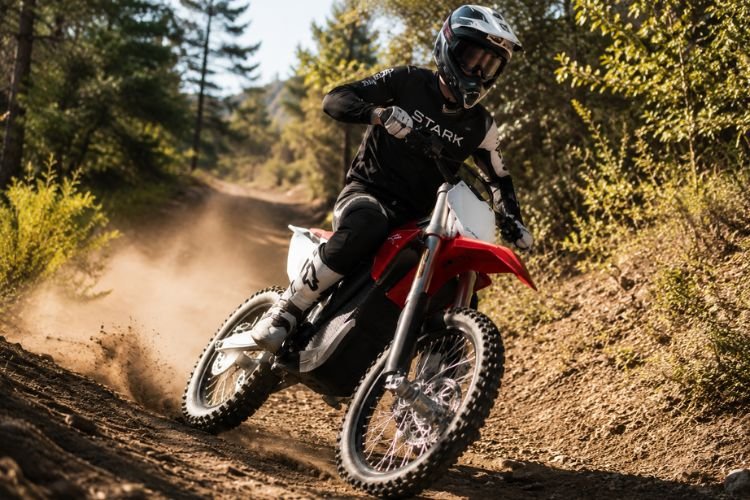
The Stark VARG is no longer interesting simply because it is electric. What makes it important in 2026 is that it has helped prove a full-size electric dirt bike can be judged alongside serious gasoline motocross and enduro motorcycles rather than only against other electric bikes.
That distinction matters. Riders shopping for a Sur Ron, Talaria, E Ride Pro, or similar lightweight e-moto usually care about portability, low weight, trail agility, and upgrade potential. The Stark VARG belongs in another category. It is a full-size, competition-oriented electric motorcycle designed for riders who expect serious chassis performance, suspension capability, and acceleration.
That also means the usual electric dirt bike questions aren’t enough. Peak power and top speed are interesting, but a potential VARG buyer is more likely to care about how the motorcycle behaves over a complete track session, whether the battery fits their riding schedule, how the weight feels compared with a conventional dirt bike, and whether charging is more inconvenient than maintaining and fueling a gasoline motorcycle.
So, is the Stark VARG worth it in 2026? For the right rider, it makes a convincing case. But it isn’t automatically better simply because it is quieter, newer, or more powerful on paper.
The VARG’s strongest argument is the complete electric riding experience. It combines immediate torque with highly adjustable power delivery, removes the need for a conventional clutch and multi-speed gearbox, produces dramatically less noise than a gasoline dirt bike, and eliminates many routine combustion-engine maintenance tasks.
Its biggest compromise remains energy replenishment. Filling a gas tank takes minutes. Charging a large motorcycle battery takes longer and requires access to electricity. Whether that matters a little or a lot depends entirely on how you ride.
For motocross sessions where riders naturally return to the paddock between runs, charging can fit into the day surprisingly well. For long, remote trail rides where carrying extra gasoline is easy but finding electricity is impossible, the equation changes.
The Stark VARG is best for experienced riders who want full-size electric performance and whose normal riding routine works with battery charging. Riders prioritizing all-day remote range, extremely low weight, or the traditional clutch-and-gearbox experience may still prefer something else.
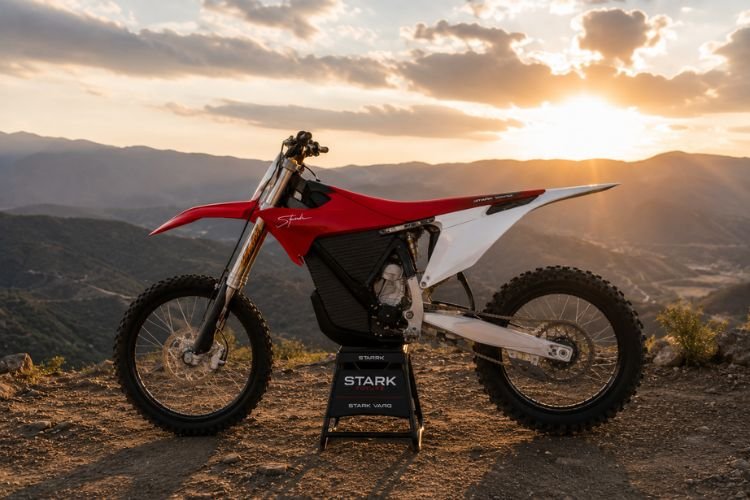
The VARG family has evolved, so specifications shouldn’t be treated as universal across every model and market. Buyers should verify the exact version they are considering, particularly when comparing power output, road legality, suspension configuration, charging equipment, and price.
| Category | Stark VARG |
|---|---|
| Bike Type | Full-size electric dirt motorcycle |
| Primary Focus | Motocross / serious off-road riding |
| Power Character | Instant and highly adjustable |
| Transmission | No conventional multi-speed gearbox |
| Clutch | No traditional clutch required |
| Noise | Extremely low compared with gas |
| Main Strength | Full-size performance with adjustable electric power |
| Main Limitation | Charging takes longer than refueling |
| Maintenance | Reduced engine-related routine maintenance |
| Best For | Serious riders moving to full-size electric |
One of the most important things to understand before buying is that a VARG isn’t simply a lightweight electric dirt bike with a bigger motor.
A highly modified lightweight e-moto can produce remarkable power, but power alone doesn’t create a motocross motorcycle. Chassis geometry, suspension travel and control, brakes, wheels, ergonomics, stability, and durability all become increasingly important as speed rises.
The VARG is designed around that complete package.
Many electric dirt bikes begin with a lightweight chassis and gradually become more powerful as manufacturers or owners upgrade the battery, controller, and motor. The VARG approaches the problem from the opposite direction: build a serious dirt motorcycle first, then use electric propulsion to change how the rider accesses its performance.
The most obvious difference is instant torque. A gasoline engine needs to operate through an rpm range and gearbox, while the VARG can deliver strong response immediately. There is no need to select the right gear before accelerating out of a corner in the conventional sense, and no clutch manipulation is required to keep an engine in the strongest part of its powerband.
For some riders, this simplifies the experience enormously. Instead of thinking about clutch position, gear selection, and engine rpm, more attention can go toward line choice, braking, body position, and traction.
But the VARG’s more important feature may be its adjustability.
Rather than treating maximum output as the only performance setting worth using, the electric system allows the motorcycle’s behavior to be tailored to the rider and conditions. This means a rider doesn’t necessarily have to deal with maximum power every time the throttle moves.
On dry, open terrain, an aggressive setting can make sense. On wet or loose ground, reducing output and smoothing throttle response may actually improve pace because the rear tire can maintain traction.
That makes the VARG’s performance more useful than simply saying, “This bike has a lot of horsepower.”
Higher-output VARG configurations have been associated with figures around the 80-horsepower level, putting the motorcycle into serious performance territory. Exact current output should always be checked against the specific 2026 configuration being purchased rather than assuming every VARG has identical specifications.
On paper, numbers like these immediately invite comparisons with 450cc motocross motorcycles. In practice, electric and gasoline powertrains deliver their performance differently enough that horsepower alone doesn’t explain the experience.
The VARG responds immediately. There is no waiting for rpm to rise and no downshift required before asking the motor for strong acceleration. That gives the motorcycle an unusually direct relationship between the rider’s right hand and the rear tire.
Yet dirt creates a natural limit: traction.
If the rear tire is already spinning, more torque doesn’t automatically move the motorcycle forward faster. This is particularly obvious on loose climbs, muddy sections, or corner exits where throttle control determines how much power reaches the ground.
This is one reason riders shouldn’t assume the highest available power setting is always the fastest setting. A smoother configuration may allow earlier throttle application and better traction, which can be more valuable than maximum peak output.
For recreational riders, the VARG can therefore provide far more power than they genuinely need. Experienced riders are more likely to exploit the upper end of its capability, particularly on faster motocross tracks and open terrain.
It certainly can be.
This isn’t a criticism of the motorcycle. It is simply the reality of combining a high-output electric motor with immediate throttle response.
A rider moving from a lower-powered motorcycle may initially find maximum output unnecessary. The good news is that the VARG’s tunability means you don’t have to ride it at full capability simply because that capability exists.
This is one of the biggest advantages of software-controlled electric performance.
A conventional high-performance dirt bike can be tuned, but dramatically changing its engine character generally isn’t as simple as selecting a different electronic power configuration. With the VARG, reducing performance can be a useful tool rather than an admission that you bought too much motorcycle.
For developing riders, lower settings can create a more manageable learning environment. As confidence grows, performance can be increased rather than immediately requiring another motorcycle.
However, this shouldn’t be interpreted as making the VARG an ideal first motorcycle for everyone. It is still a full-size machine capable of very high performance. A complete beginner must learn braking, balance, cornering, body position, traction management, and throttle control regardless of how many electronic settings are available.
The inevitable comparison is a modern 450cc motocross bike.
A 450 offers a very mechanical riding experience. The rider works with engine rpm, gears, clutch, engine braking, vibration, and exhaust feedback. Experienced riders often use these characteristics instinctively, and clutch control in particular becomes part of advanced technique.
The VARG removes or changes many of those interactions.
Acceleration is smoother and more immediate. There is no conventional multi-speed gearbox demanding shifts during acceleration, and there is no traditional clutch lever required to manage engine rpm. Vibration and mechanical noise are also dramatically reduced.
That can make the VARG feel easier to operate even when it is extremely fast. The rider has fewer mechanical tasks to perform while attacking a corner or climb.
But “easier to operate” doesn’t mean “easier to ride fast.”
Motocross speed still depends on braking points, corner technique, body position, jumping ability, line choice, traction, fitness, and confidence. Electric propulsion doesn’t remove any of those requirements.
The better way to describe the difference is that the VARG reduces powertrain workload, allowing the rider to focus more heavily on the chassis and terrain.
Whether that feels better than a 450 depends partly on personal preference. Some riders will immediately appreciate the simplicity. Others will miss the clutch, shifting, engine sound, and mechanical feedback that have always been part of motocross.
Battery performance is where a Stark Varg Review 2026 needs to move beyond conventional “range” figures.
Miles aren’t always a useful way to measure an electric motocross bike.
A rider circulating a motocross track repeatedly accelerates hard, brakes, jumps, and moves through changing terrain. A trail rider may climb thousands of feet in elevation. Another rider may cruise relatively easy trails at moderate speed.
Those three situations can produce very different energy consumption from the same battery.
For this reason, the better question is:
How much riding time does the battery provide at your pace?
An aggressive or highly skilled rider can use energy much faster than a recreational rider. Deep sand, mud, steep climbing, high speed, rider weight, cold temperatures, and repeated hard acceleration can also increase consumption.
This explains why owner reports of VARG riding time can vary considerably without either rider necessarily being wrong.
Manufacturer estimates are useful as a reference, but buyers should look for real-world testing that resembles their own use. A professional-level motocross test isn’t necessarily representative of weekend trail riding, just as a gentle trail test doesn’t tell an aggressive MX rider how long the battery will last.
The positive side is that motocross naturally involves breaks. Riders rarely stay on track continuously for hours. Returning to the paddock between sessions creates opportunities to charge.
That can make the VARG more practical than a simple battery-runtime number suggests.
For many buyers, charging matters more than maximum range.
Gasoline has an undeniable advantage here: energy can be replenished extremely quickly. Stop at the truck, add fuel, and you’re ready to ride again.
Charging an electric motorcycle requires more planning.
If you ride from home, have electrical access at a private track, or regularly return to a paddock between sessions, this may be a minor inconvenience. Charging can happen while you rest, eat, adjust suspension, or wait for the next session.
Remote riding is different.
If your normal weekend involves long-distance trails far from electrical infrastructure, carrying extra fuel for a gas motorcycle remains dramatically easier than carrying enough electrical energy to fully recharge a large traction battery.
That means the VARG’s suitability depends less on whether its battery is “good” and more on whether your riding pattern matches the battery.
For some riders, it will fit almost perfectly. For others, charging logistics will remain the single strongest reason to stay with gasoline.
Power and battery performance explain why the Stark VARG gets attention, but they don’t completely explain what it is like to own and ride one. Once the novelty of instant electric torque wears off, factors such as weight, handling, suspension, maintenance, reliability, and parts support become much more important.
This is also where the VARG needs to be judged as a full-size dirt motorcycle, not as an oversized e-bike. A machine capable of serious motocross performance needs a chassis that can handle hard braking, rough terrain, jumps, repeated impacts, and sustained riding at speed. Fortunately, that complete-motorcycle approach is one of the VARG’s strongest qualities.
Weight is one of the most misunderstood parts of the electric dirt bike discussion. Battery cells are heavy, so electric motorcycles can’t simply add more range without affecting the way the bike feels.
The VARG carries substantially more motorcycle around the rider than lightweight platforms such as a Sur Ron Light Bee X, Talaria, or similar e-moto. Anyone moving directly from that category will immediately notice the difference when loading the bike, pushing it around the garage, recovering from a mistake, or picking it up after a fall.
But that isn’t necessarily the correct comparison.
The VARG is intended to operate much closer to conventional full-size motocross and enduro motorcycles. Once viewed in that context, the question becomes less about whether it is “heavy for an electric bike” and more about how effectively its mass is managed while riding.
Battery placement is especially important. Unlike a gasoline motorcycle, where the fuel load changes during a ride, an electric motorcycle carries most of its battery mass in a relatively consistent location. Engineers can design the chassis around that fixed mass and use a low, centralized layout to influence balance and direction changes.
On the trail or track, that can make the VARG feel more manageable than its specifications might suggest. It still obeys physics—you will feel the weight when the motorcycle gets far off balance—but a well-controlled center of mass matters more than simply looking at one number.
At higher speeds, the more substantial platform can also become an advantage. The VARG feels like a serious motorcycle rather than a lightweight chassis struggling to contain an extremely powerful aftermarket motor.
Motocross is arguably where the VARG concept makes the most sense.
A closed track provides predictable riding sessions, access to a paddock for charging, and terrain where suspension, acceleration, braking, and chassis stability matter much more than maximum road range.
The lack of shifting also changes the workload. Riders can focus on corner entry, braking, body position, line choice, and throttle control without preparing for a gear change before every section. This doesn’t automatically make the motorcycle faster, but it removes one task from an already demanding sport.
Electric torque is especially useful out of corners, although restraint matters. Applying too much power too early can simply overwhelm rear-tire traction. A well-chosen power setting can therefore be faster and less tiring than maximum output.
The VARG also produces dramatically less noise than a conventional motocross bike. On a track, this changes the sensory experience, but it may have an even larger practical benefit: noise is one of the major reasons motocross facilities face restrictions and complaints.
A quieter motorcycle cannot solve every land-use issue, but reducing exhaust noise is a meaningful advantage for tracks and private practice areas near populated locations.
A common problem with modified lightweight electric dirt bikes is that motor performance can quickly exceed the capability of the original chassis. Adding a powerful controller and battery may be relatively straightforward, but suddenly the rider discovers that the brakes, suspension, tires, wheels, and geometry weren’t designed around the new speed.
The Stark VARG avoids much of this mismatch by starting as a high-performance motorcycle.
That doesn’t mean every rider will love the suspension straight out of the box. Suspension is highly personal. Rider weight, speed, terrain, jump size, riding position, and preference all affect how a setup feels.
Correct sag and suspension adjustment should therefore come before expensive component changes. A poorly configured premium suspension system can feel worse than a properly adjusted simpler setup.
Fast riders may want firmer support for large impacts and aggressive braking, while recreational riders often benefit from greater compliance over smaller bumps. Enduro-style terrain can require another compromise entirely.
The key advantage is that the VARG provides a chassis platform worth setting up properly rather than making suspension upgrades feel like an attempt to compensate for a fundamentally undersized bike.
Power figures attract attention, but braking performance determines whether you can repeatedly use that power with confidence.
The VARG’s braking system needs to manage a full-size motorcycle capable of rapid acceleration, and this becomes particularly important during motocross riding where hard braking is repeated lap after lap.
Riders should also pay attention to tire selection. With immediate electric torque available, the rear tire becomes one of the most important performance components on the motorcycle.
A tire that works well on hard-packed terrain may struggle in mud or deep sand. If the rear wheel cannot maintain traction, adding power doesn’t help. In some conditions, reducing output and fitting the correct tire can improve acceleration more than increasing horsepower.
This is why a serious VARG setup should be viewed as a system:
motor + power mapping + suspension + tires + brakes + rider technique.
Peak power is only one part of that equation.
Yes, but trail riding exposes different strengths and weaknesses than motocross.
Instant torque can be excellent for technical climbs. The absence of traditional shifting reduces workload, and adjustable power delivery allows riders to soften the response when traction is limited. Low noise can also make the riding experience unusually peaceful compared with a gasoline enduro bike.
The challenge is range planning.
A motocross rider typically returns to the same paddock repeatedly. A trail rider may travel many miles away from the truck before turning around. If battery consumption is higher than expected, there isn’t a convenient fuel reserve to pour into the bike.
Terrain also makes range difficult to predict. Long climbs, deep sand, mud, aggressive throttle use, and high average speeds can increase consumption considerably.
For shorter trail loops or riding areas where the truck is never far away, the VARG can be excellent. For long-distance remote riding, buyers should understand their energy consumption before committing to routes where charging is impossible.
This is an important distinction: the VARG can be an excellent trail bike without being the ideal electric motorcycle for every kind of trail ride.
Maintenance is one of the strongest practical arguments for electric dirt bikes.
A high-performance gasoline dirt bike requires routine attention to its combustion engine. Depending on the motorcycle and how aggressively it is ridden, ownership can involve engine oil, oil filters, air filters, spark plugs, valve inspections, coolant-system checks, and eventually internal engine service.
The VARG eliminates many of those tasks.
There is no conventional combustion engine oil service, no spark plug, no valve-clearance adjustment, and no piston or traditional top-end rebuild schedule. That can significantly reduce the amount of routine powertrain work required over time.
For riders accustomed to high-performance motocross motorcycles, this difference can be substantial.
But describing the VARG as “maintenance-free” would be misleading.
It still has tires, brakes, suspension, wheels, bearings, fasteners, drivetrain components, controls, and other mechanical parts. Motocross is extremely demanding on equipment regardless of what powers the rear wheel.
Suspension still requires periodic service. Brake pads still wear. Tires may disappear quickly when strong electric torque is used aggressively. Bearings still encounter water, dirt, and impact loads. Bolts still need inspection.
Electric power therefore reduces and changes maintenance; it doesn’t eliminate it.
Potentially, but the calculation depends on how much you ride.
Electricity for charging can cost significantly less than repeatedly purchasing gasoline, and removing many routine engine-service items can reduce ongoing expenses. Frequent riders may notice these savings more clearly.
However, the VARG itself is a premium motorcycle, and major electrical components aren’t inexpensive. The battery in particular represents a substantial portion of the motorcycle’s value.
This means buyers shouldn’t assume:“No gasoline = almost free ownership.”
Tires, brake pads, chains or drivetrain components, suspension service, bearings, crash damage, and other normal off-road costs remain.
A better way to think about it is that the VARG shifts spending away from fuel and combustion-engine maintenance while retaining the normal costs associated with riding a high-performance dirt motorcycle.
Reliability requires careful treatment because internet research can create a distorted picture.
Owners are much more likely to create a post when something fails than when their motorcycle completes another normal ride. A handful of reports therefore shouldn’t automatically be labeled a “common problem.”
When researching a used or new VARG, look for repeated patterns across a meaningful number of owners. Software behavior, charging issues, battery performance, warning messages, drivetrain wear, suspension condition, and electrical connections are all worth investigating.
More importantly, evaluate how problems are handled.
A proprietary electrical system makes manufacturer and dealer support especially important. If a battery, inverter, motor, charger, display, sensor, or software-related component develops a fault, the owner may depend more heavily on official diagnostics and replacement parts than someone fixing a conventional mechanical issue.
That makes warranty coverage part of the product.
A motorcycle with slightly better specifications but poor service support may provide a worse long-term experience than one backed by responsive parts and warranty infrastructure.
Stark’s current product information, support resources, and model specifications can be checked through the company’s official website.
The battery is probably the single most important long-term component to consider when buying any high-performance electric motorcycle.
Lithium-ion batteries naturally lose some usable capacity as they age. The rate depends on several factors, including charge cycles, storage conditions, temperature, state of charge, and how heavily the pack is used.
That doesn’t mean the battery suddenly becomes unusable after a specific number of years. Degradation is generally gradual. But a bike that once comfortably completed a riding session may eventually return with less reserve as the battery ages.
Storage habits can matter as much as riding habits. Leaving a lithium battery at an unsuitable state of charge for long periods or repeatedly exposing it to extreme temperatures may contribute to faster aging.
For long-term owners, battery health should therefore be treated in much the same way gasoline-bike buyers think about engine condition.
It also matters when purchasing used. A clean frame and new plastics don’t reveal the health of an expensive battery pack. Buyers should investigate battery condition, charging history where available, warranty status, and overall usage rather than judging the motorcycle cosmetically.
Low noise may be one of the VARG’s most underestimated advantages.
Motorcycle noise affects where and when people can ride. A gasoline motocross bike can be heard from a significant distance, which makes private practice difficult in many residential or semi-rural areas.
The VARG doesn’t make riding silent—tires, chain/drivetrain components, suspension, and impacts still create sound—but removing combustion exhaust noise dramatically changes the situation.
For riders with access to private land, this can potentially create more opportunities to practice without disturbing people far beyond the property.
Noise reduction also changes communication. Riders can hear other motorcycles, people, terrain interaction, and environmental sounds more easily.
Not everyone will prefer it. Engine sound is an emotional part of motocross for many riders, and some genuinely use engine note as feedback.
But from a practical land-use perspective, the VARG’s low noise may ultimately matter more than another ten horsepower.
The electric-versus-gas debate becomes much clearer when we stop asking which technology is universally superior and instead look at everyday ownership.
| Category | Stark VARG | Gas Dirt Bike |
|---|---|---|
| Power Delivery | Instant and adjustable | RPM and gear dependent |
| Shifting | No conventional shifting | Manual gearbox |
| Clutch Work | No traditional clutch required | Important riding skill |
| Noise | Very low | High |
| Vibration | Low | More noticeable |
| Routine Engine Maintenance | Low | Higher |
| Energy Cost | Electricity | Gasoline |
| Replenishing Energy | Charging takes time | Refueling takes minutes |
| Remote Riding | Requires careful planning | Extra fuel is easy to carry |
| Power Adjustment | Software-focused | ECU/mechanical tuning |
| Battery Aging | Important long-term factor | Not applicable in the same way |
| Engine Wear | No combustion engine | Important ownership factor |
For a rider who returns home after every session, has reliable charging, and hates engine maintenance, the VARG’s ownership model can feel remarkably convenient.
Plugging in the motorcycle after riding is much simpler than maintaining a high-performance combustion engine.
For a rider who spends weekends far from electricity and wants to ride until sunset, gasoline can still be far more practical.
Neither conclusion requires declaring one technology obsolete.
They simply serve different routines better.
This category deserves more attention than it receives in most reviews.
When purchasing a high-performance electric motorcycle, don’t only ask whether replacement brake pads and tires are available. Those are conventional wear items and relatively easy to source.
Ask what happens if you need a charger, sensor, wiring component, display, motor-related part, battery component, or other proprietary hardware.
Also investigate the warranty process. Does the motorcycle need to be transported to a specific service location? Can diagnostics be performed remotely? How long do major replacement components normally take to obtain?
These questions aren’t as exciting as horsepower, but they can determine whether a problem takes two days or two months to solve.
The VARG is technologically sophisticated, which is one of its attractions. That sophistication also means support infrastructure is part of the ownership experience.
The Stark VARG sits firmly in premium dirt-bike territory, so price is one of the biggest considerations before buying. It shouldn’t be compared only with lightweight electric dirt bikes such as a Talaria or Sur Ron. A more meaningful comparison is with modern, high-performance motocross and enduro motorcycles.
Pricing also depends on the exact VARG model, power configuration, market, taxes, charger, and optional equipment. Because Stark’s lineup has evolved, we recommend checking the Stark Future official website for current pricing rather than relying on an older MSRP found in a previous review.
The purchase price, however, is only half of the value equation.
A gasoline motocross bike continues to consume fuel and requires routine engine-related maintenance. Depending on the bike and riding intensity, that can include oil, filters, spark plugs, valve inspections, and eventually more significant engine work.
The VARG removes many of those expenses. Electricity is generally inexpensive compared with fuel, and there is no conventional combustion engine requiring the same maintenance schedule.
That doesn’t mean the VARG is cheap to own. Tires, brakes, suspension servicing, bearings, drivetrain components, and crash damage remain normal dirt-bike expenses. The traction battery is also an expensive component whose long-term health will matter as these motorcycles age.
For riders who ride frequently, reduced routine engine maintenance can become a meaningful ownership benefit. For someone who rides only occasionally, the financial savings alone may not justify buying a VARG.
Reference: Stark Future for current product, configuration, and pricing information.
The answer depends heavily on what you expect the motorcycle to replace.
If you’re comparing the VARG with a relatively inexpensive lightweight e-moto, it can look expensive. But that’s not really the market position Stark designed it to occupy.
The more relevant question is whether the VARG offers enough advantages over a premium gasoline motocross or enduro motorcycle to justify its price.
For many riders, those advantages are substantial.
The first is adjustable electric performance. Instead of buying a high-output motorcycle and always dealing with essentially the same basic engine character, the VARG allows riders to significantly tailor how the power is delivered. Maximum output can be available when wanted without being necessary every time you ride.
The second is maintenance. Eliminating many routine combustion-engine jobs is genuinely useful, particularly for riders accumulating significant hours.
The third is noise. For riders practicing on private land or near noise-sensitive areas, this can be one of the most valuable features on the entire motorcycle.
The fourth is simplicity while riding. No traditional clutch and conventional multi-speed shifting means the rider can focus more attention on braking, cornering, body position, and traction.
But the VARG isn’t automatically better value.
If your riding frequently takes you far from electricity, the convenience of gasoline remains difficult to beat. A fuel container can extend a day of riding in minutes. An electric motorcycle needs suitable charging infrastructure and more time.
So the VARG is worth its premium when its electric advantages solve problems you actually have.
The ideal buyer is an experienced motocross or off-road rider who wants a full-size motorcycle rather than a lightweight e-moto.
It makes particular sense if you ride from a home, track, private property, paddock, or other location where charging access is predictable. Riders who dislike frequent combustion-engine maintenance may also find the ownership experience especially attractive.
The VARG is also compelling for riders who value tunability. Having serious performance available doesn’t mean you need to use maximum output on every ride. Being able to tailor the bike to different terrain and skill levels is arguably more valuable than the headline horsepower figure itself.
Noise-sensitive riding is another major reason to consider one. If exhaust noise currently limits when or where you can practice, the VARG can fundamentally change your riding opportunities.
Experienced gasoline riders who are curious about electric motorcycles are probably the strongest audience. The VARG doesn’t ask them to accept a small chassis or recreational performance simply to go electric.
The first group is riders who regularly undertake very long, remote trips.
Battery technology is capable enough for serious riding, but energy replenishment remains the issue. Gasoline can be transported easily and added in minutes. If your normal riding takes you many miles from the truck with no charging infrastructure, a conventional enduro bike may still be more practical.
Complete beginners should also think carefully. Adjustable power can make the VARG much easier to manage, but it remains a premium full-size motorcycle. Someone learning basic two-wheel control may benefit more from a lighter and less expensive bike.
Finally, riders who love the mechanical experience of a gasoline dirt bike may simply prefer to keep it.
The clutch, gearbox, changing engine note, vibration, and powerband aren’t necessarily disadvantages. For many riders, learning to work with those characteristics is part of why motocross is enjoyable.
Electric simplifies that experience. Whether simplification feels like improvement is personal.
| Pros | Cons |
|---|---|
| Serious full-size dirt-bike performance | Premium purchase price |
| Highly adjustable power delivery | Charging takes much longer than refueling |
| Instant electric torque | Remote riding requires more planning |
| Extremely low noise | Battery health matters long term |
| No traditional shifting required | Full-size bike, not lightweight e-moto |
| Reduced routine engine maintenance | Proprietary electrical parts require good support |
| Low vibration | Some riders will miss clutch and gearbox interaction |
| Strong motocross potential | Not necessarily ideal for complete beginners |
This table highlights why declaring the VARG universally superior to gasoline doesn’t make sense. Its advantages are significant, but they are highly dependent on how the motorcycle will be used.
If most of your riding happens at a motocross track, private property, or relatively contained trail system with charging available, the VARG becomes extremely convincing.
You gain low noise, immediate torque, adjustable power, reduced routine engine maintenance, and simplified controls. Between sessions, charging can potentially fit naturally into the normal downtime of a track day.
If you ride remote enduro routes all day, the answer becomes less obvious.
Gasoline’s energy density and rapid refueling remain enormous practical advantages. Carrying extra fuel is easy, and a few minutes at the truck can restore a full riding range.
There is also the emotional difference. A traditional dirt bike provides sound, gear changes, clutch technique, and mechanical feedback that electric propulsion intentionally removes.
Professional motorcycle publications have generally treated the VARG as a legitimate performance motorcycle rather than a novelty, which is an important distinction. Tests from publications such as Cycle World, Dirt Bike Magazine, and Motorcycle.com can provide useful independent perspectives alongside Stark’s own specifications.
The best answer therefore isn’t: Electric is better than gas. It is:Electric is better for certain riding routines, while gasoline remains better for others.
Another common mistake is comparing the VARG directly with every electric dirt bike simply because they share an electric motor.
A Sur Ron Light Bee X, Talaria MX5, E Ride Pro, or Altis Sigma belongs to a substantially lighter category. These bikes emphasize compact dimensions, portability, playful handling, and accessibility.
The VARG is designed around a much more serious full-size motorcycle experience.
A lightweight e-moto may actually be the better machine on extremely tight trails. It is easier to move, easier to transport, easier to pick up, and generally less intimidating.
But once riding starts to resemble serious motocross or fast enduro use, chassis capability becomes increasingly important. Suspension, wheel size, brakes, ergonomics, geometry, and stability must all support the additional speed.
The VARG exists for riders who want electric propulsion without giving up the full-size dirt-bike platform surrounding it.
VARG power depends on the exact model and configuration. High-output versions have been marketed around the 80-horsepower level. Because Stark’s lineup has evolved, check Stark Future for the current specification rather than assuming figures from an older VARG apply to every 2026 model.
It can deliver extremely strong acceleration and impressive peak output, but horsepower alone doesn’t determine which motorcycle is faster around a motocross track. Traction, braking, suspension, track layout, power delivery, and rider skill all affect lap times.
Independent testing from established motorcycle publications is more useful than comparing horsepower figures alone.
Battery endurance varies significantly with riding intensity. Aggressive motocross riding can consume energy much faster than recreational trail use. Terrain, temperature, rider weight, power settings, elevation, and speed all affect consumption.
For this reason, riding time under conditions similar to your own is more useful than a single maximum-range claim.
Charging time depends on the charger, available electrical supply, battery temperature, and starting state of charge. Current charging specifications should be verified directly with Stark for the model and charger being purchased.
More importantly, even fast electric motorcycle charging isn’t as quick as pouring gasoline into a tank. Buyers should consider charging logistics as part of the purchase decision.
It doesn’t require conventional combustion-engine oil changes because there is no gasoline engine. However, the motorcycle still needs routine inspection and maintenance of brakes, tires, suspension, bearings, drivetrain components, wheels, fasteners, and other mechanical systems.
The VARG doesn’t use a conventional multi-speed manual transmission like a gasoline motocross motorcycle. Riders don’t need to perform traditional gear changes while accelerating.
Its adjustable performance can make the power easier to manage, but it remains a full-size high-performance motorcycle. Complete beginners may find a lighter and less expensive motorcycle easier for developing fundamental skills.
Yes. Its smooth electric torque and adjustable power can work very well for trail riding. The primary consideration is battery planning, particularly on long routes far from charging.
That depends on the exact model and local regulations. Stark has expanded beyond its original motocross-focused offering, but buyers shouldn’t assume every VARG configuration is road legal. Check the specific model’s homologation and your local licensing, registration, insurance, and equipment requirements.
There is no responsible way to summarize reliability from a handful of online reports. Potential buyers should look for repeated patterns across a large number of owners and pay attention to manufacturer responses, warranty handling, software updates, and long-term battery performance.
After looking beyond the headline horsepower figures, the answer becomes clearer.
Yes, the Stark VARG is worth it in 2026 for riders whose riding routine fits what an electric motorcycle does best.
Its biggest achievement isn’t simply producing a lot of power. Modern electric motors can do that. What makes the VARG important is that the motor sits inside a full-size dirt-bike package designed to handle serious riding.
The adjustable power delivery is arguably more valuable than maximum output. The rider can tailor the motorcycle to conditions instead of simply trying to control everything the motor can produce. Instant torque, reduced vibration, no traditional clutch or gear changes, and dramatically lower noise create an experience that is genuinely different from a gasoline motocross bike.
Maintenance is another meaningful advantage. Removing conventional engine oil changes, valve adjustments, spark plugs, and top-end service reduces routine powertrain work. Frequent riders may appreciate this benefit more and more as ownership hours accumulate.
But gasoline still wins one category decisively: rapid energy replenishment.
If your weekend involves long remote routes, carrying extra fuel and refilling in minutes remains much easier than finding sufficient electrical power. Charging technology continues to improve, but it hasn’t made this practical difference disappear.
The VARG also won’t automatically appeal to riders who love traditional motocross mechanics. For some people, clutch technique, shifting, exhaust sound, and engine character aren’t inconveniences—they’re part of the sport.
That leads to the most useful conclusion of this Stark Varg Review 2026:
Buy the Stark VARG if you want full-size electric dirt-bike performance, have reliable charging access, value low noise and reduced engine maintenance, and like the idea of highly adjustable power.
Stay with gasoline if rapid refueling, very long remote riding, or the traditional mechanical riding experience matters more to you.
And if you’re currently comparing the VARG with a Sur Ron, Talaria, E Ride Pro, or Altis, decide on motorcycle class before comparing horsepower. The VARG is bigger, more substantial, and designed for a fundamentally different type of riding.
In 2026, the Stark VARG no longer needs to prove that an electric dirt bike can be fast.
The more important achievement is that riders can now seriously ask whether they would rather own the electric motorcycle or the gasoline motorcycle—and the answer is no longer obvious.
For publishing, I recommend retaining these sources rather than presenting unsupported specifications:
Stark Future — Official VARG product information, current specifications, configurations and support:
https://www.starkfuture.com/
Cycle World — Independent motorcycle testing and Stark VARG coverage:
https://www.cycleworld.com/
Dirt Bike Magazine — Off-road and motocross testing:
https://dirtbikemagazine.com/
Motorcycle.com — Independent motorcycle reviews and industry coverage:
https://www.motorcycle.com/
Electric motocross and electric enduro motorcycles can look very similar, and in some cases they even share the same motor,
Electric enduro motorcycles are becoming an increasingly appealing option for riders who want strong acceleration, precise low-speed control, and less
Electric enduro motorcycles are becoming an increasingly appealing option for riders who want strong acceleration, precise low-speed control, and less
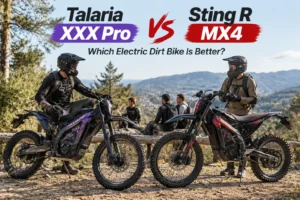
The Talaria XXX Pro and Talaria Sting R MX4 are two popular options for riders looking for a lightweight electric
