Stark Varg MX vs Stark Varg EX: Key Differences
Electric enduro motorcycles are becoming an increasingly appealing option for riders who want strong acceleration, precise low-speed control, and less

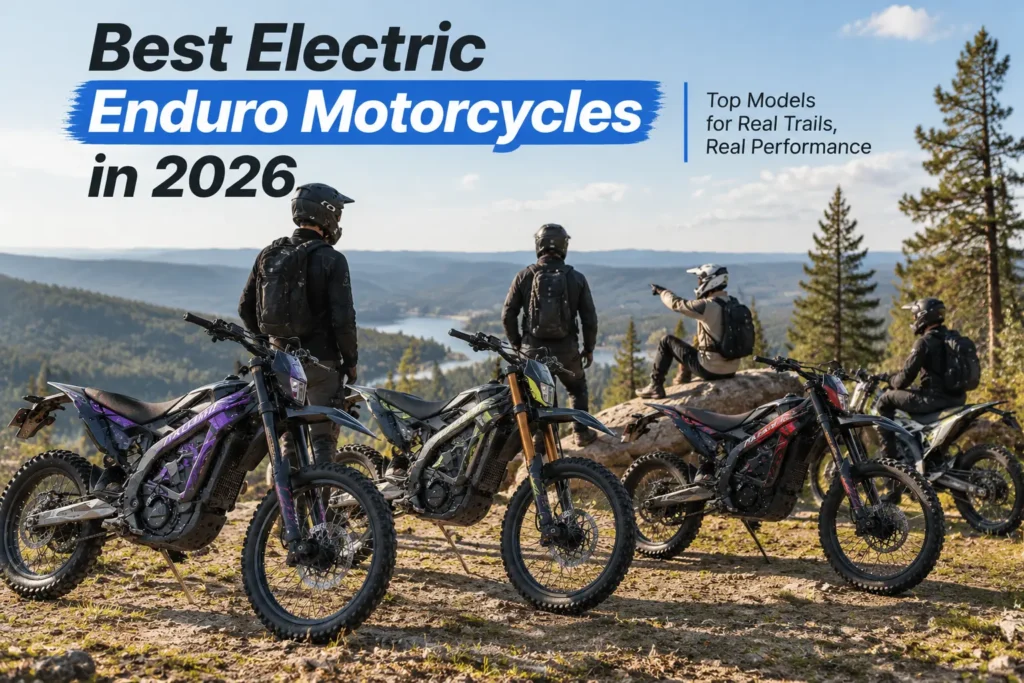
Electric enduro motorcycles are becoming an increasingly appealing option for riders who want strong acceleration, precise low-speed control, and less routine maintenance than a traditional gas-powered dirt bike. From high-performance machines designed for demanding off-road routes to lighter motorcycles built for technical trails and recreational riding, the electric enduro market now offers several distinct options for adult riders.
The best electric enduro motorcycle in 2026 depends on more than peak horsepower. Battery capacity, usable riding time, suspension performance, weight, wheel size, ground clearance, and parts availability all influence how a motorcycle performs on real trails. A bike with impressive power figures may not be the best choice for tight, rocky terrain, while a lighter motorcycle with predictable power delivery can be easier to manage on steep climbs and narrow paths.
Several models deserve consideration for different reasons. The Stark VARG EX stands out for its adjustable high-performance powertrain and large battery. The KTM FREERIDE E offers a more traditional off-road motorcycle design, although the newly announced 2027 model should be distinguished from earlier versions when comparing prices and specifications. The Electric Motion Escape R focuses on technical riding and controlled power delivery, while the Zero XE and Surron Ultra Bee X HP provide alternatives for riders who prioritize recreational trail riding and a lower purchase price.
This guide compares these motorcycles by published specifications, intended use, battery performance, handling, and ownership considerations. The goal is to help you identify the right electric enduro motorcycle for your riding style, rather than simply ranking every bike by its maximum power rating.
An electric enduro motorcycle is designed primarily for off-road riding over varied terrain, including forest trails, rocky paths, steep climbs, uneven ground, and technical sections. Unlike a motocross bike developed mainly for closed circuits and repeated jumps, an enduro motorcycle generally needs to handle a wider range of conditions, including slower technical sections and longer trail sessions. Some models also have road-homologated versions, but road legality depends on the exact configuration and local regulations.
Electric power changes the riding experience in several ways. An electric motor delivers torque without conventional gear changes, allowing riders to focus on throttle control, balance, traction, and line selection. The absence of a combustion engine also removes routine tasks such as engine oil changes, spark plug replacement, and fuel-system servicing. However, electric motorcycles still require regular maintenance of the chain, tires, brakes, bearings, suspension, fasteners, and electrical connections.
It is also important to distinguish a full-size electric enduro motorcycle from a lightweight electric dirt bike or an electric mountain bike. Compact e-motos can be excellent recreational machines, but their chassis, suspension travel, wheel configuration, and intended use may differ significantly from those of a traditional enduro motorcycle. The models in this guide therefore cover both dedicated enduro designs and capable off-road alternatives, with their differences explained rather than treating every bike as directly equivalent.
The following table summarizes five models worth considering in the U.S. market. Prices are based on manufacturer pages or published U.S. dealer listings available in October 2026. They are indicative prices, not guaranteed offers. Taxes, freight, setup charges, availability, and model-year changes can affect the final purchase cost.
| Model | Published Peak Power | Battery Capacity | Approximate Weight | U.S. Price Reference | Best For |
|---|---|---|---|---|---|
| Stark VARG EX | Up to 80 hp, with configurable power | 7.2 kWh | 264 lb | $13,040 | High-performance enduro |
| KTM FREERIDE E, 2027 model | 19.2 kW | 5.5 kWh | 247 lb | $9,999 plus $690 freight | Traditional off-road riding |
| Electric Motion Escape R, 2026 | 18 kW | 3.5 kWh | 183 lb | $11,999 MSRP | Technical trails and hard enduro |
| Zero XE | 15.5 kW | 4.3 kWh | 223 lb | $5,995 MSRP | Recreational off-road riding |
| Surron Ultra Bee X HP, 2026 | 24.5 kW | 74V 60Ah, approximately 4.44 kWh | 195 lb | Around $6,499 at U.S. dealers | Versatile trail riding |
Sources: Stark Future, KTM, Electric Motion USA, Zero Motorcycles, and Surron USA.
These motorcycles serve different purposes. The Stark and KTM are the most relevant starting points for riders seeking a dedicated enduro-style motorcycle. Electric Motion has a stronger emphasis on technical terrain and controlled low-speed performance. Zero and Surron offer compelling off-road alternatives, but buyers should compare their chassis dimensions, suspension, and intended use before treating them as direct substitutes for competition-focused enduro machines.
The Stark VARG EX is one of the most powerful electric enduro motorcycles available to U.S. buyers. Its defining feature is an adjustable electric powertrain that can be configured for different performance levels, with the manufacturer advertising up to 80 horsepower. This allows experienced riders to access substantial power while retaining the ability to choose a lower output setting for more controlled riding.
Stark lists a 7.2 kWh battery, a weight of approximately 264 pounds, and riding time of up to six hours under suitable conditions. The motorcycle also features adjustable power delivery, customizable engine braking, a digital interface, and a chassis designed around off-road performance. Its U.S. product page lists a price of $13,040 at the time of review. Actual riding time depends heavily on terrain, rider skill, power settings, and how frequently maximum output is used.
The VARG EX is particularly attractive to experienced riders who want strong acceleration for open trails, challenging climbs, and demanding off-road routes. Its adjustable power settings are also useful for riders who want to adapt the motorcycle to changing terrain rather than relying on a single fixed performance level. However, the highest power configuration is not automatically the best setting for every trail. Smooth throttle control and traction management remain essential on loose or slippery surfaces.
The main drawbacks are purchase price and the practical limitations of battery-powered riding. A large battery provides substantial stored energy, but it cannot guarantee the same riding duration in every condition. Riders who spend long periods at high power should plan routes around realistic battery consumption and available charging opportunities. Before purchasing, confirm the battery warranty, replacement cost, service arrangements, and availability of parts.
For buyers who want a premium electric enduro motorcycle with adjustable performance and a large battery, the Stark VARG EX is a leading candidate. Its price and performance make it more suitable for serious enthusiasts than for someone who only needs a basic recreational trail bike.
KTM has extensive experience building off-road motorcycles, and the FREERIDE E follows a more conventional dirt-bike design than many compact electric motos. The latest 2027 model was announced during 2026, making it relevant to shoppers comparing new motorcycles late in the year. It should not be confused with earlier FREERIDE E versions, because the newer model has a revised powertrain, chassis, battery, and suspension package.
KTM’s U.S. page lists 19.2 kW peak power, a 5.5 kWh interchangeable battery, and up to three hours of riding time under suitable conditions. The motorcycle uses a steel frame, WP XACT front suspension, a WP XPLOR rear shock, a 21-inch front wheel, and an 18-inch rear wheel. Published suspension travel is 250 mm at the front and 240 mm at the rear. The listed base MSRP is $9,999, plus $690 freight.
These specifications make the FREERIDE E worth considering for riders who want traditional off-road geometry and a motorcycle intended for trails rather than a compact pit-bike-style experience. Its wheel configuration and suspension travel are relevant for uneven ground, roots, rocks, and other obstacles commonly encountered on enduro routes. The interchangeable battery is also useful for owners who value the ability to remove the pack for charging or replacement.
There is one important ownership detail: charging time. KTM lists a standard 660W charger and a full-charge time of approximately eight hours for the 2027 model. Riders should check whether faster charging equipment is available for their configuration and how it changes the total cost. A large battery is valuable, but charging speed matters when planning multiple sessions or longer trips.
The FREERIDE E is a strong option for riders who value conventional dirt-bike proportions, adjustable suspension, and a well-established motorcycle manufacturer. Before buying, verify the model year, dealer availability, warranty coverage, and road-registration eligibility in your state. KTM’s announcement of road-legal capability does not mean every motorcycle configuration can automatically be registered for public-road use everywhere in the United States.
The Electric Motion Escape R takes a different approach to electric enduro riding. Rather than focusing solely on maximum speed, it emphasizes controlled power delivery, maneuverability, and the ability to negotiate difficult terrain. Its trials-inspired design makes it particularly relevant for riders who spend time on rocky trails, steep climbs, narrow paths, and technical sections where throttle precision and balance are more important than sustained high speed.
For the 2026 model, Electric Motion lists 18 kW peak power, a 3.5 kWh battery, a weight of approximately 183 pounds, and a claimed top speed of 52.8 mph. The manufacturer advertises up to 3.5 hours of riding time, although actual duration will vary with terrain and riding style. The motorcycle also features a diaphragm clutch, adjustable power maps, regenerative braking, and a redesigned swingarm. Its U.S. MSRP is $11,999 before freight, setup, taxes, and other dealer charges.
The relatively low weight is a major advantage when a trail requires repeated changes of direction, careful placement of the front wheel, or recovery after a difficult maneuver. The motorcycle’s power delivery systems are also intended to help riders manage traction in challenging conditions. These features can be useful when navigating technical obstacles, although skill, tire choice, and suspension setup remain important.
The Escape R is not necessarily the best choice for riders who mainly want maximum top speed or a conventional high-speed enduro experience. Its design prioritizes controlled technical riding, and its battery capacity is smaller than those of the Stark VARG EX, KTM FREERIDE E, and Zero XE. Riders planning long routes should consider charging access and the availability of the optional higher-current charger, which the manufacturer lists as reducing charging time compared with the standard unit.
For technical trail enthusiasts, the Escape R deserves serious consideration. It is especially interesting to riders who value low weight, precise control, and a motorcycle designed for demanding low-speed sections rather than choosing exclusively by horsepower.
The Zero XE provides an alternative for riders who want an electric off-road motorcycle without spending the amount required for a premium enduro machine. Zero lists a price of $5,995 MSRP, a 15.5 kW peak motor, a 4.3 kWh battery, a claimed top speed of 53 mph, and a weight of approximately 223 pounds. The manufacturer also advertises a maximum range of 65 miles at 31 mph under its stated test conditions.
One of the XE’s main advantages is its combination of battery capacity and purchase price. Its removable battery can be charged away from the motorcycle, and a spare pack can extend riding time if the owner has access to a suitable charging setup. The motorcycle also features three ride modes, adjustable suspension, traction control, regenerative braking settings, and a reverse function. These features can make the XE appealing to recreational riders who want flexibility across dirt, gravel, and mixed off-road surfaces.
The XE should not automatically be treated as a direct replacement for a dedicated competition enduro motorcycle. Its weight, suspension geometry, and intended use differ from those of a specialist machine such as the Stark VARG EX or Electric Motion Escape R. Riders who regularly tackle very technical terrain should assess its physical dimensions and suspension setup before purchasing.
Range claims also need careful interpretation. The manufacturer’s 65-mile figure is associated with a stated speed of 31 mph, and actual range can fall substantially during aggressive off-road riding. Frequent acceleration, steep climbs, loose surfaces, cold temperatures, and higher rider weight all affect energy consumption.
For riders who mainly want recreational trail access, a removable battery, and a lower initial price, the Zero XE is worth considering. It is less suitable for someone whose primary goal is competitive enduro performance or who needs a motorcycle specifically homologated for a particular road or competition category.
The 2026 Surron Ultra Bee X HP is a capable electric off-road motorcycle for riders who want substantial power without moving into the premium price range of a full-performance enduro model. Surron’s official U.S. website lists 24.5 kW maximum power, a 74V 60Ah battery, a claimed top speed of 59 mph, and a maximum range of 71 miles at 31 mph. U.S. dealer listings place the model around $6,499, although prices and availability vary.
Its battery stores approximately 4.44 kWh of nominal energy, providing a useful balance between battery capacity and motorcycle size. The Ultra Bee also offers selectable riding modes and electronic features designed to help manage power delivery. These characteristics can appeal to riders who want a motorcycle for recreational trail riding, hills, and a mixture of open and technical terrain.
The Ultra Bee X HP should be compared with other mid-sized electric off-road motorcycles rather than assumed to have the same chassis or suspension capabilities as a dedicated competition enduro bike. The rider’s height, suspension setup, tire choice, and preferred terrain all influence how suitable it will be. Its relatively accessible price and strong published output make it an attractive option, but peak power alone does not establish how it will perform on a demanding technical route.
Before purchasing, confirm the exact U.S. model, battery configuration, warranty coverage, and parts support. Some listings and model names can differ across markets, and the road-legal status of one version should not be assumed to apply to every version sold under the Ultra Bee name.
For riders who want a powerful recreational trail motorcycle with a larger battery than many compact e-motos, the Ultra Bee X HP is a strong alternative. It may offer better value than a premium enduro machine if the rider does not need specialized hard-enduro equipment or the highest level of adjustable suspension.
Choosing the best electric enduro motorcycle starts with identifying the terrain you ride most often. Technical trails with rocks, roots, steep climbs, and frequent changes in direction place a premium on manageable weight, controlled power delivery, tire traction, and suspension setup. Faster open trails place greater emphasis on stability, power, battery capacity, and braking performance. A motorcycle that works well in one environment may be less suitable in another.
Battery capacity should be compared in kilowatt-hours rather than voltage or amp-hours alone. Watt-hours represent the amount of stored energy and provide a more useful starting point for comparing different battery systems. However, battery size does not guarantee a specific range. A larger battery can still be depleted quickly if the rider spends much of the ride using high power or climbing steep terrain.
Weight and ergonomics are equally important. A lighter motorcycle can be easier to maneuver and recover on technical routes, while a larger chassis may provide a more familiar riding position for taller adults. Seat height, handlebar reach, foot-peg placement, suspension sag, and carrying capacity all influence fit. If possible, sit on the motorcycle or arrange a test ride before making a decision.
Suspension and brakes should also match the intended use. Look at the available adjustment, the quality of the components, the wheel configuration, and the availability of suitable tires. A motorcycle with high peak power is not necessarily the best enduro bike if its suspension cannot handle the terrain or its weight makes technical sections difficult.
Finally, calculate the total ownership cost rather than comparing sticker prices alone. Include freight, taxes, protective equipment, charging equipment, replacement battery costs, tires, brake pads, chain maintenance, and access to parts and service. Confirm the warranty terms and ask how repairs are handled. For riders who intend to use public roads, verify the exact vehicle’s certification, registration eligibility, insurance requirements, and local laws before purchase.
The best option depends on the rider’s priorities. The Stark VARG EX is a leading choice for high-performance enduro riding, while the KTM FREERIDE E offers a traditional off-road layout. The Electric Motion Escape R is particularly interesting for technical terrain, and the Zero XE and Surron Ultra Bee X HP are alternatives for recreational trail riding at lower prices.
Riding time varies substantially with terrain, power settings, rider weight, temperature, and riding style. Manufacturers may quote distance at a fixed speed or riding time under specific conditions. Technical climbs and aggressive acceleration can reduce range considerably, so riders should plan around realistic conditions rather than relying entirely on maximum advertised figures.
Yes, many electric enduro motorcycles are well suited to technical trails because they provide immediate torque and do not require conventional gear changes. Models such as the Electric Motion Escape R emphasize controlled low-speed riding, while the Stark VARG EX provides adjustable power for different conditions. Weight, suspension, tires, and rider experience still determine how effectively a motorcycle handles difficult terrain.
An electric enduro motorcycle is generally designed for varied off-road routes, technical sections, and longer trail sessions. A motocross bike is developed primarily for closed circuits, jumps, and repeated high-intensity laps. Some electric models can perform well in both environments, but suspension setup, wheel configuration, equipment, battery management, and intended use should be checked before choosing one for a specific discipline.
Some models have road-homologated versions, but street legality is not automatic. It depends on the exact motorcycle configuration, applicable federal and state requirements, registration eligibility, insurance, and licensing. A model that can be registered in one state or market may not qualify in another. Confirm the exact vehicle documentation with the manufacturer and your local motor vehicle agency.
The models in this guide range from approximately $5,995 for the Zero XE to $13,040 for the Stark VARG EX, before applicable taxes and additional fees. The KTM FREERIDE E and Electric Motion Escape R sit between or near the higher end of this range, depending on the model year and configuration. Budget for protective gear, charging equipment, parts, and maintenance as well as the initial purchase.
Some electric off-road motorcycles can be suitable for developing riders, but high-performance enduro models require good throttle control and proper training. Adjustable power modes may help riders learn progressively, but they do not replace protective equipment, supervision where appropriate, and practice in a controlled environment. Beginners should prioritize manageable power, fit, and predictable handling over maximum horsepower.
They generally require less routine powertrain maintenance because they do not have combustion engines, engine oil, spark plugs, or fuel systems. However, chains, tires, brakes, bearings, suspension, fasteners, and electrical components still need regular inspection. Battery care, replacement cost, parts availability, and warranty support are also important parts of long-term ownership.
The best electric enduro motorcycles in 2026 offer different advantages depending on how and where you ride. The Stark VARG EX stands out for high-performance output and adjustable power. The KTM FREERIDE E offers a traditional off-road layout and a substantial interchangeable battery, while the Electric Motion Escape R is particularly appealing for technical trails and controlled low-speed riding.
For recreational riders seeking a lower purchase price, the Zero XE and Surron Ultra Bee X HP offer capable alternatives, although neither should automatically be treated as equivalent to a specialist competition enduro motorcycle. Their value depends on rider fit, intended terrain, parts support, and the level of suspension performance required.
Before making a decision, compare battery energy, realistic range, weight, suspension, brakes, warranty coverage, and the final delivered price. Confirm the exact model year, particularly when newer models are announced late in the calendar year, and verify road-registration eligibility if public-road use is important.
The best electric enduro motorcycle is the one that matches your terrain, riding experience, and ownership budget. For serious performance, start with the Stark VARG EX. For a traditional enduro-style platform, consider the KTM FREERIDE E. For technical riding, examine the Electric Motion Escape R. If price and recreational trail capability matter more, compare the Zero XE and Surron Ultra Bee X HP carefully before choosing.
Electric enduro motorcycles are becoming an increasingly appealing option for riders who want strong acceleration, precise low-speed control, and less
The Talaria XXX Pro and Talaria Sting R MX4 are two popular options for riders looking for a lightweight electric
The Surron Hyper Bee and Surron Light Bee X are both high-performance electric dirt bikes, but they are designed for
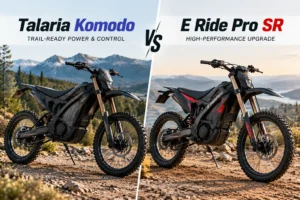
The Talaria Komodo and E Ride Pro SR are two high-performance electric dirt bikes designed for riders who want serious
