Stark Varg EX Review: Range, Power, Pros & Cons

The Stark VARG EX takes one of the most interesting ideas in modern off-road motorcycling and makes it considerably more practical. The original VARG proved that an electric motorcycle could deliver serious motocross performance. The VARG EX takes that high-performance electric platform in a different direction, targeting enduro and trail riders who need more than explosive acceleration around a closed track.

That distinction is important. A motocross bike regularly returns to the paddock, where charging can fit between riding sessions. Enduro riding may take you much farther from the truck, across slow technical sections, steep climbs, open trails, and public-road connections where permitted. In that environment, maximum horsepower is only part of the equation.

Range, battery efficiency, weight, charging, traction, low-speed control, suspension, and road legality become much more important.

According to Stark Future, the VARG EX combines a 7.2 kWh battery with up to 80 hp in its higher-output configuration, while offering the adjustable power delivery that has become one of the defining features of the VARG platform. But those numbers don’t answer the biggest buying question.

Can an electric enduro motorcycle this powerful actually replace a gasoline enduro bike for real-world riding?

That’s what this review is designed to find out.

Stark VARG EX Review

The VARG EX is one of the strongest arguments yet for taking electric enduro motorcycles seriously. It isn’t simply a motocross VARG with lights added. The EX was developed around broader off-road use, combining the VARG’s electric powertrain with enduro-oriented equipment and the road-homologation features required in applicable markets.

Its biggest advantage isn’t 80 hp by itself. In fact, many riders will rarely need maximum output on a technical trail. The more useful feature is how easily that performance can be controlled.

Electric torque is available immediately, and adjustable power settings allow riders to soften or strengthen the motorcycle’s response depending on terrain. On wet roots, loose climbs, mud, or tight woodland trails, a controlled setting may be substantially more useful than maximum horsepower. When terrain opens up, the rider can access much stronger performance without physically modifying the motorcycle.

The EX also removes several traditional enduro tasks. There is no conventional clutch to manage and no multi-speed gearbox to shift through. Engine noise and vibration are dramatically reduced, while maintenance no longer revolves around oil changes, valve inspections, spark plugs, or top-end service.

But there is an unavoidable compromise: energy replenishment.

A gas enduro bike can be refueled in minutes, including far from home if extra fuel is available. A VARG EX depends on its battery and access to suitable electricity. For riders who stay relatively close to a charging point, that may be easy to manage. For long-distance remote enduro, it deserves serious thought.

Our early verdict is therefore straightforward: the VARG EX makes the most sense for riders who want premium full-size electric enduro performance and whose normal routes fit comfortably within an electric charging routine.

Stark VARG EX Key Specifications

Specifications are useful, but only when they are connected to how the motorcycle actually behaves. Stark’s official information should remain the primary reference because equipment, homologation, software, and market-specific configurations can change.

Specification Stark VARG EX
Motorcycle Type Full-size electric enduro
Maximum Power Up to 80 hp on higher-output configuration
Battery Capacity 7.2 kWh
Power Delivery Adjustable electric output
Transmission No conventional multi-speed gearbox
Traditional Clutch No
Primary Use Enduro, trail and off-road riding
Road Equipment Homologated equipment in applicable configuration/market
Main Strength Power, tunability and low-noise enduro riding
Main Limitation Charging and range planning on long remote rides

These figures immediately show why comparing the VARG EX with lightweight electric dirt bikes can be misleading.

A Talaria MX5, Sur Ron Light Bee X, E Ride Pro, or Altis Sigma can be exceptionally entertaining and capable, but those bikes belong to a lighter e-moto category. The VARG EX is intended to behave like a full-size enduro motorcycle.

That means it should be compared with motorcycles riders might otherwise choose for serious trail and enduro use—not simply whichever electric bike happens to have a similar peak-power number.

What Is the Stark VARG EX?

The simplest explanation is that the VARG EX takes Stark’s high-performance electric motorcycle concept and adapts it for riding beyond a motocross track.

That sounds obvious, but enduro places very different demands on a motorcycle.

Motocross rewards acceleration, suspension performance, jumping ability, and repeatable speed around a relatively short closed course. Enduro adds slow technical riding, rocks, roots, steep climbs, descents, changing surfaces, longer distances, and potentially road connections between trails.

The motorcycle therefore needs to perform well at 5 mph as well as at 50 mph.

This is where electric power becomes particularly interesting.

Gasoline enduro riders often use clutch technique to control torque at very low speed. The clutch helps prevent stalling, smooths power delivery, and allows the rider to manage difficult obstacles with precision.

The VARG EX doesn’t have an engine that needs to be kept running at a certain rpm. Its electric motor cannot stall in the conventional sense, removing one of the challenges associated with slow technical riding.

That doesn’t eliminate skill. Balance, throttle control, body position, traction, braking, and line choice still determine whether you clean an obstacle.

It simply changes what the rider has to manage.

Stark VARG EX Power: Do You Really Need 80 HP?

The headline figure is difficult to ignore. In higher-output form, Stark advertises the VARG EX with up to 80 horsepower.

That’s an enormous amount of potential performance for an off-road motorcycle, particularly when combined with the immediate response of an electric motor.

But there’s an important distinction between available power and usable power.

On asphalt, more output can translate relatively cleanly into stronger acceleration when sufficient traction is available. Off-road, the relationship is much less direct. Mud, gravel, loose soil, roots, rocks, and steep terrain dramatically reduce how much torque the rear tire can transmit.

If the tire is spinning, adding another 20 hp doesn’t automatically make the motorcycle accelerate faster.

This is why the VARG EX’s adjustable performance is arguably more interesting than its maximum figure.

A rider can use a softer setup on technical terrain where traction matters and stronger output on fast open sections. This effectively allows the character of the motorcycle to change without replacing mechanical components.

For many recreational enduro riders, maximum power may be unnecessary most of the time.

And that’s perfectly fine.

The value is knowing the performance is available without being forced to use all of it.
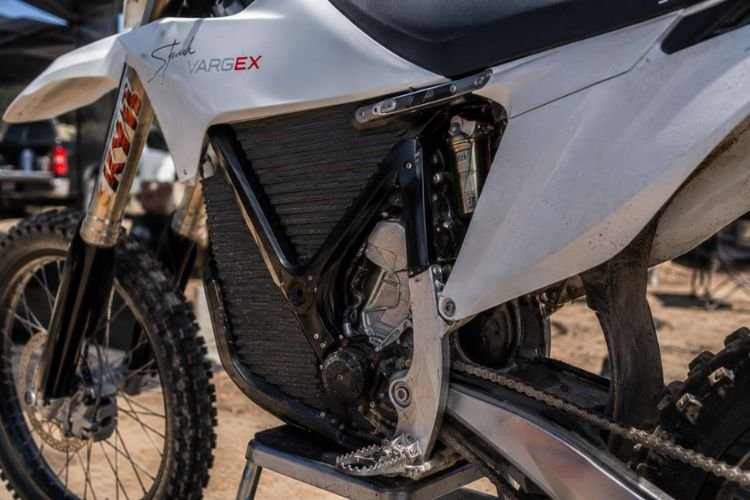
Power Delivery on Technical Trails

Power Delivery on Technical Trails

Technical terrain may actually be where the electric drivetrain provides its most interesting advantage.

Imagine approaching a rocky climb on a conventional gas enduro bike. The rider needs to think about gear selection, engine rpm, clutch control, throttle input, traction, and momentum. Experienced riders perform these actions almost automatically, but they still require physical and mental workload.

On the VARG EX, several variables disappear.

There is no need to select a conventional gear before the obstacle. There is no engine to stall. There is no traditional clutch that needs to be slipped through a difficult section.

The rider can focus more heavily on throttle input, balance, braking, and line selection.

Instant torque can help too, but it needs to be controlled. An overly aggressive setting on wet rocks or roots can make the rear tire break traction immediately. A smoother map may produce a much better result.

This is an important theme throughout our Stark Varg EX Review:

More power isn’t always the answer. Better control of power often is.

How Does the VARG EX Compare With a Gas Enduro Bike?

The differences become most obvious at low speed.

A gasoline enduro motorcycle has an engine that produces different amounts of torque depending on rpm. Gears and clutch technique allow the rider to keep the engine operating where it works best.

The VARG EX simplifies this relationship considerably.

Twist the throttle and the motor responds. Slow down and there is no concern about engine rpm falling too low and causing a stall. Accelerate again and there is no need to downshift first.

That can make technical riding feel surprisingly natural after an adjustment period.

However, experienced enduro riders shouldn’t assume the electric system simply makes everything easier. Clutch control can be an extremely precise tool, and riders who have spent years mastering it may initially miss that mechanical connection.

Weight and traction still exist. Difficult terrain remains difficult.

The VARG EX changes the technique; it doesn’t remove the challenge.

Stark VARG EX Range: The Number That Matters More Than Horsepower

For most potential buyers, Stark VARG EX range is probably more important than the 80 hp headline.

This is also where simplistic reviews can become misleading.

Quoting one maximum range figure doesn’t tell an enduro rider very much because energy consumption changes enormously with terrain and riding style.

A rider cruising easy forest roads at moderate speed may travel considerably farther than someone attacking deep sand or repeatedly climbing steep hills. Technical riding can involve low speeds but high motor loads. Fast riding increases aerodynamic resistance. Cold weather can affect battery performance, while rider weight and tire choice also influence consumption.

So instead of asking:How many miles does a Stark VARG EX go?A more useful question is:Will the VARG EX complete the type of ride I normally do with enough battery left to get home comfortably?

That difference is critical.

The 7.2 kWh Battery Explained

Stark lists the VARG EX with a 7.2 kWh battery, giving the motorcycle substantial stored energy compared with lightweight electric dirt-bike platforms.

Battery capacity in kilowatt-hours tells us how much energy the pack stores. It doesn’t tell us exactly how many miles the motorcycle will travel because consumption isn’t constant.

For example, imagine two riders leaving with a full battery.

Rider A spends the afternoon flowing through moderate trails, using smooth throttle inputs and relatively little sustained high-speed riding.

Rider B attacks steep climbs, deep sand, and open sections with aggressive acceleration.

They can return with dramatically different battery percentages despite riding for a similar amount of time.

This is why real-world range testing needs context.

Whenever you see a VARG EX range claim, ask:

What terrain was used? How fast was the rider? What power setting was selected? What was the temperature? How much elevation was involved?

Without that information, a range number is much less useful than it appears.

Range Anxiety: Is It a Real Problem?

Yes, but how serious it is depends on where you ride.

For a rider doing local trail loops from a home, vehicle, or riding area with charging access, range anxiety may disappear quickly once typical battery consumption becomes familiar.

Owners learn their motorcycles.

After several rides, you begin to understand how much battery a familiar loop normally consumes and how riding harder affects the remaining percentage. The experience becomes much more predictable.

Remote enduro is different.

A gas rider can carry extra fuel or arrange a fuel stop. An electric rider cannot simply pour another few kilowatt-hours into the battery from a small container.

That makes route planning more important.

A sensible VARG EX rider should leave a reserve rather than planning to arrive back at the vehicle with 1% remaining. Weather, mud, route changes, missed turns, and unexpected climbs can all increase consumption.

For riders regularly completing extremely long and isolated routes, gasoline remains easier.

For shorter technical sessions, closed riding areas, private land, and routes that naturally return toward a charging location, the EX becomes much more practical.

Charging the Stark VARG EX

Charging is the other half of the range equation.

A large battery is valuable only if you can conveniently put energy back into it. The exact charging experience depends on available electrical supply, charger configuration, starting state of charge, and battery conditions, so buyers should verify current charging specifications directly with Stark Future.

The fundamental difference from gasoline isn’t likely to disappear from this buying decision:

Refueling takes minutes. Charging takes longer.

That sounds like an automatic win for gasoline, but real-world riding schedules make it more nuanced.

Most riders aren’t continuously moving for eight hours. They stop to eat, rest, adjust the motorcycle, talk with other riders, or change riding areas. If charging is available during those breaks, some of the waiting time effectively disappears into downtime that would have happened anyway.

The VARG EX therefore works best when charging becomes part of the routine rather than an emergency response to an empty battery.

At home, this can be extremely convenient: finish riding, clean and inspect the motorcycle, plug it in, and prepare for the next session.

In the middle of nowhere, the story changes completely.

Is the VARG EX Better for Enduro Than the VARG MX?

For dedicated trail and enduro riding, the EX is the more logical starting point.

The MX version was developed around motocross, while the EX expands the concept toward broader off-road use with equipment and setup appropriate to enduro riding and, in relevant markets/configurations, homologation requirements.

The important distinction isn’t simply lights or accessories.

Enduro riding asks more from low-speed control, versatility, trail equipment, range management, and the motorcycle’s ability to work across constantly changing terrain.

A rider who spends almost all their time on a motocross track may still prefer the MX-oriented setup.

A rider whose normal weekend includes rocks, roots, hills, forest trails, and connections between riding areas has much stronger reasons to consider the EX.

This also prevents one of the biggest mistakes when researching the VARG online: don’t assume every test of the VARG MX tells you exactly how the VARG EX will behave.

They share important technology, but their intended use isn’t identical

Stark Varg EX Review 

Range and power may attract the most attention, but they don’t determine whether an electric enduro motorcycle is enjoyable after the first few rides. Once you’re actually on a rocky trail, factors such as weight distribution, suspension, braking, traction, ergonomics, and low-speed control become far more important than the maximum horsepower number.

This is where the Stark VARG EX needs to justify its premium positioning. It isn’t trying to be the lightest electric dirt bike available. Instead, it attempts to combine the benefits of an electric drivetrain with the chassis capability expected from a serious full-size enduro motorcycle.

Stark VARG EX Weight and Handling

Weight is one of the unavoidable challenges of high-performance electric motorcycles. A large battery stores more energy and helps extend riding time, but battery cells add mass. There is no way around that basic tradeoff.

The VARG EX therefore feels very different from lightweight e-motos such as a Sur Ron Light Bee X, Talaria MX5, or Altis Sigma. Those machines can be extremely easy to move around tight trails, load into a vehicle, or recover after a mistake. The VARG EX belongs in a more substantial motorcycle class.

That doesn’t mean the number on the scale tells the entire story.

Where the weight sits matters almost as much as how much weight there is. Electric motorcycles allow engineers to position the battery and motor around the chassis rather than accommodating a conventional engine, fuel tank, exhaust system, and associated components. A centralized mass can make a motorcycle feel more manageable once it is moving than its static weight might suggest.

On flowing trails and faster terrain, the more substantial chassis can become an advantage. The EX feels planted and is designed around serious speeds rather than feeling like a lightweight e-moto whose motor performance has exceeded the capability of its frame and suspension.

The weight becomes more obvious when things go wrong. Picking the motorcycle up on a steep hill, manually turning it around on a narrow trail, or catching it after losing balance requires more effort than with a lightweight platform.

For smaller riders or anyone spending most of their time on extremely tight technical trails, that distinction matters.

Technical Trail Performance

Technical riding is where the VARG EX’s electric drivetrain becomes particularly interesting.

A conventional enduro rider approaching rocks, roots, or a steep climb may be managing throttle, clutch, gear selection, balance, and rear-wheel traction simultaneously. Skilled riders do this almost instinctively, but it remains part of the workload.

The VARG EX removes two major variables: conventional shifting and clutch management.

There is no combustion engine waiting to stall if rpm falls too low. There is no need to select a lower gear before a technical obstacle. The rider can concentrate more heavily on balance, throttle control, braking, and choosing a line.

This doesn’t magically make difficult trails easy. In fact, instant electric torque can create its own problem if the throttle response is too aggressive for the conditions.

On wet roots or loose rock, the maximum power setting may be exactly what you don’t want.

This is where adjustable power delivery becomes genuinely useful rather than simply a technology feature. A softer configuration can make the rear tire easier to control, helping it find traction instead of immediately spinning.

For technical enduro, precision can be more valuable than horsepower.

Does the Lack of a Clutch Help or Hurt?

This depends heavily on the rider.

Newer riders may appreciate having one less control to manage. There is no concern about stalling the engine and no need to slip a clutch through a slow obstacle.

Experienced enduro riders may have a different reaction.

A clutch isn’t simply something riders use to stop an engine from stalling. At an advanced level, it is a precision tool for controlling torque, quickly changing rear-wheel response, lifting the front wheel, and managing traction.

Someone who has spent years developing clutch technique may initially miss that direct mechanical control.

The VARG EX replaces much of the need for clutch management with extremely controllable electric torque and adjustable response. That creates a different riding technique rather than simply making traditional technique obsolete.

Some riders adapt almost immediately. Others may need several sessions before they stop reaching instinctively for a clutch lever.

This is one of the reasons a test ride is particularly valuable before buying a VARG EX. The difference isn’t only technical—it changes how the rider interacts with the motorcycle.

Suspension and Enduro Setup

A powerful motor doesn’t make a good enduro motorcycle if the suspension can’t maintain control over rocks, roots, braking bumps, drops, and repeated impacts.

The VARG EX is designed as a serious off-road platform, and suspension is an important part of separating it from lightweight recreational e-motos.

However, expensive suspension doesn’t automatically mean perfect suspension.

Setup remains essential.

Rider weight, skill level, terrain, speed, and personal preference all influence how suspension should behave. A fast rider attacking larger impacts may need considerably more support than someone riding slow technical trails. A setup designed for aggressive terrain can feel unnecessarily harsh at recreational speeds.

Before deciding that suspension components need replacing, owners should correctly set sag and work through available compression and rebound adjustments.

This matters particularly with electric motorcycles because battery mass changes how the chassis responds. Suspension setup needs to control that mass without making the bike feel harsh or reluctant to change direction.

The goal isn’t simply maximum stiffness. Good enduro suspension needs enough support to remain controlled while maintaining compliance so the tires can follow uneven terrain and preserve traction.

Brakes and Regenerative Braking

Strong acceleration needs equally serious deceleration.

The VARG EX’s full-size motorcycle design gives it braking hardware appropriate for much higher performance than lightweight e-motos. This matters on long descents and faster enduro terrain, where repeated braking can generate significant heat.

Electric drivetrains also open the door to adjustable motor-braking behavior. Riders accustomed to four-stroke motorcycles often rely on engine braking when entering corners or descending hills, while two-stroke riders may expect considerably less.

An electric motorcycle can electronically shape some of this behavior.

That allows riders to tune the deceleration character to better match personal preference. Some may want stronger motor braking to help control steep descents, while others prefer a freer-rolling feel.

It is another example of the VARG philosophy: characteristics traditionally determined by mechanical engine design can increasingly become adjustable settings.

Physical brakes still do the serious work, however. Motor braking should complement good braking technique rather than replace it.

Traction Matters More Than Maximum Power

The VARG EX’s power figures sound extraordinary until you put the motorcycle on wet dirt.

The tire then becomes the limiting factor.

A rear tire can only transmit a certain amount of force before it begins to spin. Surface conditions, tire compound, tread pattern, pressure, rider position, suspension setup, and throttle input all influence that limit.

This explains why a lower power setting can sometimes make the VARG EX faster through technical terrain.

Instead of repeatedly breaking traction, the motorcycle can maintain forward drive. The rider also expends less energy trying to control unnecessary wheelspin.

Tire choice should therefore be considered part of performance setup. Someone riding mud and soft terrain has different needs from a rider spending most of the time on hard-packed trails and rocks.

With this much electric torque available, fitting the correct rear tire can produce a bigger real-world improvement than unlocking additional horsepower.

Road-Legal Capability: Why the EX Is Different

One of the most significant differences between the VARG EX and a pure motocross motorcycle is its broader enduro focus and homologation equipment.

Depending on the market and exact version, road-legal equipment can make it possible to connect trails using public roads where the motorcycle is properly registered and local regulations permit.

This substantially changes practicality.

A motocross motorcycle is typically transported to a track or private riding area. A road-homologated enduro motorcycle can potentially travel between off-road sections rather than requiring a truck for every transition.

However, do not assume that buying a VARG EX automatically makes it street legal everywhere.

Registration rules vary by country, state, province, and municipality. The exact motorcycle specification, homologation documentation, licensing requirements, insurance, and permitted equipment all need to comply with local law.

Before purchasing specifically for dual road-and-trail use, confirm these requirements with the seller and relevant local authority.

Stark’s current EX configuration and homologation information should be checked through the official Stark Future website.

What Is the VARG EX Like on the Road?

Road capability is useful, but this is still an enduro-focused motorcycle rather than an electric touring bike.

Smooth pavement provides much more traction than loose dirt, which makes the motor’s acceleration especially noticeable. At the same time, sustained road speed can use battery energy quickly.

Aerodynamic drag increases significantly as speed rises. Off-road motorcycles also aren’t shaped primarily around aerodynamic efficiency, so maintaining high road speeds can consume considerably more energy than relaxed trail riding.

This means a VARG EX owner shouldn’t automatically assume road miles are “easy miles” for the battery.

Short road connections between trails make much more sense than treating the motorcycle as a long-distance highway machine.

The tires matter too. Aggressive enduro tires optimized for loose terrain won’t necessarily provide the same road behavior, noise level, or longevity as road-oriented motorcycle tires.

The EX’s road capability is best viewed as additional versatility, not a replacement for a dedicated road motorcycle.

Stark VARG EX Maintenance

Maintenance is one of the VARG EX’s strongest ownership advantages over a gasoline enduro motorcycle.

There is no conventional combustion engine, which means several familiar maintenance jobs disappear. Owners aren’t dealing with normal engine-oil changes, spark plugs, valve-clearance checks, or traditional piston and top-end service.

There is also no air-fuel mixture or exhaust system to maintain in the same way as a combustion motorcycle.

For riders accumulating significant hours, this can save both time and workshop effort.

But the phrase “maintenance-free electric motorcycle” should be avoided.

The VARG EX still operates in mud, dust, water, rocks, and harsh terrain. Brake pads wear. Tires wear. Suspension needs servicing. Wheel and chassis bearings require attention. Fasteners should be checked, and drivetrain components still experience load and wear.

Powerful electric torque can be particularly hard on consumable components if the motorcycle is ridden aggressively.

The difference is therefore not maintenance versus no maintenance.

It is traditional dirt-bike maintenance without much of the combustion-engine maintenance.

That can still be a major improvement.

Reliability and What Owners Should Watch

The VARG EX is a technologically sophisticated motorcycle, which changes the type of reliability questions owners need to ask.

With a gasoline bike, long-term concerns often center around engine wear, valves, compression, cooling systems, fueling, clutch condition, and internal mechanical components.

Electric ownership shifts attention toward the battery, charging system, software, sensors, wiring, motor, inverter/controller systems, and other proprietary electronics.

That doesn’t automatically make electric less reliable. Electric motors have far fewer moving parts than combustion engines.

But when a proprietary electronic component does fail, the owner may have fewer repair options at home.

Manufacturer support therefore becomes extremely important.

Before buying, investigate warranty coverage, diagnostic procedures, replacement-part availability, and where the motorcycle can be serviced. This becomes even more important if there is no nearby Stark service location.

Online owner reports can be useful, but isolated complaints shouldn’t automatically be presented as “common VARG EX problems.” Look for repeated patterns across multiple owners and consider how quickly Stark resolves those issues.

Battery Health and Long-Term Ownership

The 7.2 kWh battery is one of the VARG EX’s most valuable components, so long-term battery health deserves attention.

Lithium-ion batteries gradually lose some usable capacity through age and charge cycles. Temperature, storage conditions, charging behavior, and operating stress can all influence the rate of degradation.

This shouldn’t be interpreted as the battery suddenly failing after a certain number of rides. Battery aging is normally gradual.

But range is particularly important on an enduro motorcycle, so even gradual capacity loss matters over several years.

Good storage practices can help. Owners should follow Stark’s recommendations regarding long-term storage, charging, and temperature rather than relying on generic advice intended for small e-bike batteries.

Used buyers should pay even more attention.

A motorcycle can have perfect plastics and a clean frame while hiding a battery that has experienced heavy use or poor storage. Battery condition, warranty status, charging behavior, and total usage are therefore important parts of a used VARG EX inspection.

The Low-Noise Advantage

Low noise might actually be more valuable on the EX than on the motocross VARG.

Trail riding often takes place closer to homes, hikers, cyclists, equestrians, wildlife, and other land users. An electric motorcycle doesn’t make riding silent—the tires, drivetrain, suspension, and terrain still produce sound—but eliminating combustion exhaust dramatically reduces how far the motorcycle can be heard.

For private landowners, this can be a major advantage. A gasoline enduro motorcycle can generate complaints from surprisingly far away, while the VARG EX makes practice considerably less intrusive.

Lower noise also changes the trail experience.

You can hear tire traction, rocks contacting the bike, suspension movement, and environmental sounds much more clearly. Communication between riders during slower sections can also become easier.

This won’t convince everyone. Some riders genuinely enjoy the sound of a combustion engine.

But from a practical perspective, reduced noise can potentially increase where and when a motorcycle can be ridden, which is far more meaningful than simply making it quieter.

Stark VARG EX vs Gas Enduro Bike

After discussing performance, range, and ownership, the difference becomes easier to summarize.

Category Stark VARG EX Gas Enduro Bike
Power Delivery Instant and adjustable RPM and gear dependent
Low-Speed Riding No conventional stalling Clutch control often important
Shifting No conventional gear changes Manual gearbox
Noise Very low Significantly higher
Vibration Low More noticeable
Engine Maintenance Minimal Regular maintenance required
Energy Cost Electricity Gasoline
Replenishing Energy Requires charging Refueling takes minutes
Remote Riding More planning required Extra fuel is easy to carry
Power Character Software-adjustable Mechanically/ECU influenced
Battery Aging Long-term consideration Not applicable in same way
Trail Experience Smooth and quiet Traditional mechanical feel

Neither column wins every category.

If you regularly return home after two or three hours of riding, have reliable charging, and dislike engine maintenance, the VARG EX can make tremendous sense.

If you disappear into remote terrain all day and need the ability to add range anywhere, gasoline still has an obvious practical advantage.

Stark VARG EX Pros and Cons So Far

At this stage of the review, the major strengths and compromises are becoming clear.

Pros Cons
Extremely strong adjustable performance Premium purchase price
7.2 kWh battery Range varies greatly with riding conditions
Excellent low-speed electric control Charging is slower than refueling
No conventional shifting Heavier than lightweight e-motos
No traditional engine stalling Remote riding requires planning
Very low noise Battery aging matters long term
Reduced engine maintenance Proprietary electronics require good support
Full-size enduro chassis Some experienced riders may miss a clutch
Road/enduro versatility where homologated Not designed as a long-distance road motorcycle

What stands out is that most of the EX’s disadvantages aren’t related to performance. The motorcycle already has more than enough performance for most riders.

The real compromises involve range, charging, weight, cost, and long-term ownership infrastructure.

Stark Varg EX Review

After looking at power, the 7.2 kWh battery, range, charging, handling, suspension, technical trail performance, and maintenance, the Stark VARG EX becomes easier to understand. It isn’t trying to win simply by producing a huge horsepower figure. Its real purpose is to make electric propulsion work in the situations where enduro riders traditionally depend on a gasoline motorcycle.

That makes the final decision less about specifications and more about ownership. Is the VARG EX worth paying for? Should you choose it instead of the VARG MX? And, most importantly, does an electric enduro motorcycle actually fit the way you ride?

Stark VARG EX Price and Value

The VARG EX belongs in the premium full-size motorcycle category. Current pricing can vary by country, configuration, taxes, registration requirements, accessories, and available promotions, so buyers should check the official Stark Future website for the current price in their market rather than relying on an older MSRP.

The more useful calculation is total ownership cost.

A conventional high-performance enduro motorcycle requires fuel and routine combustion-engine servicing. Engine oil, filters, spark plugs, valve inspections, and eventually more significant engine work can all contribute to long-term costs.

The VARG EX eliminates many of those items. Charging with electricity can also cost considerably less than repeatedly filling a gasoline motorcycle.

However, that doesn’t make ownership inexpensive. Tires, brake pads, suspension servicing, bearings, drivetrain components, and crash damage remain. With as much torque as the VARG EX can deliver, consumables can still wear quickly under aggressive riding.

Battery health should also be considered. The 7.2 kWh pack is a major component of the motorcycle, and its condition will become increasingly important as VARG EX models enter the used market.

For frequent riders, reduced engine servicing may become a significant advantage. For occasional riders, maintenance savings alone probably shouldn’t be the main reason to spend premium money on an electric motorcycle.

Stark VARG EX vs VARG MX

The EX and MX share Stark’s electric performance philosophy, but they are designed around different riding environments.

The MX is the more natural choice for riders who spend most of their time on a motocross track. The EX makes more sense when riding extends beyond a closed circuit into enduro terrain, technical trails, and—where the specific homologated configuration and local laws permit—road connections.

Category VARG EX VARG MX
Primary Purpose Enduro / trail Motocross
Technical Trail Use Strong focus Secondary use
Road Equipment Available as part of homologated EX specification where applicable Primarily off-road competition focused
Long Trail Riding Better suited Less purpose-built for it
Motocross Track Very capable More focused
Low-Speed Technical Riding Major strength Capable, but different focus
Best Buyer Enduro/trail rider MX rider

Don’t choose the EX simply because it appears more versatile on paper. If 90% of your riding happens on a motocross track, buying the model designed specifically for that environment makes more sense.

Likewise, an enduro rider shouldn’t choose the MX just because an older review or used example is cheaper. Equipment and setup designed around your actual riding can be worth more than a small difference in purchase price.

Stark VARG EX vs Gas Enduro Bike: Which Is Better?

This is the comparison that matters most.

On technical trails, the VARG EX has several genuine advantages. There is no conventional engine to stall, no traditional gearbox to shift through, and no clutch required to keep an engine operating in its useful rpm range. Electric torque is immediate, and adjustable power delivery can help the rider match response to available traction.

It is also dramatically quieter.

Routine powertrain maintenance is simpler because many combustion-engine service items disappear. For riders who accumulate significant hours, spending less time dealing with engine oil, valves, spark plugs, and related service can be a meaningful benefit.

Gasoline responds with one enormous advantage: energy is easy to carry.

A rider can put additional fuel in a container and extend a remote ride in minutes. That flexibility remains difficult for a battery-electric enduro motorcycle to match.

The decision can therefore be surprisingly simple.

If you regularly ride relatively contained trail systems and return to a home, truck, workshop, or other location with electricity, the VARG EX becomes highly practical.

If your idea of enduro involves disappearing into remote terrain for an entire day with no charging opportunities, a gasoline motorcycle remains easier to live with.

Who Should Buy the Stark VARG EX?

The strongest VARG EX buyer is an experienced off-road rider who wants the advantages of electric propulsion without moving down to a lightweight e-moto.

It is especially attractive if you value low noise. Riders with access to private land may find this alone changes how frequently they can practice because a VARG EX creates far less disturbance than a conventional gasoline enduro motorcycle.

It also suits riders who enjoy technical terrain. Immediate but adjustable torque, no conventional stalling, and no need to shift can reduce workload through rocks, roots, climbs, and slow obstacles.

Frequent riders who dislike engine maintenance have another strong reason to consider one. Electric doesn’t eliminate motorcycle maintenance, but it removes many routine jobs associated specifically with a combustion engine.

Finally, the VARG EX makes sense for someone who simply wants a full-size electric enduro motorcycle. If a Sur Ron, Talaria, E Ride Pro, or Altis feels too small for the type of riding you do, the EX represents a fundamentally different category.

Who Should Skip the Stark VARG EX?

Long-distance remote riders should think carefully.

The 7.2 kWh battery gives the EX substantial energy capacity, but there is still no electric equivalent to carrying a small container of gasoline and refueling in a few minutes. Route planning matters when the nearest suitable charging point is far away.

Very small or inexperienced riders may also prefer a lighter platform. Adjustable power can make acceleration manageable, but it cannot make a full-size motorcycle physically smaller when you need to pick it up on a steep trail.

Price-sensitive buyers have plenty of alternatives as well. If your riding doesn’t require full-size enduro capability, a less expensive lightweight electric dirt bike may deliver more fun per dollar.

And experienced riders who love clutch technique, shifting, exhaust sound, and the mechanical character of a gasoline engine shouldn’t assume they need to abandon those things simply because electric technology is newer. Those interactions are genuinely part of the riding experience.

Is the Stark VARG EX Good for Beginners?

There are two sides to this.

Mechanically, the VARG EX removes some of the hardest things beginners have to learn on a gasoline dirt bike. There is no traditional clutch coordination, no conventional gear selection, and no engine stalling. Power can also be reduced and softened.

Those are meaningful advantages.

But the EX remains a full-size, expensive, extremely capable motorcycle. A new rider still needs to learn braking, body position, cornering, balance, traction, and throttle control.

For someone with mountain-bike or motorcycle experience who is new specifically to enduro, the adjustable VARG EX may be surprisingly approachable.

For someone who has barely ridden a powered two-wheeler, a lighter and less expensive motorcycle is usually the more sensible learning tool.

Is 80 HP Actually Useful on the Trail?

Not most of the time.

And that isn’t a weakness.

A wet root doesn’t care how much horsepower your motorcycle makes. Neither does a loose rocky climb if the rear tire has already broken traction.

The VARG EX’s high maximum output is useful because it provides performance headroom. Riders can access serious acceleration when terrain opens up without being forced to use that output through every technical section.

For trail riding, adjustability is more valuable than maximum power.

A smooth setting that keeps the tire hooked up can be faster and less tiring than repeatedly managing wheelspin from an aggressive map.

This is one reason judging the VARG EX purely against another motorcycle’s horsepower figure misses much of what makes it interesting.

Stark VARG EX Pros and Cons

After looking at the complete motorcycle, the strengths and compromises are relatively clear.

Pros Cons
Up to 80 hp in higher-output configuration Premium pricing
7.2 kWh battery Charging takes longer than refueling
Highly adjustable power delivery Range varies significantly with conditions
Strong technical-trail control Long remote rides require planning
No conventional engine stalling Heavier than lightweight e-motos
No traditional gear shifting Battery condition matters long term
Very low noise Proprietary components increase dependence on support
Reduced combustion-engine maintenance Some riders will miss clutch and shifting
Full-size enduro platform More motorcycle than many beginners need
Road/enduro versatility where legally homologated Not intended as a long-distance road motorcycle

The important thing is that very few of the disadvantages concern outright performance.

The VARG EX already has plenty.

Most compromises come from the realities of owning a high-performance battery-electric motorcycle: charging, range planning, battery aging, purchase price, and support infrastructure.

Frequently Asked Questions

What is the Stark VARG EX range?

There isn’t one useful real-world range number for every rider. Range changes significantly with terrain, average speed, elevation, rider weight, temperature, tire choice, power settings, and throttle use. A relaxed forest-road ride can consume energy very differently from aggressive hard enduro or deep-sand riding.

For this reason, compare range tests performed under conditions similar to your own riding rather than relying only on a maximum-distance claim.

How much power does the Stark VARG EX have?

Stark has offered the VARG EX with up to approximately 80 hp in its higher-output configuration. Buyers should verify the exact current configuration in their market because specifications and available versions can change.

What battery does the Stark VARG EX use?

Stark lists the VARG EX with a 7.2 kWh battery. The large battery capacity is important for enduro use, although actual riding time still varies substantially with terrain and riding intensity.

How long does the Stark VARG EX take to charge?

Charging time depends on the available electrical supply, charger, battery temperature, and starting state of charge. Check Stark’s current technical information for the exact charging setup supplied in your market.

More importantly, charging remains slower than filling a gas tank, so riders should consider where charging fits into their normal riding day.

Is the Stark VARG EX street legal?

The EX has been developed with road homologation in applicable markets, but road legality isn’t universal. Registration, licensing, insurance, equipment, and vehicle-classification rules vary by location. Confirm the exact model and local requirements before purchasing it specifically for public-road use.

Is the Stark VARG EX better than the VARG MX?

For trail and enduro riding, the EX is generally the more logical option. For riders focused almost entirely on motocross tracks, the MX is more purpose-specific. The better motorcycle depends on where you actually ride.

Does the Stark VARG EX have a clutch?

It doesn’t require a traditional clutch in the way a gasoline enduro motorcycle does. The electric drivetrain delivers power without a conventional multi-speed manual gearbox.

Experienced riders may need time to adapt because clutch technique is an important part of traditional enduro riding.

Does the VARG EX require oil changes?

It doesn’t require conventional combustion-engine oil changes. However, it still requires normal motorcycle maintenance, including attention to brakes, tires, suspension, bearings, drivetrain components, wheels, controls, and fasteners.

Can the Stark VARG EX replace a gas enduro bike?

For many riders, yes. If your normal rides fit comfortably within the available battery and you have convenient charging access, the VARG EX can perform the role of a serious full-size enduro motorcycle.

Gas remains more practical for extremely long remote riding because fuel is much faster and easier to replenish.

Final Verdict: Is the Stark VARG EX Worth It?

After examining range, power, battery capacity, handling, technical trail performance, charging, maintenance, and the pros and cons, the Stark VARG EX makes one of the strongest cases yet for a full-size electric enduro motorcycle.

But its headline 80 hp isn’t the main reason.

The EX is compelling because of how that performance can be controlled. Immediate torque is useful, but adjustable power delivery allows riders to decide how much of it they actually want. On technical trails, a smooth and predictable setting can be more valuable than maximum output.

The electric drivetrain also changes enduro riding in meaningful ways. There is no conventional engine to stall, no traditional gearbox demanding shifts, and no clutch required to keep an engine in its powerband. Low noise can open up additional riding opportunities, while reduced combustion-engine maintenance makes frequent ownership easier.

The 7.2 kWh battery gives the VARG EX meaningful energy capacity, but battery technology hasn’t eliminated the fundamental advantage of gasoline: rapid refueling. Riders doing long, remote routes still need to think carefully about charging and reserve energy.

So, is the Stark VARG EX worth it?

For an experienced rider who wants premium full-size electric enduro performance, regularly rides within a manageable battery radius, has convenient charging access, and values low noise and reduced engine maintenance, yes—the VARG EX is a genuinely compelling alternative to a gas enduro bike.

For someone whose weekends involve extremely long remote routes, quick fuel stops, or carrying extra gasoline deep into the backcountry, a conventional enduro motorcycle remains easier to manage.

And for riders deciding between the VARG EX and smaller electric dirt bikes, the choice should begin with motorcycle class rather than power. The EX isn’t designed to be a larger Sur Ron or Talaria. It is designed to compete in the world of full-size enduro motorcycles.

That’s ultimately what makes the Stark VARG EX significant.

It doesn’t need to prove that an electric dirt bike can produce enough horsepower. That question has already been answered.

The real test is whether electric power can deliver the range, control, chassis performance, and everyday practicality required by serious enduro riders. For a growing number of riding situations, the VARG EX shows that the answer is yes.

References & Further Reading

For specifications that may change by model year or market, verify current information before publication:

Stark Future — Official VARG EX specifications, configuration, homologation and charging information:
https://starkfuture.com/

For independent testing and additional riding perspectives, useful specialist publications include:

Cycle World: https://www.cycleworld.com/
Dirt Bike Magazine: https://dirtbikemagazine.com/
Enduro21: https://enduro21.com/

Table of Contents

Table of Contents

Share:

More Posts

Send Us A Message

Scroll to Top