Electric Motocross vs Electric Enduro: What’s the Difference?
Electric motocross and electric enduro motorcycles can look very similar, and in some cases they even share the same motor,

The Sur Ron Ultra Bee has become one of the most important electric dirt bikes in the space between lightweight e-motos and full-size electric motorcycles. It is bigger, more powerful, and more motorcycle-like than the Light Bee X, yet it remains considerably more manageable than a full-size electric motocross bike. That middle ground is a major reason the Ultra Bee has developed such a strong following.
But the Ultra Bee market has changed. The original 12.5 kW version that established the platform is no longer the whole story. The updated 2025 model brought substantially more power, a larger battery, revised suspension, a stronger drivetrain, an 18-inch rear wheel, and new riding features. That means an older Ultra Bee review can still tell you something about the chassis, but it may no longer accurately describe the performance of the newer bike.
So this Sur Ron Ultra Bee Review focuses on the questions that matter before buying: How fast is it? How does it handle real trails? Is the suspension good enough in stock form? What range can you realistically expect? What are the weaknesses? And with newer competitors entering the market, is the Ultra Bee still worth buying?
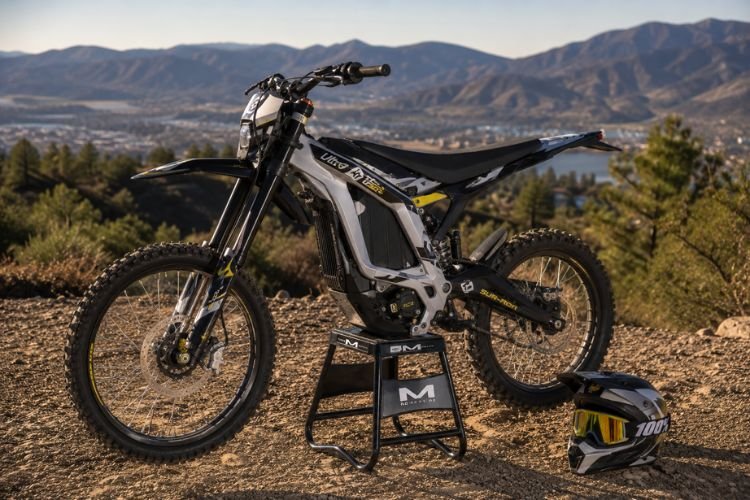
Sur Ron Ultra Bee Review: Quick Verdict
The Ultra Bee’s biggest strength isn’t one specification. It is how well the complete platform works together.
The bike is powerful enough for serious trail riding, compact enough to remain playful, and established enough that owners have access to a rapidly growing aftermarket. Electric Cycle Rider has gone as far as calling the 2025 Ultra Bee one of its favorite and most versatile electric dirt bikes, highlighting the platform’s build quality, geometry, upgrade potential, and improved power.
The updated model also addresses several limitations of the original. Sport mode now delivers much more power, the rear wheel is better suited to conventional off-road tire choices, and the suspension and frame have been strengthened. The tradeoff is additional weight, and riders who push hard may still want suspension tuning, better tires, or other setup changes.
| Category | Review Takeaway |
|---|---|
| Power | Strong, especially on the updated model |
| Acceleration | Punchy and responsive |
| Top Speed | Motorcycle-level performance |
| Range | Good capacity, but aggressive riding reduces it quickly |
| Handling | Agile for a mid-weight electric dirt bike |
| Suspension | Improved, but advanced riders may still want tuning |
| Brakes | Good stock performance |
| Build Quality | One of the platform’s strengths |
| Aftermarket | Excellent and continuing to grow |
| Beginner Friendly | Better for riders with some experience |
| Maintenance | Simpler than gas in some areas, but still a dirt bike |
| Overall | One of the most versatile mid-weight electric dirt bike platforms |
If you’re looking for the absolute lightest e-moto, the Ultra Bee probably isn’t it. If you want full-size motocross power and suspension, something like a Stark Varg belongs in another performance category. But if you want something between those extremes, the Ultra Bee makes a lot of sense.
The Ultra Bee was created to fill the substantial gap between Sur Ron’s lightweight Light Bee platform and the much larger Storm Bee. The original model already made that purpose clear: approximately 187 pounds, 12.5 kW peak power, a removable 74V 55Ah battery, 19-inch wheels, 240 mm of suspension travel, and a claimed top speed around 56 mph.
That combination created something that felt different from both an upgraded Light Bee and a conventional dirt bike.
It had enough mass and chassis structure to feel more planted than lightweight e-motos, while remaining compact enough to move through technical terrain without the physical commitment of a full-size motorcycle.
More importantly, riders quickly discovered that the Ultra Bee was an excellent modification platform. Wheels, suspension, controllers, power upgrades, tires, handlebars, protection components, and other aftermarket parts expanded rapidly. Electric Cycle Rider’s heavily modified Ultra Bee has even been tested alongside the much more powerful Stark Varg, illustrating just how far owners can take the platform.
That aftermarket flexibility remains one of the Ultra Bee’s strongest selling points.
If you’re researching the Ultra Bee today, this is one of the most important sections to understand.
The original Ultra Bee and updated 2025 model aren’t identical motorcycles.
According to Electric Cycle Rider’s 2025 first-ride testing, the newer version moves from the earlier 12.5 kW peak output to 18 kW in Sport mode, with a short-duration 21 kW Turbo mode. Battery capacity increases from 74V 55Ah to 74V 60Ah, or approximately 4.4 kWh. The motor design, controller, battery management, suspension, frame, primary drive, rear wheel, and riding features were also revised.
The bike became heavier in the process, with the updated version reported at around 195 pounds.
| Specification | Earlier Ultra Bee | 2025 Ultra Bee |
|---|---|---|
| Battery | 74V 55Ah | 74V 60Ah |
| Approx. Capacity | 4.1 kWh | 4.4 kWh |
| Peak Power | 12.5 kW | Up to 21 kW Turbo |
| Sport Mode | Earlier powertrain | 18 kW |
| Front Wheel | 19 in | 19 in |
| Rear Wheel | 19 in | 18 in |
| Suspension Travel | Approx. 240 mm | Approx. 240 mm |
| Weight | Approx. 187 lb | Approx. 195 lb |
| Turbo Mode | No | Yes |
| Crawl Mode | No | Yes |
These changes are large enough that buyers should always check which model year a review, range test, or used-bike listing refers to.
The original Ultra Bee wasn’t slow, but power was one area where experienced riders frequently saw room for improvement. The updated bike addresses that directly.
Moving to 18 kW in Sport mode creates a substantial difference in real-world acceleration compared with the earlier 12.5 kW platform. Turbo mode can briefly provide the full 21 kW output when additional performance is needed. Electric Cycle Rider found the extra power immediately noticeable during its first ride, particularly because the increase isn’t limited to a headline peak number—the stronger Sport mode is available during normal riding.
That’s an important distinction.
A huge peak-power figure that can only be accessed briefly isn’t necessarily as useful as strong sustained output. For trail riding, corner exits, hill climbs, and open sections, the power you can repeatedly use matters more than a maximum figure achieved under limited conditions.
The updated Ultra Bee has moved much closer to the performance level many owners previously tried to reach through controller and power upgrades.
More power isn’t always easier to ride.
Electric Cycle Rider found the updated Ultra Bee noticeably punchier than the earlier bike. Its softer F1 throttle map was considered the most manageable for trail use, while more aggressive settings could feel overly sensitive. In a later comparison with the Zero XE, testers again noted that the Ultra Bee hit harder but could feel jerkier at low speed than the smoother Zero.
This is important because technical riding requires precision.
When climbing over rocks, navigating roots, or trying to maintain traction on loose terrain, the ability to request a small amount of torque matters more than simply having a large amount available.
Experienced riders may enjoy the sharper response. Less experienced riders should spend time learning the softer throttle settings before deciding that maximum response is automatically better.
The Ultra Bee rewards good throttle control.
Top speed varies by model year, gearing, wheel setup, battery state, rider weight, terrain, and measurement method.
The original Ultra Bee was officially associated with approximately 90 km/h, or 56 mph, which is consistent with early published specifications.
For most off-road riders, however, maximum speed isn’t the most important performance metric. A bike capable of around 50–60 mph already has more speed than most technical trails allow you to use safely.
What matters more is how quickly the bike accelerates between corners, how well it maintains traction on climbs, and whether the chassis remains predictable when speed increases.
This is one reason the newer Ultra Bee’s additional power matters even if you aren’t interested in top-speed runs. Stronger acceleration can be useful throughout the riding experience.
On a dirt bike, speed rarely builds in a straight uninterrupted line.
You accelerate out of one corner, brake for the next, climb a technical section, cross rough terrain, slow for an obstacle, and accelerate again. That means usable acceleration can affect the riding experience much more frequently than absolute top speed.
The Ultra Bee’s relatively compact chassis helps here. It provides substantial electric torque without feeling as physically large as a full-size dirt bike.
This combination is one of the reasons the platform works so well for riders moving upward from a Light Bee X or similar lightweight e-moto. You get a noticeable increase in motorcycle capability without immediately moving to the size and power of a full motocross machine.
Handling is one of the strongest arguments for the Ultra Bee.
Despite its weight, the motorcycle has developed a reputation for feeling agile in technical terrain. In Electric Cycle Rider’s comparison with the Zero XE, testers found the Ultra Bee quicker to turn, easier to pivot, and easier to recover when a rider missed a line. The relatively low battery placement also contributes to the way the bike carries its mass.
This is a useful reminder that scale weight doesn’t tell the complete handling story.
A motorcycle can weigh more on paper yet feel easier to manage if the mass is positioned effectively. Center of gravity, geometry, wheel sizes, handlebar position, and suspension all influence how heavy a motorcycle feels once it’s moving.
At the same time, approximately 190+ pounds is still substantial compared with a Light Bee-style machine. You’ll notice that difference when lifting the bike, catching it after a mistake, or moving it around without power.
One of the smartest changes to the 2025 Ultra Bee is easy to overlook: the rear wheel moved from 19 inches to 18 inches while the front remains 19 inches.
The original 19/19 configuration helped keep the bike relatively compact, but it wasn’t ideal for riders wanting a broader range of traditional dirt-bike tires. Electric Cycle Rider previously experimented with 21/18 conversions and found that wheel changes could improve traction and stability, particularly compared with the original front-end geometry.
The updated 18-inch rear opens the door to a much wider selection of off-road rubber while providing additional sidewall compliance in rocks, roots, and rough terrain.
The remaining 19-inch front keeps the steering quick.
For tight trails, that can be enjoyable. Riders prioritizing higher-speed stability and rollover capability may still prefer a 21-inch front conversion.
The Ultra Bee’s suspension story has evolved along with the motorcycle.
The original platform offered approximately 240 mm of travel front and rear, but serious riders often looked toward suspension tuning or replacement as one of the most meaningful upgrades. Electric Cycle Rider’s dedicated suspension testing concluded that tuning the Ultra Bee suspension could be one of the most important modifications after changing the wheel setup.
The updated model attempts to address some of that from the factory.
For 2025, the fork structure was strengthened, with Electric Cycle Rider reporting increased rigidity and hydraulic bump stops designed to improve resistance to bottoming. The rear also received refinements aimed at better control under harder riding.
During testing, the revised front end felt more precise under braking and through square-edge impacts. The rear also appeared more composed than the earlier setup.
That doesn’t mean every rider will be satisfied.
Not necessarily.
For recreational trail riding, the stock suspension may be entirely adequate, particularly once it is correctly adjusted for rider weight and terrain.
Advanced riders are a different story. If you’re regularly hitting large jumps, racing enduro, riding fast through rough terrain, or pushing the motorcycle close to motocross speeds, suspension limitations become easier to expose.
Before spending money, however, set the bike up correctly.
Sag, compression, rebound, tire pressure, rider position, and wheel configuration can dramatically change how a motorcycle behaves. Replacing expensive components before understanding the stock setup is an easy way to spend money without knowing what problem you’re actually solving.
The Ultra Bee’s huge aftermarket means upgrades are always available later.
Strong acceleration requires equally serious braking.
The Ultra Bee uses motorcycle-style hydraulic disc brakes rather than the lighter bicycle-derived systems found on some smaller e-motos. The original published specifications listed 240 mm rotors front and rear, and the platform also incorporates regenerative braking strategies.
In more recent comparative testing, Electric Cycle Rider found the Ultra Bee’s braking performance good out of the box, with strong initial bite helped by the bike’s relatively compact dimensions and weight compared with larger competitors. Testers did note that upgraded pads could provide additional stopping performance for demanding riders.
For normal trail use, the stock braking package is one of the reasons the Ultra Bee feels more like a complete motorcycle than a heavily powered-up e-bike.
The Ultra Bee has now been around long enough that its appeal is no longer based solely on launch specifications.
Its forged aluminum chassis, substantial swingarm, full-size-style bodywork, large removable battery, stronger drivetrain components, and established aftermarket have helped the platform mature into something riders can configure for very different types of use.
Electric Cycle Rider specifically highlighted build quality when naming the 2025 Ultra Bee its most versatile electric dirt bike of the year, praising the geometry, full-size seat, plastics, chain, battery, motor, and upgrade potential.
That versatility may be more important than any single performance specification.
One rider can build an Ultra Bee for tight hard-enduro terrain. Another can move toward motocross. Someone else may leave it largely stock and use it as a recreational trail bike.
Few platforms in this category offer the same combination of factory capability and modification potential.
It depends on what you’re comparing it with.
Compared with a Light Bee X or other lightweight e-moto, yes, the Ultra Bee is noticeably heavier. The original was around 187 pounds, and the updated model moves closer to approximately 195 pounds according to current independent testing.
Compared with a full-size dirt motorcycle, however, the Ultra Bee can still feel compact and manageable.
This middle ground is the entire point.
The extra mass contributes to a more planted motorcycle feel, but you give up some of the bicycle-like flickability that makes smaller e-motos so entertaining.
If you spend most of your time lifting the bike over obstacles, doing extremely tight technical riding, or simply want the lightest possible machine, that weight deserves serious consideration.
If you want greater stability and a more substantial chassis, it may feel like a reasonable trade.
Performance explains why many riders become interested in the Sur Ron Ultra Bee, but battery behavior, range, charging, reliability, maintenance, and everyday usability determine whether it remains enjoyable after the first few months. This is especially important with the Ultra Bee because owners use it in very different ways. A rider exploring moderate trails isn’t putting the same demands on the battery and chassis as someone repeatedly climbing steep terrain or riding aggressively at high power.
The platform’s maturity is an advantage here. Compared with many newer electric dirt bikes, the Ultra Bee has been on the market long enough to generate independent tests, modification experience, and meaningful owner feedback. That doesn’t mean every internet complaint should be treated as a universal defect, but it does give prospective buyers a better picture of what ownership actually involves.
Battery capacity is one of the biggest differences between the earlier and updated Ultra Bee. The original bike used a removable 74V 55Ah lithium-ion pack, providing roughly 4.1 kWh of nominal energy. The updated 2025 model increases that to 74V 60Ah, or approximately 4.4 kWh. Electric Cycle Rider also reports an updated battery-management system designed to support the more powerful drivetrain.
The removable design remains an important practical advantage. A removable battery can simplify charging or storage for riders who don’t have a convenient electrical outlet beside the motorcycle. The tradeoff is weight. A battery this large isn’t something most people will casually carry long distances.
More capacity is welcome, but the updated bike also has substantially more power available. This means the battery increase shouldn’t automatically be interpreted as a proportional increase in real-world riding distance. If the additional performance encourages you to accelerate harder and ride faster, energy consumption can rise just as quickly.
This is one of the hardest questions to answer with one number.
Sur Ron has historically published range figures under specific test conditions, but real off-road riding rarely resembles a controlled range test. Terrain, elevation, rider weight, temperature, tire choice, tire pressure, riding mode, and throttle use all influence consumption.
A rider traveling at moderate speeds on relatively smooth terrain can cover considerably more distance than someone repeatedly climbing steep hills and accelerating hard out of every corner.
That’s why the best way to evaluate Ultra Bee range is not:
“What is the maximum number of miles anyone has achieved?”
The better question is:
“Does the battery comfortably cover the kind of riding I normally do?”
For most owners, that becomes much easier to answer after several rides on familiar routes.
The Ultra Bee makes aggressive riding tempting because electric torque is available immediately. But acceleration requires energy, and repeatedly accelerating the combined weight of motorcycle and rider can consume a significant portion of the battery.
Higher speeds create another problem: aerodynamic drag.
As speed increases, the energy required to push the motorcycle and rider through the air rises significantly. This means maintaining higher speeds can reduce range much faster than riders expect from looking at distance alone.
Steep climbs, soft sand, mud, and loose surfaces add additional resistance. A 20-mile technical ride can therefore consume more energy than a much longer relaxed ride under easier conditions.
This isn’t an Ultra Bee defect. It’s a fundamental characteristic of electric vehicle energy consumption.
This is an important ownership question because peak power isn’t useful if it remains available only at a very high state of charge.
Battery voltage changes as the pack discharges, and the motorcycle’s battery-management and controller systems determine how much power can safely be delivered at different states of charge and temperatures. Riders may therefore notice that maximum performance doesn’t feel identical throughout an entire battery cycle.
The practical approach is to judge the motorcycle by consistency rather than expecting the final 10% of the battery to behave exactly like the first 10%.
If performance changes dramatically or unexpectedly at a normal state of charge, especially when accompanied by warnings or unusual behavior, that deserves investigation. A gradual change under heavy use is different from a sudden unexplained loss of power.
Charging quickly becomes routine.
For riders with access to a suitable outlet where the motorcycle is stored, the process is straightforward: return from riding, inspect the bike, allow components to return to an appropriate temperature if necessary, and charge according to the manufacturer’s instructions.
The removable battery creates additional flexibility for riders who need to charge away from the motorcycle. However, because the pack is large and heavy, “removable” doesn’t mean particularly portable in the way a small commuter e-bike battery is.
Owners should use the correct charging equipment and avoid questionable third-party chargers or improvised electrical modifications. Pay attention to connectors, cables, unusual heat, charging errors, or abnormal battery behavior. Battery packs are expensive components, and good charging habits are much cheaper than careless experimentation.
Temperature matters both during riding and storage.
Lithium-ion batteries generally prefer moderate conditions. Cold weather can temporarily reduce available performance and range, while prolonged exposure to excessive heat can accelerate battery aging.
This means an Ultra Bee stored for months in an extremely hot environment may experience different long-term battery conditions from one stored appropriately indoors.
Long-term storage also requires more thought than simply leaving the motorcycle at whatever battery percentage remained after the final ride. Owners should follow Sur Ron’s current guidance regarding storage state of charge, temperature, and periodic checks.
No responsible review can promise that an Ultra Bee battery will last a specific number of years. Battery longevity depends on charging cycles, temperature, storage, discharge depth, riding conditions, and other variables.
The Ultra Bee’s physical dimensions are one of the reasons it works so well as a bridge between lightweight e-motos and full-size dirt bikes.
Compared with a Light Bee X, the cockpit feels considerably more motorcycle-like. There is more room to move, the seat and peg relationship is better suited to serious off-road riding, and the bike generally feels less cramped for adult riders.
At the same time, it doesn’t feel as physically imposing as many full-size dirt motorcycles. This can make it attractive to riders who want more space and stability without immediately stepping into a significantly taller or heavier machine.
Standing ergonomics matter particularly off-road. Riders should consider handlebar position, lever angle, footpeg placement, and body position rather than judging comfort only by the seat.
A setup that feels fine while sitting in a showroom may feel very different after an hour of standing through technical terrain.
It can be, particularly compared with smaller lightweight e-motos, but taller riders may still want ergonomic changes.
Handlebar height and position are relatively easy areas to personalize. Footpeg and seat options can also influence how much room a taller rider has while standing and transitioning between seated and standing positions.
The growing aftermarket is particularly valuable here. Rather than forcing every owner into one factory ergonomic setup, the Ultra Bee can be adapted relatively easily for different body types.
Still, riders significantly taller than average should test the bike if possible. “Bigger than a Light Bee” doesn’t automatically mean “full-size motocross ergonomics.”
Part 1 discussed the Ultra Bee’s strong overall construction, but long-term build quality is about more than how a motorcycle feels when new.
Off-road use places repeated stress on wheels, bearings, suspension pivots, fasteners, plastics, chain components, electrical connectors, and controls. Mud and water add contamination, while crashes introduce loads that no specification sheet can predict.
The Ultra Bee benefits from being a relatively established platform. Replacement parts and aftermarket components are widely discussed within the owner community, and many common setup questions have already been explored by riders and specialists.
That ecosystem reduces some of the uncertainty associated with buying a completely new electric dirt bike platform.
It doesn’t eliminate normal mechanical wear.
The Ultra Bee has an advantage over many recently launched competitors: more bikes have accumulated meaningful ownership time.
Overall, the platform has developed a reputation as a robust electric dirt bike, but that statement needs context. Reliability depends heavily on whether the motorcycle remains stock, how aggressively it’s ridden, how well it’s maintained, and whether electrical modifications remain within appropriate limits.
A stock recreational trail bike and a heavily modified machine producing substantially more power shouldn’t be treated as the same reliability case.
The most useful way to think about Ultra Bee reliability is by system. The motor and battery are only part of the motorcycle. Chain components, bearings, suspension, brakes, wheels, seals, fasteners, and controls all experience normal off-road wear.
A reliable electric motor doesn’t make the entire dirt bike maintenance-free.
No serious Sur Ron Ultra Bee Review should pretend that owners never encounter issues. At the same time, online reports need to be interpreted carefully because modification level and riding conditions vary enormously.
One recurring discussion involves suspension. The stock suspension can work well for recreational trail riding, but heavier or more aggressive riders may reach its limits. This is more of a setup and performance limitation than evidence that every Ultra Bee suspension system is defective.
Another concern is drivetrain wear and noise. Chains, sprockets, and primary-drive components experience significant torque. Proper adjustment and inspection are particularly important after hard off-road riding.
Bearings and linkage components also deserve periodic inspection, especially on motorcycles regularly exposed to mud, water, jumps, and impacts.
Electrical issues should be approached more cautiously. If the bike develops persistent error codes, charging problems, unusual power loss, or connector damage, owners should diagnose the cause rather than repeatedly resetting the system and continuing to ride.
The Ultra Bee’s electric motor may require less routine attention than a combustion engine, but the final drive still needs maintenance.
Chain tension should be inspected according to the manufacturer’s procedure. Too much slack can create noise, poor engagement, and additional wear. Too little slack can place unnecessary loads on bearings and drivetrain components as the suspension moves through its travel.
This is why simply tightening a noisy chain until the noise disappears isn’t good maintenance.
The chain also needs appropriate cleaning and lubrication, particularly after wet, muddy, dusty, or sandy rides. Sprocket condition should be checked at the same time because a worn chain running on worn sprockets can accelerate deterioration throughout the system.
Electric torque makes drivetrain condition worth taking seriously.
Less engine maintenance doesn’t mean no motorcycle maintenance.
Owners should regularly inspect tires, brakes, chain and sprockets, wheels, suspension, bearings, controls, fasteners, and electrical components. The exact service schedule should always come from the manual for the specific model year.
The maintenance pattern also depends on use. A rider covering clean, moderate trails may require fewer interventions than someone riding every weekend through mud, sand, rocks, and water.
After particularly demanding rides, inspection frequency should increase even if the odometer hasn’t reached a scheduled service interval.
Mileage tells only part of the story. Riding conditions tell the rest.
Tires are one of the most variable ownership costs.
The Ultra Bee has enough torque to wear a rear tire quickly if the rider regularly accelerates aggressively, particularly on hard surfaces. Off-road terrain creates different wear patterns: rocks can damage knobs and sidewalls, while low pressures can increase pinch and rim risks.
The updated 18-inch rear wheel is helpful because it gives owners access to a broader selection of traditional dirt-bike tires.
That makes it easier to choose rubber based on actual terrain rather than simply accepting the limited options available for an unusual wheel size.
Tire choice can significantly change the Ultra Bee’s personality. A setup optimized for soft terrain won’t necessarily feel ideal on hardpack, and a tire that works well on dirt may wear rapidly with frequent pavement use.
The Ultra Bee’s braking system is one of its stronger stock features, but brake pads remain consumable components.
Wear depends on rider weight, terrain, braking technique, contamination, and how frequently the motorcycle is ridden on long descents. Regenerative braking can reduce some reliance on the mechanical brakes, but it doesn’t eliminate the need to inspect pads and rotors.
Owners should become familiar with normal lever feel. A sudden change in lever travel, braking force, noise, or vibration deserves attention.
Brake maintenance isn’t an area where riders should wait for obvious failure. The Ultra Bee has enough speed and power that predictable braking should always be treated as essential.
There isn’t one useful annual number because rider behavior changes the answer dramatically.
Routine costs are primarily associated with tires, brake pads, chain and sprockets, cleaning and lubrication supplies, suspension service, bearings, and occasional damaged components.
Electricity is generally not the expensive part of ownership.
Major electrical components such as the battery, controller, and motor are different. They aren’t routine consumables, but replacement can be costly if eventually required outside warranty coverage.
Modification can also dramatically change ownership costs. An owner who leaves the motorcycle mostly stock may have a very different budget from someone adding suspension, wheels, controller upgrades, protection components, handlebars, and power modifications.
The Ultra Bee can be relatively straightforward to maintain.
It can also become a very expensive hobby if the aftermarket becomes part of the fun.
This deserves more attention because it’s one of the biggest reasons the platform remains competitive.
A new electric dirt bike may have better specifications in one or two areas, but specifications don’t tell you whether replacement wheels, brake components, suspension parts, protection, ergonomic upgrades, or drivetrain components will be easy to find two years later.
The Ultra Bee has already developed a large modification ecosystem.
That means owners can build the motorcycle around their needs rather than immediately replacing the entire platform when their riding progresses.
A recreational trail rider can keep the bike relatively stock. A hard-enduro rider can focus on protection, tires, gearing, and suspension. A motocross-oriented rider can move toward wheels and suspension better suited to jumping and higher speeds.
That flexibility adds value beyond the factory specification sheet.
Many routine mechanical tasks are approachable for owners with basic motorcycle maintenance experience and the correct tools.
Chain care, wheel removal, tire replacement, brake-pad inspection, control adjustments, and general chassis inspections are familiar motorcycle tasks.
Electrical work requires more caution.
The Ultra Bee uses a high-voltage battery system capable of delivering substantial current. Internal battery work, major wiring modifications, controller installation, or diagnosing serious electrical faults shouldn’t be treated like casual bicycle maintenance.
The best DIY owner isn’t the person who attempts every repair.
It’s the person who understands where normal maintenance ends and specialized electrical work begins.
This may be where the motorcycle makes its strongest argument.
There is no fuel to mix or store. There’s no conventional engine warm-up routine. You can prepare the motorcycle, switch it on, and ride. Afterward, basic ownership revolves around charging, cleaning, inspections, and scheduled mechanical maintenance.
The quiet drivetrain also changes the experience. You hear tire interaction, chain movement, suspension operation, and the terrain itself much more clearly than on a gas motorcycle.
That quietness is useful mechanically too. New noises can be easier to detect.
After several months, most owners probably won’t be thinking about the Ultra Bee’s peak-kilowatt figure every time they ride. They’ll care more about whether it starts reliably, covers the planned route, handles predictably, and requires a reasonable amount of attention between rides.
That’s what everyday ownership ultimately comes down to.
For certain riders, absolutely.
If your normal riding distance fits within the battery’s practical range, you have reliable charging access, and you enjoy electric power delivery, the Ultra Bee can replace a gas trail bike for a significant portion of recreational riding.
For other riders, gasoline remains more convenient.
Long riding days are the obvious example. Refueling a gas motorcycle takes minutes, while recharging an electric bike requires more planning. Riders who routinely cover large distances in remote terrain need to think carefully about energy availability.
A gas bike and an Ultra Bee also feel different. The lack of clutch and gears simplifies riding, but riders who enjoy manual transmission control may miss that interaction.
The Ultra Bee doesn’t need to replace every gas motorcycle.
Its value comes from being particularly good at the type of riding where its battery capacity, manageable size, quiet operation, and electric torque work together.
This is one area where buyers should never rely on assumptions.
The Ultra Bee’s power and speed generally place it outside ordinary low-power e-bike classifications. Registration, insurance, licensing, lighting requirements, and public-road eligibility depend on jurisdiction and the exact version being sold.
Some markets or configurations may have road-oriented equipment, while an off-road model shouldn’t automatically be considered street legal simply because it has an electric motor.
The same applies to bicycle trails and public recreational areas. Quiet operation doesn’t automatically create legal access.
Check local regulations before purchasing if public-road or shared-trail use is important to you.
After looking at performance, handling, battery behavior, range, reliability, maintenance, and everyday ownership, the Sur Ron Ultra Bee becomes easier to understand. It isn’t trying to be the lightest e-moto or the most powerful full-size electric dirt bike. Its appeal comes from occupying the space between those two categories unusually well.
That distinction matters even more today because the Ultra Bee no longer competes in an empty market. Riders can choose lighter machines, newer high-output e-motos, and full-size electric motorcycles with considerably more performance. The question is therefore no longer whether the Ultra Bee is impressive. The question is whether its combination of size, capability, aftermarket support, and usability still makes sense for the person spending the money.
The Ultra Bee’s strongest qualities become clearer when they’re considered alongside the compromises. More power isn’t automatically better, and lower weight isn’t automatically better either. What matters is how the complete package fits your riding.
| Pros | Cons |
|---|---|
| Strong stock performance, especially on updated models | Heavier than Light Bee-style e-motos |
| Excellent balance between compact and full-size platforms | Aggressive throttle settings can feel sharp |
| Agile handling for its size | Serious riders may still want suspension tuning |
| Removable high-capacity battery | Battery is heavy to move regularly |
| Motorcycle-style brakes and chassis | Real-world range drops with aggressive riding |
| Strong aftermarket ecosystem | Charging can’t match gas-bike refueling speed |
| Broad tire and wheel upgrade options | Not automatically street legal |
| Mature platform with substantial owner experience | High-performance modifications can become expensive |
| Less combustion-related maintenance | Still requires normal dirt-bike maintenance |
| Good platform for rider progression | Complete beginners may prefer something lighter |
The important point is that most Ultra Bee disadvantages aren’t necessarily design failures. They’re consequences of where the motorcycle sits in the market. Making it substantially lighter would change its stability and durability. Making it dramatically more powerful would move it closer to full-size electric motorcycle territory.
For the right rider, yes.
The strongest value argument isn’t based solely on motor power. Newer competitors can challenge or exceed the Ultra Bee in individual specifications. The value comes from receiving a capable motorcycle with an established chassis, removable battery, usable stock suspension and brakes, a large owner community, and an aftermarket that allows the bike to evolve.
This matters more than it may initially appear.
When buying a relatively new electric dirt bike platform, you’re also buying into its future parts ecosystem. Tires will wear. Brake pads will need replacement. Suspension may eventually require service. Controls get damaged. Owners may want different wheels, protection, ergonomics, or gearing.
A mature platform makes those decisions easier.
The Ultra Bee becomes particularly good value for someone planning to keep the bike and gradually tailor it to a specific type of riding.
The Ultra Bee makes the most sense for riders who have outgrown lightweight e-motos but don’t necessarily want a full-size electric motocross bike.
A Light Bee X, Talaria, mountain bike, or e-bike rider looking for a meaningful step upward will immediately notice the difference in chassis, brakes, suspension, power, and physical size. Dirt-bike riders interested in electric motorcycles may also find the Ultra Bee easier to approach than smaller e-motos because the controls and riding position feel more motorcycle-like.
It’s particularly well suited to recreational trail riding, technical terrain, enduro-style riding, and riders who enjoy modifying their machines over time.
The Ultra Bee is also appealing if versatility matters more to you than winning one specification category.
A complete beginner may not need this much motorcycle.
The Ultra Bee is easier to manage than many full-size dirt bikes, but it still combines substantial torque with roughly 190+ pounds of motorcycle. Riders with no meaningful two-wheel experience may learn more comfortably on a lighter, less powerful platform.
It may also be the wrong choice for someone whose priority is extremely tight, low-speed technical riding where minimum weight matters above everything else.
At the opposite extreme, riders focused on motocross racing, large jumps, or maximum full-size performance may eventually find the Ultra Bee’s middleweight nature limiting. A purpose-built full-size electric dirt bike can make more sense there.
Finally, someone wanting primarily street transportation should consider whether an off-road-oriented Ultra Bee is the correct platform at all.
The Ultra Bee and Light Bee X share a brand, but they shouldn’t be treated as two versions of the same motorcycle.
The Light Bee X is much lighter and retains the bicycle-like agility that helped make it famous. It’s easy to move around, highly customizable, and supported by an enormous aftermarket. For tight recreational riding and riders who enjoy lightweight machines, that character remains extremely appealing.
The Ultra Bee moves decisively toward motorcycle territory. It has more power, more substantial suspension, stronger brakes, a larger battery, a roomier riding position, and greater high-speed stability.
| Category | Ultra Bee | Light Bee X |
|---|---|---|
| Overall Character | Mid-weight electric dirt bike | Lightweight e-moto |
| Power | Much stronger | More approachable |
| Weight | Heavier | Significantly lighter |
| Handling | Stable and motorcycle-like | Very agile and playful |
| Rider Space | Better for many adults | More compact |
| Trail Capability | Stronger stock package | Excellent for lighter trail use |
| Aftermarket | Excellent | Exceptional |
| Beginner Appeal | Better with prior experience | Easier entry point |
| Upgrade Potential | Very high | Extremely high |
If you already own a Light Bee X and constantly find yourself wanting more chassis, brakes, battery, and power, the Ultra Bee is a logical upgrade.
If what you love about the Light Bee is how light and playful it feels, moving to an Ultra Bee changes that character considerably.
This is a particularly interesting comparison because the two bikes appeal to many of the same performance-focused buyers.
The Altis Sigma places greater emphasis on very high stock output and headline performance. As discussed in our Altis Sigma Review, earlier production Sigma versions entered the market with approximately 22 kW peak output and 70+ mph capability, immediately positioning the platform as a serious high-performance alternative.
The Ultra Bee takes a different route. Its biggest advantage isn’t necessarily winning a peak-power comparison. Instead, it offers a mature platform, highly developed aftermarket, proven modification paths, broad owner knowledge, and a chassis that works particularly well for technical off-road use.
For a buyer, the decision shouldn’t simply be:
Which bike has more kilowatts?
A better comparison is:
Do you want maximum stock performance, or do you value platform maturity, handling character, and customization more?
A performance-focused buyer who wants substantial output straight from the factory may find the Sigma extremely attractive. A rider who values the Ultra Bee’s established ecosystem and versatile chassis may still prefer the Sur Ron even when another bike wins on paper.
The Ultra Bee also needs to be viewed in relation to motorcycles above it.
Full-size electric dirt bikes can provide more power, larger chassis dimensions, more serious suspension, and performance aimed at riders accustomed to motocross or full-size enduro motorcycles.
But those advantages come with additional size and weight.
That’s where the Ultra Bee remains interesting. It doesn’t attempt to duplicate a full-size motocross motorcycle. Instead, it offers enough motorcycle capability for serious trail use while retaining a compactness that makes technical terrain less physically demanding for many riders.
If you regularly ride motocross tracks and large jumps, a full-size machine may be worth the additional commitment.
If your riding includes tight trails, rocks, climbs, woods, and technical sections, the Ultra Bee’s smaller dimensions can become an advantage rather than a compromise.
Not universally.
That’s an important conclusion because the electric dirt bike market is evolving too quickly for one model to dominate every category.
Some newer competitors offer more peak power. Others may provide better stock suspension, different wheel configurations, newer electronics, or aggressive pricing.
The Ultra Bee’s response to those competitors is platform maturity.
There are already known solutions for many of the things owners want to change. There is a large community discussing setup. There are established wheel conversions, suspension options, tires, controls, protection components, and performance upgrades.
That doesn’t appear on a specification sheet, but it can matter significantly after the first year of ownership.
If you’re buying new and the updated version is officially available in your market, its additional power, larger battery, revised suspension, stronger drivetrain, and 18-inch rear wheel make a compelling case.
The older Ultra Bee shouldn’t automatically be dismissed, particularly on the used market.
An earlier bike in good condition at the right price can still make an excellent trail motorcycle. It may also already include useful upgrades such as wheels, suspension, tires, protection, or controls.
However, don’t value aftermarket modifications dollar-for-dollar when buying used. A heavily modified bike can be excellent, but it can also have experienced harder riding or contain electrical modifications that complicate reliability.
Condition and maintenance history matter more than the total price of the parts attached to it.
A used electric dirt bike deserves the same careful inspection as any performance motorcycle, plus additional attention to the battery and electrical system.
Inspect the frame, swingarm, wheels, suspension, bearings, brakes, chain, sprockets, controls, and fasteners for damage or unusual wear. Look underneath the motorcycle for evidence of hard impacts. Check fork and shock areas for leakage and inspect wheel and linkage movement for abnormal play.
The battery should charge normally and the motorcycle shouldn’t display unexplained error messages. Examine accessible connectors for damage or questionable modifications.
Ask about controller changes, power modifications, crashes, water exposure, and maintenance history.
A completely stock motorcycle with clear history can sometimes be a safer purchase than a heavily modified bike with an impressive parts list but little documentation.
No.
That’s worth stating clearly because the size of the Ultra Bee aftermarket can create the impression that the motorcycle arrives unfinished.
For recreational trail riding, many owners can ride the bike in stock form and make adjustments only as actual needs appear.
Tires are often one of the most meaningful places to start because traction influences acceleration, braking, cornering, and confidence simultaneously. Ergonomic adjustments can also make a major difference without dramatically changing the motorcycle.
Suspension becomes a sensible investment when rider weight, speed, terrain, or jumping genuinely exceeds the stock setup.
Power should usually come later.
Before adding more kilowatts, ask whether traction, braking, suspension, or rider skill is already the limiting factor.
Rather than immediately installing a controller, a sensible upgrade path begins with the rider.
Set lever position, handlebar position, suspension, and tire pressure correctly. Ride familiar terrain and identify what actually limits you.
If traction is the problem, look at tires.
If the motorcycle regularly bottoms or feels uncontrolled through rough terrain, investigate suspension setup.
If ergonomics make standing uncomfortable, address the cockpit.
If protection is inadequate for rocky riding, add the appropriate guards.
Only after those fundamentals are sorted does additional power become a particularly convincing upgrade.
The updated Ultra Bee already offers enough performance that many riders may never need more.
The Ultra Bee’s growing ownership history is increasingly valuable.
No dirt bike should be expected to remain perfect regardless of maintenance, and reliability reports need to account for modification. A stock motorcycle used recreationally isn’t experiencing the same stresses as one with significant power upgrades, oversized tires, repeated jumps, or hard enduro use.
For prospective owners, the encouraging aspect is that the Ultra Bee is no longer an unknown platform.
Common maintenance areas are well understood, replacement components are easier to find than on many newer models, and a substantial amount of community knowledge exists around setup and repair.
That reduces ownership uncertainty.
It doesn’t eliminate wear.
Electric motocross and electric enduro motorcycles can look very similar, and in some cases they even share the same motor,
Electric enduro motorcycles are becoming an increasingly appealing option for riders who want strong acceleration, precise low-speed control, and less

Electric enduro motorcycles are becoming an increasingly appealing option for riders who want strong acceleration, precise low-speed control, and less
The Talaria XXX Pro and Talaria Sting R MX4 are two popular options for riders looking for a lightweight electric
