Electric Motocross vs Electric Enduro: What’s the Difference?
Electric motocross and electric enduro motorcycles can look very similar, and in some cases they even share the same motor,

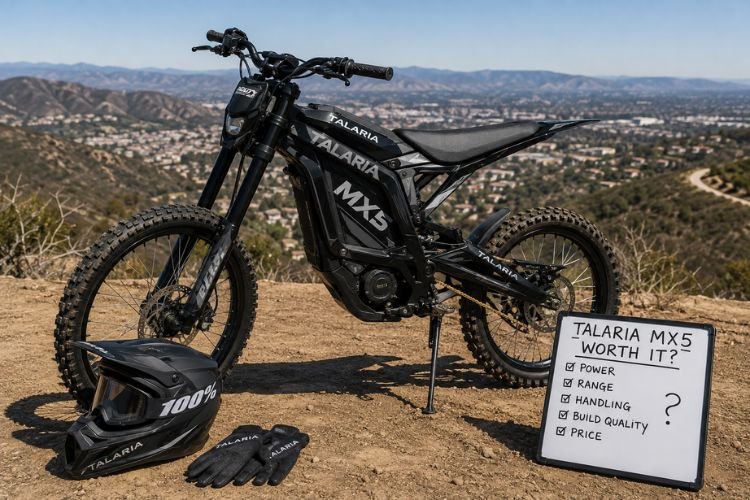
The Talaria MX5 Sting Pro arrived with a simple promise: take the familiar lightweight Talaria platform and give riders much more of what they had been upgrading themselves. More voltage, more power, stronger braking hardware, a revised gearbox, and a more serious overall package made the MX5 one of Talaria’s most important steps beyond the MX4 Sting R.
But is the Talaria MX5 worth it when there are now so many high-performance electric dirt bikes to choose from?
For many riders, the answer is yes. The MX5 offers a strong combination of stock performance and relatively manageable size, especially for someone who wants more than an entry-level e-moto but doesn’t want the weight and dimensions of a Sur Ron Ultra Bee-class motorcycle. The 72V electrical system and stronger factory hardware also mean fewer immediate upgrades than many older lightweight platforms required.
That doesn’t make the MX5 the automatic winner. Its additional performance comes with more weight and a higher price than earlier Talaria models, real-world range depends heavily on how aggressively you ride, and competition from E Ride Pro and other high-output lightweight e-motos has become much stronger. The right question isn’t whether the MX5 has good specifications. It clearly does. The question is whether those specifications translate into enough usable value for your riding.
The Talaria MX5 makes the most sense for someone who likes the agility and compact dimensions of lightweight electric dirt bikes but doesn’t want to immediately replace the battery, controller, brakes, and other major components to get serious performance. Its 72V architecture represents an important step beyond the MX4, while the factory package feels more prepared for the speeds and acceleration modern riders expect.
The MX5 is particularly attractive as an upgrade from older 60V platforms. Riders coming from a stock Sur Ron Light Bee X or earlier Talaria will notice the difference in acceleration and overall performance immediately. At the same time, the MX5 remains much closer to the lightweight e-moto concept than larger machines such as the Ultra Bee.
| Category | Talaria MX5 Takeaway |
|---|---|
| Power | Strong stock performance for a lightweight e-moto |
| Battery | 72V platform is a major improvement |
| Top Speed | Around the 60 mph class under suitable conditions |
| Acceleration | One of its strongest qualities |
| Range | Good, but strongly affected by riding style |
| Handling | Agile, although heavier than earlier lightweight platforms |
| Brakes | Major improvement over older e-moto hardware |
| Suspension | Capable for trail riding; demanding riders may want tuning |
| Drivetrain | Gearbox-based Talaria design |
| Upgrade Need | Lower than many older stock platforms |
| Beginner Friendly | Manageable in lower modes, but powerful |
| Overall Value | Strong if you actually use the additional performance |
The important phrase is if you actually use the additional performance. Someone who rides slowly around easy trails may be paying for capability they rarely need. For an experienced rider who regularly finds an MX4 or stock Light Bee X underpowered, the value equation looks very different.
The MX5 Sting Pro sits above the MX4 Sting R in Talaria’s lightweight off-road lineup and represents a meaningful electrical and hardware upgrade rather than a cosmetic refresh. One of the most significant changes is the move from the MX4’s 60V architecture to a 72V system.
That matters because voltage influences how an electric powertrain can deliver power. A higher-voltage system can support stronger performance without relying solely on increasingly extreme current levels. Of course, voltage alone doesn’t make a motorcycle good—the motor, controller, battery, BMS, gearing, cooling, and calibration still have to work together—but moving to 72V gave Talaria a stronger foundation for the MX5’s increased output.
The MX5 also received hardware intended to match that additional performance, including stronger braking equipment and changes to the drivetrain. This is important because adding motor power to a lightweight chassis without improving the rest of the motorcycle can create an unbalanced product. Talaria’s approach with the MX5 is much closer to delivering a complete higher-performance package from the factory.
Specifications can vary slightly by market or distributor, so buyers should verify the exact motorcycle they’re ordering. For the widely sold MX5 Sting Pro configuration, however, the key numbers place it clearly above the MX4 generation.
| Specification | Talaria MX5 Sting Pro |
|---|---|
| Battery System | 72V |
| Battery Capacity | Commonly listed at 40Ah |
| Nominal Battery Energy | Approx. 2.9 kWh |
| Peak Power | Commonly listed around 13.4 kW |
| Claimed/Published Top Speed | Around 59–60 mph |
| Drivetrain | Gearbox + chain final drive |
| Wheels | 19-inch front / 19-inch rear stock configuration |
| Brakes | Upgraded 4-piston hydraulic system |
| Brake Rotors | Larger motorcycle/e-moto-oriented hardware |
| Riding Modes | Multiple power/regen settings depending on configuration |
| Weight | Roughly 160+ lb depending on specification |
These figures explain why the MX5 attracted so much attention. Around 13.4 kW of peak output in a machine that remains far lighter than a full-size dirt motorcycle creates an impressive power-to-weight experience.
Still, buyers shouldn’t choose it from the table alone. Battery energy, power, and maximum speed matter only when the chassis can put that performance to the ground predictably.
This is the real starting point of the article.
The MX5’s value isn’t that it is the cheapest way to enter electric dirt riding. It isn’t. Older Talaria models, used Light Bee X bikes, and other lower-powered platforms can cost less and may be entirely sufficient for casual riders.
Instead, the MX5’s value comes from how much upgrading it can potentially eliminate.
For years, one of the most common paths in the lightweight e-moto world was to buy a relatively modest stock bike and gradually replace the controller, battery, brakes, wheels, suspension, and other components. The final motorcycle could be excellent, but the total cost could easily move far beyond the original purchase price.
The MX5 arrives with a 72V battery system, substantially more stock power than earlier lightweight platforms, and brakes better suited to that performance. A rider who would otherwise purchase an MX4 and immediately begin chasing more power should therefore compare the finished cost of the build, not just the initial prices of the two motorcycles.
On the other hand, if you enjoy building and customizing a motorcycle, or simply don’t need MX5-level performance, paying more for stronger factory hardware may provide less value.
The MX5’s approximately 13.4 kW peak-power figure is one of the specifications most frequently used to sell the motorcycle, but the riding experience is more important than the number itself. In a lightweight machine, that amount of power is enough to produce genuinely serious acceleration.
Electric torque arrives without waiting for engine rpm to rise or selecting another gear. Open the throttle and the motorcycle responds immediately, which makes the MX5 feel especially strong at the speeds riders frequently use on trails and short open sections.
This is also why the MX5 shouldn’t be treated as an ordinary e-bike. Its acceleration, mass, and speed move it firmly into high-performance motorized vehicle territory. Riders upgrading from lower-powered electric bicycles should give themselves time to adapt to the throttle rather than immediately riding in the most aggressive mode.
The useful part of the MX5’s additional output isn’t simply that it can reach a high maximum speed. The extra performance makes itself felt during hill climbs, corner exits, passing through soft terrain, and situations where a lower-powered machine begins to feel strained.
A trail exposes throttle calibration much better than a straight road.
In technical riding, you may need only a small amount of torque while balancing over rocks or roots. A few seconds later, you may want strong acceleration up a climb. The best electric dirt bike powertrain needs to deliver both without making the rider fight the throttle.
The MX5 gives riders enough performance that traction can become the limiting factor before motor output does. On loose dirt, excessive throttle simply spins the rear tire. This means experienced riders may find that learning to meter the MX5’s torque produces faster real-world riding than constantly asking for maximum power.
Riding modes are useful here. Lower-output settings aren’t just for beginners; they can also improve control when terrain is slippery or technical. Maximum power is most valuable when there is enough traction and space to use it.
This is an important part of deciding whether the MX5 is worth buying. The motorcycle provides performance headroom. Whether that headroom benefits you depends on terrain and riding skill.
The Talaria MX5 is generally associated with a top speed around 59–60 mph in stock form under suitable conditions. Exact results vary, and buyers should be cautious about treating any one test as a universal number.
Rider weight, battery state of charge, tire pressure, terrain, wind, temperature, gearing, and measurement method all influence top speed. A motorcycle display can also report a slightly different number from GPS.
For most trail riders, however, whether the MX5 reaches 58, 59, or 60 mph isn’t particularly important. Any of those speeds are already beyond what can safely be used on most technical off-road trails.
What matters more is how quickly the motorcycle reaches useful trail speeds and whether the chassis feels controlled when the pace increases.
In that sense, the MX5’s performance is more meaningful than its maximum-speed number. The additional power makes the motorcycle feel stronger throughout normal acceleration, not just during a top-speed attempt.
Sometimes, but not nearly as often as marketing might suggest.
On tight woodland trails, 60 mph may be irrelevant. Riders spend much more time moving between low and moderate speeds, braking for obstacles, navigating corners, and climbing. In those situations, throttle response and usable torque matter far more.
On open private property, wider trails, or suitable off-road environments, higher-speed capability can be valuable because it gives the motorcycle additional performance reserve. The MX5 doesn’t have to operate near its maximum speed to benefit from the stronger powertrain.
There is also a safety consideration. Speeds approaching 60 mph require appropriate protective equipment, tires, brakes, suspension, and rider judgment. The fact that an electric motorcycle is quiet and compact doesn’t reduce the energy involved in a crash at motorcycle speeds.
Acceleration is arguably more important than top speed on the MX5.
The combination of a 72V architecture, substantial peak output, and relatively low overall mass gives the motorcycle a strong power-to-weight ratio. Compared with older stock lightweight platforms, the difference should be immediately noticeable.
That acceleration is useful for more than entertainment. Strong midrange response helps on steep climbs and allows the rider to regain momentum quickly after technical sections. It also means the bike has more performance reserve when carrying a heavier adult rider.
The downside is that strong acceleration increases demands elsewhere. Rear tires wear faster when riders constantly use maximum torque. Chains and drivetrain components experience significant loads. Battery consumption rises. Braking and suspension become more important as average riding speed increases.
More performance isn’t free—it simply moves the limits to other parts of the motorcycle.
For someone already considering the MX4 Sting R, this is probably the most important early comparison.
The MX4 remains a capable electric dirt bike, and riders who prioritize lower purchase cost or don’t need maximum stock performance may still be perfectly happy with it. The MX5, however, moves to a 72V architecture and substantially stronger factory output, making it better suited to riders who would otherwise begin modifying an MX4 for more power.
This changes the buying calculation.
If you buy an MX4 and leave it stock, the lower price can make excellent sense. If you buy an MX4 and soon purchase a higher-performance controller, battery, brakes, and supporting hardware, the initial savings become much less meaningful.
For a performance-focused buyer, the MX5 can therefore be the cheaper decision over the complete build, even when it costs more on day one.
We’ll compare the two more deeply in Part 3, because power alone doesn’t determine which Talaria is the better purchase.
One of the MX5’s biggest strengths is that it provides significantly more performance without moving all the way into the dimensions of a larger mid-weight electric motorcycle.
That gives it a different personality from something like a Sur Ron Ultra Bee. The MX5 retains much of the agility riders expect from the lightweight e-moto category. Direction changes are relatively easy, the motorcycle is manageable on tighter terrain, and riders can move it around with less physical effort than a much heavier machine.
There is a tradeoff compared with earlier lightweight platforms. The MX5’s larger electrical system and stronger hardware add weight, so it doesn’t feel quite as featherweight as the lightest e-motos. Riders coming directly from a Light Bee-style machine may notice the difference during very slow maneuvers or when physically lifting the bike.
For many riders, though, the compromise works. The additional mass contributes to a more planted feel while the bike remains substantially easier to manage than a full-size dirt motorcycle.
Technical terrain is where weight, throttle control, geometry, and suspension have to work together.
The MX5’s compact dimensions are helpful when navigating tight corners, rocks, roots, and narrow sections. Electric power also removes the need to coordinate clutch and gear selection, allowing the rider to concentrate on line choice, balance, braking, and throttle.
Strong torque can be both an advantage and a challenge. On a steep climb with good traction, immediate electric response is extremely useful. On wet roots or loose rocks, too much throttle can instantly break traction.
This is why the MX5’s lower-output settings shouldn’t be dismissed once a rider becomes experienced. Sometimes less power at the rear wheel produces more forward progress.
For extremely tight hard-enduro riding, lighter bikes still have an advantage when riders need to repeatedly lift, pivot, or recover the motorcycle. For typical recreational trail riding, the MX5 strikes a useful balance between agility and stability.
Suspension needs to be judged in relation to the motorcycle’s increased performance. A fork and shock that feel acceptable at moderate speed can reveal limitations quickly when the motor allows the rider to approach rough terrain faster.
For recreational trail riding, the MX5’s stock suspension gives owners a usable starting point. It allows the motorcycle to be ridden seriously without making suspension replacement an automatic day-one requirement. Rider weight, terrain, and riding style will determine how long that remains true.
Heavier riders and those regularly hitting jumps or rough terrain at speed may eventually want more support or professional tuning. Before replacing anything, however, the stock setup should be adjusted properly. Sag, compression, rebound, tire pressure, handlebar position, and rider technique all influence how the suspension feels.
A poorly adjusted expensive fork can perform worse for a specific rider than properly set-up stock suspension.
That matters when considering value. The MX5 is worth more if the stock chassis already satisfies your riding needs. If your first plan is replacing the suspension, wheels, brakes, and several other major components regardless, a different starting platform may deserve consideration.
Braking is one of the areas where the MX5 needed to improve because motor performance increased substantially.
Earlier lightweight electric dirt bikes were often criticized for combining increasingly powerful aftermarket drivetrains with braking systems closer to heavy-duty mountain bike hardware. Once speeds and motorcycle mass rise, that approach becomes increasingly difficult to justify.
The MX5’s upgraded four-piston braking package and larger hardware are therefore more important than they might look on a specification table. Strong brakes allow the rider to use more of the motor’s performance confidently, but outright stopping force is only part of the equation. Modulation, lever feel, heat management, pad availability, and consistency on long descents all matter.
Aggressive riders may still experiment with pads or other brake components, but the key point is that Talaria recognized the relationship between acceleration and stopping performance. More motor power should be accompanied by a chassis capable of controlling it.
Talaria’s gearbox-based primary drive remains one of the platform’s distinguishing features compared with electric dirt bikes using a belt primary drive.
A gearbox has practical off-road advantages. There is no primary belt to worry about damaging or contaminating under harsh riding conditions, and the system provides a robust mechanical connection between the motor and final chain drive.
The tradeoff is maintenance.
Gear oil isn’t difficult or particularly expensive to service, but it does mean the MX5 isn’t a completely maintenance-free electric motorcycle. Owners need to follow the correct service intervals and use the appropriate lubricant specified for their model.
This is a good example of why “electric means no maintenance” is misleading. The MX5 eliminates oil changes associated with a combustion engine, but its gearbox, chain, brakes, suspension, tires, bearings, and other chassis components still require attention.
For most riders, no—and that’s one of the strongest arguments for buying it.
The MX5 is much closer to the performance level that owners of older lightweight e-motos often tried to build themselves. The 72V battery system, stronger stock output, upgraded brakes, and overall hardware mean there is less pressure to immediately begin replacing expensive components.
That doesn’t mean there is nothing worth changing. Tires may be a logical early upgrade depending on terrain. Ergonomic adjustments can improve comfort. Protection may be useful for rocky riding, and advanced riders may eventually want suspension tuning.
But those are changes based on personal use rather than fixing an obvious lack of stock performance.
A buyer who can purchase the MX5, set it up properly, and simply ride it is getting more value from the factory package than someone who immediately removes half of the original components.
Based on performance and chassis capability alone, the Talaria MX5 makes a strong case for its price. The move to a 72V system and approximately 13.4 kW peak output gives it the kind of stock performance that previously pushed many lightweight e-moto owners toward expensive battery and controller upgrades. Better braking hardware and a more performance-oriented overall package help ensure the additional power isn’t simply a number on a product page.
Its biggest strength is balance. The MX5 is significantly more serious than older lightweight platforms without making the full jump into the weight and dimensions of a Sur Ron Ultra Bee-class motorcycle. For riders who enjoy tight trails and lightweight handling but want considerably more factory performance, that middle ground is appealing.
The MX5 is less convincing for someone who doesn’t need the additional output. An MX4 or another lower-cost machine may provide better value for casual trail use, and riders focused entirely on maximum performance now have several aggressive competitors to consider.
So far, the answer to “Is the Talaria MX5 worth it?” is yes for performance-focused riders who intend to use what they’re paying for. But power and top speed only tell half the story.
Part 1 showed why the Talaria MX5 Sting Pro makes a convincing first impression. The 72V architecture, roughly 13.4 kW peak output, stronger brakes, and relatively compact chassis give it considerably more factory performance than earlier lightweight Talaria platforms. But a motorcycle isn’t worth buying simply because the first acceleration run is impressive. Battery range, charging, reliability, maintenance, consumable costs, comfort, and parts availability determine whether the MX5 continues to feel like good value after months of riding.
This is also where the MX5 has an advantage over buying an older platform and immediately modifying it. A factory-integrated battery, controller, motor, gearbox, and braking package gives the owner a known starting point. Modifications can certainly improve performance later, but many riders can leave the major electrical components alone and focus on riding.
The MX5’s move to a 72V battery system is one of the biggest reasons to choose it over the MX4. The commonly sold MX5 Sting Pro configuration uses a 72V 40Ah battery, giving roughly 2.9 kWh of nominal energy. Exact specifications should still be confirmed with the seller for the model year and market being purchased, particularly as manufacturers update products over time.
The important number for range comparisons isn’t simply 40Ah. Battery voltage matters too, which is why watt-hours provide a more useful measure when comparing different electric motorcycles. Approximately 2.9 kWh gives the MX5 a meaningful amount of stored energy for a relatively lightweight machine, but it doesn’t guarantee one fixed number of miles. Real-world range depends heavily on how the motorcycle is ridden.
A moderate rider on relatively smooth terrain may see surprisingly good efficiency, while aggressive off-road riding can consume the battery much faster. Repeated full-throttle acceleration, steep climbs, deep sand, mud, low tire pressures, aggressive knobby tires, heavier riders, cold temperatures, and sustained higher speeds all increase energy consumption. This is why maximum advertised range should never be interpreted as the distance every owner will achieve on a trail.
For practical ownership, the better question isn’t “What is the maximum range of a Talaria MX5?” It is “How much of the battery will my normal ride use?” After several rides on familiar routes, owners can establish a much more reliable personal range estimate than any laboratory-style specification can provide.
The MX5 creates a problem that affects nearly every high-performance electric dirt bike: having more power encourages you to use more power. The harder the motorcycle accelerates, the more energy it asks from the battery. At higher sustained speeds, aerodynamic drag also becomes increasingly significant, so doubling speed doesn’t simply double the energy required to move through the air.
Terrain compounds the effect. A long climb converts stored electrical energy into elevation, while soft surfaces increase rolling resistance. Combine high speed, repeated acceleration, steep terrain, and a heavier rider, and the difference between claimed range and actual trail range can become substantial.
For this reason, riders planning longer trips should leave a battery reserve instead of designing routes that require arriving at exactly zero percent. Terrain conditions can change, and the return portion of a ride may require more energy than expected. A range estimate that works on a dry summer trail may not reproduce itself in mud, cold weather, or deep sand.
This doesn’t mean the MX5 has poor range. It means performance and range are connected, and the rider controls a large part of that relationship.
Charging is one of the biggest lifestyle differences between an electric dirt bike and a gas motorcycle. Instead of visiting a fuel station or carrying gasoline, MX5 owners typically return from a ride and recharge at home. For someone who rides locally and has convenient access to power, that can be easier than dealing with fuel.
Charging time depends on the charger supplied with the exact bike, starting battery percentage, temperature, and battery configuration. Buyers should therefore verify the current charger specification rather than relying on a charging time quoted for another market or model year.
The basic habits are straightforward. Use the manufacturer-approved charging equipment, keep charging connectors clean and undamaged, and avoid improvised adapters or questionable third-party chargers. If the battery has been subjected to particularly hard riding or extreme temperatures, follow Talaria’s current instructions regarding when it should be charged.
Long-term storage also deserves attention. Lithium-ion batteries generally don’t benefit from being left indefinitely in extreme heat or at an inappropriate state of charge. If the MX5 will sit unused for a long period, follow the battery-storage recommendations in the manual for the specific version.
Battery lifespan can’t responsibly be reduced to “X years” or “X miles.” Lithium-ion degradation depends on temperature, charging cycles, depth of discharge, storage conditions, charging behavior, and how hard the battery is regularly used.
A lightly ridden MX5 stored in moderate conditions may age differently from one repeatedly discharged deeply, ridden at high output in hot conditions, and stored for long periods in excessive heat. Calendar age matters as well, even when the motorcycle isn’t accumulating mileage.
Prospective long-term owners should therefore think about battery replacement as a future ownership consideration rather than an annual maintenance expense. Before buying, it’s reasonable to ask the dealer how replacement batteries are sourced, what they currently cost, and what battery warranty applies.
A replacement battery is one of the most expensive individual components on an electric dirt bike. Knowing that it will remain available is part of assessing long-term value.
The MX5 benefits from Talaria already having experience with earlier Sting platforms. It isn’t a company’s first attempt at building an electric off-road motorcycle, and the gearbox-based drivetrain is a familiar part of the Talaria design philosophy.
Still, buyers should be cautious with broad claims such as “the MX5 is bulletproof.” Reliability depends on riding conditions, maintenance, manufacturing variation, crashes, water exposure, and modification. A stock motorcycle used for recreational trails isn’t the same reliability case as one running altered electrical settings and being repeatedly jumped or raced.
The useful way to evaluate MX5 reliability is by system. The battery and controller need to communicate correctly, the motor needs to manage heat and load, the gearbox needs appropriate lubrication, and the mechanical chassis still contains bearings, seals, brakes, wheels, suspension components, fasteners, chain, and sprockets that experience normal wear.
In other words, the absence of a gasoline engine simplifies some maintenance. It doesn’t make the rest of the motorcycle indestructible.
Searches for Talaria MX5 problems are common because buyers understandably want to know what could go wrong before spending thousands of dollars. The challenge is separating genuine recurring weaknesses from isolated owner experiences.
A forum post about one failed component doesn’t establish a model-wide defect. The same applies to unusual noises, electrical warnings, leaking suspension, brake issues, or battery behavior. Modification also matters because changing controller parameters, electrical components, gearing, wheels, or other systems can introduce stresses that don’t exist on a stock motorcycle.
For a prospective MX5 owner, several areas deserve routine attention without automatically being labeled defects. Monitor the gearbox for changes in sound or leakage, maintain correct chain tension, inspect wheels and spokes after hard riding, watch suspension seals, check brake-pad wear, and pay attention to charging behavior or unexplained electrical warnings. Fasteners should also be inspected periodically because off-road impacts and vibration can loosen hardware on any dirt motorcycle.
The right approach is preventive inspection rather than assuming every online complaint will happen to your bike.
Talaria’s gearbox is one of the clearest mechanical differences between its platform and electric dirt bikes using a belt for the primary reduction.
For off-road use, a gearbox can be appealing because there isn’t a primary drive belt exposed to the same concerns surrounding wear, contamination, or replacement. The system is robust and gives Talaria its distinctive drivetrain design.
The tradeoff is gear oil.
Gear oil needs periodic attention according to Talaria’s service instructions. Owners should use the correct lubricant and follow the service interval for their specific MX5 rather than applying a schedule taken from another Talaria model. The work itself isn’t particularly complicated, but ignoring it because “electric bikes don’t need oil changes” would be a mistake.
The gearbox may also produce mechanical sound that riders coming from belt-driven e-motos aren’t accustomed to. Learning the motorcycle’s normal drivetrain sound is useful. A consistent mechanical sound isn’t necessarily a problem; a sudden change in sound, vibration, leakage, or behavior deserves inspection.
For most owners, gearbox maintenance is a relatively small tradeoff for the drivetrain design.
The final drive still uses a chain, and the MX5’s stronger electric torque makes correct chain care important. The chain needs appropriate tension, cleaning, lubrication, and inspection, particularly after muddy, sandy, or wet rides.
Too much slack can increase noise and wear. Too little slack can be equally problematic because chain tension changes as the suspension moves through its travel. An excessively tight chain can place unnecessary loads on drivetrain components and bearings.
Sprockets should be inspected alongside the chain. Replacing a worn chain while ignoring badly worn sprockets can shorten the life of the new components. Aggressive riders should expect drivetrain wear to occur faster than it does for someone using moderate power on clean trails.
This is normal motorcycle maintenance, not evidence that the MX5 is unreliable.
The upgraded brakes are an important part of the MX5 package, but brake pads remain consumables. Rider weight, terrain, braking technique, contamination, speed, and long descents all affect how quickly they wear.
The increased performance of the MX5 can also accelerate tire wear. Riders who frequently use full electric torque on hard surfaces may wear a rear tire much faster than someone riding moderate dirt trails. Tire choice makes a significant difference here. A tire optimized for loose off-road terrain won’t necessarily provide ideal durability for riders spending substantial time on pavement.
This is another reason to avoid judging ownership cost from electricity alone. Charging an MX5 can be inexpensive compared with buying gasoline, but tires, brake pads, chains, sprockets, bearings, and suspension service still cost money.
The harder you ride, the more those consumables matter.
The stock suspension is capable enough that most recreational riders don’t need to replace it immediately, but suspension is still a service item. Fork seals can wear, fluid degrades, and internal components experience repeated cycles every time the motorcycle moves through its travel.
Dust and mud make seal cleanliness particularly important. A small amount of preventive care after dirty rides can reduce the chance of contamination being pulled into the fork.
Riders who jump frequently or ride rough terrain at high speed should inspect suspension and chassis components more often than someone using the bike casually. The same applies to steering and linkage bearings.
Off-road maintenance should be based partly on hours and severity of use, not only odometer mileage.
The MX5 remains relatively compact compared with larger electric dirt motorcycles, and that is both a strength and a limitation. Riders who enjoy lightweight e-moto ergonomics may immediately feel at home, while taller riders accustomed to full-size dirt bikes may find the cockpit more compact.
Handlebar position, lever angle, footpeg position, and standing posture all influence comfort. These are worth adjusting before purchasing expensive ergonomic parts. Small changes in control position can make a surprising difference when standing for long trail sections.
Seat comfort matters less during aggressive off-road riding because riders spend substantial time standing, but it becomes more noticeable during relaxed exploration or connecting sections. Taller riders may eventually look toward bar risers, different handlebars, peg options, or seat changes depending on their proportions.
The important point is that the MX5 is still a lightweight-category machine. Riders specifically wanting full-size dirt-bike ergonomics should test one before assuming additional motor performance also means a substantially larger cockpit.
The MX5 gained performance and hardware, and those improvements come with mass. Compared with a stock Light Bee X or some earlier lightweight platforms, it feels more substantial.
Whether that is a problem depends on terrain.
On faster trails, a little additional mass can contribute to stability. The bike can feel more planted and less nervous than an extremely light machine. During tight technical riding, however, every extra pound becomes more noticeable when changing direction, catching the motorcycle after a mistake, or lifting it after a fall.
This is one reason the MX5 occupies an appealing middle ground. It offers significantly more stock performance without moving into the approximately 190-pound-plus territory associated with larger mid-weight electric dirt motorcycles.
For many riders, that compromise is exactly what makes it attractive.
Build quality should be judged after use rather than by how the motorcycle looks when it comes out of the crate. After several hundred miles of off-road riding, owners should still expect controls to operate consistently, connectors to remain secure, wheels to stay properly maintained, and chassis hardware to hold up when inspected and serviced correctly.
New owners should establish a regular inspection routine. Check axle hardware, spokes, controls, brake components, chain condition, suspension seals, visible electrical connections, and key fasteners. After particularly hard rides, inspect sooner rather than simply waiting for a mileage interval.
Electric motorcycles can make this process easier in one respect: they’re quiet. With no combustion engine dominating the sound, riders can often hear changes in chain, gearbox, brakes, or chassis noise more clearly.
Don’t ignore a new sound simply because the motorcycle still moves normally.
There isn’t one useful annual number because riding style changes the answer too much. A casual owner and an aggressive off-road rider can have dramatically different tire, brake, drivetrain, and suspension expenses.
Routine costs primarily include gear oil, chain-care products, tires, brake pads, chain and sprockets, bearings, suspension service, and occasional damaged parts. Electricity for charging is generally a relatively small part of the overall cost.
Major electrical components are different. Batteries, motors, and controllers aren’t routine annual consumables, but replacement can be expensive if one eventually fails outside warranty. This is why warranty terms and replacement-part availability matter even if the motorcycle has been reliable so far.
Owners who modify heavily should also separate maintenance cost from hobby spending. New wheels, handlebars, suspension, controllers, cosmetic parts, and performance upgrades aren’t necessarily costs required to keep the MX5 operating.
Sometimes the most expensive part of owning an e-moto is discovering how many upgrades are available.
Talaria has a meaningful advantage here compared with newer brands entering the electric dirt bike market. The broader Sting platform is already well known, and the aftermarket has grown considerably.
That doesn’t mean every MX4 component automatically fits an MX5. Buyers should confirm compatibility rather than assuming that parts designed for earlier Talaria models transfer directly.
For long-term ownership, consumable and replacement parts matter more than cosmetic upgrades. Brake pads, chains, sprockets, bearings, drivetrain components, controls, chargers, and model-specific electrical parts need to remain accessible.
A good dealer adds real value because they can help identify the correct component rather than leaving the owner to guess from online listings.
It can be, but it isn’t the easiest possible first motorcycle.
The absence of a clutch and manual gearbox reduces the number of controls a new rider needs to manage. Lower-output riding modes can also make the motorcycle easier to learn. Those are genuine advantages.
The other side is performance. The MX5 has enough power to punish careless throttle inputs, and its speed requires serious braking judgment. A completely inexperienced rider doesn’t benefit from using maximum power immediately.
New riders should start with the least aggressive practical settings and spend time practicing slow-speed control, emergency braking, standing position, cornering, and smooth throttle application before increasing performance.
A lighter, lower-powered e-moto may be easier for a complete beginner. But someone with mountain-bike, e-bike, or motorcycle experience may adapt to the MX5 relatively quickly.
As a recreational off-road motorcycle, it can be very convenient. Charge at home, check the motorcycle, switch it on, and ride. There is no fuel to mix, no conventional engine warm-up, and no clutch or gearbox shifting to manage while riding.
As transportation on public roads, the answer becomes more complicated.
A Talaria MX5 shouldn’t automatically be treated as a conventional legal e-bike because it has pedals nowhere in the equation and electric propulsion. Its power and speed can place it in motorcycle or off-road motor-vehicle classifications depending on jurisdiction. Registration, licensing, insurance, lighting equipment, and road-use requirements vary significantly.
The same applies to bicycle paths and public trails. Quiet operation doesn’t automatically make a high-powered electric dirt bike legal wherever bicycles or low-power pedal-assist e-bikes are allowed.
Buyers planning to commute should verify local laws before making street use part of the value calculation.
Yes, and this may be one of the strongest arguments in its favor.
The MX5 arrives with enough stock performance that many riders don’t need to immediately purchase a controller or higher-voltage battery. That is very different from older lightweight e-moto ownership, where performance modifications often became part of the purchase plan before the motorcycle was even delivered.
A stock MX5 can therefore be financially sensible for someone who wants to ride rather than build.
That doesn’t mean modifications have no value. Tires, ergonomics, protection, suspension setup, and eventually other components can tailor the bike to specific terrain. But those upgrades can happen because the rider has identified an actual need, not because the stock motorcycle is fundamentally underpowered.
For buyers concerned about value, that distinction matters.
After looking at performance, battery capacity, real-world range, handling, maintenance, reliability, and everyday ownership, the Talaria MX5 Sting Pro becomes easier to evaluate. Its biggest advantage isn’t simply that it is faster than older Talaria models. The real improvement is that Talaria combined a 72V powertrain with stronger supporting hardware while keeping the bike within the lightweight e-moto category.
That makes the MX5 particularly relevant to riders who would otherwise buy a cheaper platform and immediately begin upgrading it. At the same time, the market has become much more competitive. The MX5 isn’t the only high-performance lightweight electric dirt bike available, so the final decision should come down to how much of its factory capability you actually need and whether another platform better matches your riding style.
The MX5 has relatively few weaknesses that completely undermine the package. Most of its disadvantages are tradeoffs created by increasing performance while trying to retain lightweight handling.
| Pros | Cons |
|---|---|
| Strong 72V factory powertrain | More expensive than lower-powered Talaria models |
| Around 13.4 kW peak output | Heavier than some lightweight e-motos |
| Strong acceleration | Hard riding can reduce range quickly |
| Improved braking hardware | Complete beginners may not need this much power |
| Gearbox-based primary drive | Gearbox requires oil maintenance |
| Agile compared with larger e-motos | Stock suspension may eventually limit aggressive riders |
| Good Talaria aftermarket support | 19/19 stock wheel setup isn’t ideal for everyone |
| Fewer immediate power upgrades needed | High torque can increase tire and drivetrain wear |
| Familiar Sting platform | Not automatically street legal |
| Strong overall performance-to-price proposition | Competition is much stronger than a few years ago |
For riders who actually want a fast lightweight e-moto, the advantages are meaningful. For someone who mostly rides casually at moderate speeds, however, some of what makes the MX5 more expensive may go unused.
For many buyers, this is the comparison that matters most.
The MX4 Sting R remains a capable electric dirt bike. It is lighter on the wallet, has an established owner base, and provides enough performance for recreational trail riding. Someone who doesn’t constantly chase more acceleration may never feel that the MX4 is inadequate.
The MX5 changes the equation for performance-oriented riders. Moving to a 72V architecture and approximately 13.4 kW peak output creates substantially more factory performance, while the upgraded braking and supporting hardware are designed around that higher capability.
The mistake would be comparing purchase prices without considering what happens afterward.
Suppose you buy an MX4 because it costs less, then decide you want considerably more power. A controller upgrade may lead to wanting a different battery. Increased speed may make stronger brakes more desirable. Additional performance can expose limitations elsewhere, and suddenly the cheaper motorcycle has become an expensive project.
An MX5 buyer can potentially avoid that process.
| Category | Talaria MX5 | Talaria MX4 |
|---|---|---|
| Electrical Platform | 72V | 60V |
| Stock Power | Significantly stronger | More moderate |
| Acceleration | Major advantage | Good for recreational use |
| Braking Hardware | Upgraded | Adequate for stock performance |
| Weight | Heavier | Lighter |
| Purchase Cost | Higher | Lower |
| Need for Power Upgrades | Lower | Higher for performance-focused riders |
| Best For | Riders wanting strong stock performance | Value-focused recreational riders |
If you intend to leave both motorcycles stock and don’t need MX5 performance, the MX4 can be the better value. If your first thought after buying an MX4 would be “How do I make this much faster?”, buying the MX5 from the beginning makes considerably more sense.
The Sur Ron Light Bee X remains an important comparison because it helped define the lightweight e-moto category and still benefits from one of the largest aftermarket ecosystems available.
Stock versus stock, however, the MX5 offers a substantial performance advantage. Its 72V architecture, stronger factory output, gearbox-based drivetrain, and upgraded brakes create a motorcycle that requires much less modification to reach serious performance.
The Light Bee X answers with weight, simplicity, and customization. It remains exceptionally playful, and the enormous aftermarket allows owners to transform almost every part of the motorcycle. For riders who enjoy the building process, that can be part of the appeal rather than a disadvantage.
The decision is therefore less about which brand is “better” and more about what you want to buy.
If you want a finished high-performance package from the factory, the MX5 has a strong argument. If you want an extremely established lightweight platform that you can gradually turn into your own custom build, the Light Bee X remains compelling.
There is also a handling difference. Riders who prioritize the lowest possible mass may prefer the Sur Ron’s lighter character, while the MX5 trades some of that lightness for substantially stronger stock performance.
E Ride Pro is arguably a more direct comparison because both platforms appeal to buyers who want strong performance without immediately beginning a major battery-and-controller build.
This comparison is also more model-year sensitive. E Ride Pro’s lineup has continued to evolve, and specifications can change as newer versions enter the market. Buyers should therefore compare the exact motorcycles available at the time of purchase rather than relying on an older comparison that treats a brand’s lineup as permanently fixed.
The Talaria’s strengths include its established Sting lineage, gearbox-based drivetrain, broad aftermarket, and familiar chassis. E Ride Pro has built its reputation around aggressive stock performance and has become an increasingly serious alternative for riders who prioritize factory output.
For many buyers, the decision may ultimately come down to four things: current price, exact model specifications, local dealer support, and riding feel.
A small difference in peak kilowatts matters less if one motorcycle fits you better, has stronger local parts support, or delivers throttle response you prefer on technical terrain.
Although these motorcycles aren’t direct equivalents, some riders will naturally cross-shop them.
The Ultra Bee is a more substantial motorcycle. It provides a larger chassis, roomier ergonomics, stronger motorcycle feel, and a platform designed to bridge the gap toward full-size dirt bikes. The tradeoff is significantly greater weight.
The MX5 remains much closer to the lightweight e-moto concept. It is easier to maneuver in tight terrain, easier to transport, and less physically demanding when the trail becomes awkward.
This means choosing the Ultra Bee simply because it is “more motorcycle” isn’t automatically an upgrade.
If you ride fast, open terrain and prefer full-size-style ergonomics, the Ultra Bee may make more sense. If your riding includes tight woods, technical trails, backyard-style riding, or situations where agility matters, the MX5 can actually be the more enjoyable tool.
The ideal MX5 buyer wants serious stock performance without giving up the compact character that makes lightweight e-motos appealing. It is particularly well suited to someone upgrading from a lower-powered Talaria, stock Light Bee X, conventional e-bike, or another lightweight electric platform.
Experienced riders who know they will want 72V performance can also save themselves from an expensive upgrade path by starting with the MX5. Rather than buying a motorcycle based on its potential and immediately replacing major electrical components, they get a strong battery, controller, motor, and braking package from the factory.
Trail riders are another good fit. The MX5 has enough power for steep climbs and faster sections while remaining manageable when trails tighten up. Riders who enjoy tuning tires, ergonomics, suspension, and protection can still personalize the motorcycle without needing to rebuild the entire powertrain.
The MX5 is harder to justify for riders who simply don’t need its performance.
A complete beginner may learn more comfortably on something lighter and less powerful. Lower riding modes can make the MX5 manageable, but buying 13.4 kW only to use a small fraction of it doesn’t automatically represent good value.
Very tall riders looking for full-size dirt-bike ergonomics should also test the MX5 before buying. Its increased performance doesn’t change the fact that it belongs to the compact e-moto category.
At the other end of the spectrum, riders focused on motocross-level jumping, high-speed competition, or full-size enduro riding may eventually want a larger chassis and more serious suspension platform.
Finally, if your main goal is legal street commuting, confirm local vehicle laws first. A high-powered Talaria shouldn’t be purchased under the assumption that it will automatically be treated like a conventional pedal-assist e-bike.
It can be, but it wouldn’t be our first recommendation for every new rider.
Someone with mountain-bike, e-bike, scooter, motorcycle, or dirt-bike experience may adapt relatively quickly. The lack of clutch and manual shifting simplifies operation, while lower-output modes allow the rider to gradually become familiar with the motorcycle.
A completely inexperienced rider faces a different situation. Strong electric torque arrives immediately, and the MX5 is capable of motorcycle-level speeds. Learning throttle control, braking, cornering, and body position on a less powerful platform can be easier.
If a beginner does choose the MX5, the smartest approach is to leave maximum performance alone initially. Smooth low-speed control is a much more important skill than discovering how quickly the bike accelerates.
A used MX5 can offer excellent value, but condition matters more than the size of the aftermarket parts list.
Begin with the mechanical components. Inspect tires, rims, spokes, brakes, chain, sprockets, suspension seals, bearings, frame, swingarm, controls, and signs of impact damage. Check the gearbox area for leakage and listen for drivetrain sounds that differ significantly from normal operation.
Then look at the electrical system. The bike should charge normally, power on consistently, and operate without unexplained error codes. Ask about controller changes, battery modifications, crashes, water exposure, and any wiring work.
Battery history deserves particular attention. Odometer mileage alone can’t tell you how the battery was charged, stored, or treated. A low-mileage motorcycle that spent long periods under poor storage conditions isn’t automatically healthier than a higher-mileage bike that was properly maintained.
Heavily modified examples require extra caution. Quality modifications installed correctly can improve a motorcycle, but unknown wiring changes and aggressive controller settings can complicate reliability and future diagnosis.
No. In fact, the ability to leave the major powertrain components alone is one of the reasons the MX5 is worth considering.
The first priority should be setup. Adjust lever position, handlebars, suspension settings, and tire pressures for the rider and terrain. Ride the motorcycle enough to establish what actually needs improvement.
Tires may be one of the first worthwhile changes because traction affects acceleration, climbing, braking, and cornering simultaneously. Protection can be valuable in rocky terrain, and taller riders may benefit from ergonomic changes. Faster or heavier riders may eventually investigate suspension tuning.
Additional power should be much farther down the list for most people.
If 13.4 kW isn’t enough because the rear tire is constantly spinning, another controller isn’t solving the actual problem.
The answer can be reduced to one idea: factory integration.
Instead of treating the motorcycle as a starting point for an expensive electrical build, Talaria gives the MX5 a 72V system and enough output to satisfy many riders in stock form. Supporting changes to the braking and drivetrain package make that performance more usable.
This matters financially. The cost of a motorcycle shouldn’t be measured only on purchase day. A cheaper platform plus battery, controller, brake, and supporting upgrades can eventually cost substantially more than a stronger stock motorcycle.
Factory integration can also reduce complexity. When battery, BMS, controller, and motor are designed to work together, the owner avoids some of the compatibility and troubleshooting challenges that can accompany heavily modified builds.
That doesn’t make stock automatically better than modified. It simply gives the MX5 a strong value proposition for riders who prefer riding over building.
If you don’t need the performance, you aren’t getting much benefit from paying for it.
A recreational rider who spends most of the time at low speeds may be perfectly satisfied with an MX4 or another less expensive machine. Someone who knows they will replace the suspension, wheels, battery, controller, brakes, and other major components regardless may also want to compare platforms based on chassis and aftermarket potential rather than stock equipment.
Likewise, a buyer requiring full-size motorcycle ergonomics may be better served by moving into another category rather than trying to turn the MX5 into something it wasn’t designed to be.
Value is personal because unused capability still costs money.
Electric motocross and electric enduro motorcycles can look very similar, and in some cases they even share the same motor,
Electric enduro motorcycles are becoming an increasingly appealing option for riders who want strong acceleration, precise low-speed control, and less
Electric enduro motorcycles are becoming an increasingly appealing option for riders who want strong acceleration, precise low-speed control, and less
The Talaria XXX Pro and Talaria Sting R MX4 are two popular options for riders looking for a lightweight electric
