Electric Motocross vs Electric Enduro: What’s the Difference?
Electric motocross and electric enduro motorcycles can look very similar, and in some cases they even share the same motor,

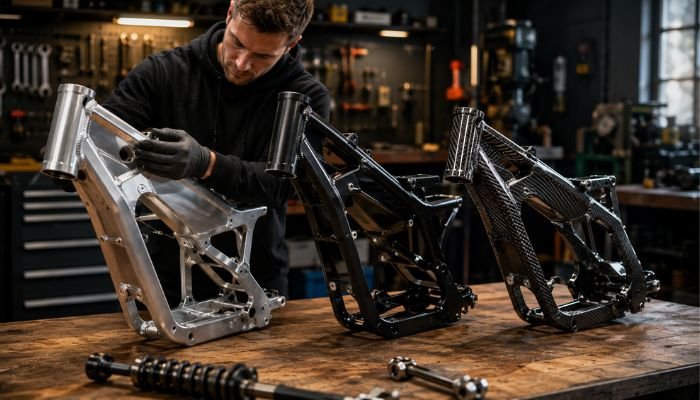
When shopping for an electric dirt bike, most riders compare specifications like motor power, battery capacity, top speed, and suspension travel. While those numbers are important, there’s another component that has a major impact on how a bike feels on the trail—the frame.
The frame is the backbone of every electric dirt bike. It supports the battery, motor, suspension, and rider while absorbing thousands of impacts from rocks, jumps, roots, and rough terrain. The material used to build that frame directly influences the bike’s weight, durability, handling, and long-term reliability.
Most modern electric dirt bikes use aluminum alloy frames, but you’ll also find steel, chromoly steel, and, in rare cases, carbon fiber. Each material offers a different balance of strength, stiffness, weight, repairability, and cost.
Understanding these differences can help you choose the right bike for your riding style, whether you’re exploring forest trails on weekends, riding technical singletrack, or pushing your limits on motocross-style tracks.
In this guide, we’ll explain how electric dirt bike frame materials compare, why manufacturers choose certain materials, and what really matters when buying your next bike.
Most modern electric dirt bikes use aluminum alloy frames because they provide the best balance of lightweight construction, strength, corrosion resistance, and handling. Steel frames are heavier but extremely durable and easier to repair, making them a practical option for budget or heavy-duty applications. Chromoly steel offers improved strength with less weight than traditional steel, while carbon fiber remains rare in electric dirt bikes due to its high cost and limited resistance to repeated off-road impacts.
Choosing the best frame material depends less on finding the “strongest” option and more on selecting the one that matches your riding style, terrain, and budget.
Many riders assume the motor or battery has the biggest influence on performance.
While both are important, the frame determines how efficiently every other component works together.
A well-designed frame affects:
Unlike electric commuter bikes that spend most of their time on paved roads, electric dirt bikes are built for environments that constantly challenge the frame.
These bikes regularly encounter:
Every impact travels through the wheels, suspension, and finally into the frame.
That’s why material selection matters so much.
One of the biggest advantages of electric dirt bikes is their agility.
A lighter frame doesn’t simply reduce total weight—it changes how the bike behaves.
Benefits of a lighter frame include:
However, lighter isn’t always better.
Engineers must balance weight reduction with structural strength, especially for aggressive off-road riding.
Electric dirt bikes produce instant torque.
Unlike gasoline engines that gradually build power, electric motors deliver maximum torque almost immediately.
This places significant stress on the frame around areas such as:
A strong frame distributes these forces evenly while maintaining precise handling.
Another important characteristic is stiffness.
Stiffness describes how much a frame flexes under load.
A frame that’s too flexible may feel unstable during aggressive riding.
A frame that’s too stiff may transfer more impacts directly to the rider.
Manufacturers carefully tune frame stiffness to balance:
This is one reason why two electric dirt bikes made from the same material can feel completely different on the trail.
Many online articles compare aluminum, steel, and carbon fiber using examples from electric bicycles.
While those comparisons are useful, electric dirt bikes place far greater demands on their frames.
Electric bicycles are primarily designed for:
Electric dirt bikes, on the other hand, must withstand:
These conditions require stronger frame designs and more robust construction methods.
This is why you’ll rarely see lightweight carbon fiber frames on modern electric dirt bikes, even though they’re common on premium road and mountain bikes.
Durability often matters more than achieving the lowest possible weight.
Although manufacturers use different manufacturing techniques, most electric dirt bike frames are built from one of four materials.
| Frame Material | Weight | Strength | Typical Use |
|---|---|---|---|
| Aluminum Alloy | Lightweight | High | Most modern electric dirt bikes |
| Steel | Heavy | Very High | Budget and heavy-duty models |
| Chromoly Steel | Moderate | Excellent | Premium steel applications |
| Carbon Fiber | Very Lightweight | High | Rare specialty models |
Each material has its own advantages and compromises.
Understanding these trade-offs is far more useful than assuming one material is universally better.
Aluminum alloy has become the industry standard for modern electric dirt bikes.
Manufacturers such as Sur Ron, Talaria, Altis, E Ride Pro, and many others use aluminum alloy because it offers an excellent combination of low weight, high strength, and corrosion resistance.
Contrary to popular belief, manufacturers don’t choose aluminum simply because it’s lighter.
They choose it because it delivers one of the best overall strength-to-weight ratios available for off-road riding.
An aluminum frame offers several important advantages for electric dirt bikes.
A lighter frame improves handling by making the bike easier to control through tight turns and technical terrain.
Reducing weight also helps riders change direction more quickly and decreases fatigue during longer rides.
Unlike untreated steel, aluminum naturally forms a protective oxide layer that helps resist corrosion.
This makes aluminum frames especially suitable for riders who frequently encounter:
Although proper cleaning is still important, aluminum generally requires less corrosion protection than steel.
Modern aluminum alloys are engineered to provide impressive strength without excessive weight.
When combined with advanced manufacturing processes, aluminum frames can withstand the demanding conditions of off-road riding while remaining relatively lightweight.
This balance is one of the main reasons aluminum dominates today’s electric dirt bike market.
Because aluminum is both lightweight and relatively stiff, it creates a responsive riding feel.
Many riders notice:
These characteristics make aluminum particularly popular among riders who value agility and performance.
One of the biggest myths is that aluminum is weaker than steel.
In reality, comparing frame materials isn’t that simple.
Frame strength depends on many factors, including:
A well-engineered aluminum frame can easily outperform a poorly designed steel frame.
That’s why manufacturers focus on complete frame design rather than material alone.
Although aluminum is an excellent choice for most riders, it isn’t perfect.
Compared with steel, aluminum generally has:
Fortunately, modern suspension systems compensate for much of the reduced frame flex, allowing manufacturers to prioritize lightweight performance without sacrificing ride quality.
For most recreational and performance riders, these trade-offs are well worth the benefits.
Before aluminum became the standard for modern electric dirt bikes, steel was the material of choice for many motorcycles and off-road machines. Even today, steel remains popular in certain applications because of its durability and ability to withstand years of demanding use.
Although relatively few high-performance electric dirt bikes use traditional steel frames today, the material still offers several advantages that make it a practical choice for specific riders.
Steel has an excellent reputation for handling heavy loads and repeated impacts.
For electric dirt bikes, this means a well-built steel frame can tolerate:
This toughness has made steel a trusted material in off-road motorcycles for decades.
Unlike aluminum, steel naturally flexes slightly under load.
This controlled flexibility can help absorb some of the harsh impacts generated during off-road riding.
Some riders describe steel-framed bikes as feeling more forgiving on rough terrain because they transmit fewer vibrations directly to the rider.
However, frame flex is carefully engineered. Too much flexibility can reduce steering precision, while too little can make a bike feel harsh.
One of steel’s biggest advantages is repairability.
If a steel frame becomes damaged, experienced fabricators can often:
Repairing aluminum requires specialized welding techniques and heat treatment, making it more complicated and often more expensive.
For riders who frequently travel to remote areas or keep their bikes for many years, this can be an important consideration.
Despite its durability, steel has several drawbacks that explain why most manufacturers have moved toward aluminum.
Weight is steel’s biggest disadvantage.
A heavier frame can affect:
Electric dirt bikes already carry a large battery pack, so adding unnecessary frame weight reduces some of the agility riders expect.
Unlike aluminum, steel can rust when protective coatings are damaged.
Regular maintenance is especially important if you ride in:
Cleaning and drying the frame after each ride helps prevent long-term corrosion.
Not all steel is created equal.
Chromoly steel, commonly known as 4130 chromoly, is a premium alloy that contains chromium and molybdenum.
These additional elements improve strength while allowing manufacturers to use thinner tubing than traditional steel.
The result is a frame that offers many of steel’s advantages without as much weight.
Compared with standard steel, chromoly offers:
Because it balances strength and controlled flex, chromoly has long been a favorite material for motocross bikes, BMX bikes, roll cages, and racing applications.
Although aluminum dominates today’s electric dirt bike market, chromoly is still respected for its rugged performance.
Chromoly is often chosen when manufacturers want:
For aggressive trail riding and repeated jumps, chromoly remains one of the strongest frame materials available.
Its primary disadvantage is manufacturing cost, which is higher than ordinary steel.
Carbon fiber is widely used in high-end road bikes and mountain bikes, leading some riders to wonder why it isn’t common on electric dirt bikes.
The answer lies in the very different demands of off-road riding.
Electric dirt bikes experience repeated heavy impacts that require exceptional toughness as well as stiffness.
Carbon fiber excels in lightweight applications but is less practical for bikes that regularly endure crashes, jumps, and rock strikes.
When properly engineered, carbon fiber offers several impressive benefits.
Carbon fiber is significantly lighter than both aluminum and steel.
Reducing frame weight can improve:
This is one reason carbon dominates competitive cycling.
Carbon fiber does not rust.
Riders in wet environments don’t need to worry about corrosion affecting the frame itself.
Unlike metal frames, carbon fiber can be designed with different stiffness characteristics in different areas.
Engineers can increase rigidity around the head tube while allowing more compliance elsewhere.
This level of tuning is difficult to achieve with traditional metals.
Despite these advantages, carbon fiber has several limitations for aggressive off-road riding.
These include:
For most riders, the small weight savings do not justify the additional cost and reduced practicality.
As a result, carbon fiber remains uncommon in today’s electric dirt bike market.
Understanding the strengths and weaknesses of each material makes it easier to choose the right bike.
| Material | Weight | Durability | Corrosion Resistance | Repairability | Common on Electric Dirt Bikes |
|---|---|---|---|---|---|
| Aluminum Alloy | Excellent | Very Good | Excellent | Moderate | Very Common |
| Steel | Fair | Excellent | Fair | Excellent | Less Common |
| Chromoly Steel | Good | Excellent | Good | Very Good | Limited |
| Carbon Fiber | Excellent | Good | Excellent | Difficult | Rare |
The table highlights an important point:
There is no perfect frame material.
Every design represents a balance between performance, durability, manufacturing cost, and intended use.
Frame material influences more than just the bike’s overall weight.
It also affects how the bike responds to rider input and challenging terrain.
Lighter frames generally feel more agile when entering and exiting corners.
Aluminum frames are known for their responsive steering, allowing riders to change direction quickly on technical trails.
Steel frames often feel slightly more planted because of their additional weight, although this can reduce agility in tight sections.
During steep climbs, every pound matters.
A lighter frame requires less energy to move uphill, helping improve efficiency and reducing rider fatigue.
While the motor provides most of the climbing power, reducing unnecessary weight still benefits overall handling and battery consumption.
Landing after jumps places enormous stress on an electric dirt bike.
The frame must distribute these forces without compromising structural integrity.
Material selection is important, but suspension setup, wheel quality, and overall frame design play an even larger role in absorbing repeated impacts.
A well-designed aluminum frame can comfortably handle demanding off-road riding when paired with quality suspension components.
Technical trails require constant adjustments in body position and steering.
A lightweight frame generally feels more responsive when navigating:
However, rider skill often has a greater influence on performance than small differences in frame material.
Many riders spend hours comparing aluminum versus steel while overlooking something even more important: frame geometry.
Geometry determines how a bike behaves long before the frame material becomes noticeable.
Important geometry measurements include:
These dimensions affect:
For example, two electric dirt bikes may both use aluminum alloy frames, yet feel completely different because their geometry is designed for different riding styles.
Manufacturers carefully combine frame material with geometry, suspension, and chassis design to create a balanced riding experience.
That’s why choosing a bike based solely on frame material rarely tells the full story.
One of the biggest misconceptions about aluminum frames is that they’re simply made from lightweight metal tubing.
In reality, modern electric dirt bike frames are the result of advanced engineering and manufacturing techniques designed to maximize strength while keeping weight to a minimum.
Instead of relying on thicker material, manufacturers improve frame performance through smart design.
Many premium electric dirt bike manufacturers use hydroforming, a manufacturing process that shapes aluminum tubes using high-pressure hydraulic fluid.
Unlike traditional round tubing, hydroformed tubes can be engineered with different shapes and wall thicknesses to strengthen specific areas of the frame.
This offers several advantages:
Hydroforming allows engineers to reinforce high-stress areas without making the entire frame heavier.
After welding, many aluminum frames undergo heat treatment to restore strength lost during the manufacturing process.
Heat treatment improves:
This is one reason why a high-quality aluminum frame performs far better than simply comparing raw material properties.
Some sections of an electric dirt bike frame experience much higher loads than others.
Manufacturers often reinforce these areas using gussets or additional material around:
These reinforcements help distribute impact forces throughout the frame instead of concentrating stress in one location.
Unlike traditional dirt bikes, electric dirt bikes must support a large battery pack inside the frame.
This changes how the chassis is engineered.
Manufacturers carefully position the battery to:
The frame and battery enclosure are often designed together rather than as separate components.
Whether you’re buying a new or used electric dirt bike, inspecting the frame is one of the most important steps.
A clean-looking bike isn’t always a structurally sound one.
Taking a few minutes to inspect critical areas can help you avoid expensive repairs later.
Welds are among the highest-stress areas on any frame.
Look carefully for:
Pay particular attention to:
Any visible cracking should be professionally evaluated before riding.
Minor cosmetic scratches are normal after off-road riding.
However, deep dents or gouges may indicate a significant impact.
Inspect areas around:
Large dents can weaken the frame by concentrating stress in a smaller area.
Aluminum does not rust like steel, but corrosion can still occur under certain conditions, especially where different metals come into contact.
For steel or chromoly frames, check carefully for:
Keeping the frame clean is one of the best ways to prevent long-term damage.
If a bike has been involved in a serious crash, the frame may no longer be perfectly aligned.
Possible warning signs include:
If alignment is questionable, have the bike inspected by a qualified technician before purchasing.
Even the strongest frame benefits from regular care.
Simple maintenance habits can extend the life of your bike and help preserve its appearance.
Mud traps moisture and abrasive particles against the frame.
After riding in wet or muddy conditions:
Avoid using high-pressure washers directly on bearings, seals, or electrical components.
A quick inspection after each ride makes it easier to spot problems before they become serious.
Check for:
Finding issues early is usually less expensive than waiting for a failure to occur.
Improper transportation can damage the frame just as easily as riding.
When transporting an electric dirt bike:
If you frequently travel to riding areas, using a dedicated bike stand or wheel chock can also improve stability during transport.
Long-term exposure to moisture accelerates corrosion and can shorten the life of metal components.
Whenever possible:
Good storage habits benefit not only the frame but also the battery, suspension, and drivetrain.
The best frame material depends on how and where you ride.
Here’s a simple guide to help narrow your choice.
| Rider Type | Recommended Frame Material | Why It Works |
|---|---|---|
| Beginner Riders | Aluminum Alloy | Lightweight, durable, and easy to handle |
| Trail Riders | Aluminum Alloy | Excellent balance of strength and agility |
| Endurance Riders | Aluminum Alloy or Chromoly | Efficient for long rides while remaining durable |
| Budget Buyers | Steel | Affordable, strong, and easier to repair |
| Aggressive Off-Road Riders | High-Quality Aluminum Alloy | Excellent handling with proven durability |
For most riders, a well-designed aluminum alloy frame remains the best overall choice because it offers the most balanced combination of performance, durability, and manageable weight.
Neither material is universally better.
Aluminum is lighter and more resistant to corrosion, making it the preferred choice for most modern electric dirt bikes. Steel offers excellent durability and is generally easier to repair but adds additional weight.
Aluminum provides an outstanding strength-to-weight ratio, helping manufacturers build bikes that are durable, agile, and resistant to corrosion.
It also allows engineers to optimize weight distribution without sacrificing structural performance.
Yes.
Like any material, aluminum can crack if subjected to severe impacts, manufacturing defects, or long-term fatigue.
Regular inspections and proper maintenance help identify problems before they become serious.
A quality frame can last for many years when properly maintained.
Its lifespan depends on:
Cleaning the bike regularly and inspecting high-stress areas can significantly extend frame life.
Not directly.
Motor power, gearing, battery output, and controller settings have a much greater impact on top speed.
However, a lighter frame may improve acceleration, climbing efficiency, and overall handling.
For most riders, no.
While carbon fiber is exceptionally light, its high cost and limited practicality in harsh off-road environments make aluminum alloy the better all-around choice for today’s electric dirt bikes.
Choosing the right electric dirt bike frame material isn’t about finding the strongest or the lightest option—it’s about understanding how each material performs in real-world riding conditions.
Traditional steel remains a dependable choice for riders who prioritize durability and repairability, while chromoly offers improved strength with reduced weight. Carbon fiber showcases impressive engineering potential but is still too expensive and uncommon for most electric dirt bike applications.
For the vast majority of riders, aluminum alloy continues to set the benchmark. It delivers an excellent balance of low weight, structural strength, corrosion resistance, and responsive handling, making it the preferred material for most modern electric dirt bikes.
That said, frame material is only one piece of the puzzle.
A bike’s geometry, suspension design, build quality, and overall chassis engineering have an equally important influence on how it performs on the trail. A thoughtfully engineered aluminum frame paired with a well-balanced chassis will almost always outperform a poorly designed frame made from a more expensive material.
When comparing electric dirt bikes, don’t focus solely on the material listed in the specifications. Consider how the entire frame has been designed, manufactured, and tested for the type of riding you enjoy most.
The right combination of frame material and engineering will provide a bike that feels confident on technical climbs, stable through rough terrain, and durable enough to handle years of off-road adventures.
Electric motocross and electric enduro motorcycles can look very similar, and in some cases they even share the same motor,

Electric enduro motorcycles are becoming an increasingly appealing option for riders who want strong acceleration, precise low-speed control, and less

Electric enduro motorcycles are becoming an increasingly appealing option for riders who want strong acceleration, precise low-speed control, and less
The Talaria XXX Pro and Talaria Sting R MX4 are two popular options for riders looking for a lightweight electric
