Electric Motocross vs Electric Enduro: What’s the Difference?
Electric motocross and electric enduro motorcycles can look very similar, and in some cases they even share the same motor,

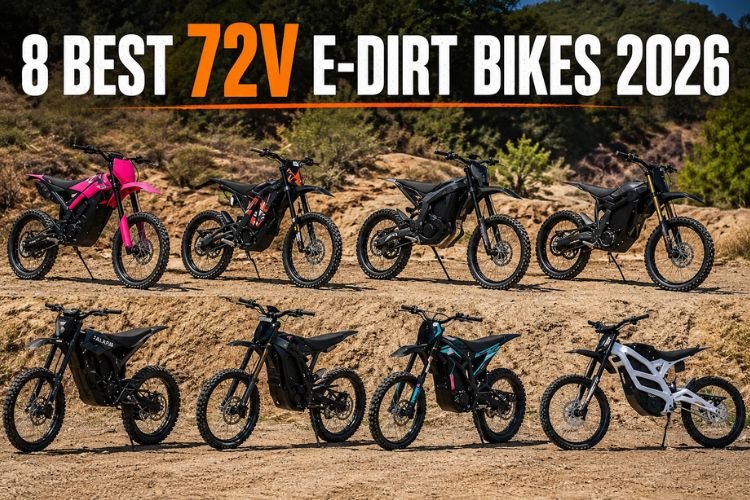
The best 72V electric dirt bikes in 2026 combine serious power with larger batteries, stronger controllers, motorcycle-style suspension, and the performance needed for demanding recreational off-road riding.
But 72V alone doesn’t make an electric dirt bike good.
Two bikes can both use 72V batteries while delivering completely different riding experiences. Motor output, battery capacity, controller tuning, weight, suspension, brakes, wheel sizes, charging speed, and parts support can matter just as much as voltage.
After comparing current manufacturer specifications, eight 72V models stand out for different reasons. The 79Bike Falcon GT is our performance-focused pick, the 79Bike Falcon Pro offers a more balanced high-performance package, the Rerode R1+ combines a large 72V 40Ah battery with serious peak output, while the Happyrun G300 Pro is particularly interesting for riders prioritizing value.
If you’re not specifically committed to a 72V platform, start with our Best Electric Dirt Bikes in 2026 guide instead. It compares the wider electric dirt bike market without restricting the choices by battery voltage.
| Model | Best For | Battery | Peak Power | Claimed Top Speed |
|---|---|---|---|---|
| 79Bike Falcon GT | Maximum Performance | 72V 40Ah | 16.8kW* | 59 mph |
| Rerode R1+ | High-Power Trail Riding | 72V 40Ah | 17kW | 59 mph |
| RAWRR Mantis X Pro | Premium Performance | 72V 35Ah | 15kW | 105 km/h / 65 mph |
| 79Bike Falcon Pro | Best Balanced Pick | 72V 35Ah | 10kW | 56 mph |
| Rerode R1 | Lightweight Performance | 72V 35Ah | Up to 10kW** | 55 mph |
| 79Bike Falcon Lite | Accessible 72V Option | 72V 30Ah | 8kW | 52 mph |
| Happyrun G300 Pro | Best Value | 72V 30Ah | 6.5kW | 50 mph |
| RAWRR Mantis X | Recreational Trail Riding | 72V 30Ah | 6.5kW | 80 km/h / 50 mph |
*79Bike’s current comparison page lists 16.8kW for the Falcon GT, while its individual product page displays 16kW in some sections.
*Current Rerode listings vary by configuration and seller. Verify the exact current model specification before ordering.
Manufacturer-claimed speed and range figures are not guaranteed real-world results. Rider weight, terrain, temperature, battery state of charge, tire setup, controller settings, and riding style can all affect performance.
A 72V electric dirt bike uses a battery system with a nominal voltage of approximately 72 volts. But voltage should never be considered in isolation.
Think of voltage as one part of the electrical architecture rather than a performance score.
For example, a 72V 30Ah battery contains approximately:
72 × 30 = 2,160Wh
A 72V 40Ah battery contains approximately:
72 × 40 = 2,880Wh
That is a 720Wh difference in nominal energy even though both are described as “72V.”
The same principle applies to motor performance. A bike with a 72V electrical system doesn’t automatically produce 10kW or 15kW. The battery’s discharge capability, BMS, controller, motor, thermal management, gearing, and software all influence how much power reaches the rear wheel and how that power feels to the rider.
This is why buying an electric dirt bike simply because the product page says “72V” is a mistake.
A better approach is to evaluate the complete system.
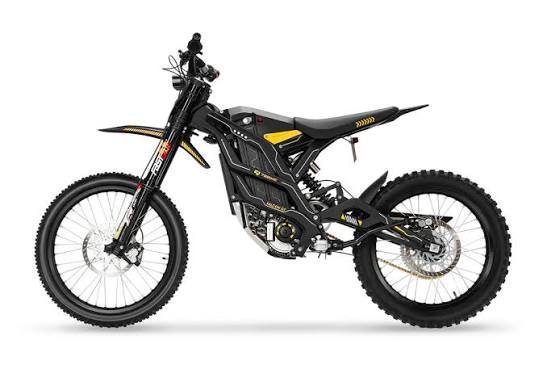
The 79Bike Falcon GT sits near the aggressive end of the current lightweight 72V electric dirt bike market.
79Bike’s current specifications list a 72V 40Ah Samsung 50S battery, a claimed top speed of 59 mph, and peak output listed at up to 16.8kW on the company’s comparison page. The company also lists 610 Nm of torque and approximately 120 km of maximum mileage.
Those figures put the Falcon GT well above entry-level 72V machines.
It isn’t just the motor that separates it from the less expensive Falcon models. The GT uses 220mm front and rear brake rotors, a 19-inch front and 18-inch rear wheel configuration, and a triple-beam forged aluminum-alloy frame.
The battery is another major advantage. At 72V 40Ah, nominal capacity works out to approximately 2,880Wh.
That doesn’t guarantee longer real-world range than every smaller-battery competitor because higher performance can consume energy quickly. It does, however, give the bike a substantial energy reserve.
The trade-off is weight and price. 79Bike lists the Falcon GT at approximately 152 pounds, making it heavier than the Falcon Pro.
Best for: Experienced riders prioritizing high stock performance and a large battery over minimum weight or minimum cost.
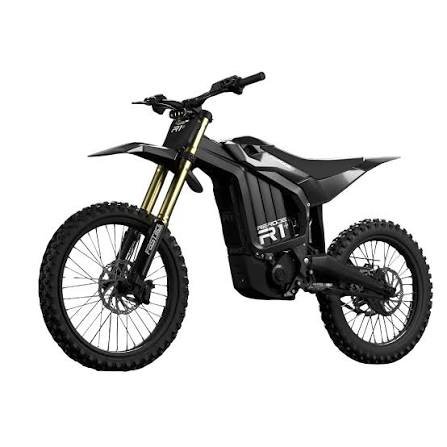
The Rerode R1+ is another serious 72V performance option.
Current U.S. specifications list a 72V 40Ah Samsung battery, 17kW peak output, 500 Nm of wheel torque, and a claimed top speed of approximately 59 mph. Listed weight is around 150 pounds.
Like the Falcon GT, the R1+ therefore combines high peak output with a roughly 2,880Wh nominal battery.
Rerode also gives the R1+ upgraded braking hardware, including a 220mm front rotor and 203mm rear rotor, plus a 19-inch front and 18-inch rear wheel combination.
What makes the R1+ interesting isn’t simply that it has a large peak-power number. It’s that the rest of the hardware is designed around the higher-performance package.
That matters on trails.
Once an electric dirt bike reaches this level of output, suspension control, braking, tires, chassis behavior, and throttle mapping become increasingly important. More power is only useful when the rider can control it.
At around $4,500 on the current U.S. listing we checked, the R1+ also sits firmly in premium lightweight e-moto territory.
Best for: Riders who want a 72V 40Ah platform with strong stock power and trail-oriented hardware.
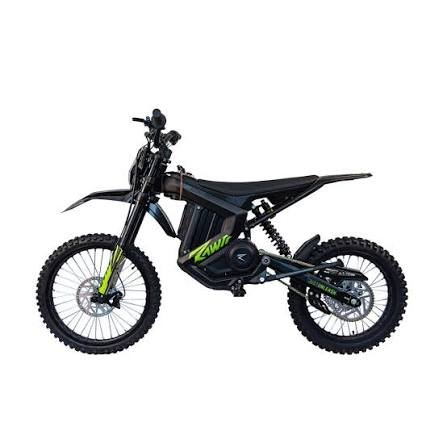
The RAWRR Mantis X Pro takes a slightly different approach.
RAWRR lists a 72V 35Ah lithium-ion battery, 15,000W maximum output, 390 Nm of maximum torque, and a claimed maximum speed of 105 km/h, or roughly 65 mph.
That makes it one of the fastest manufacturer-claimed machines in this group.
The chassis specifications also reflect its performance positioning. The Mantis X Pro uses an aluminum-alloy frame, 220mm front and rear hydraulic brake rotors, adjustable suspension, and a 19-inch front/17-inch rear wheel combination.
Listed weight is approximately 75 kg including the battery, so this isn’t the lightest option here.
What you’re getting instead is a more substantial performance platform.
RAWRR also offers Eco, Sport, and Race riding modes and describes the controller as tunable. That flexibility can be useful because riders don’t always want maximum power, especially on loose or technical terrain.
The Mantis X Pro therefore makes the most sense for someone deliberately shopping near the top of the 72V category rather than simply looking for an inexpensive first electric dirt bike.
Best for: Performance-focused riders who want strong power, large brakes, adjustable settings, and a more substantial chassis.
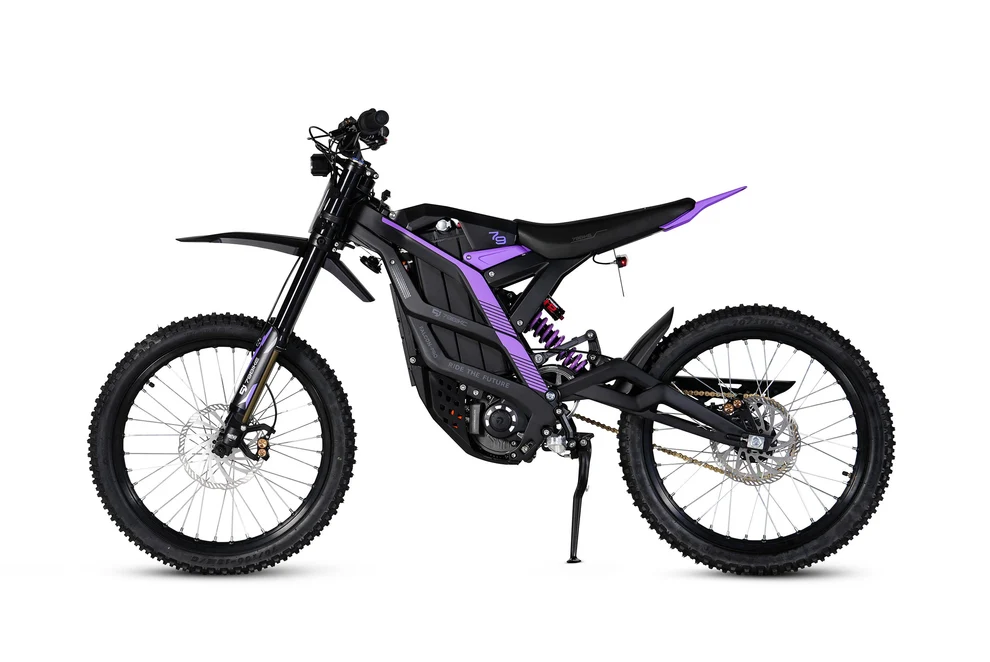
The 79Bike Falcon Pro is arguably more interesting for the average performance buyer than the higher-output Falcon GT.
Its specifications are still serious: a 10kW peak mid-mounted motor, 72V 35Ah LG lithium battery, claimed 56 mph maximum speed, Fastace suspension, and a listed weight of approximately 130 pounds.
That combination matters.
A bike doesn’t have to produce 15–17kW to be fast, and adding more power often comes with extra weight, cost, and greater demands on the rider.
The Falcon Pro keeps the 72V architecture and a respectable 2,520Wh of nominal battery energy while remaining considerably lighter than some of the highest-output machines in this guide.
79Bike also includes Fastace 2.0 front suspension, a Fastace rear shock, 203mm braking hardware, NFC unlocking, and a dashboard with automatic day/night functionality.
For many riders, that makes the Falcon Pro the sweet spot.
You get a meaningful step above lower-cost 6.5–8kW machines without automatically moving into the heaviest and most aggressive part of the category.
We’ve covered this model in more detail in our 79Bike Falcon Pro Review, including the questions buyers should consider beyond peak power.
Best for: Riders who want strong performance without automatically choosing the biggest motor available.
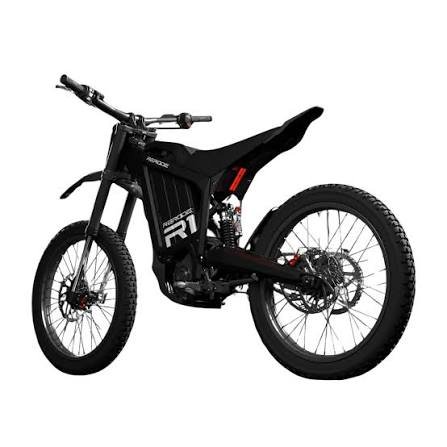
The Rerode R1 competes directly in the lightweight 72V e-moto category.
Current U.S. listings show a 72V 35Ah removable battery, approximately 130-pound weight, FastAce suspension, 19-inch wheels, and a claimed maximum speed around 55 mph.
That combination makes the R1 especially interesting for riders who care about agility.
A 150-pound electric dirt bike with enormous power can be exciting in open terrain, but additional weight becomes much more noticeable on narrow trails, low-speed technical sections, during transport, or when you need to pick the bike up.
At roughly 130 pounds, the R1 remains closer to the Falcon Pro’s weight class.
There is one important purchasing detail: current Rerode listings don’t always present identical peak-power specifications across every U.S. page and configuration. Buyers should therefore confirm the exact model-year motor, controller, and battery specification with the seller before ordering rather than assuming every R1 listing represents the same configuration.
Best for: Riders prioritizing lightweight handling while still wanting a 72V 35Ah platform.
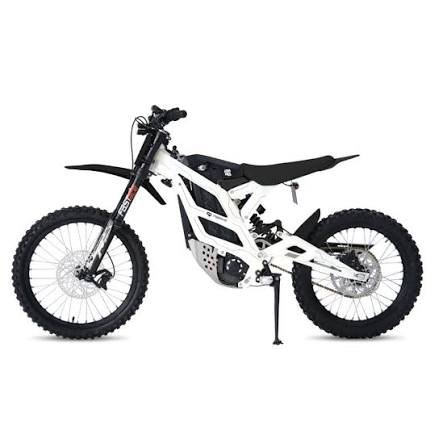
Not everyone shopping for a 72V electric dirt bike needs 10–17kW.
That’s where the 79Bike Falcon Lite becomes interesting.
79Bike currently lists the Falcon Lite with an 8kW peak motor, 72V 30Ah battery, 340 Nm of torque, and a claimed 52 mph maximum speed.
Those specifications put it between bikes like the G300 Pro and more powerful machines such as the Falcon Pro.
A 72V 30Ah pack provides roughly 2,160Wh of nominal battery energy. The Falcon Lite also uses an aluminum-alloy frame and off-road wheel setup, with 200mm of listed front suspension travel.
For a rider who specifically wants 72V but doesn’t need the additional performance and cost of the Falcon Pro or GT, the Lite is worth considering.
It also illustrates why this guide isn’t simply ranking bikes from highest wattage to lowest.
An 8kW bike can be a better purchase than a 17kW bike if it better matches your experience, terrain, budget, and intended use.
Best for: Riders moving into the 72V category who don’t need maximum stock output.
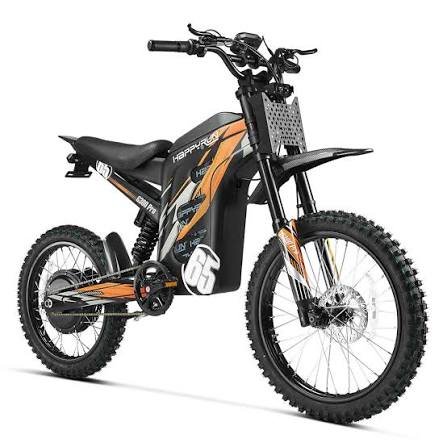
The Happyrun G300 Pro takes a different route from most of the premium models on this list.
Instead of competing for the largest motor number, it competes aggressively on price-to-performance.
HappyRun currently specifies a 72V 30Ah battery, 6,500W peak motor, claimed 50 mph maximum speed in Offroad Mode, and 70+ miles of advertised maximum range.
The battery works out to approximately 2,160Wh nominally.
The G300 Pro also includes full suspension, hydraulic brakes, a color LCD, a 2,000-lumen front light, and a manufacturer-listed maximum payload of 350 pounds.
Its biggest attraction, however, is price.
At the time this guide was prepared, HappyRun’s U.S. site was advertising the G300 Pro around the low-$2,000 range during its promotion. Sale pricing changes frequently, so check the current price before buying.
That can put it substantially below many 72V performance bikes.
There are compromises. The 6.5kW peak output is well below machines such as the Falcon GT, R1+, or Mantis X Pro, and riders prioritizing premium suspension may prefer more expensive alternatives.
But that’s missing the point of the G300 Pro.
For someone who wants a 72V system and meaningful off-road performance without spending $4,000–$5,000, the value proposition is compelling.
We’ve also compared it directly with the Falcon Pro in our Happyrun G300 Pro vs 79Bike Falcon Pro guide, which is worth reading if those are your final two choices.
Best for: Budget-conscious buyers who want to enter the 72V performance category for less.
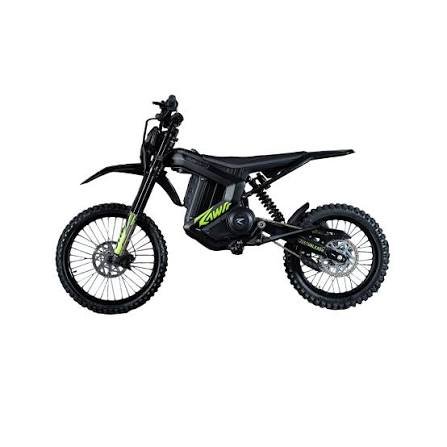
The regular RAWRR Mantis X offers another middle-ground option.
RAWRR’s current lineup lists it with a 72V 30Ah battery, 6.5kW peak power, and a claimed maximum speed around 80 km/h, or roughly 50 mph.
That puts its headline specifications close to the G300 Pro, although the two bikes shouldn’t be considered identical simply because their battery and peak-power numbers are similar.
The Mantis X is better understood as the less extreme alternative to the Mantis X Pro.
If you like the RAWRR platform but don’t need the Pro’s 15kW output, the standard X offers a more moderate way into the range.
This can be particularly relevant for recreational trail riders. Maximum output is exciting on a specification sheet, but manageable power, predictable handling, braking, suspension setup, and rider confidence often matter more during an entire day of riding.
Best for: Recreational riders who want a 72V RAWRR without stepping up to the heavier, much more powerful X Pro.
A common mistake is assuming that 72V is automatically better than 60V.
It isn’t that simple.
Higher system voltage can help manufacturers build higher-performance powertrains efficiently, but voltage alone doesn’t determine acceleration, range, reliability, or overall bike quality.
A well-engineered 60V bike can be a better purchase than a poorly designed 72V bike.
When comparing the two, look at the complete package:
For example, choosing between a 72V 30Ah and 72V 40Ah bike already represents a significant difference in stored nominal energy.
The battery also deserves careful treatment after purchase. Our guide to extending electric dirt bike battery life explains the charging, storage, and usage habits worth considering for long-term ownership.
For most buyers, this is more important than asking which model has the highest peak output.
A 6.5–8kW machine can already deliver substantial performance for recreational off-road riding. Moving toward 10kW gives experienced riders additional acceleration and climbing capability, while 15–17kW machines enter a much more aggressive performance category.
More isn’t automatically better.
Extra performance places greater demands on throttle control, traction, suspension, brakes, tires, and rider judgment. A machine capable of around 50–60+ mph should be treated as a serious powered off-road vehicle, not as an ordinary bicycle.
Beginners should therefore avoid choosing their first bike purely by wattage. Our Best Electric Dirt Bikes for Beginners guide focuses more heavily on controllability, weight, rider fit, and progression.
Start with your riding rather than the specification table.
If you mostly ride open terrain and want maximum acceleration, models such as the Falcon GT, Rerode R1+, and Mantis X Pro deserve attention.
For tighter trails, weight and chassis balance become more important. A roughly 130-pound Falcon Pro or Rerode R1 may be more appealing than simply buying the machine with the highest peak-power number.
Budget changes the equation again.
If you have less than $5,000 to spend, our Best Electric Dirt Bikes Under $5,000 guide provides a wider comparison that includes both 72V bikes and alternatives using different electrical architectures.
Finally, consider ownership after the purchase.
Replacement batteries are expensive. Tires, brake pads, suspension components, bearings, chains or belts, and other wear items eventually need attention. Dealer availability and replacement-parts support can matter more over several years than a small difference in advertised top speed.
There isn’t one best model for every rider. The 79Bike Falcon GT and Rerode R1+ stand out for high stock performance, while the Falcon Pro offers a more balanced power-to-weight package. The Happyrun G300 Pro is particularly attractive for buyers prioritizing price-to-performance.
Not necessarily. Battery voltage alone doesn’t determine top speed. Motor output, controller settings, gearing, tire diameter, battery discharge capability, software, and other factors influence speed. A 72V architecture provides performance potential, not a guaranteed speed advantage.
There is no universal speed for a 72V electric dirt bike. Models in this guide have manufacturer-claimed maximum speeds ranging from around 50 mph to approximately 65 mph. Actual speed varies with the bike, rider, terrain, battery condition, setup, and riding conditions.
Yes. Current 72V platforms range from approximately 6.5kW recreational machines to models with manufacturer-listed peak outputs above 15kW. The more important question is whether the complete powertrain, chassis, suspension, and brakes fit your intended riding.
There is no fixed wattage. A 72V battery can be paired with motors and controllers of many different power levels. Current models in this guide range from around 6,500W to approximately 17,000W of manufacturer-listed peak output.
Range varies significantly. Battery capacity, speed, rider weight, terrain, elevation, temperature, tire pressure, and acceleration all affect energy consumption. Compare watt-hour capacity and manufacturer testing conditions rather than assuming every 72V bike has similar range.
Some can be, but voltage should not be the deciding factor. Many 72V bikes are extremely powerful. Beginners should prioritize manageable ride modes, predictable throttle response, appropriate seat height, lower weight, strong brakes, and suitable protective equipment.
Do not assume they are. Many high-performance electric dirt bikes don’t fit standard e-bike classifications, particularly when they lack pedals or exceed local power and speed limits. Registration, licensing, insurance, equipment, and road-use rules vary by jurisdiction. Check applicable local laws before riding on public roads.
The best 72V electric dirt bike in 2026 depends less on finding the biggest number and more on matching the bike to your riding.
For maximum stock performance, the 79Bike Falcon GT, Rerode R1+, and RAWRR Mantis X Pro sit near the aggressive end of this list.
For riders who want a better balance between weight and serious performance, the 79Bike Falcon Pro is one of the most compelling options.
The Rerode R1 and Falcon Lite make sense for riders who want a capable 72V platform without automatically chasing maximum output.
And if value matters most, the Happyrun G300 Pro stands out because it brings a 72V 30Ah battery and 6.5kW peak system into a considerably lower price bracket than many premium competitors.
Don’t buy based on voltage alone.
Compare battery energy, power delivery, weight, suspension, brakes, rider fit, parts availability, and price. A well-matched 8kW bike can be a much better purchase than a 17kW machine whose performance you rarely use.
The goal isn’t to own the most powerful 72V electric dirt bike.
It’s to own the one you’ll actually enjoy riding.
Specifications were checked against current manufacturer or official U.S. distributor information from 79Bike, HappyRun, RAWRR Mantis, and Rerode. Prices, specifications, availability, software configurations, and regional versions can change. Confirm the current model-year configuration with the manufacturer or authorized seller before purchasing.
Electric motocross and electric enduro motorcycles can look very similar, and in some cases they even share the same motor,

Electric enduro motorcycles are becoming an increasingly appealing option for riders who want strong acceleration, precise low-speed control, and less

Electric enduro motorcycles are becoming an increasingly appealing option for riders who want strong acceleration, precise low-speed control, and less
The Talaria XXX Pro and Talaria Sting R MX4 are two popular options for riders looking for a lightweight electric
