
Electric Motocross vs Electric Enduro: What’s the Difference?
Electric motocross and electric enduro motorcycles can look very similar, and in some cases they even share the same motor,
The Altis Sigma earned attention for one simple reason: it brought unusually serious power into the lightweight electric dirt bike category. But peak motor output is only part of the performance story. For riders comparing high-performance e-motos, the more practical question is straightforward: How fast does the Altis Sigma actually go?
That answer has become slightly more complicated because there are now different Sigma versions, wheel configurations, gearing setups, and model years. A 2025 Sigma 19/19 shouldn’t automatically be compared with a Sigma MX 19/16, and the updated 2026 Sigma raises the performance ceiling again.
Independent testing adds another important detail. A speed shown on the motorcycle’s TFT display isn’t necessarily identical to GPS-verified road speed. RiderGuide, for example, reported seeing 115 km/h, or roughly 71.5 mph, on the Sigma’s display, while explicitly noting that motorcycle speedometers can read high.
So instead of repeating one headline number, this Altis Sigma Top Speed Test guide separates manufacturer claims from independent observations and explains why two riders can test the same model and get different results.
For the earlier 2025-generation standard Sigma, the most defensible answer is around 70 mph or slightly above under favorable conditions. Electric Cycle Rider lists the production 2025 Sigma at over 70 mph, while RiderGuide recorded approximately 71.5 mph on the bike’s speedometer during testing.
The 2026 Sigma is different. Altis currently advertises the updated 2026 model with a 25 kW peak hairpin motor and an 80+ mph (128+ km/h) top-speed claim. Altis specifically lists the 19-inch front/19-inch rear Trail configuration with a 39-tooth sprocket as an 80 mph setup.
That distinction matters enormously for SEO and for buyers researching the bike today.
| Altis Sigma Version | Published/Claimed Top Speed | Important Context |
|---|---|---|
| 2025 Sigma 19/19 | 70+ mph | Independent display test reached about 71.5 mph |
| 2025 Sigma MX 19/16 | 60+ mph | Smaller rear wheel and different gearing favor off-road torque |
| 2026 Sigma 19/19 | 80+ mph claimed | Updated 25 kW powertrain and 39T setup |
| Real-world result | Varies | GPS, gearing, battery, rider and conditions matter |
The key word for the 2026 figure is claimed. Altis publishes 80+ mph for the new version, but that shouldn’t be presented as if it were the same thing as an independently GPS-verified 80+ mph test.
This is probably the most important update for anyone searching for Sigma speed figures now.
The 2025 and 2026 bikes shouldn’t be treated as though their specifications are identical.
Altis currently lists the 2025 version with a 97.2V 35Ah battery and 23 kW peak hairpin motor. For 2026, the manufacturer lists an upgraded 25 kW peak motor, 601 Nm figure with the specified 39T setup, a heavier-duty 520H chain, revised dimensions, and an advertised 80+ mph maximum speed.
That means an older article saying:
“The Altis Sigma tops out at 70 mph.”
is no longer enough.
It may reasonably describe the earlier bike, but it doesn’t describe the current 2026 manufacturer’s specification.
Likewise, saying:
“Every Altis Sigma does 80 mph.”
would also be misleading.
Model year matters.
One of the more useful published tests comes from RiderGuide. During its Sigma review, the tester reported seeing 115 km/h on the speedometer, equivalent to about 71.5 mph. Importantly, the reviewer immediately acknowledged that speedometers can exaggerate actual speed.
That’s a much more useful result than simply repeating a marketing number.
Electric Cycle Rider’s production-model first ride also lists the 2025 Sigma at over 70 mph (113 km/h) and specifically praised the bike’s power delivery at higher speeds.
Taken together, those reports make 70+ mph a reasonable real-world performance reference for the standard earlier-generation Sigma, with one important limitation: a display-indicated result isn’t automatically a GPS-certified result.
If you’re performing your own Altis Sigma top speed test, measurement method matters.
A motorcycle’s display calculates speed using parameters such as wheel rotation and configured gearing. Tire dimensions, gearing settings, calibration, and other factors can create differences between indicated and actual ground speed.
This is why a test should ideally record both:
Displayed speed tells you what the Sigma itself reports.
GPS speed provides a useful independent measurement of actual movement over the ground.
If the display shows 72 mph while a reliable GPS measurement records 68 or 69 mph, the bike didn’t necessarily malfunction. You’re simply looking at two different measurement methods.
Owner discussions also show why caution is needed when using community top-speed numbers. Some riders have reported indicated speeds above 70 mph while others have observed a few mph of difference against GPS. These anecdotes are useful context, but they aren’t controlled tests and shouldn’t be treated as manufacturer specifications.
For a credible comparison, use the same measurement method for every motorcycle.
This is where many buyers get confused.
The Sigma and Sigma MX may share much of their underlying platform, but they’re optimized differently.
The earlier standard Sigma uses a 19-inch front and 19-inch rear wheel configuration, while the MX uses a 19-inch front and 16-inch rear setup. The MX configuration was developed with stronger off-road emphasis, and earlier versions used different rear sprocket gearing as well. Electric Cycle Rider documented 533 Nm for the standard 39T setup and 601 Nm for the 44T MX configuration in its 2025 production-bike coverage.
The tradeoff is classic motorcycle gearing:
More emphasis on wheel torque and off-road response can mean less maximum road speed.
Electric Cycle Rider’s current Sigma MX listing describes that configuration as a 60+ mph machine.
So a Sigma MX rider reporting around 60 mph shouldn’t immediately assume something is wrong because another Sigma owner reached 70 mph.
They may effectively be testing two differently configured motorcycles.
No.
This is one of the biggest misconceptions surrounding electric dirt bike specifications.
Motor power helps the motorcycle accelerate and overcome aerodynamic drag, but maximum speed also depends on gearing, motor RPM limits, wheel circumference, controller behavior, battery voltage under load, and aerodynamic resistance.
That’s why two electric motorcycles with similar peak-kilowatt figures can have noticeably different top speeds.
At lower speeds, adding power can create dramatic acceleration differences. At high speed, aerodynamic drag becomes increasingly important. Eventually, adding more power produces much smaller gains in maximum speed than riders might expect.
The 2026 Sigma’s jump from the earlier 70+ mph territory to Altis’s current 80+ mph claim therefore shouldn’t be interpreted simply as:
23 kW → 25 kW = 10 mph faster.
The complete powertrain configuration matters.
Even two stock motorcycles from the same model year may not produce identical results.
Electric motorcycles generally have the strongest electrical performance available when battery conditions allow the system to deliver full output. As battery state of charge changes, voltage under load and available performance can change as well.
For a meaningful top-speed comparison, battery state should therefore be recorded rather than ignored.
Temperature can affect battery and powertrain behavior. Extreme conditions may change available power or trigger protective strategies.
This is another reason a cold-weather test shouldn’t automatically be compared directly with a warm-weather test.
Rider weight matters, particularly during acceleration and when the bike is dealing with hills. At high speed, rider position becomes increasingly important because aerodynamic drag is substantial.
Sitting upright creates more frontal area than adopting a compact riding position.
A strong headwind can noticeably reduce maximum speed.
A tailwind can make a motorcycle appear faster than it would be under neutral conditions.
For a serious test, testing in both directions and comparing results is more useful than making a single one-way run.
An uphill road isn’t comparable with a flat surface.
Neither is loose dirt comparable with smooth pavement.
Surface conditions affect traction and rolling resistance, while elevation changes directly affect the load placed on the motor.
Changing tires changes more than traction.
Different tire dimensions, tread patterns, weights, and pressures can affect rolling resistance and effective wheel circumference. Aggressive off-road tires may behave very differently from a road-oriented setup during a high-speed test.
This is one of the biggest factors.
Changing sprocket size can alter the balance between acceleration, wheel torque, and theoretical maximum speed. That’s exactly why Sigma and Sigma MX speed figures shouldn’t be mixed together without identifying the wheel and sprocket configuration.
A useful test needs more than someone pointing a camera at the TFT display.
For a credible result, record the exact model year, wheel configuration, sprocket setup, battery state of charge, rider weight, temperature, surface, wind conditions, displayed maximum speed, and independent GPS maximum speed.
Testing should only be done in a legal, controlled environment appropriate for high-speed motorcycle operation. Public streets and mixed-use trails aren’t suitable places to chase a maximum-speed number.
This matters especially with the Sigma because 70 to 80 mph is motorcycle-level speed. At 70 mph, the motorcycle is traveling more than 100 feet every second. Small changes in surface conditions, traffic, visibility, or rider input can have serious consequences.
Top speed is useful for comparing performance.
It isn’t worth taking unnecessary risks to verify.
For the earlier standard 19/19 Sigma, 70+ mph is supported reasonably well by published professional testing, although exact GPS speed can differ from what appears on the display. RiderGuide’s approximately 71.5 mph indicated run and Electric Cycle Rider’s 70+ mph production specification provide useful independent context.
For the updated 2026 Sigma, the conversation has changed. Altis now advertises 80+ mph with the updated 25 kW powertrain and appropriate 19/19 configuration.
That makes the most accurate short answer:
2025 standard Sigma: roughly 70+ mph territory. 2025 Sigma MX: roughly 60+ mph territory. 2026 standard Sigma: Altis claims 80+ mph, but independent GPS testing is the better benchmark for confirming the real-world number.
And that’s exactly where this article gets more interesting, because maximum speed alone doesn’t tell us how quickly the Sigma gets there or how useful that performance actually is off-road.
Top speed tells us what the Altis Sigma can eventually reach, but it doesn’t explain how the bike actually feels getting there. For an electric dirt bike, acceleration, gearing, throttle calibration, battery state, and wheel setup can matter just as much as the final number on the display.
This is particularly important with the Sigma because different configurations are designed for different priorities. A setup optimized for trail torque won’t necessarily produce the same maximum speed as one geared for faster open terrain.
One reason the Sigma feels extremely quick is the way an electric motor delivers torque. Unlike a gas engine that builds power through its rev range, an electric drivetrain can provide strong torque almost immediately.
Professional testing of the earlier Sigma repeatedly highlighted this characteristic. RiderGuide praised not only the amount of power available but also the throttle calibration, noting that the bike remained controllable despite its high output. Electric Cycle Rider similarly emphasized the strong acceleration and high-speed performance of the production model.
This distinction matters. A motorcycle can have an impressive top-speed number while feeling relatively mild getting there. The Sigma’s appeal is that acceleration itself is a major part of the experience.
For trail riding, that immediate response is arguably more useful than the final few mph of top speed. Strong acceleration helps when exiting corners, climbing hills, or quickly building momentum in open terrain.
Riding modes can significantly change how much of the Sigma’s available performance the rider can access and how aggressively the motorcycle responds to throttle input.
For a proper speed test, the selected riding mode should always be recorded. Comparing one test performed in a reduced-power mode with another performed using the highest-performance setting doesn’t tell us much about the motorcycles themselves.
More aggressive settings can affect throttle response, acceleration, and the ability to reach maximum performance. Less aggressive settings may deliberately make the bike easier to manage.
This is also why riders shouldn’t interpret a lower speed in a restricted setting as a mechanical problem. Before diagnosing a performance issue, verify that the bike is correctly configured and operating in the intended riding mode.
The wheel configuration is another major reason Sigma speed results can look inconsistent online.
A standard 19/19 setup and a 19/16 MX-style configuration aren’t intended to deliver exactly the same riding experience. The smaller rear wheel and off-road-oriented gearing can favor wheel torque, technical riding, and acceleration at the expense of maximum road speed.
Think of it as choosing between two priorities.
| Setup | Main Strength | Top-Speed Effect |
|---|---|---|
| 19/19 | Faster open riding and balanced trail use | Higher speed potential |
| 19/16 MX | Technical terrain and stronger wheel torque | Generally lower maximum speed |
Neither setup is automatically better. It depends on what you’re trying to do.
If most of your riding involves technical dirt, steep climbs, and tighter trails, sacrificing some maximum speed may be a very reasonable trade.
If you’re interested in open terrain and maximum performance, the faster gearing becomes more attractive.
Sprocket gearing deserves its own explanation because it’s one of the easiest ways to misunderstand electric dirt bike speed.
In simplified terms, changing the final-drive ratio changes the relationship between motor rotation and rear-wheel rotation. A larger rear sprocket generally increases torque at the wheel but reduces theoretical maximum speed at a given motor RPM. A smaller rear sprocket generally moves the balance toward higher speed while reducing some mechanical advantage.
This is why you should never compare two modified Sigma top-speed tests without checking the gearing first.
A rider saying:
“My Sigma only reaches 62 mph.”
may have a completely different wheel and sprocket setup from someone reporting more than 70 mph.
The number alone doesn’t tell you whether the bike is performing correctly.
It can.
Battery state of charge affects the electrical conditions available to the powertrain. Under heavy acceleration, voltage can drop under load, and the motorcycle’s battery-management and controller systems determine how much power can safely be delivered.
For riders, the practical takeaway is straightforward: don’t compare a top-speed run at a nearly full charge with another test performed near the bottom of the battery and expect identical results.
A meaningful test should record battery percentage before the run.
Temperature also matters. Batteries and controllers operate within defined thermal limits, and the system may protect itself when conditions move outside the intended operating range.
So if your Sigma feels slightly different after repeated aggressive riding, don’t immediately conclude that something has failed. Battery state, temperature, and powertrain protection can all influence performance.
The TFT speedometer is useful during normal riding, but independent GPS measurement makes top-speed comparisons more credible.
For example, if the display reports 72 mph while GPS reports 69 mph, the useful result isn’t simply whichever number looks better.
The useful result is:
72 mph indicated / 69 mph GPS.
That tells readers exactly what was measured.
It also makes future comparisons much easier.
A proper test record might look like this:
| Test Variable | Example Data |
|---|---|
| Model | Altis Sigma |
| Model Year | 2025 |
| Wheels | 19/19 |
| Rear Sprocket | Stock configuration |
| Battery | Near full charge |
| Surface | Flat paved closed course |
| Wind | Low |
| Display Speed | Recorded |
| GPS Speed | Recorded |
| Direction | Tested both ways |
This approach is much more useful than a social-media clip showing a display for two seconds.
Wind and road gradient can influence high-speed results more than many riders expect.
Imagine one run produces 73 mph with a mild tailwind. Turn around and the same motorcycle manages only 68 mph against the wind.
Which number represents the bike’s real top speed?
Using only the faster run would exaggerate performance. Using only the slower run would understate it.
Testing in both directions under similar conditions helps reduce the influence of wind and slight elevation changes. Averaging the two results provides a more meaningful reference.
This is standard logic for serious vehicle performance testing and makes even more sense when the difference between competing electric dirt bikes may be only a few mph.
This is where specifications and real riding begin to separate.
An 80 mph claim sounds impressive, but how often does an off-road rider actually need 80 mph?
On technical trails, almost never.
A motorcycle’s useful performance depends much more on how effectively it delivers power between corners, climbs, obstacles, and changing terrain.
For many Sigma riders, performance in the 20–50 mph range will matter far more frequently than the difference between 70 and 75 mph at maximum speed.
That doesn’t make top speed irrelevant. It tells us about the overall performance ceiling and gives shoppers a useful comparison point.
But it shouldn’t be the only performance metric used when choosing an electric dirt bike.
The Sur Ron Light Bee X is one of the best-known names in the lightweight electric off-road category, but it occupies a different performance level from the Sigma in stock form.
The Sigma’s much higher-output powertrain and motorcycle-oriented performance put it well beyond the stock Light Bee X in outright maximum speed. For riders upgrading from a Light Bee-style platform, the difference isn’t simply a few extra mph. The Sigma also brings significantly stronger acceleration and a more substantial motorcycle feel.
That means the Sigma shouldn’t be viewed simply as a slightly faster Sur Ron.
It’s a different performance class.
The E Ride Pro SS is a more relevant comparison because it targets riders looking for serious performance from a lightweight electric dirt bike.
Depending on model year and configuration, published speed figures have continued to evolve as E Ride Pro has updated its lineup. This makes model-year matching essential.
The broader point is that once motorcycles enter roughly the 60–70+ mph category, choosing between them based only on a claimed top-speed number becomes increasingly unhelpful.
A rider should also compare battery capacity, weight, gearing, suspension, brakes, wheel setup, range, thermal behavior, and parts availability.
A 3 mph advantage on paper doesn’t automatically make one bike better on a trail.
The Sur Ron Ultra Bee is another useful reference because it’s more motorcycle-like than the Light Bee X.
The Sigma’s headline performance has generally positioned it as the faster option in outright stock top-speed discussions, particularly with the newer Sigma’s manufacturer-claimed 80+ mph capability.
However, the Ultra Bee and Sigma differ in more than maximum speed. Chassis behavior, weight, battery characteristics, aftermarket support, and intended use all influence the ownership experience.
For buyers, the better question isn’t:
Which one has the biggest number?
It’s:
Which performance package better matches the way I ride?
Seventy miles per hour may not sound extraordinary when compared with street motorcycles.
On a lightweight off-road-oriented electric motorcycle, it is very fast.
At 70 mph, you’re traveling roughly 103 feet per second. At 80 mph, that increases to about 117 feet per second.
That changes how quickly hazards approach and how much space you need to react.
Off-road tires, uneven surfaces, wind, rider equipment, visibility, and braking distance all become increasingly important.
This is why maximum-speed testing belongs in an appropriate controlled environment, not on public roads or shared trails.
Rider weight has a clear effect on acceleration and hill-climbing because the motor has more total mass to accelerate.
Its effect on absolute top speed on flat ground can be less dramatic than people assume because aerodynamic drag becomes a dominant resistance at high speed.
However, a heavier rider can still affect the result through acceleration time, rolling resistance, suspension position, and the motorcycle’s ability to reach its maximum speed within the available testing distance.
On hills, weight becomes much more important.
So when comparing speed tests, rider weight is worth recording even if it isn’t the only variable.
Changing gearing, wheel setup, tires, or other components can affect performance, but modifications involve tradeoffs.
A setup aimed at higher theoretical speed may sacrifice wheel torque or technical trail performance. Electrical modifications can introduce much greater concerns involving battery limits, controller compatibility, thermal management, reliability, warranty coverage, and safety.
For most riders, the stock Sigma already offers considerably more speed than normal trail riding requires.
Before modifying a high-output electrical system, consider whether the goal actually improves the way you use the motorcycle.
More top speed isn’t automatically better performance.
If you’re buying an Altis Sigma primarily for off-road riding, I’d pay attention to five things alongside top speed: throttle control, acceleration, traction, braking, and suspension behavior.
A motorcycle that delivers 65 mph with excellent control can be more enjoyable on technical terrain than one capable of 80 mph but poorly matched to the rider or trail.
The Sigma’s strongest performance argument therefore isn’t simply that it can reach motorcycle-level speeds.
It’s that a substantial amount of electric power is available across the riding experience.
The biggest mistake readers can make is finding an older Sigma test and assuming the result automatically applies to the current bike. The 2025 production Sigma was widely discussed as a 70+ mph machine. RiderGuide reported seeing 115 km/h, approximately 71.5 mph, on the display during testing, while also cautioning that motorcycle speedometers can read higher than true road speed.
For 2026, Altis lists an updated 25 kW peak motor and advertises 80+ mph (128+ km/h) for the appropriate 19/19 configuration. That makes the current manufacturer’s claim substantially higher than the performance generally associated with the earlier model. Buyers should still distinguish a manufacturer specification from an independently GPS-verified result.
| Model | Power/Configuration Context | Top-Speed Reference |
|---|---|---|
| 2025 Sigma 19/19 | Earlier standard configuration | 70+ mph |
| 2025 Sigma MX 19/16 | More off-road-focused setup | 60+ mph |
| 2026 Sigma 19/19 | Updated 25 kW platform | 80+ mph claimed |
| Actual individual bike | Depends on conditions and setup | Varies |
If you’re researching a used Sigma, always ask for the model year and configuration before using top speed as a diagnostic benchmark.
For most off-road riding, no.
An 80 mph capability demonstrates the performance potential of the powertrain, but technical trails rarely provide a situation where that speed is useful. Rocks, roots, loose dirt, corners, elevation changes, and limited visibility make control much more important than maximum velocity.
Where additional speed can become relevant is open terrain or appropriate closed-course riding. Even then, acceleration and stability may matter more often than the last few mph.
This distinction is important because consumers sometimes treat top speed as a simple measure of quality:
80 mph must be better than 70 mph.
That isn’t necessarily true.
A faster bike isn’t automatically better suspended, easier to control, more efficient, longer ranged, or better suited to technical terrain.
Top speed measures one part of performance.
Real-world riding is very different from a maximum-speed test.
On a trail, riders constantly accelerate and decelerate. The motorcycle may encounter loose surfaces, elevation changes, corners, obstacles, and limited sight lines. In those conditions, the Sigma’s strong acceleration and controllable throttle can be more valuable than its absolute maximum speed.
For many owners, the most frequently used performance exists well below the bike’s top-speed ceiling. This is also why riders moving from lower-powered electric dirt bikes may notice the Sigma’s acceleration before they ever attempt to reach maximum speed.
A motorcycle doesn’t need to be traveling at 70 mph to feel extremely fast.
If your Sigma doesn’t match a number you saw online, don’t immediately assume there’s a mechanical problem.
Start by identifying what you’re comparing.
A 2025 Sigma shouldn’t automatically be expected to match the current 2026 manufacturer’s claim. Likewise, a 19/16 MX setup shouldn’t be compared directly with a 19/19 configuration optimized for higher speed.
Then consider battery state. A top-speed test performed with a high state of charge may produce different results from one performed much later in the ride.
Gearing is another major factor. Changing rear sprocket size can change the balance between wheel torque and maximum speed. Tire dimensions can also alter effective gearing and speedometer calculations.
Finally, consider the testing environment. Headwind, elevation, surface, rider position, rider weight, tire pressure, and available run-up distance can all influence the result.
If performance seems unusually low, work through the simple factors before assuming something expensive has failed.
| Check | Why It Matters |
|---|---|
| Model year | 2025 and 2026 specifications differ |
| Sigma vs Sigma MX | Wheel and gearing configurations differ |
| Riding mode | Reduced modes may limit performance |
| Battery charge | Available performance can change with SOC |
| Battery temperature | System protection may affect output |
| Sprocket size | Changes final-drive ratio |
| Tire size | Changes effective gearing |
| Tire pressure | Affects rolling resistance |
| Brake drag | Can create unnecessary resistance |
| Chain condition | Poor adjustment can affect drivetrain behavior |
| Wind and gradient | Can significantly alter a speed test |
| GPS vs display | Measurement methods may disagree |
If the bike suddenly loses substantial performance compared with its own previous behavior under similar conditions, that’s more meaningful than failing to match someone else’s internet result.
Performance variation is normal. A dramatic unexplained change isn’t.
Suppose your motorcycle previously reached a consistent speed under similar conditions and now struggles significantly below that level. If the model, gearing, battery state, riding mode, tires, and environment haven’t changed, further inspection may be justified.
Pay attention to other symptoms such as unusual drivetrain noise, error messages, inconsistent throttle response, abnormal battery behavior, excessive heat, brake drag, or changes in charging.
This is also where maintenance matters. A poorly adjusted drivetrain or mechanical resistance can affect how the motorcycle performs.
For owners interested in preventing these issues, our Altis Sigma Maintenance Guide covers chain adjustment, gearbox service, brakes, tires, suspension, battery care, and scheduled inspections in greater detail.
You don’t need to reach maximum speed to determine whether your motorcycle is working properly.
Normal acceleration, throttle response, battery behavior, error-free operation, and consistent performance can tell you much more during everyday ownership.
If you do perform a maximum-speed test, use a legal closed course or controlled environment designed for this type of riding. Wear motorcycle-appropriate protective equipment and make sure the bike is mechanically sound before testing.
A good test should also be repeatable. Record battery percentage, wheel setup, gearing, GPS speed, displayed speed, rider weight, weather, and test direction.
The goal should be useful data, not simply the largest number you can make appear on the screen.
There’s another reason you probably won’t spend much time riding at maximum speed:
range.
Higher speeds demand considerably more energy, particularly as aerodynamic resistance increases. Sustained high-speed riding can therefore reduce real-world range compared with moderate trail riding.
This creates an important tradeoff for Sigma owners. The motorcycle may have enough performance to reach very high speeds, but repeatedly using that capability consumes battery energy quickly.
A rider trying to maximize range will naturally ride differently from someone conducting acceleration and top-speed tests.
That’s not a weakness unique to the Sigma. It’s basic vehicle physics.
For most electric dirt bike riders, acceleration is more useful.
Imagine two motorcycles:
Bike A reaches 80 mph but feels less responsive at typical trail speeds.
Bike B reaches 70 mph but provides excellent throttle response, traction, and acceleration exactly where you need it.
For technical off-road riding, many riders would prefer Bike B.
The Sigma’s performance reputation isn’t built solely on the number at the end of a speed run. Its strong electric torque and acceleration are equally important to the riding experience.
That’s why a good performance comparison should look at the complete powertrain rather than ranking motorcycles by top speed alone.
The full performance potential is more than a new rider needs.
That doesn’t automatically mean every beginner should avoid the Sigma, but it does mean new riders need discipline. Someone with mountain bike, e-bike, dirt bike, or motorcycle experience may adapt more easily than a person with no powered two-wheel experience.
New riders should focus on smooth throttle control, braking, balance, body position, and low-speed handling rather than maximum speed.
Our Altis Sigma for Beginners guide covers this topic in more detail, including who should consider the bike and who may benefit from starting on something less powerful.
The earlier standard 2025 Sigma is generally associated with 70+ mph performance, with RiderGuide reporting approximately 71.5 mph indicated during testing. Altis currently advertises 80+ mph for the updated 2026 Sigma in the appropriate 19/19 configuration. Manufacturer claims and independently GPS-verified speeds should always be distinguished.
Altis advertises 80+ mph for the updated 2026 Sigma. Actual speed can vary with gearing, wheel setup, battery condition, rider, weather, terrain, and measurement method. An advertised figure shouldn’t automatically be treated as an independent GPS result.
The MX configuration is more focused on off-road torque and uses a different wheel/gearing setup. Earlier published information places it around the 60+ mph category rather than the higher maximum speed associated with the standard 19/19 Sigma.
First identify the model year, wheel setup, rear sprocket, riding mode, and battery state. A Sigma MX or differently geared bike may naturally produce a lower top speed than a standard 19/19 configuration. Wind, terrain, temperature, tires, and measurement method can also affect the result.
Displayed speed and GPS speed may differ. For a more useful performance test, record both values rather than assuming the display is a perfectly accurate measurement of ground speed.
It can. Battery state of charge, voltage under load, temperature, and powertrain management can influence available performance. Tests should ideally be performed at comparable battery levels.
Changing final-drive gearing can alter the balance between acceleration, wheel torque, and theoretical maximum speed. A gearing change designed for more top speed can involve tradeoffs in other areas, so riders should consider their actual riding needs rather than chasing one number.
In stock form, the Sigma belongs to a substantially higher outright performance category than the standard Light Bee X. Buyers should still compare more than top speed because the motorcycles differ in power, weight, chassis design, price, and intended riding experience.
The answer depends on which Altis Sigma you’re talking about.
For the earlier standard 2025 Sigma, published professional testing supports roughly 70+ mph territory, with RiderGuide recording approximately 71.5 mph indicated during its test. For the off-road-oriented MX configuration, the expected maximum speed is lower because the wheel and gearing setup prioritizes a different type of performance.
The updated 2026 Sigma moves the specification higher. Altis advertises 80+ mph for the appropriate 19/19 configuration, making it one of the more striking headline figures in this class. Until comparing equivalent independent GPS tests, however, it’s best described exactly as what it is: a manufacturer top-speed claim.
More importantly, the Altis Sigma Top Speed Test tells us something beyond the final mph number.
The Sigma is fast because of the entire powertrain experience: strong electric torque, rapid acceleration, gearing options, and a high performance ceiling. Whether the bike reaches 70, 72, or 80 mph matters less on most trails than how effectively that power can be controlled.
For shoppers, the best approach is therefore simple: compare the correct model year, verify the wheel and sprocket configuration, separate displayed speed from GPS speed, and don’t choose an electric dirt bike based on maximum speed alone.
Electric motocross and electric enduro motorcycles can look very similar, and in some cases they even share the same motor,
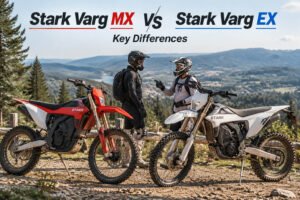
Electric enduro motorcycles are becoming an increasingly appealing option for riders who want strong acceleration, precise low-speed control, and less
Electric enduro motorcycles are becoming an increasingly appealing option for riders who want strong acceleration, precise low-speed control, and less
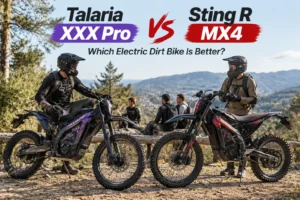
The Talaria XXX Pro and Talaria Sting R MX4 are two popular options for riders looking for a lightweight electric

ALTIS is about more than just bikes. it’s about being fearless, pure, future-focused, and creative. That's what we stand for, and it's what drives everything we do