Electric Motocross vs Electric Enduro: What’s the Difference?
Electric motocross and electric enduro motorcycles can look very similar, and in some cases they even share the same motor,

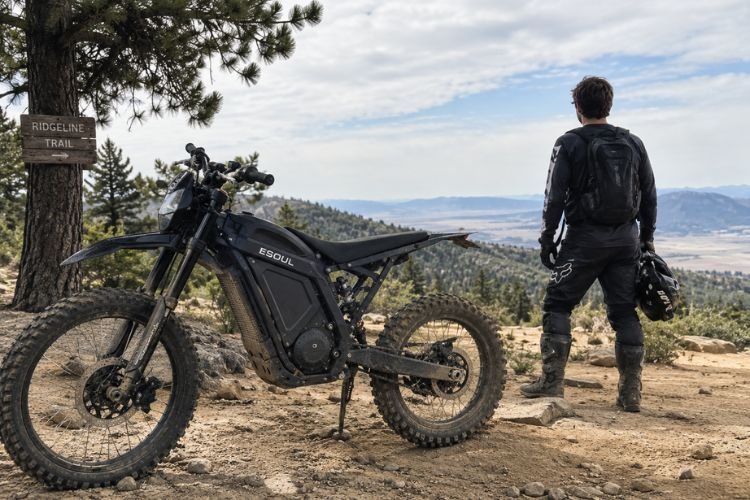
Electric dirt bikes have moved far beyond being quiet alternatives to small gas-powered trail bikes. Today’s market includes lightweight recreational e-motos, powerful 72V machines, technical-trail bikes, and full-size electric motorcycles capable of serious motocross and enduro riding.
But improved performance doesn’t automatically make them a good purchase for everyone.
So, are electric dirt bikes worth it?
For many trail riders, beginners, and people who value quiet operation, immediate power delivery, simple controls, and lower routine powertrain maintenance, yes, an electric dirt bike can absolutely be worth buying. However, gas dirt bikes can still make more sense for riders who need all-day range, rapid refueling, easy access to fuel in remote areas, or a mature parts and service network.
The real question isn’t whether electric dirt bikes are universally better than gas dirt bikes.
It is whether the advantages of electric fit how, where, and how long you actually ride.
| Electric Dirt Bikes Are Often Worth It If… | They May Not Be Worth It If… |
|---|---|
| You mainly ride trails, tracks, or private property | You regularly need all-day range |
| Quiet operation matters | You ride far from charging |
| You prefer simple throttle control | You enjoy clutch and gearbox involvement |
| You want less routine motor maintenance | Fast refueling is essential |
| Your normal ride fits the battery range | Your rides regularly exceed battery range |
| You have reliable parts and battery support | Replacement parts are difficult to source |
| You want strong low-speed response | You need maximum flexibility in remote areas |
| You understand where the bike can legally be ridden | You assume every electric dirt bike is street legal |
The best way to decide is to look beyond peak power and advertised range and consider the total ownership experience.
One of the biggest arguments against electric dirt bikes is purchase price. A capable electric dirt bike can require a significant upfront investment, particularly once you move from entry-level recreational models into high-performance e-motos and full-size electric motorcycles.
Electricity itself is usually only a small part of the ownership equation.
You can estimate the theoretical electricity required for a full charge with a simple calculation based on battery energy and your electricity rate. If a bike has a 2.5kWh battery and electricity costs $0.20 per kWh, for example:
2.5kWh × $0.20 = $0.50
That is approximately 50 cents of electricity for 2.5kWh before accounting for charging losses and other real-world factors.
The example is illustrative rather than a universal charging cost. Electricity prices vary by location, batteries differ in usable capacity, and charging is not perfectly efficient.
Still, it demonstrates an important point: electricity is not usually the only—or even the most important—cost question when deciding whether an electric dirt bike is worth it.
Buyers should think about the complete ownership cost:
Electric powertrains eliminate several maintenance items associated with internal-combustion motorcycles. There is no engine oil to change, no spark plug, no carburetor to clean, and no gasoline fuel system. Many electric dirt bikes also eliminate the conventional manual clutch and multi-speed transmission.
That can make routine ownership simpler.
But electric dirt bikes are not maintenance-free.
They still have tires, brakes, suspension, steering bearings, wheel bearings, chains or other final-drive components, fasteners, wheels, seals, and electrical connections that require inspection or maintenance. Off-road riding is hard on chassis components regardless of what powers the rear wheel.
Battery replacement also deserves attention. Instead of asking only how much money you might save on gasoline or oil changes, ask:
What does a replacement battery cost, and will one still be available when I need it?
The same question applies to controllers, displays, chargers, plastics, brake components, and proprietary electronics.
This is particularly important when comparing a well-supported bike against an inexpensive model from a brand with limited replacement-parts availability. A lower purchase price can become less attractive if the bike is difficult to repair several years later.
Battery specifications should also be compared carefully. A large Ah number does not necessarily mean a battery stores more energy than a lower-Ah pack operating at a higher voltage. Our guide to Electric Dirt Bike Battery Ah vs Wh explains why watt-hours are generally the more useful starting point for comparing nominal battery energy across different voltage systems.
For buyers on a tighter budget, it also makes sense to compare complete bikes rather than simply buying the least expensive option. Our Best Electric Dirt Bikes Under $5,000 in 2026 guide looks at models specifically within that price range.
The financial case for an electric dirt bike is therefore strongest when you actually use the advantages you are paying for: convenient home charging, reduced routine powertrain maintenance, quiet riding, and electric power delivery.
Buying one solely because you expect fuel savings to recover the purchase price is too simplistic.
The strongest reason to buy an electric dirt bike isn’t that electricity is cheaper than gasoline. It is that electric power changes the riding and ownership experience.
The first difference most riders notice is power delivery.
Electric motors can provide strong response without waiting for an engine to reach a particular rpm range. There is no conventional engine idle, and many electric dirt bikes do not require the rider to coordinate throttle, clutch, and gear selection.
That can be especially useful in technical terrain. On a steep climb or tight switchback, the rider can focus on throttle control, balance, traction, and line selection without worrying about stalling a combustion engine.
This doesn’t mean every electric dirt bike has better traction or acceleration. Motor tuning, controller calibration, gearing, tires, suspension, weight, and rider input still matter. Our guide to Electric Dirt Bike Torque vs Horsepower explains why headline power numbers alone don’t determine how effectively a bike accelerates or climbs.
For beginners, simplified controls can reduce the number of tasks they have to manage at once. A new rider can concentrate more on braking, body position, cornering, and throttle control instead of immediately learning clutch engagement and gear selection.
That is one reason electric models can be attractive to first-time riders. If that is your priority, see our Best Beginner Electric Dirt Bikes guide for bikes selected specifically around beginner needs.
Noise is another major advantage.
Electric dirt bikes are not completely silent—tires, chains, gears, bearings, suspension, and the motor itself still make noise—but they eliminate the exhaust note of a combustion engine.
That can make the riding experience less intrusive in appropriate locations and is particularly noticeable around homes, farms, private riding areas, and other noise-sensitive environments.
However, quiet does not mean legal everywhere. An electric motorcycle can still be prohibited from public roads, bicycle paths, sidewalks, trails, parks, or other areas depending on its classification and local rules.
Another meaningful advantage is routine powertrain maintenance.
A gas dirt bike may require engine oil changes and other engine-specific service, with maintenance needs depending heavily on the model and how it is ridden. Electric powertrains eliminate many of those combustion-engine service items.
That can be particularly appealing to riders who want to finish a ride, clean and inspect the bike, charge it, and prepare for the next session without maintaining a small combustion engine.
There are also fewer operational concerns around gasoline storage and engine warm-up.
None of these benefits makes electric universally superior. But if quiet operation, simple controls, immediate motor response, and reduced routine engine maintenance are high priorities, the electric ownership experience can be genuinely compelling.
The biggest weakness remains energy replenishment.
A gas dirt bike can be refueled quickly. An electric dirt bike generally needs to be connected to a charger or have its battery swapped if the design supports practical battery replacement.
That difference may barely matter to someone who rides for an hour near home.
It can matter enormously to someone who spends a full day exploring remote trails.
Range also needs to be treated carefully. Manufacturer range claims are useful reference points, but they are not guaranteed trail distances. Real energy consumption changes with speed, rider weight, bike weight, elevation, terrain, tire pressure, temperature, riding mode, acceleration, wind, mud, sand, and many other variables.
A rider cruising gently on relatively smooth terrain can experience very different energy consumption from a rider repeatedly accelerating up steep technical climbs.
For that reason, do not buy an electric dirt bike whose advertised maximum range only barely covers your normal ride.
You want margin.
If your typical ride is long, remote, or difficult to shorten once the battery becomes low, conservative range planning matters more than the largest mileage number printed on a product page.
Battery aging is another consideration. Lithium-ion batteries do not maintain their original performance forever. How quickly a battery ages depends on factors including chemistry, temperature, storage conditions, charging behavior, cycle use, current demand, and battery management.
Avoid treating battery life as a universal number such as “five years” or “1,000 cycles” unless the manufacturer provides a clearly defined specification or warranty for the exact battery.
Instead, investigate practical ownership questions before buying:
Can the battery be replaced? How much does it cost today? What warranty covers it? Is the manufacturer likely to support the model?
Our How to Extend Electric Dirt Bike Battery Life guide covers charging, storage, temperature, and other habits that can affect battery ownership.
Charging infrastructure can also be limiting.
Unlike an electric car, an off-road motorcycle may be used in forests, deserts, tracks, farms, mountains, or remote trail systems where convenient charging is unavailable. A fast charger is only useful when you have access to a compatible power source and the bike supports the relevant charge rate.
Parts availability deserves just as much attention.
The electric dirt bike market is developing quickly, and not every brand has the dealer network or long-term parts ecosystem associated with established motorcycle manufacturers. Proprietary batteries, controllers, displays, connectors, software, and other electronics can make repairs difficult if manufacturer support disappears.
This is why a bike with slightly weaker specifications but strong support can sometimes be a better long-term purchase than one offering spectacular peak-power figures from an uncertain brand.
Finally, electric dirt bikes can be heavy relative to their physical size because batteries contain substantial mass. Weight distribution varies significantly between designs, so a heavier bike can still handle well, but total weight matters when navigating technical terrain, loading the bike into a vehicle, or picking it up after a fall.
These are not reasons to avoid electric dirt bikes. They are reasons to buy the right electric dirt bike rather than simply the one with the biggest battery or highest peak-kW number.
The electric-versus-gas debate often becomes too emotional. From a buying perspective, both powertrains solve some problems better than others.
| Factor | Electric Dirt Bike | Gas Dirt Bike |
|---|---|---|
| Power delivery | Immediate electric-motor response | Depends on engine, gearing and rpm |
| Controls | Usually simpler | Clutch and gears common |
| Routine engine maintenance | Lower | More engine-specific service |
| Noise | Much quieter | Significantly louder |
| Energy replenishment | Requires charging/battery swap | Fast refueling |
| Long riding sessions | Limited by battery and charging | Easier with additional fuel |
| Remote riding | Charging can be difficult | Fuel is easier to carry |
| Powertrain complexity | Fewer combustion-engine components | Mature mechanical technology |
| Major long-term component | Battery and electronics | Engine and transmission |
| Parts ecosystem | Highly brand-dependent | Often mature on established models |
| Street legality | Model and jurisdiction dependent | Model and jurisdiction dependent |
| Beginner learning curve | Often easier | Clutch/gears add another skill |
| Riding character | Quiet, direct, smooth | Engine sound, gears and clutch interaction |
If you ride short or moderate sessions and can charge at home between rides, electric removes one of the biggest inconveniences of gasoline ownership without replacing it with a serious problem.
If you regularly ride all day, carry additional fuel, or travel deep into areas where returning to a charger is difficult, gas still has a major practical advantage.
There is also a subjective side.
Some riders genuinely enjoy shifting gears, controlling a clutch, hearing an engine, and tuning a combustion motorcycle. Those are part of the riding experience rather than defects that electric power needs to fix.
Other riders prefer the opposite. They want to twist the throttle and concentrate on the trail.
Neither preference is wrong.
The more useful question is whether the bike’s characteristics make your riding easier or more enjoyable.
Cost should be viewed the same way. An electric dirt bike can have lower routine powertrain maintenance and low electricity costs while still being expensive to purchase or eventually repair. A gas dirt bike may consume fuel and require more engine service but offer inexpensive rapid refueling, abundant replacement parts, and familiar servicing.
That is why total value cannot be reduced to “electricity is cheaper than gasoline.”
For beginners, electric dirt bikes can make a lot of sense.
Simplified controls remove clutch and gear management on many models, while selectable power modes on some bikes can make it easier to start with more manageable output. Beginners still need proper protective equipment, instruction, braking skills, throttle discipline, and an appropriately sized bike—electric power does not make off-road motorcycling risk-free—but the basic operation can be easier to learn.
For recreational trail riders, electric is often at its most convincing. If your normal session comfortably fits within the bike’s realistic range and you return home to charge afterward, the charging limitation may have very little impact on your riding.
Quiet operation and low-speed electric response can also be attractive on tight trails.
For technical trail riders, electric motorcycles offer some particularly interesting characteristics. Immediate motor response, no conventional clutch requirement on many models, and no engine stalling can help when managing rocks, roots, ledges, switchbacks, and steep climbs.
But power alone doesn’t make a good technical-trail bike. Weight, geometry, suspension, tires, throttle calibration, traction, ground clearance, and battery range remain critical. Our Best Electric Dirt Bikes in 2026 guide compares bikes across different riding priorities rather than simply ranking them by peak power.
For motocross and aggressive off-road riding, electric is increasingly credible. Full-size machines such as the Stark VARG demonstrate that electric motorcycles can be designed around serious motocross performance rather than simply recreational trail use.
However, a competition rider needs to think about more than lap performance. Race format, charging time, access to electricity, battery strategy, event rules, crash parts, suspension service, and track support all influence whether an electric race bike makes practical sense.
For long-distance and remote backcountry riders, the argument becomes weaker.
Battery technology continues to improve, but gasoline’s ability to replenish a large amount of usable energy in a few minutes remains extremely practical. Carrying extra fuel is also much easier than carrying a large second traction battery on many electric motorcycles.
If your riding frequently takes you far from your vehicle, home, or electricity, range and charging deserve more weight in your decision than torque or peak horsepower.
This is one area where buyers need to be particularly careful.
If your main reason for buying an electric dirt bike is commuting, riding around town, or connecting trails using public roads, check its legal classification before paying for the bike.
Do not assume that an electric dirt bike is legally an e-bike simply because it is electric.
Likewise, adding a headlight, brake light, mirrors, or turn signals does not automatically transform an off-highway electric motorcycle into a street-legal motorcycle.
Public-road requirements can involve vehicle classification, manufacturer certification, VIN and ownership documentation, registration, license plates, insurance, rider licensing, required equipment, and state-specific rules.
This is especially relevant to powerful e-motos that visually sit somewhere between a mountain bike and a motorcycle but deliver performance far beyond conventional low-power pedal-assist bicycles.
For a complete explanation, read our Are Electric Dirt Bikes Street Legal? U.S. Laws Explained guide before buying a bike for road use.
California riders should also review our California Electric Dirt Bike Laws in 2026 guide because California has specific rules for off-highway electric motorcycles and electric bicycles.
Street legality can completely change whether an electric dirt bike is “worth it.”
A $5,000 off-road e-moto may be excellent value for someone with legal trails or private property nearby. The exact same bike could be a poor purchase for someone whose only intended use is commuting on public streets and who later discovers it cannot be registered for that purpose.
Determine where you can legally ride first. Choose the bike second.
By this point, the answer should be clearer.
You should seriously consider an electric dirt bike if your normal rides fit comfortably within realistic battery range, you have convenient charging, you have somewhere legal to ride, and you value quiet operation, simple controls, strong electric power delivery, and reduced routine engine maintenance.
You should think more carefully if your rides regularly last all day, you travel far into remote areas, you need to refuel in minutes, or the model you are considering has uncertain battery and replacement-parts support.
Before buying, answer these questions:
That last question is important.
The best electric dirt bike purchase is one made because the characteristics of electric power fit the rider—not because electric motorcycles are newer or more fashionable.
Yes, electric dirt bikes can be worth buying for riders who value quiet operation, immediate power delivery, simple controls, home charging, and lower routine powertrain maintenance. They are less suitable for riders who regularly need long range, very fast energy replenishment, or easy refueling in remote areas.
Electric powertrains eliminate several combustion-engine maintenance items, including engine oil, spark plugs, and fuel-system service. However, electric dirt bikes still require tires, brakes, suspension, chains or other final-drive maintenance, bearings, and chassis inspection. Battery and electronic replacement costs should also be considered.
Charging cost depends on battery energy, local electricity rates, and charging losses. As a simple example, 2.5kWh multiplied by an electricity price of $0.20/kWh equals $0.50 for 2.5kWh of electricity before accounting for charging losses. Your actual cost may differ.
There is no universal lifespan for every electric dirt bike battery. Battery aging depends on cell chemistry, temperature, storage, charging behavior, cycle use, current demand, BMS operation, and other factors. Check the manufacturer warranty and replacement-battery availability for the exact model.
They can be. Many electric dirt bikes eliminate clutch and gear management, allowing beginners to focus more on throttle, braking, balance, and body position. The bike still needs to be appropriately sized and powered for the rider.
Yes, provided the bike’s range, suspension, tires, weight, geometry, and power delivery match the terrain. Electric power can be particularly enjoyable on trails because of its low-speed response and simple operation.
Neither is universally better. Electric bikes tend to offer quieter operation, simpler controls, and less routine engine maintenance. Gas dirt bikes offer rapid refueling and can be more convenient for long or remote riding. The better choice depends on how you ride.
A well-designed electric powertrain can have relatively few routine service requirements, but overall reliability depends on the specific motorcycle, battery, controller, wiring, chassis components, manufacturing quality, and manufacturer support. Avoid assuming that every electric dirt bike is reliable simply because it has fewer engine parts.
Some electric motorcycles are designed and certified for road use, while many electric dirt bikes and e-motos are intended for off-highway use. Street legality depends on the specific vehicle and jurisdiction. Lights and mirrors alone do not necessarily make an off-road bike street legal.
For many riders, the biggest practical disadvantage is the combination of limited onboard energy and slower energy replenishment compared with refueling a gas motorcycle. This matters most during long rides and in remote areas without convenient charging.
So, are electric dirt bikes worth it?
For the right rider, yes.
They offer a genuinely different ownership and riding experience: quiet operation, immediate electric-motor response, simple controls, convenient home charging, and fewer routine combustion-engine maintenance requirements.
Those advantages can make an electric dirt bike particularly appealing for beginners, recreational trail riders, technical riders, and anyone whose normal riding sessions comfortably fit within the available battery range.
But electric isn’t automatically the better choice.
If you regularly ride all day, explore remote areas, need to replenish energy in minutes, or cannot easily access replacement batteries and parts, a gas dirt bike may still provide better practical value.
Purchase price also tells only part of the story. Electricity can be inexpensive, but tires, brakes, suspension, batteries, replacement electronics, parts availability, warranty support, and resale value all contribute to the real cost of ownership.
The same applies to performance. A large battery, huge peak-kW figure, or impressive torque number does not automatically make a bike worth buying.
An electric dirt bike is worth it when its advantages solve more of your riding needs than its limitations create.
Before buying, determine where you can legally ride, how far you normally travel, where you will charge, what replacement parts cost, and whether the manufacturer has the support you expect to need.
Then choose the bike around those answers.
The smartest question isn’t:
“Are electric dirt bikes better than gas dirt bikes?”
It is:
“Is an electric dirt bike better for the way I ride?”
For a growing number of riders, the answer to that question is yes.
The strongest internal-link path for this article is:
| Article Section | Anchor Text | Destination | Reason |
|---|---|---|---|
| Cost | electric dirt bikes under $5,000 | Best Electric Dirt Bikes Under $5,000 | Commercial next step |
| Battery | electric dirt bike battery Ah vs Wh | Battery Ah vs Wh guide | Explains capacity |
| Battery ownership | extend electric dirt bike battery life | Battery Life guide | Ownership support |
| Beginners | best beginner electric dirt bikes | Beginner guide | Rider-specific buying intent |
| Trail riding | best electric dirt bikes | Best Electric Dirt Bikes 2026 | Main commercial guide |
| Street use | are electric dirt bikes street legal | Street Legal guide | Legal intent |
| California | California electric dirt bike laws | California Laws guide | State-specific support |
| Performance | torque vs horsepower | Torque vs Horsepower guide | Technical supporting content |
Where the newer Battery Ah vs Wh, Torque vs Horsepower, and national Street Legal articles have final published URLs, replace the temporary references with those exact URLs rather than linking them to the homepage.
Electric motocross and electric enduro motorcycles can look very similar, and in some cases they even share the same motor,
Electric enduro motorcycles are becoming an increasingly appealing option for riders who want strong acceleration, precise low-speed control, and less
Electric enduro motorcycles are becoming an increasingly appealing option for riders who want strong acceleration, precise low-speed control, and less
The Talaria XXX Pro and Talaria Sting R MX4 are two popular options for riders looking for a lightweight electric
