Electric Motocross vs Electric Enduro: What’s the Difference?
Electric motocross and electric enduro motorcycles can look very similar, and in some cases they even share the same motor,

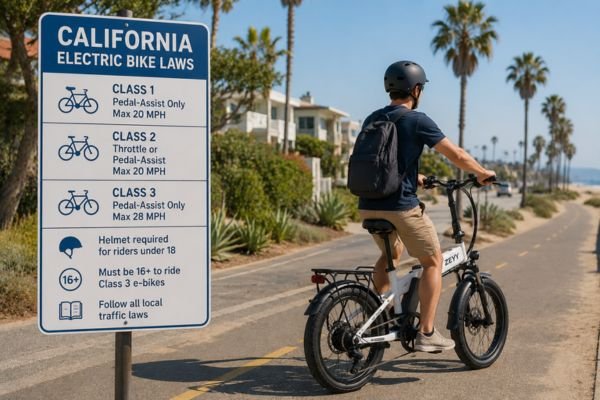
California has become one of the largest markets for electric dirt bikes in the United States. From weekend trail riders to commuters looking for off-road adventure, models like the ALTIS lineup, Sur Ron, Talaria, and E Ride Pro have introduced thousands of new riders to electric off-road riding.
Unfortunately, they’ve also created a great deal of confusion.
One of the most common questions new owners ask isn’t about battery range or top speed—it’s whether they’re actually allowed to ride their bike where they want.
Can you ride an electric dirt bike on public streets?
Do you need to register it with the California DMV?
Is a driver’s license required?
Can you legally ride on bike paths or neighborhood roads?
The answer depends on how California classifies your vehicle.
Many riders mistakenly assume that electric dirt bikes are treated like electric bicycles simply because they’re powered by electricity. In reality, most modern electric dirt bikes fall into an entirely different legal category.
Understanding that distinction before purchasing a bike can save you from unexpected fines, registration problems, or even having your bike impounded for being operated in the wrong location.
This guide explains how California currently regulates electric dirt bikes, where they may legally be ridden, when registration is required, and the practical steps every rider should take before heading out on the trail.
While we’ll cover the general rules that apply across the state, always remember that local cities, counties, and land managers may impose additional restrictions on where off-highway vehicles can be operated.
If you’re looking for the short version, here’s what most riders need to know.
| Question | Quick Answer |
|---|---|
| Are electric dirt bikes street legal in California? | Most off-road electric dirt bikes are not street legal in their factory configuration. |
| Do electric dirt bikes need DMV registration? | Most off-highway electric motorcycles require California OHV identification to operate in designated public riding areas. |
| Can you ride on public roads? | Generally no, unless the vehicle is legally registered and equipped for on-road use. |
| Can you ride on bike paths? | No. Electric dirt bikes are not classified as electric bicycles. |
| Can you ride on private property? | Yes, with the property owner’s permission. |
| Do helmet laws apply? | Yes. Appropriate protective equipment is strongly recommended, and specific legal requirements depend on where and how the vehicle is operated. |
Although these answers cover the most common situations, the details become much more important once you understand how California defines different types of electric vehicles.
One of the biggest reasons riders become confused is that not every electric two-wheeled vehicle is regulated the same way.
California separates electric vehicles into several different categories, each with its own legal requirements.
Understanding these categories is the first step toward riding legally.
Electric bicycles are designed primarily for bicycle use.
They include fully functional pedals and must meet California’s legal definition of an e-bike.
Because of these requirements, electric bicycles can generally be ridden in places where bicycles are permitted, subject to local regulations.
Most electric dirt bikes do not meet this definition because they lack pedals and produce significantly more power than an electric bicycle is allowed to have.
Models such as the ALTIS, Sur Ron, Talaria, and E Ride Pro are generally designed primarily for off-road use.
Beginning in 2026, California law specifically recognizes off-highway electric motorcycles (often called eMotos) as a category of off-highway vehicle (OHV). These vehicles are subject to OHV identification requirements when operated in designated public OHV riding areas.
That distinction is important because many new owners mistakenly assume these bikes are simply “powerful e-bikes.”
Legally, they are treated very differently.
A street-legal motorcycle must satisfy both California registration requirements and applicable federal safety standards for highway use.
Simply installing mirrors, lights, or turn signals on an off-road electric dirt bike does not automatically make it legal to ride on public streets. Whether a vehicle can be registered for on-road use depends on how it was manufactured and certified.
Understanding this difference is one of the most important things any buyer can learn before purchasing an electric dirt bike.
This is easily the question we receive most often.
For the vast majority of riders, the answer is straightforward:
Most electric dirt bikes sold for off-road riding are not street legal in California when purchased from the factory.
That’s because they are manufactured as off-highway vehicles rather than highway-certified motorcycles.
California specifically distinguishes off-highway electric motorcycles from electric bicycles and generally requires them to be operated in appropriate locations, such as designated OHV areas or private property where riding is permitted.
This means that riding an off-road eMoto on neighborhood streets, public roads, bike lanes, or shared-use paths can lead to legal issues, even if the bike is quiet or battery-powered.
One of the biggest misconceptions among first-time buyers is believing that an electric motor automatically makes the vehicle an electric bicycle.
It doesn’t.
How the bike was designed, manufactured, and classified matters far more than the fact that it runs on electricity.
Part of the confusion comes from the rapid growth of the electric off-road market.
Many popular bikes look similar to mountain bikes at first glance, yet their performance is closer to that of lightweight motorcycles.
Others are advertised online using terms like electric bike, eMoto, electric motorcycle, and electric dirt bike interchangeably.
Unfortunately, those marketing terms don’t determine how California law classifies the vehicle.
The legal classification depends on factors such as:
Understanding those differences before purchasing a bike can save new owners considerable time, money, and frustration.
Now that we’ve covered how California classifies electric dirt bikes and why most off-road models aren’t automatically street legal, it’s time to look at the practical side of ownership.
In the next section, we’ll explain:
For many new owners, registration is one of the most confusing parts of owning an electric dirt bike.
The answer depends on where you plan to ride and how your bike is classified under California law.
Beginning in 2026, California officially recognizes off-highway electric motorcycles (eMotos) as a type of Off-Highway Vehicle (OHV). That means most electric dirt bikes designed primarily for off-road use—including many popular models from brands such as ALTIS, Sur Ron, Talaria, and E Ride Pro—must follow California’s OHV identification requirements when ridden in designated public OHV recreation areas.
Unlike passenger cars or street motorcycles, these vehicles generally receive an OHV identification plate or permit rather than standard on-road registration.
If your electric dirt bike will be operated in public OHV riding areas managed by California or other public agencies, it generally needs valid California OHV identification unless a specific exemption applies.
Examples include:
Registration helps identify vehicles using these recreation areas and supports California’s OHV program.
If you ride only on private property with the landowner’s permission, OHV identification generally isn’t required.
This is another question that doesn’t have a one-size-fits-all answer.
Whether a driver’s license is required depends largely on where the vehicle is being operated and how it is legally registered.
For an electric dirt bike being used off-road in designated riding areas, California’s OHV rules are different from the licensing rules that apply to vehicles operated on public highways.
If a motorcycle is legally registered for highway use, California’s motorcycle licensing requirements apply. However, most factory-built off-road eMotos are not highway-registered motorcycles.
Because licensing requirements can vary depending on the riding location and vehicle classification, riders should always review the latest California DMV guidance before riding.
Knowing where you can ride is just as important as knowing what you can ride.
Many enforcement issues occur because riders mistakenly assume electric dirt bikes can be used anywhere an electric bicycle can go.
That’s simply not the case.
California offers hundreds of miles of trails and multiple Off-Highway Vehicle recreation areas specifically designed for motorcycles, ATVs, and electric off-road motorcycles.
These areas remain the best option for legal recreational riding.
Before visiting, check:
Private property is often the simplest place to ride legally.
With the property owner’s permission, riders generally have much greater flexibility than they would on public land.
Even so, riders should always operate responsibly and be mindful of nearby homes, livestock, and local noise ordinances.
For most factory-built electric dirt bikes, public streets are not legal riding locations.
Because these vehicles are typically manufactured for off-road use rather than highway use, they generally cannot be operated on public roads simply because they’re electric.
If you need a vehicle for commuting or neighborhood transportation, you should look for a motorcycle or other vehicle specifically certified for on-road use.
One of the biggest misconceptions is believing that an electric dirt bike qualifies as an electric bicycle.
It doesn’t.
California’s electric bicycle rules apply only to vehicles that meet the legal definition of an e-bike.
Most electric dirt bikes do not qualify because they lack pedals and are significantly more powerful. As a result, they generally are not permitted on bicycle paths, bike lanes, or shared-use trails that are intended for bicycles.
Even when riding legally, safety should always be your first priority.
California has long required helmet use for motorcycle riders on public roads, and riders using OHV recreation areas should also wear appropriate protective equipment for off-road riding.
At a minimum, every rider should wear:
Parents purchasing an electric dirt bike for a teenager should treat protective gear as part of the overall cost of ownership—not an optional accessory.
Many violations happen because riders misunderstand how California classifies electric dirt bikes.
Here are some of the most common mistakes.
Electric power alone doesn’t determine how a vehicle is classified.
Most electric dirt bikes fall under California’s OHV rules rather than e-bike regulations.
Even quiet electric dirt bikes are generally not legal for ordinary street use if they were manufactured as off-highway vehicles.
If you’re planning to ride in California’s designated OHV recreation areas, don’t assume you can simply unload the bike and ride.
Make sure your bike has the required OHV identification before heading to public riding areas.
In the final section, we’ll answer the questions riders ask most often, including:
We’ll also include a quick-reference legal checklist and a summary of the rules every California rider should know before hitting the trail.
Understanding California’s electric dirt bike laws can feel overwhelming, especially since regulations have evolved alongside the rapid growth of electric off-road motorcycles. Here are answers to some of the questions riders ask most often.
Yes—but where and how you ride matters.
Most electric dirt bikes designed for off-road use are legal to own in California. However, they are generally intended for riding on private property or in designated Off-Highway Vehicle (OHV) recreation areas, rather than on public streets. California now specifically recognizes qualifying off-highway electric motorcycles (eMotos) as a type of OHV.
In most cases, no.
Factory-built electric dirt bikes such as many ALTIS, Sur Ron, Talaria, and E Ride Pro models are designed primarily for off-road use and generally are not highway-certified motorcycles.
If a vehicle was not originally manufactured and certified for highway use, adding mirrors, lights, or turn signals usually does not make it legal to operate on public roads.
Generally, no.
Electric dirt bikes are different from California’s legally defined electric bicycles.
Because most electric dirt bikes do not have pedals and produce substantially more power, they are typically regulated under OHV rules rather than e-bike rules.
Insurance requirements depend on how the vehicle is registered and where it is operated.
If your bike is used strictly as an off-highway vehicle, insurance requirements differ from those that apply to street-registered motorcycles. If you have questions about your specific situation, contact your insurance provider or the California DMV before riding.
Yes, teenagers can legally ride electric dirt bikes in appropriate locations, such as private property with permission or designated OHV recreation areas, provided all applicable California laws and safety requirements are followed.
Parents should also ensure that young riders wear proper protective equipment and operate bikes that match their experience level.
This is one of the most misunderstood topics.
Some motorcycles manufactured for off-road use may have different registration pathways depending on how they were originally built and certified. However, many popular electric dirt bikes that are manufactured specifically for off-road use are not eligible for simple aftermarket conversion into street-legal motorcycles in California. Always verify your specific model with the California DMV before making modifications or assuming it can be registered for highway use.
Consequences vary depending on the circumstances and local enforcement.
Riders may be subject to citations, fines, or other enforcement actions if they operate an off-highway electric motorcycle where it is not legally permitted.
The safest approach is to ride only in locations where your vehicle is legally authorized.
Before heading out, ask yourself these questions:
✅ Am I riding in a legal location?
✅ Does my bike have the required OHV identification if I’m using public OHV land?
✅ Am I wearing a properly fitted helmet and protective riding gear?
✅ Have I checked local rules or seasonal trail closures?
✅ Do I understand whether my bike is classified as an OHV or a highway motorcycle?
Taking a few minutes to confirm these items can help prevent unnecessary problems and make your ride more enjoyable.
If you’re shopping for your first electric dirt bike, legal compliance should be part of your decision—not an afterthought.
Before buying any model, consider the following questions:
Answering these questions before purchasing can help you choose a model that fits both your riding goals and California’s legal framework.
California offers some of the best off-road riding opportunities in the country, and electric dirt bikes continue to grow in popularity thanks to their quiet operation, low maintenance, and exciting performance.
At the same time, California’s legal framework makes an important distinction between electric bicycles, off-highway electric motorcycles, and street-legal motorcycles. Understanding those differences is essential before purchasing or riding an electric dirt bike.
For most riders, the safest approach is straightforward:
Spending a little time learning the rules before your first ride can save considerable time, money, and frustration later.
As California’s electric off-road market continues to evolve, it’s also a good idea to review updates from the California DMV and California State Parks periodically, since regulations and administrative guidance may change over time.
For the most up-to-date information, consult the official California resources:
Electric motocross and electric enduro motorcycles can look very similar, and in some cases they even share the same motor,
Electric enduro motorcycles are becoming an increasingly appealing option for riders who want strong acceleration, precise low-speed control, and less
Electric enduro motorcycles are becoming an increasingly appealing option for riders who want strong acceleration, precise low-speed control, and less
The Talaria XXX Pro and Talaria Sting R MX4 are two popular options for riders looking for a lightweight electric
