Electric Motocross vs Electric Enduro: What’s the Difference?
Electric motocross and electric enduro motorcycles can look very similar, and in some cases they even share the same motor,

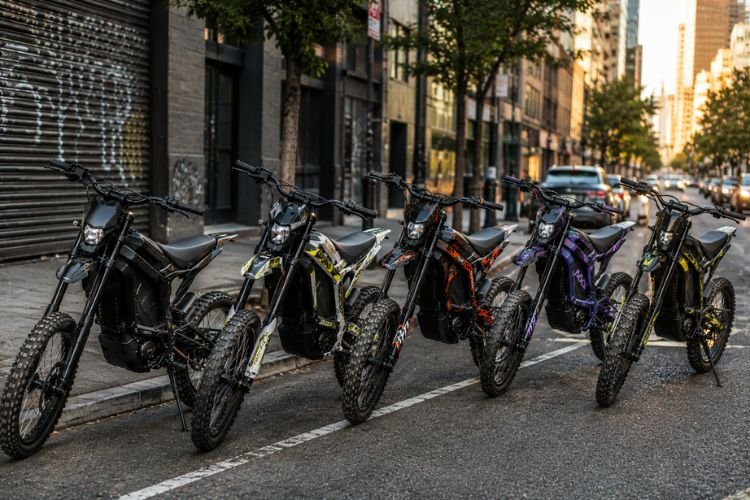
High-power electric dirt bikes have changed dramatically. A few years ago, riders often bought a lightweight e-moto and immediately started planning a higher-voltage battery and aftermarket controller. In 2026, that is no longer the only route. Several manufacturers now offer serious factory performance, larger batteries, stronger brakes, and more capable chassis without requiring an expensive powertrain rebuild on day one.
That creates a new problem: more power doesn’t automatically mean a better electric dirt bike. A 20 kW machine may look superior to a 13 kW bike on paper, but weight, throttle response, traction, suspension, battery capacity, and thermal management determine how much of that performance you can actually use. Tight woodland trails demand something very different from fast desert riding.
This guide to the Best High-Power Electric Dirt Bikes 2026 focuses on that usable performance rather than simply ranking bikes by the largest advertised peak-power number. We’ll compare some of the most relevant high-performance models from Altis, E Ride Pro, Talaria, Sur Ron, and Arctic Leopard, while looking at the compromises that come with increasingly powerful electric motorcycles.
Exact specifications can vary by model year, market, firmware, and configuration, so buyers should always verify the motorcycle being sold by their dealer. The table below is intended to show where each bike fits rather than turn a complicated buying decision into a single number.
| Model | Performance Class | Main Strength | Best For |
|---|---|---|---|
| Altis Sigma | High-Power Lightweight | Strong power-to-weight performance | Performance-focused riders |
| E Ride Pro | High-Power Lightweight | Strong factory electrical package | Riders who don’t want immediate power upgrades |
| Talaria MX5 Sting Pro | High-Power Lightweight | Balanced 72V platform | All-around trail riding |
| Sur Ron Ultra Bee | Mid-Weight High Performance | Larger, more capable chassis | Fast and rough terrain |
| Arctic Leopard EXE 880 | Battery-Focused High Performance | Large-battery approach | Longer trail sessions |
| Altis Delta | Higher-Level Performance | More substantial performance platform | Experienced riders wanting to step up |
There are faster electric motorcycles and there are lighter e-motos, but this list is focused on machines that make sense for riders shopping for serious off-road electric performance rather than theoretical maximum numbers.
The Sur Ron Light Bee X is intentionally not one of the primary high-power picks. It remains one of the most important lightweight e-moto platforms and has an enormous aftermarket, but its stock performance no longer represents the high-power benchmark. A modified Light Bee can be extremely powerful, but that becomes a custom build rather than a factory-bike comparison.
There is no universal industry definition of “high-power electric dirt bike.” The category ranges from lightweight machines that resemble oversized mountain bikes to electric motorcycles approaching conventional enduro dimensions and performance.
For this guide, high-power means more than having enough output for casual recreational riding. We are looking primarily at bikes with factory powertrains designed to deliver strong acceleration, serious climbing ability, and speeds that move well beyond conventional pedal-assist e-bike territory.
The distinction between peak power and continuous power is important. Peak output describes what the electrical system can produce for a limited period under suitable conditions. Continuous output describes what it can sustain. Manufacturers may measure and advertise these figures differently, which is why comparing two bikes purely from the largest kW number can be misleading.
Voltage is equally easy to oversimplify. A 72V system can support strong performance and lower current for a given power level compared with a lower-voltage system, but voltage alone doesn’t determine which motorcycle is better. Battery energy, controller limits, motor design, cooling, gearing, software, and overall efficiency all contribute to the final result.
The same applies to top speed. Once an electric dirt bike can reach approximately motorcycle-level speeds, an additional few mph may matter less on trails than suspension quality, braking, throttle calibration, and weight.
In other words, high power should describe the complete riding experience, not just the biggest number on the specification sheet.
The Altis Sigma has become one of the most interesting choices for riders who want to keep the playful character of a lightweight e-moto while moving into much more serious factory performance.
That combination is important. As batteries become larger and motors become more powerful, electric dirt bikes tend to gain weight. Extra mass can improve stability in some situations, but it also changes what makes lightweight e-motos so entertaining. Technical trails, tight corners, quick direction changes, and low-speed maneuvers all reward a motorcycle that doesn’t feel unnecessarily heavy.
The Sigma’s appeal is therefore not simply about peak output. It is the relationship between power and chassis size.
For riders coming from a stock Sur Ron Light Bee X, older Talaria, or lower-powered electric dirt bike, the difference can be substantial. Strong factory output reduces the need to immediately start researching a new battery and controller, while the compact format retains much of the maneuverability riders expect from this category.
The Sigma is particularly attractive to experienced riders who already know they will want more performance. Buying a lower-powered motorcycle because it costs less can become false economy if the first upgrades are an expensive battery, controller, brakes, and supporting components.
Starting with a stronger factory package can simplify that process.
At the same time, high output isn’t automatically beginner-friendly. Electric torque arrives immediately, and on loose surfaces there is a point where more power simply creates more wheelspin. Riders need good throttle control to take advantage of the Sigma’s performance rather than constantly fighting it.
That is why we see the Sigma as a performance-focused lightweight option, rather than the automatic recommendation for everyone. A newer rider who spends most of the time on tight trails may be happier with less output and an easier learning curve.
For an experienced rider who wants serious acceleration without moving to a much larger electric motorcycle, however, the Sigma deserves a place near the top of the list.
E Ride Pro helped accelerate an important change in the lightweight electric dirt bike market: riders no longer had to assume that buying the bike was only the beginning of an expensive powertrain build.
The attraction of E Ride Pro is straightforward. Depending on the exact model, buyers can get a high-voltage battery system, powerful controller and motor package, and strong acceleration from the factory. That matters because aftermarket power builds become expensive quickly.
A traditional upgrade path might involve buying the motorcycle, then replacing the controller and battery. More speed can expose limitations in brakes, tires, suspension, and drivetrain components, leading to additional spending. By the time the project reaches the desired performance level, the total investment may be much higher than the original purchase price suggested.
E Ride Pro’s factory-performance philosophy attempts to reduce that gap.
It is important not to treat E Ride Pro as a single motorcycle. The lineup has evolved, and different models target different performance and price levels. A comparison using specifications from an older E Ride Pro model may not accurately describe what a 2026 buyer is actually considering.
That is why shoppers should compare the exact model available from their dealer, including battery energy, peak and rated output, suspension, brakes, wheel setup, weight, warranty, and delivered price.
For this guide, E Ride Pro earns its position because of the broader philosophy behind the platform: serious stock performance with less pressure to immediately replace major electrical components.
The tradeoff is that its aftermarket ecosystem is younger than Sur Ron’s. That may matter to riders who want to replace almost every part of the bike over several years. It matters much less to someone who specifically chose E Ride Pro because they don’t want to perform a major electrical build.
Parts and dealer support should still be investigated before buying. High-performance electronics are impressive when working correctly, but a strong dealer network becomes valuable when a proprietary charger, display, sensor, controller, or battery component eventually needs attention.
For riders who want to buy a fast lightweight electric dirt bike and spend more time riding than building, E Ride Pro remains one of the most relevant options in 2026.
The Talaria MX5 Sting Pro takes a slightly different approach. Instead of pushing only for maximum headline output, it combines modern high-voltage performance with an already established Talaria platform.
The commonly sold MX5 configuration uses a 72V 40Ah battery and is widely listed at approximately 13.4 kW peak output. Those figures put it well beyond the older 60V MX4 Sting R and firmly into the modern high-performance lightweight e-moto category.
Yet the reason the MX5 belongs on this list isn’t simply 13.4 kW.
Talaria already had years of Sting development before introducing the MX5. Owners benefit from an established community, growing aftermarket, widely understood maintenance requirements, and the brand’s familiar gearbox-based drivetrain. Talaria also upgraded supporting hardware such as the braking system to better match the additional performance.
The MX5 makes sense for riders who want enough factory power that they aren’t immediately thinking about replacing the battery and controller, but who still value manageable size and trail agility.
On mixed terrain, that balance can matter more than having the highest peak-output figure in the group. Technical climbs need torque, but they also need traction. Fast sections reward power, but they also require stable suspension and good brakes. Tight sections punish unnecessary weight.
The MX5 attempts to cover all of those situations rather than specializing entirely in one.
Its gearbox also distinguishes it from some competitors. The reduction gearbox requires periodic lubricant maintenance, so the bike isn’t maintenance-free, but many riders appreciate the robust drivetrain arrangement for off-road use.
The biggest limitation is that riders obsessed with maximum factory output may find more aggressive alternatives. But that is also why the MX5 works so well as an all-around recommendation. Most trail riders don’t spend their entire ride at full throttle, and there is a point where additional peak power becomes less useful than predictable delivery, good traction, and balanced handling.
For someone who wants high performance without turning every ride into a horsepower contest, the MX5 is one of the strongest options in the category.
At this point, it is worth addressing the number that dominates high-performance electric dirt bike marketing: kilowatts.
Suppose one motorcycle advertises 13 kW and another advertises 20 kW. It is tempting to conclude that the second bike is dramatically better. On a dyno or straight acceleration run, the difference may indeed be obvious. On an actual trail, the result becomes more complicated.
The rear tire can only transmit a limited amount of torque before losing traction. Loose dirt, mud, rocks, roots, and steep climbs reduce that limit further. Once the rear wheel is spinning, additional motor output isn’t automatically creating forward acceleration.
Weight matters too. A lighter bike can change direction more quickly and require less effort from the rider. This is why power-to-weight ratio often tells us more about the character of an electric dirt bike than peak power alone.
Then there is heat. A motor and controller capable of producing an enormous short-duration peak don’t necessarily maintain that performance indefinitely. Long climbs, high ambient temperatures, deep sand, and sustained high-speed riding can put much greater thermal load on the electrical system.
That makes usable power more important than theoretical maximum power.
The best high-power electric dirt bike should deliver strong output predictably, maintain performance under the conditions it was designed for, and have a chassis capable of controlling the speed it produces.
This is also why our ranking doesn’t simply place the bike with the highest advertised kW figure at number one.
That brings us to three different high-performance approaches: the Sur Ron Ultra Bee, Arctic Leopard EXE 880, and Altis Delta.
The Sur Ron Ultra Bee is important because it answers a question many experienced lightweight e-moto riders eventually ask: should I keep adding power to a compact bike, or move to a larger chassis?
The Ultra Bee takes the second approach. It sits above the Light Bee X in size and overall motorcycle feel, providing more substantial ergonomics and a chassis better suited to riders who want to carry speed through rough terrain. It is still much more manageable than many full-size electric motorcycles, but it no longer feels like an oversized mountain bike.
That difference becomes valuable as power and speed increase. Strong acceleration is only useful if the suspension, brakes, tires, and chassis can manage it. On fast fire roads, rough trails, larger bumps, and more aggressive off-road riding, a more substantial platform can provide confidence that a smaller lightweight chassis may struggle to match.
The tradeoff is obvious: weight.
A Light Bee-style machine can be incredibly easy to move around technical terrain. The Ultra Bee asks the rider to manage more mass, particularly during tight switchbacks, low-speed obstacles, and recovery after a fall. For smaller riders or anyone who primarily rides tight woodland single-track, that extra size isn’t automatically an improvement.
The Ultra Bee makes the most sense for experienced riders who have begun to feel limited by the chassis rather than the motor.
If you are constantly considering suspension, wheel, brake, and ergonomic upgrades to make a smaller e-moto behave more like a conventional dirt bike, moving to an Ultra Bee may be a better long-term decision. Taller and heavier riders may also appreciate the additional room.
Sur Ron’s mature ecosystem adds another advantage. The brand has one of the largest owner communities in the electric dirt bike market, and the Ultra Bee benefits from a substantial and growing selection of aftermarket components, setup knowledge, and replacement parts.
For riders chasing the lowest possible weight, it isn’t our first recommendation. But if your definition of high performance includes chassis capability and stability rather than peak motor output alone, the Ultra Bee remains one of the most important electric dirt bikes to consider.
The Arctic Leopard EXE 880 approaches high performance from another direction. While lightweight bikes emphasize power-to-weight ratio, the EXE 880 is particularly interesting to riders who care about carrying substantial battery energy for longer sessions.
This distinction matters because increasing motor output without considering battery capacity can create an unbalanced motorcycle. High power encourages harder acceleration and higher average speeds, both of which increase energy consumption. A motorcycle can feel spectacular for the first part of a ride but still become frustrating if range constantly dictates when you have to turn around.
A larger battery can help solve that problem, but it introduces one of the central compromises of electric motorcycles: energy has weight.
Adding more cells increases stored energy but also changes handling. A battery-focused motorcycle may provide more confidence for long rides while feeling less effortless than a lightweight machine through repeated technical obstacles.
This makes the EXE 880 a particularly interesting option for riders who spend more time exploring longer routes than playing on extremely tight trails.
The EXE 880 also illustrates why range needs to be evaluated carefully.
A larger battery should generally provide more available energy, but real-world range depends on much more than capacity. Rider weight, speed, terrain, tire choice, elevation, temperature, motor efficiency, and throttle use all affect consumption.
Two riders on identical motorcycles can therefore return with very different battery percentages.
High-speed riding is especially demanding. Aerodynamic drag rises rapidly as speed increases, which means maintaining higher speeds can consume dramatically more energy than cruising moderately. Deep sand, mud, steep climbs, and repeated hard acceleration can have similar effects.
This is why claimed maximum range shouldn’t be used as the only comparison metric. A manufacturer may test under conditions that look nothing like aggressive off-road riding.
For an EXE 880 buyer, the better question is whether the larger-battery approach provides enough additional usable riding time to justify the added size and weight.
Arctic Leopard doesn’t yet have the same aftermarket depth or accumulated owner knowledge as Sur Ron. That doesn’t automatically make the EXE 880 difficult to own, but it means the dealer becomes more important.
Before purchasing, confirm access to proprietary components such as the battery, charger, controller, display, wiring, plastics, and model-specific drivetrain parts. Ask how warranty claims are handled and whether replacement parts are stocked domestically.
High-performance specifications are exciting when shopping. Parts availability becomes exciting when something breaks.
A good distributor or dealer can therefore significantly change the ownership equation for the EXE 880.
For riders with strong local support who prioritize battery capacity and longer trail sessions, it remains a compelling alternative to the more common lightweight high-power platforms.
The Altis Delta belongs in this guide because it represents another step in the progression from lightweight e-moto toward more substantial electric off-road motorcycle.
That distinction is important. At some point, continuing to add power to a very light chassis becomes less useful than building a motorcycle with suspension, brakes, wheels, geometry, and ergonomics designed around greater performance.
The Delta therefore shouldn’t be viewed simply as “a bigger Sigma.” The buying question is different.
A Sigma-style platform appeals to riders who want an exceptional combination of low weight and strong output. A more substantial bike such as the Delta can make greater sense when the rider values stability, rough-terrain capability, and a more motorcycle-like riding position.
This is particularly relevant for experienced riders coming from gasoline dirt bikes. Someone accustomed to full-size off-road motorcycles may find compact e-motos entertaining but physically small. Strong motor output doesn’t necessarily solve cramped ergonomics or limited chassis dimensions.
The choice between these two demonstrates the central theme of this entire guide.
If your riding is dominated by technical trails, quick direction changes, and situations where low weight matters, the Sigma’s lighter philosophy can be more appealing. You don’t need the largest motorcycle to have the fastest or most enjoyable ride.
The Delta becomes more interesting as speed and terrain intensity increase. A larger platform can give the rider more room and create a more planted feel when conditions become rough.
Neither approach is inherently better.
A rider upgrading from a Light Bee X may love the familiar lightweight character of the Sigma. A rider coming from motocross or enduro motorcycles may feel more comfortable moving toward the Delta.
This is why high-power electric dirt bikes should be divided by weight and chassis class, not simply ranked from highest to lowest kW.
The most important decision may actually happen before you choose a brand.
Do you want a lightweight high-power e-moto or a more substantial electric dirt motorcycle?
Lightweight platforms such as the Sigma, MX5, and comparable E Ride Pro models emphasize power-to-weight ratio. They are easier to maneuver, easier to transport, and less exhausting when the terrain becomes technical. Their compact dimensions are part of the appeal.
Mid-weight motorcycles such as the Ultra Bee trade some of that agility for a larger chassis, more room, and greater stability. Battery-focused or more substantial platforms can push the tradeoff further.
Neither class wins everywhere.
| Riding Priority | Better Direction |
|---|---|
| Tight technical trails | Lightweight |
| Quick direction changes | Lightweight |
| Easier recovery after falls | Lightweight |
| Easier transport | Lightweight |
| Fast open trails | Mid-weight |
| Rough terrain at speed | Mid-weight |
| Taller rider ergonomics | Mid-weight |
| More motorcycle-like feel | Mid-weight |
| Maximum battery capacity | Often mid-weight |
| Playful handling | Lightweight |
This table may be more useful than comparing another five peak-power figures.
Power and range often work against each other in the real world.
A high-performance motor doesn’t constantly consume its maximum rated output, but riders tend to use the capability available to them. Hard acceleration, sustained speed, steep climbing, and wheelspin all consume additional energy.
This means buying a larger battery doesn’t necessarily produce the range increase expected if the new motorcycle also encourages significantly more aggressive riding.
The same principle explains why two range tests of the same bike can produce dramatically different results.
For trail riding, watt-hours per mile—or watt-hours per kilometer—is often more useful than a manufacturer’s maximum-range claim. Unfortunately, terrain makes even that measurement variable.
The practical solution is to buy enough battery for your normal riding with a sensible reserve rather than automatically choosing the largest pack available.
If you normally return home with 40% battery remaining, carrying substantially more cells every ride may only add weight. If you regularly finish with less than 10%, battery capacity should become a major buying priority.
This is the question that high-performance marketing rarely asks.
For a newer rider, even a relatively modest electric dirt bike can provide more than enough acceleration to learn trail riding. Increasing peak output doesn’t improve braking technique, cornering, balance, line selection, or throttle control.
For intermediate riders, high-power lightweight bikes become more attractive because additional torque can be useful for steep climbs, quick acceleration, and faster terrain while still retaining manageable dimensions.
Experienced riders are more likely to take advantage of the strongest platforms, particularly on open terrain. But even then, the highest-output bike isn’t automatically fastest through a technical trail.
Traction remains the limit.
If the rear tire is already spinning, additional motor power doesn’t produce proportional forward acceleration. Better tires, throttle mapping, suspension setup, and rider technique may make the bike faster than another increase in peak output.
There is also the chassis to consider. Once speeds rise significantly, suspension and braking performance become increasingly important. A motorcycle capable of accelerating quickly should also remain composed when hitting rough terrain and be able to repeatedly slow down without overwhelming its brakes.
High power works best when the entire motorcycle has been designed around it.
Rather than starting with peak kW, we recommend looking at five things together: usable performance, weight, battery energy, chassis capability, and ownership support.
Usable performance tells you how the motorcycle behaves beyond a short full-throttle run. Weight tells you how much effort it will require throughout the ride. Battery energy determines how long you can use the performance. Chassis capability determines whether the motorcycle can safely and comfortably control its speed.
Ownership support is the category most buyers forget.
A motorcycle may look outstanding on paper, but eventually it will need tires, brake pads, bearings, drivetrain parts, suspension service, and potentially proprietary electrical components. A reliable source for batteries, controllers, chargers, displays, sensors, and bodywork can make a major difference over several years of ownership.
That is one reason established platforms such as Sur Ron and Talaria continue to compete effectively even when newer motorcycles advertise impressive numbers.
The best specification sheet lasts until something needs replacing.
After comparing the Altis Sigma, E Ride Pro, Talaria MX5 Sting Pro, Sur Ron Ultra Bee, Arctic Leopard EXE 880, and Altis Delta, the biggest lesson is straightforward: the most powerful electric dirt bike isn’t automatically the best one to own.
Power matters, but only when the rest of the motorcycle can use it. Weight determines how the bike feels through every corner. Battery capacity determines how long you can ride. Suspension and brakes determine how confidently you can use the available speed, while parts and dealer support determine what ownership looks like long after the first ride.
That makes the final buying decision much easier if you start with your riding style rather than a peak-kilowatt figure.
For most riders, these six motorcycles can be separated by what each one does particularly well.
| Category | Recommended Bike | Why |
|---|---|---|
| Best Lightweight Performance | Altis Sigma | Strong performance without giving up lightweight character |
| Best Factory-Performance Choice | E Ride Pro | High-output philosophy with less need for immediate electrical upgrades |
| Best All-Around Choice | Talaria MX5 Sting Pro | Strong balance of power, handling, platform maturity, and aftermarket |
| Best Mid-Weight Choice | Sur Ron Ultra Bee | Larger chassis and more motorcycle-like riding experience |
| Best Battery-Focused Choice | Arctic Leopard EXE 880 | Better suited to buyers prioritizing energy capacity |
| Best Step Beyond Lightweight E-Motos | Altis Delta | More substantial high-performance platform |
These aren’t absolute winners. Model specifications, prices, and dealer support can change, and two riders using the same motorcycle on different terrain may reach completely different conclusions. The table is better viewed as a starting point for narrowing down the category.
The Altis Sigma makes the most sense for riders who want serious acceleration but don’t want their electric dirt bike to become unnecessarily large and heavy.
That power-to-weight approach is particularly valuable on technical terrain. Tight corners, steep climbs, quick direction changes, and low-speed obstacles reward agility. Additional motor output can help, but only if the motorcycle remains controllable enough to put that power into the ground.
The Sigma therefore suits experienced lightweight e-moto riders who are ready for substantially stronger performance but still enjoy the compact riding experience. Someone upgrading from a stock Light Bee X or older lightweight platform may find this combination especially appealing.
E Ride Pro is a strong choice for riders who don’t want to treat their new motorcycle as the beginning of a powertrain project.
The traditional high-performance e-moto build often involves replacing a controller and battery, then upgrading supporting hardware as speed increases. That route can produce an exceptional custom bike, but it also costs money and introduces compatibility considerations.
E Ride Pro’s appeal is getting much closer to that high-performance experience from the factory.
The exact model matters, particularly in 2026 as product lineups continue to evolve. Buyers should compare current battery capacity, output, suspension, brakes, weight, warranty, and delivered price rather than relying on older specification comparisons.
If your priority is buy it, set it up, and ride it fast, E Ride Pro deserves serious consideration.
The Talaria MX5 is arguably the easiest all-around recommendation because it doesn’t need to dominate one extreme category.
Its commonly sold 72V 40Ah configuration and approximately 13.4 kW peak output provide substantially more factory performance than earlier Talaria platforms. At the same time, it retains relatively compact dimensions, Talaria’s gearbox-based drivetrain, an established owner community, and a growing aftermarket.
For mixed trail riding, that combination works extremely well.
There may be bikes with more advertised power and others with lower weight, but the MX5 provides enough performance that many owners won’t immediately feel pressure to replace the battery or controller. That can make the total ownership cost more attractive than a cheaper platform requiring major modifications.
For someone who doesn’t yet know whether they prioritize maximum power, minimum weight, or a larger chassis, the MX5 is a sensible place to begin the comparison.
The Ultra Bee is the better choice when the chassis itself becomes a priority.
Riders coming from conventional dirt motorcycles may prefer its larger dimensions and more substantial riding position. Taller riders can benefit from additional room, while higher-speed riding can make the more planted chassis feel worthwhile.
The tradeoff is reduced lightweight agility. On extremely tight trails, the additional mass is noticeable, particularly when correcting mistakes or recovering the motorcycle after a fall.
But if you’re already spending money trying to make a lightweight e-moto larger, more stable, and more capable over rough terrain, the Ultra Bee may solve the underlying problem more effectively.
The EXE 880 is worth considering when your main concern isn’t whether the motorcycle has enough acceleration, but whether the battery can support the kind of riding you want to do.
For longer trail sessions, additional energy capacity can be more useful than another increase in peak output. The compromise is that battery cells have physical mass, so range-focused motorcycles may not feel as effortless in tight terrain.
Dealer support deserves extra attention here. Before buying, verify access to proprietary electrical and body components as well as warranty support. A strong local distributor can make a newer platform significantly easier to own.
The Delta becomes relevant when a rider likes the performance direction of bikes such as the Sigma but wants to move beyond the lightweight e-moto format.
Rather than thinking of it simply as “more power,” consider the Delta as a different chassis decision. A more substantial platform can better suit riders coming from motocross or enduro backgrounds, as well as those riding faster and rougher terrain.
If minimum weight and playful handling are central to your riding, stay in the lightweight category. If high-speed stability and a more motorcycle-like platform matter more, stepping up can make sense.
For many riders, no.
That doesn’t make high-power motorcycles pointless. Experienced riders can use strong output for climbing, acceleration, open terrain, and aggressive riding. The mistake is assuming that buying more peak power automatically provides more enjoyment.
On loose trails, traction often becomes the limiting factor before motor output does. If the rear tire is already spinning at 60% throttle, another several kilowatts won’t automatically make the motorcycle climb faster.
Higher power can also consume battery energy more quickly when used aggressively and increase wear on tires, chains, sprockets, and brakes.
For many trail riders, a well-controlled 12–15 kW-class motorcycle may provide more performance than they regularly need. Riders using faster open terrain can benefit more from higher output, provided the chassis, suspension, brakes, and thermal management are designed to support it.
The question shouldn’t be “How much power can I afford?”
It should be “How much power can I actually use?”
A high-power motorcycle isn’t usually the best place for a complete beginner to start.
Electric motors make operation mechanically simple because there is no clutch or conventional manual gearbox to learn, but that simplicity can hide how quickly these motorcycles accelerate. Immediate electric torque can punish poor throttle control.
If a beginner buys a high-output model, adjustable power modes can help, but they shouldn’t be treated as a replacement for learning basic riding skills. Braking, balance, body position, cornering, and smooth throttle control matter far more than maximum speed.
Someone with previous mountain-bike, e-bike, scooter, or motorcycle experience may adapt much faster. A completely new rider may be better served by a lighter and less aggressive motorcycle before moving into the highest-performance category.
They can be, particularly for riders who would otherwise spend heavily modifying a lower-output motorcycle.
Consider the complete cost rather than the purchase price. A cheaper bike plus a high-voltage battery, controller, brakes, suspension, and other supporting components can eventually cost more than a stronger factory platform.
Factory integration can also reduce complexity. A battery, BMS, controller, and motor designed to operate together remove some of the compatibility questions associated with custom builds.
On the other hand, high-power bikes aren’t automatically better value for casual riders. If you never use the additional capability, you’re paying for performance while potentially carrying additional battery and hardware weight.
Buy enough motorcycle for the riding you actually do rather than the specification sheet you want to show someone.
There is no universal definition. In today’s market, the term generally describes electric dirt bikes offering performance well beyond conventional e-bikes, often with high-voltage powertrains and motorcycle-level acceleration. Peak power should always be considered alongside weight, continuous output, chassis capability, and battery capacity.
There isn’t one winner for everyone. The Talaria MX5 Sting Pro is one of the strongest all-around choices, while the Altis Sigma emphasizes lightweight performance and E Ride Pro is attractive for strong factory output. The Ultra Bee better suits riders wanting a larger chassis.
For many trail riders, yes. A 10 kW-class lightweight motorcycle can already deliver serious acceleration. More power becomes increasingly useful for experienced riders, steep climbs, open terrain, and higher-speed riding, but traction and chassis capability remain important.
Not automatically. Higher voltage can support strong power delivery efficiently, but battery energy, controller design, motor efficiency, weight, gearing, and software all matter. Voltage alone shouldn’t determine a purchase.
Real-world range varies too much to declare a universal winner based solely on manufacturer claims. Battery energy, speed, rider weight, terrain, temperature, elevation, and throttle use all matter. Battery-focused platforms such as the Arctic Leopard EXE 880 deserve consideration if longer sessions are a priority.
E Ride Pro is particularly attractive to buyers prioritizing strong factory performance, while the Talaria MX5 offers a balanced combination of 72V power, established platform support, handling, and aftermarket potential. Compare exact current models rather than brands alone.
Yes, but more power isn’t always better on technical trails. Low weight, smooth throttle mapping, traction, suspension, and braking can matter more than maximum output. High power becomes more useful as trails become faster and more open.
Not automatically. Many high-performance electric dirt bikes exceed typical e-bike power and speed classifications and are designed primarily for off-road use. Registration, licensing, insurance, equipment, and road-use requirements vary by jurisdiction, so local regulations should be checked before riding on public roads.
The Best High-Power Electric Dirt Bikes 2026 prove that the category has moved far beyond simply installing a bigger controller on a lightweight e-moto.
For lightweight performance, the Altis Sigma stands out because it combines serious output with an agile platform. E Ride Pro makes a strong case for riders who want high factory performance without immediately planning major electrical upgrades. The Talaria MX5 Sting Pro is our strongest all-around choice because it balances a 72V powertrain, substantial performance, manageable dimensions, an established platform, and aftermarket support.
The Sur Ron Ultra Bee becomes more appealing when riders want a larger chassis and more motorcycle-like feel, while the Arctic Leopard EXE 880 deserves attention from buyers who place greater emphasis on battery capacity and longer trail sessions. The Altis Delta represents another logical direction for experienced riders moving beyond lightweight e-moto dimensions.
Ultimately, don’t choose a high-power electric dirt bike simply because it produces the largest peak-kilowatt figure.
Choose the bike that gives you the best combination of usable power, battery capacity, weight, chassis capability, parts support, and control for the terrain you actually ride.
In 2026, having enough power is becoming easy. Using that power well is what separates the best electric dirt bikes from the rest.
Electric motocross and electric enduro motorcycles can look very similar, and in some cases they even share the same motor,
Electric enduro motorcycles are becoming an increasingly appealing option for riders who want strong acceleration, precise low-speed control, and less
Electric enduro motorcycles are becoming an increasingly appealing option for riders who want strong acceleration, precise low-speed control, and less
The Talaria XXX Pro and Talaria Sting R MX4 are two popular options for riders looking for a lightweight electric
