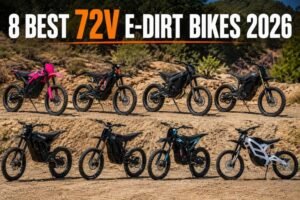
Best 72V Electric Dirt Bikes 2026: 8 Top Picks Compared
The best 72V electric dirt bikes in 2026 combine serious power with larger batteries, stronger controllers, motorcycle-style suspension, and the

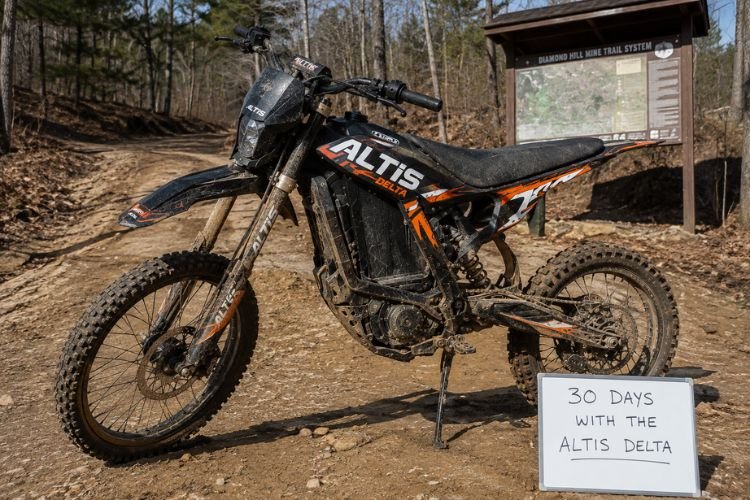
The first ride on a new electric dirt bike is easy to judge. The acceleration feels exciting, the controls are unfamiliar, the suspension feels fresh, and almost everything about the bike gets compared with expectations built from specifications and videos. But owning a bike for several weeks tells you much more than a first ride ever can.
That is what makes 30 Days With the Altis Delta an interesting way to evaluate the bike. After a month, the important questions start changing. Peak power still matters, but so do throttle control, real-world range, charging habits, suspension setup, tire wear, maintenance, and how easy the motorcycle is to live with between rides.
The Altis Delta sits in an interesting position because it brings serious electric performance into a relatively compact off-road platform. On paper, specifications can make almost any high-performance electric dirt bike sound impressive. In real ownership, however, the bikes that stand out are usually the ones that combine performance with predictable controls, usable range, good chassis behavior, and manageable maintenance.
So rather than treating this as another specification review, let’s look at what becomes important during the first 30 days of Altis Delta ownership, what new owners are likely to notice first, and which characteristics take longer to understand.
The Altis Delta makes the most sense for riders who want more than a casual electric bicycle but don’t necessarily want the size and ownership experience of a full-size gas dirt bike. Its electric drivetrain makes everyday operation straightforward, while its off-road chassis means owners still need to think like motorcycle riders when it comes to tires, brakes, suspension, drivetrain maintenance, and protective equipment.
The biggest change during the first month isn’t necessarily the motorcycle itself. It’s the rider’s understanding of it. During the first few rides, acceleration tends to dominate the experience. After several weeks, throttle response, chassis balance, range consistency, suspension setup, and maintenance become much more noticeable.
| First Impression | What Matters After 30 Days |
|---|---|
| Strong acceleration | How controllable the power feels |
| Impressive specifications | Real-world usable performance |
| Battery capacity | Actual range for your riding style |
| Suspension components | Whether the setup fits your weight and terrain |
| Off-road tires | Wear, pressure and traction |
| Electric simplicity | Chain, brakes and chassis maintenance |
| Compact design | Comfort and fit over longer rides |
That distinction is important because a good electric dirt bike shouldn’t only be exciting for the first weekend. It should become easier to understand and more useful as you spend time with it.
The first few rides are mostly about adaptation. Electric power delivery can feel very different if you’re coming from a conventional bicycle, lower-powered e-bike, or gas-powered motorcycle. There’s no need to build engine RPM in the traditional sense, and strong torque can arrive quickly when you ask for it.
For a new Delta owner, the smartest approach during the first several rides is therefore not chasing maximum performance. Spend time learning how the throttle responds, how the brakes feel, how the motorcycle behaves at walking speed, and how easily you can place the front wheel where you want it.
Low-speed control reveals more about a motorcycle than many riders expect. Tight turns, slow climbs, stopping on uneven terrain, and maneuvering around obstacles quickly tell you whether the bike feels natural underneath you.
This is also when you should begin experimenting with setup rather than assuming the factory configuration is perfect for every rider. Controls may need repositioning for comfort, tire pressure needs to match terrain, and suspension settings should eventually reflect rider weight and riding style.
A motorcycle can feel dramatically better after relatively small setup changes.
Something interesting usually happens after several rides on a powerful electric dirt bike: the acceleration that initially felt almost overwhelming starts feeling normal.
That’s when discipline becomes important.
As confidence increases, riders naturally begin accelerating harder, carrying more speed into corners, and trying more difficult terrain. The Delta may feel easier to ride, but that doesn’t mean the consequences of mistakes have changed.
Instead of immediately searching for more speed, this is a good time to focus on smoothness. Can you accelerate without breaking traction unnecessarily? Can you maintain consistent throttle through a corner? Can you climb loose terrain without spinning the rear tire? Can you transition from acceleration to braking without upsetting the chassis?
These skills matter far more off-road than simply being able to use full throttle.
The first week is also when riders begin understanding whether the motorcycle’s physical dimensions work for them. Seat height and specification charts provide useful information before purchase, but actual riding reveals whether the handlebar position, peg relationship, standing posture, and overall ergonomics feel natural.
Range is one of the hardest things to judge from a product page because electric dirt bike energy consumption changes dramatically with riding conditions.
During the second week, owners usually have enough experience to stop asking:
“What is the Altis Delta’s maximum range?”
and start asking:
“How far does my Altis Delta go when I ride it the way I actually ride?”
That’s a much better question.
Real-world range depends on rider weight, speed, terrain, elevation, temperature, tire pressure, surface conditions, and especially throttle use. A relaxed ride on relatively smooth terrain may consume energy slowly, while repeated hard acceleration and steep climbing can drain the same battery much faster.
This is why one owner’s range number shouldn’t automatically become another owner’s expectation. The useful benchmark is consistency. Ride familiar routes, pay attention to starting and ending battery percentage, and learn how different riding styles affect consumption.
After several weeks, battery percentage becomes easier to interpret. Instead of seeing 50% and wondering whether you’ll make it home, you begin developing a much better understanding of what that remaining energy means for your normal terrain.
Charging sounds like one of the least interesting aspects of electric dirt bike ownership, but it becomes part of the real ownership experience very quickly.
During the first few days, owners often think about charging constantly. After a few weeks, it usually becomes routine. You return from riding, inspect the motorcycle, allow components to return to appropriate conditions after demanding use, and charge according to the manufacturer’s instructions when needed.
Good battery habits are worth establishing early. Avoid using incompatible charging equipment, protect connectors from damage and contamination, and pay attention to unusual heat, warnings, or changes in charging behavior. Storage conditions matter too, particularly in very hot or cold environments.
The battery is one of the most valuable components on an electric dirt bike. Treating charging as part of maintenance rather than simply plugging the bike in whenever convenient is a better long-term ownership habit.
A suspension setup that feels acceptable during an exciting first ride may become less impressive once you begin riding the same trails repeatedly.
Perhaps the front feels too firm over small bumps. Maybe the rear feels too active. Perhaps the bike dives more than you’d like during braking, or you want more support when riding aggressively.
That doesn’t automatically mean there’s a suspension problem.
Factory settings need to accommodate a wide range of riders, while your ideal setup depends on weight, speed, terrain, and riding style. Once you’re familiar with the motorcycle, make adjustments according to the manufacturer’s guidance and keep notes rather than randomly changing several settings at once.
Change one thing, ride, evaluate, and then decide whether another adjustment is necessary.
That process may sound slower, but it’s far easier to understand what each change actually accomplished.
By the third week, the headline specifications become less important.
This is when owners start noticing details such as chain noise, tire wear, brake feel, fasteners, control position, suspension behavior, and small rattles that may not have been obvious during the first few rides.
That’s a good thing.
Learning what the Delta normally sounds and feels like makes it easier to recognize when something changes. Electric motorcycles can actually make certain mechanical sounds more noticeable because there’s no loud combustion engine masking chain, tire, brake, and suspension noise.
A new sound doesn’t automatically mean something is failing. It means something deserves inspection.
This is also where the idea that electric dirt bikes are “maintenance-free” begins to disappear. The motor may eliminate many traditional engine services, but the rest of the motorcycle still experiences dirt, vibration, impacts, heat, and wear.
For most new owners, the first month should be more about inspection and adjustment than major replacement. Exact requirements depend on mileage and the manufacturer’s service schedule, so owners should always follow the manual for their specific model and year.
During this period, pay particular attention to tire pressure and condition, brake feel, chain condition and tension, suspension, controls, wheels, visible fasteners, charging behavior, and any unusual warnings or noises.
After muddy or dusty rides, additional cleaning and inspection may be necessary. Mileage isn’t the only thing that determines maintenance. Fifty hard off-road miles can be much more demanding on certain components than several hundred easy miles.
If something repeatedly needs adjustment during the first month, document it rather than simply correcting it every time. A pattern is more useful diagnostically than a single isolated change.
By week four, the novelty has faded enough to make a more useful judgment.
You know what the throttle feels like. You understand the brakes. You have a better idea of real-world range. You know whether the motorcycle fits you physically, and you’ve probably discovered which types of terrain you enjoy riding most.
This is when a genuinely good motorcycle starts distinguishing itself from one that simply makes a strong first impression.
The question is no longer:
“Is the Altis Delta fast?”
It’s:
“Do I actually enjoy riding and owning it?”
For many riders, that answer depends on balance. Performance needs to be accessible rather than intimidating. Range needs to work for typical rides. The chassis needs to inspire confidence. Maintenance needs to feel manageable. And the bike needs to suit the terrain available to the owner.
Those characteristics are much harder to communicate through a specification sheet, which is exactly why a 30-day ownership perspective is valuable.
The biggest lesson isn’t that the Delta suddenly becomes a different motorcycle after a month. It’s that your priorities change.
On day one, power dominates the conversation. By day 30, you’re more likely to care about how smoothly that power can be controlled, how predictable battery consumption feels, how well the suspension works on your regular trails, and how much attention the motorcycle needs between rides.
That’s a healthier way to judge any performance electric dirt bike.
Maximum output may convince someone to click on a product page, but usability determines whether they’ll still enjoy the motorcycle after the excitement of buying it has worn off.
The Delta is likely to make the most sense for riders who genuinely intend to use its off-road capability rather than simply buying based on performance numbers. Riders coming from mountain bikes, e-bikes, lightweight e-motos, or smaller dirt bikes may appreciate having additional performance available without immediately moving into a much larger motorcycle.
Completely inexperienced riders should approach the available performance more cautiously. Powerful electric motorcycles can be straightforward to operate, but straightforward controls don’t automatically make high performance beginner-friendly.
Likewise, riders primarily interested in street transportation should evaluate whether an off-road-oriented electric motorcycle is actually the right tool for their needs and verify the applicable registration and road-use rules in their area.
After the first month, these are the areas worth evaluating rather than judging the motorcycle solely by specifications.
| Ownership Area | What to Ask After 30 Days |
|---|---|
| Power | Is it controllable as well as exciting? |
| Range | Does it cover your normal rides comfortably? |
| Handling | Do you feel confident on your usual terrain? |
| Suspension | Have you found settings that work for you? |
| Brakes | Do they remain predictable and consistent? |
| Battery | Is charging easy to fit into your routine? |
| Maintenance | Are routine inspections manageable? |
| Comfort | Does the riding position work over longer sessions? |
| Reliability | Have any issues repeatedly returned? |
| Overall value | Do you still look forward to riding it? |
That last question matters more than it sounds.
A motorcycle can win every specification comparison and still be the wrong motorcycle for a particular rider.
30 Days With the Altis Delta is long enough to move beyond the honeymoon period, but not long enough to make sweeping claims about years of durability or battery lifespan. That’s an important distinction.
A month can tell you whether the ergonomics work, whether you enjoy the power delivery, whether the real-world range fits your riding, how the suspension behaves on familiar terrain, and what routine maintenance feels like. It can also reveal early annoyances or setup issues that aren’t obvious during a short demo ride.
What 30 days cannot reliably tell you is how the battery will perform after several years or whether every component will survive thousands of hard off-road miles. Those questions require much longer-term evidence.
That’s why the best early ownership verdict isn’t simply “good” or “bad.”
It’s whether the motorcycle becomes better understood and more enjoyable as the miles accumulate.
For the right rider, that’s ultimately more important than how impressive the Altis Delta looks during its first five minutes on the trail.
By the second half of the first month, the Altis Delta is no longer a new toy. You know how the throttle reacts, you have a better idea of how much battery your normal ride consumes, and you start noticing details that were easy to overlook during the first few days.
This is where a 30-day ownership review becomes more useful than a first-ride impression. Instead of asking whether the Delta is powerful, the better questions are whether that power is easy to use, whether the battery fits real riding habits, how the chassis behaves once the pace increases, and whether any small annoyances begin to matter.
During the first few rides, battery percentage can feel difficult to judge because you don’t yet know how quickly your riding style consumes energy. After several weeks on familiar routes, patterns begin to appear.
Hard acceleration, sustained higher speeds, steep climbs, loose terrain, rider weight, temperature, and tire setup can all affect consumption. A relaxed trail ride and an aggressive high-power session may therefore produce very different range from the same battery.
This is why a single maximum-range figure isn’t particularly useful for a 30-day ownership review. What matters more is predictability. By the end of the month, you should have a much better idea of how much battery your normal loop consumes and how much reserve you want before heading farther from your starting point.
That confidence changes the ownership experience. Instead of constantly watching the battery percentage, you begin planning rides around your own real-world data.
For many riders, it becomes much easier to manage.
Range anxiety is strongest when you don’t know what the remaining battery percentage actually means. After repeatedly riding similar terrain, you develop a practical reference point.
If your normal trail loop consistently uses roughly the same portion of the battery under similar conditions, planning becomes straightforward. But it’s still important to leave additional reserve when exploring unfamiliar terrain. A route that looks short on a map may include steep climbs, soft surfaces, or technical sections that consume much more energy than expected.
The best range estimate isn’t necessarily the largest number someone achieved online. It’s the number you’ve learned from your bike, your weight, your terrain, and your riding style.
The Delta’s acceleration may feel dramatic on day one. By week three or four, your brain has adapted.
That doesn’t mean the motorcycle has become slower.
It means you’ve become accustomed to it.
This is actually when you can make a better judgment about the powertrain. Once the initial excitement fades, you start paying more attention to throttle precision. Can you feed power in smoothly on loose dirt? Can you maintain traction during a climb? Does the motorcycle respond predictably when you make small throttle adjustments?
For off-road riding, those characteristics matter more than simply having a large peak-power number.
A bike that produces impressive dyno figures but makes power difficult to control can become tiring on technical terrain. Usable electric performance is about both output and delivery.
Before buying a high-performance electric dirt bike, it’s easy to imagine using maximum power constantly.
Real trail riding usually tells a different story.
On narrow trails, loose climbs, rocks, roots, and tight corners, traction becomes the limiting factor long before motor output does. More throttle isn’t always the fastest way through a section.
As experience increases, good riders often become smoother rather than simply more aggressive. They learn when to use strong acceleration and when a smaller throttle input produces better traction.
That’s one of the most important changes during the first 30 days: you stop asking how much power the Delta has and start learning how much power the terrain can actually accept.
Handling takes longer to evaluate than acceleration.
During a short test ride, almost any unfamiliar motorcycle requires adjustment. After several weeks, you know how the Delta responds when braking into a corner, changing direction, climbing, descending, and moving underneath you while standing.
This is also when rider technique becomes important. Handlebar position, foot placement, body position, tire pressure, and suspension setup can all influence how the motorcycle feels.
If the front end initially feels vague or the rear doesn’t provide the traction you expected, don’t immediately blame the chassis. Check setup first. A small change in tire pressure or suspension adjustment can noticeably change off-road behavior.
The goal after 30 days is for the motorcycle to feel predictable. You should spend less time thinking about what the bike is doing and more time looking ahead at the trail.
One month is usually enough time to identify whether the basic suspension setup works for your riding, but it’s still too early to assume every limitation requires an aftermarket upgrade.
Start with setup.
Rider weight, riding position, terrain, and speed all influence suspension behavior. If adjustments are available, make controlled changes and keep track of the original settings so you can return to your baseline.
Avoid changing several things simultaneously. If you change tire pressure, rebound, and compression at the same time, you may improve the bike but have no idea which adjustment actually helped.
A better approach is simple: change one variable, ride a familiar section, evaluate the result, and continue from there.
By the end of the first month, you’ll usually have a much clearer idea of whether the stock setup simply needed adjustment or whether your riding genuinely demands something different.
Brakes often receive little attention when they’re working properly, but a 30-day review should include them.
By this point, you should know what normal lever feel and stopping response are like. That baseline makes it easier to notice changes.
Brake-pad wear depends heavily on riding style and terrain. Long descents and repeated hard braking can create much more wear than easy recreational riding. Mud and contamination can also affect braking behavior.
Rather than waiting for a fixed mileage number, inspect the system regularly. Pay attention to pad condition, rotor condition, lever feel, unusual noise, and any reduction in stopping performance.
A high-performance electric dirt bike needs predictable braking just as much as it needs strong acceleration.
After 30 days, tire condition can reveal quite a lot about how the motorcycle is being used.
Aggressive acceleration on hard surfaces can wear the rear tire quickly. Rocky trails can damage knobs or sidewalls. Incorrect pressure may contribute to unusual wear or poor handling.
This is also where riders who mix pavement and dirt begin seeing tradeoffs. A tire designed to provide useful off-road traction may wear differently when subjected to repeated high-speed pavement use.
Inspect more than the center tread. Look at the knobs, sidewalls, and overall wear pattern. If handling or traction changes noticeably during the first month, tire condition and pressure should be among the first things you check.
Electric motorcycles can make chain maintenance easy to forget because there isn’t a gasoline engine demanding frequent attention.
The chain doesn’t care.
It still operates in dirt, water, sand, and dust while transferring substantial torque to the rear wheel. During the first month, get into the habit of checking its condition and tension regularly.
Listen as well as look. Because an electric powertrain is relatively quiet, changes in chain and drivetrain noise can be easier to hear than on a gas motorcycle.
A chain that suddenly sounds different, develops excessive slack, or requires frequent adjustment deserves inspection. Don’t simply tighten it repeatedly without considering whether wear, alignment, or another drivetrain issue may be contributing.
This is an important question because a useful ownership review shouldn’t read like an advertisement.
The first thing that becomes less impressive is simply novelty. Acceleration that initially felt unbelievable eventually becomes familiar.
You may also discover that specifications you cared about before purchasing aren’t particularly important in everyday riding. Maximum speed is a good example. If most of your riding happens on technical trails, the bike’s absolute top speed may become almost irrelevant.
At the same time, small practical details become more important. Charging convenience, tire wear, chain maintenance, control position, suspension setup, parts availability, and how easy the bike is to clean can affect ownership more frequently than peak-power numbers.
That’s not necessarily criticism of the Delta. It’s what happens when a motorcycle moves from a product page into everyday use.
No motorcycle is perfect, and one of the purposes of spending longer with a bike is identifying details that wouldn’t appear in a short review.
A control that feels slightly awkward during a 20-minute ride may become genuinely irritating after several weeks. A fast-wearing tire may seem unimportant initially but becomes a real ownership cost. A component that frequently needs adjustment deserves more attention than a one-time issue.
The important distinction is between normal ownership adjustments and recurring problems.
A chain needing routine adjustment isn’t automatically a reliability problem. A chain requiring abnormal adjustment after every ride could be worth investigating.
Likewise, needing to set suspension for your weight is normal. A suspension component repeatedly leaking isn’t.
Context matters.
For many owners, the first changes shouldn’t be expensive performance modifications.
Start with ergonomics and setup.
Handlebar position, lever angle, tire pressure, suspension settings, and control placement can have a larger impact on confidence than adding more power.
The next priorities should depend on actual use. A rider spending most of the time on technical trails may value different tires or protection components. Someone riding more open terrain may prioritize another setup entirely.
Avoid modifying the Delta simply because other owners are doing it.
Ride the stock motorcycle long enough to identify a real limitation first.
Otherwise, it’s very easy to spend money solving problems you never actually had.
This is where responsible wording matters.
Thirty days isn’t enough to make a meaningful long-term durability claim. It may reveal early issues, loose hardware, setup changes, or rapidly wearing components, but it cannot tell us how a battery, motor, controller, bearings, or suspension will perform after several years.
What owners can evaluate is whether the motorcycle remains consistent.
Does the power delivery feel the same? Is charging behaving normally? Are the brakes predictable? Does the suspension still operate correctly? Are there recurring warning messages? Have any fasteners repeatedly loosened? Is the drivetrain developing unusual noise?
Consistency is more meaningful than expecting a completely wear-free motorcycle.
Off-road motorcycles experience wear. The question is whether that wear is reasonable and manageable.
A month is a good point to perform a more deliberate inspection, even if the motorcycle appears to be working perfectly.
| Area | What to Inspect |
|---|---|
| Battery | Charging behavior, warnings, visible condition |
| Chain | Tension, lubrication, wear, abnormal noise |
| Sprockets | Tooth condition and visible wear |
| Brakes | Pads, rotors, lever feel |
| Tires | Pressure, tread, knobs, sidewalls |
| Wheels | Damage and abnormal play |
| Suspension | Leaks, operation, mounting points |
| Controls | Throttle, levers, switches |
| Hardware | Critical visible fasteners |
| Electrical system | Display, connectors and warnings |
| Frame/body | Damage from impacts or falls |
The exact scheduled maintenance should still follow the current Altis documentation for the specific model and year. A 30-day checklist complements the official service schedule; it doesn’t replace it.
This may be the most useful question in the entire review.
Performance motorcycles are easy to enjoy for an hour. Ownership asks more from them.
The Delta’s electric drivetrain removes several traditional gas-bike routines, which can make everyday ownership more straightforward. There’s no fuel to store and no conventional combustion engine maintenance routine.
But you still own an off-road motorcycle.
The chain gets dirty. Tires wear. Brake pads wear. Suspension needs inspection. Bolts experience vibration. The bike needs cleaning. The battery needs appropriate charging and storage.
If you’re comfortable with those basic responsibilities, the ownership experience can be relatively straightforward.
If you’re expecting something that requires the same attention as a casual commuter bicycle, your expectations need adjusting.
A powerful electric dirt bike isn’t the right choice for everyone.
Someone who wants a completely maintenance-free vehicle may find the routine inspection requirements inconvenient. A rider primarily interested in long-distance road travel may discover that an off-road-focused electric motorcycle isn’t the ideal tool. A complete beginner may also find that available performance demands more respect than expected.
There is also the question of where you can legally ride. Electric dirt motorcycles don’t automatically qualify as ordinary e-bikes on public roads, bike paths, or restricted trails. Ownership is much more enjoyable when you already have appropriate places to use the motorcycle.
The best buyer isn’t necessarily the person who wants the most power.
It’s the person whose riding environment actually matches what the Delta was designed to do.
The biggest improvement is usually confidence.
The bike hasn’t necessarily changed. The rider has.
Throttle inputs become smoother. Braking becomes more natural. You stop looking at the controls. You understand how the bike responds on familiar terrain, and battery consumption becomes easier to predict.
This is when a good motorcycle begins feeling like your motorcycle rather than something you’re still learning.
And that’s arguably the most useful result of a 30-day ownership period.
After 30 days, the Altis Delta becomes much easier to judge as an ownership experience rather than simply a collection of specifications. The initial excitement around power and acceleration doesn’t disappear, but it becomes less important than the things you notice every time you ride: throttle control, handling, battery predictability, braking, suspension setup, maintenance, and whether the bike actually fits the terrain you ride most often.
A month still isn’t enough time to make claims about multi-year reliability or long-term battery degradation. It is, however, enough time to understand whether the Delta is enjoyable to live with and whether the advantages that attracted you initially still matter after the novelty wears off.
The biggest strength of the Delta ownership experience is the combination of electric performance and relatively straightforward operation. You don’t have to manage the traditional engine routine of a gas dirt bike, yet you still get the responsive power delivery that makes high-performance electric off-road motorcycles exciting.
After several weeks, that power becomes easier to use. Instead of simply opening the throttle to experience acceleration, you begin using smaller inputs to maintain traction, control the motorcycle through corners, and build momentum on climbs. That’s when performance starts feeling useful rather than simply impressive.
Another advantage is how quickly the bike can fit into a riding routine. Once you understand your typical energy consumption, charging becomes more predictable. Once the suspension and controls are adjusted for you, the chassis becomes more familiar. Routine chain, tire, and brake inspections also become normal rather than something you need to consciously remember every time.
The same month of riding that reveals the Delta’s strengths also makes its limitations easier to see.
First, an electric dirt bike isn’t maintenance-free. The absence of a combustion engine can create the wrong expectation for new owners. The chain still needs attention, tires and brake pads still wear, suspension needs inspection, and off-road riding can loosen or damage components.
Range can also become a limitation depending on how you ride. Aggressive acceleration, higher speeds, steep climbs, and difficult terrain consume energy quickly. Riders coming from gas motorcycles may need time to adjust to planning around available battery energy rather than simply stopping for fuel.
Finally, not everyone needs this level of performance. If most of your riding takes place on easy trails or in small riding areas, you may rarely use the Delta’s full capability. More power is useful only when the rider and terrain can take advantage of it.
| Pros | Cons |
|---|---|
| Strong electric power delivery | More performance than some riders need |
| Straightforward electric operation | Real-world range varies significantly |
| No traditional gas-engine routine | Still requires motorcycle-style maintenance |
| Good potential for off-road riding | Tires, brakes and drivetrain remain consumables |
| Power becomes easier to control with experience | Complete beginners need to progress carefully |
| Charging becomes easy to plan once usage is understood | Charging takes longer than filling a gas tank |
| Plenty of room for rider progression | Legal riding access varies by location |
| Quiet powertrain makes riding experience distinctive | Mechanical drivetrain noises can become more noticeable |
The strongest positive is that the Delta can become more enjoyable as the rider learns it. The biggest negative is that buyers expecting unlimited range or virtually zero maintenance may need to adjust their expectations.
The purchase price is only the beginning of electric dirt bike ownership. Electricity for charging is generally a relatively small operating expense, but consumables and off-road wear still need to be included in the budget.
During normal ownership, expenses can include tires, brake pads, chain and sprocket components, cleaning and lubrication products, suspension servicing, bearings, damaged plastics or controls, and other wear items. Riders who frequently use hard terrain, jumps, rocks, mud, or pavement may replace certain components more often.
Protective equipment should also be considered part of the ownership budget. A high-performance electric dirt bike deserves motorcycle-appropriate riding equipment rather than protection chosen simply because the drivetrain happens to be electric.
The largest long-term electrical expense would potentially be the battery, but a 30-day review cannot responsibly estimate when an individual battery will require replacement. Battery longevity depends on cycles, temperature, storage, charging habits, and use.
In some areas, electric ownership can reduce maintenance. There’s no conventional combustion engine requiring the familiar combination of engine oil, spark plugs, fuel-system servicing, or engine tuning.
That doesn’t mean the total cost of ownership will always be lower for every rider. Chassis wear still exists, and electric motorcycles contain expensive battery and power-electronics components.
For many owners, the more noticeable advantage is maintenance simplicity rather than guaranteed minimum cost.
There are fewer routine combustion-related jobs to remember, while the maintenance that remains is concentrated around the drivetrain, brakes, tires, suspension, chassis, and battery system.
Not immediately.
A common mistake with performance electric dirt bikes is ordering upgrades before understanding the stock motorcycle. Thirty days is a much better point to decide what actually needs changing.
For many riders, setup improvements should come before major modifications. Adjusting handlebar and lever position, suspension settings, and tire pressure may improve the riding experience more than adding additional performance.
After that, upgrades should solve specific problems. If your terrain regularly damages exposed components, protection may make sense. If the stock tires don’t match your surfaces, another tire choice may help. If your riding has genuinely reached the limits of a particular suspension setup, then suspension changes become easier to justify.
Modifying simply because an aftermarket part exists usually isn’t the best approach.
Probably not for most riders during their first month.
One of the biggest lessons from spending time with a powerful electric dirt bike is that available motor output quickly stops being the limiting factor.
Traction, suspension, braking, terrain, and rider skill often become more important.
If you’re spinning the rear tire on a loose climb, adding more power won’t necessarily make you faster. If you’re entering corners faster than you can confidently brake, additional acceleration isn’t solving the real problem.
Before looking for more power, become better at using the power already available.
The Delta makes the most sense for riders who want a serious electric off-road experience and understand that they’re buying something closer in ownership responsibility to a motorcycle than a casual e-bike.
Riders coming from mountain bikes, e-bikes, lighter e-motos, dirt bikes, or motorcycles may appreciate the combination of immediate electric performance and off-road capability. It’s also attractive to someone who wants enough performance to continue progressing rather than quickly outgrowing an entry-level machine.
The ideal owner also has an appropriate place to ride. This is important because high-powered electric dirt motorcycles aren’t automatically permitted anywhere conventional e-bikes are allowed.
Before purchasing, consider where you’ll actually use the motorcycle as carefully as you consider power and battery specifications.
A complete beginner with very little two-wheel experience may be better served by something lighter and less powerful while developing fundamental skills.
The Delta may also be a poor match for someone whose main priority is long-distance street transportation. An off-road-oriented electric motorcycle and a commuter e-bike solve very different problems.
Likewise, riders expecting virtually no maintenance may be disappointed. Electric power simplifies some aspects of ownership, but it doesn’t eliminate mechanical wear.
The best motorcycle isn’t the one with the strongest specification sheet. It’s the one that matches the rider’s experience, terrain, range needs, budget, and expectations.
At the end of the first month, it’s worth giving the motorcycle a deliberate inspection rather than simply plugging it in for the next ride.
Check the tires for wear and damage, inspect brake pads and rotors, verify normal brake feel, examine the chain and sprockets, look for suspension leakage, inspect visible hardware, and make sure controls operate correctly. Pay attention to charging behavior, battery warnings, unusual noises, and anything else that has changed since the first week.
Compare your mileage with the official service schedule for your exact model year as well. Calendar time doesn’t replace mileage-based maintenance. One owner may cover 100 miles in 30 days while another covers 1,000.
That difference matters much more mechanically than the number of days you’ve owned the bike.
For the right type of rider, the reasons for choosing the Delta should actually become clearer after a month.
The initial attraction may be performance, but the longer-term appeal comes from how that performance fits into real riding. If the bike feels predictable, covers your typical riding distance, works well on your terrain, and doesn’t create maintenance demands beyond what you’re comfortable managing, then the ownership experience makes sense.
If you bought it primarily because of a specification or social-media video, the answer may be different.
That’s why a 30-day perspective is useful. It moves the buying decision away from hype and toward everyday reality.
It can be a good regular-use electric dirt bike when your riding environment matches its intended use. How practical it feels depends on range requirements, charging access, terrain, maintenance expectations, and local riding regulations.
There isn’t one real-world range number that applies to every owner. Rider weight, speed, terrain, elevation, temperature, tire setup, and throttle use can all affect energy consumption. Your own repeated rides are the best way to establish a useful range estimate.
It avoids several traditional gas-engine maintenance tasks, but it still requires regular attention to the chain, sprockets, brakes, tires, suspension, chassis, battery, and electrical system. Always follow the official service schedule for your model.
It may work for riders with transferable mountain bike, e-bike, e-moto, or motorcycle experience, but complete beginners should respect the available performance and learn gradually. A lighter or less powerful bike may be easier for some new riders.
Charging should be based on actual use and the manufacturer’s battery-care guidance rather than an arbitrary daily schedule. Follow the official instructions for charging temperatures, storage, approved equipment, and long-term battery care.
Off-road riding naturally involves dirt and mud, but muddy conditions increase cleaning and inspection needs. Pay particular attention to the drivetrain, brakes, suspension seals, tires, and other areas where abrasive contamination can accumulate.
Thirty days isn’t enough to make a meaningful long-term reliability conclusion. During the first month, consistency in power delivery, charging, brakes, suspension, drivetrain behavior, and electronics is more useful to monitor. Long-term reliability should be judged using substantially more mileage and ownership data.
It can be worth buying for someone who wants high-performance electric off-road riding and has the terrain, experience, budget, and maintenance expectations to match. Buyers focused primarily on commuting, maximum range, or very low-powered recreational riding may find other platforms more suitable.
Rather than assigning artificial numbers after only one month, a practical scorecard is more useful.
| Category | 30-Day Takeaway |
|---|---|
| Performance | More than enough for most trail situations |
| Throttle Control | Becomes increasingly important as confidence grows |
| Range | Best judged from your own riding patterns |
| Handling | Improves as rider setup becomes dialed in |
| Suspension | Setup matters before upgrades |
| Brakes | Regular inspection remains essential |
| Maintenance | Simpler than gas in some areas, but not maintenance-free |
| Charging | Becomes routine after learning consumption |
| Beginner Suitability | Depends heavily on previous experience |
| Long-Term Reliability | Too early to judge after 30 days |
After 30 days, the most interesting thing about the Altis Delta isn’t simply how fast it accelerates.
It’s how quickly performance becomes normal.
During the first ride, acceleration may dominate your impression. After a week, you start thinking about handling and range. By the second or third week, suspension setup, traction, braking, and drivetrain condition become more noticeable. By day 30, you’re judging the Delta less like a new product and more like a motorcycle you actually own.
That’s exactly what should happen.
The Delta’s strongest argument is that it provides enough performance for riders to grow into while retaining the straightforward character that makes electric off-road motorcycles appealing. Its limitations are equally important to understand: range depends heavily on riding style, off-road components still require maintenance, and high performance isn’t automatically useful to every rider.
Thirty days isn’t enough to tell us how the Delta will behave after 5,000 miles or several years of battery cycles. It is enough to answer a more immediate question:
Does the Altis Delta still make sense after the excitement of the first ride disappears?
For riders who have appropriate places to ride, enjoy high-performance electric off-road motorcycles, and are comfortable with normal motorcycle maintenance, there’s a strong case that it does.
The first day shows you what the Altis Delta can do.
The best 72V electric dirt bikes in 2026 combine serious power with larger batteries, stronger controllers, motorcycle-style suspension, and the
If you’re comparing the Happyrun G300 Pro vs 79Bike Falcon Pro, the decision comes down to a fairly simple trade-off:
The lightweight electric dirt bike market has changed dramatically. A few years ago, choosing a high-performance e-moto often meant shopping
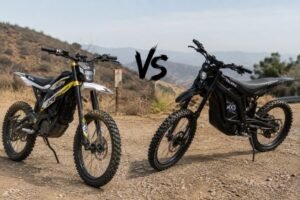
Choosing between the Sur Ron Ultra Bee vs Talaria MX5 is more complicated than comparing peak power or top speed.
