
Electric Motocross vs Electric Enduro: What’s the Difference?
Electric motocross and electric enduro motorcycles can look very similar, and in some cases they even share the same motor,
The Altis Sigma is not the first electric dirt bike most people would describe as a typical beginner machine.
It’s powerful. It’s relatively substantial compared with lightweight e-moto platforms, and its performance potential goes far beyond what a completely inexperienced rider needs while learning basic off-road skills.
That naturally raises an important question:
Is the Altis Sigma good for beginners?
The short answer is yes for some beginners, but definitely not for everyone.
A rider coming from mountain bikes, e-bikes, smaller electric dirt bikes, or gas motorcycles may find the Sigma surprisingly manageable when ridden responsibly. Someone who has never ridden a powered two-wheel vehicle, however, should approach it very differently.
The key isn’t simply whether you’re a “beginner.”
It’s what kind of beginner you are.
This guide explains the Altis Sigma from a new rider’s perspective, including power delivery, weight, throttle control, riding modes, sizing, learning curve, and the skills you should develop before using its full performance.
The Altis Sigma can work as a first high-performance electric dirt bike for a responsible rider who already has basic two-wheel skills and is willing to learn gradually.
However, its performance means it isn’t the most forgiving choice for someone with absolutely no riding experience.
Here’s a simple way to look at it:
| Rider Experience | Altis Sigma as a First Bike |
|---|---|
| No two-wheel experience | ⚠️ Consider something less powerful first |
| Bicycle experience only | ⚠️ Significant learning curve |
| Mountain bike experience | ✓ Possible with gradual progression |
| E-bike experience | ✓ Possible, but respect the power difference |
| Sur Ron/Talaria-style bike experience | ✓ Strong next step |
| Gas dirt bike experience | ✓ Relatively easy transition |
| Experienced motorcycle rider new to electric | ✓ Generally suitable |
The most important factor isn’t how quickly you can ride.
It’s whether you already understand balance, braking, body position, and throttle discipline.
It might seem unusual for a beginner to consider such a capable electric dirt bike, but the logic makes sense.
Many buyers don’t want to purchase an entry-level machine only to outgrow it six months later.
Instead, they want something they can learn on and continue riding as their skills improve.
The Sigma is attractive because it combines serious performance with the simplicity of an electric drivetrain.
There’s no traditional gasoline engine to manage, and electric power delivery removes several mechanical tasks associated with conventional dirt motorcycles.
That allows the rider to concentrate more on:
But drivetrain simplicity should never be confused with low performance.
The Sigma can still accelerate extremely quickly.
That’s why new riders need to separate two questions:
Is it mechanically easy to operate?
Yes.
Is all of its available performance easy for a complete beginner to control?
Not necessarily.
The Altis Sigma’s performance is probably the first thing a new rider needs to understand.
Electric motors behave differently from small gasoline engines.
You don’t necessarily need to wait for RPM to build before meaningful torque arrives.
Throttle input can translate into acceleration very quickly.
That’s exciting for experienced riders.
For beginners, it means throttle discipline matters from the first ride.
A common beginner mistake is holding the handlebars too tightly. When the bike moves unexpectedly, the rider’s body shifts backward, their hand unintentionally rotates the throttle farther, and the motorcycle accelerates even harder.
That’s exactly the type of mistake you want to prevent on a high-performance electric dirt bike.
If the Sigma is your first serious electric dirt bike, don’t measure progress by top speed.
Measure progress by whether you can:
A rider who can perform those skills confidently at 15 mph has learned much more than someone who can simply accelerate to 50 mph in a straight line.
One of the biggest mistakes a new owner can make is immediately selecting the strongest available performance setting just because it’s there.
Don’t.
If the bike provides adjustable riding or power settings, begin with the least aggressive appropriate configuration and follow the current Altis owner’s manual for how those settings work.
The goal is to create predictable responses while your brain builds muscle memory.
During your first sessions, practice:
Only increase performance once the current setting feels completely predictable.
The Sigma isn’t going anywhere.
You don’t need to experience everything it can do on day one.
Power gets most of the attention, but weight can actually be the bigger challenge for a beginner.
A heavier motorcycle behaves differently from a mountain bike or lightweight electric bicycle.
You’ll notice it when:
Once you’re moving, good chassis balance can make a motorcycle feel much lighter than the number on the specification sheet suggests.
At walking speed, however, physics becomes difficult to hide.
This is particularly important for smaller riders.
Before purchasing a Sigma, make sure you’re comfortable supporting the motorcycle and managing it when stopped.
This is where sizing becomes important.
Beginners often assume they need both feet completely flat on the ground.
That’s not always necessary for an experienced motorcycle rider.
But a new rider benefits enormously from feeling confident at stops.
You should consider:
A motorcycle that feels intimidating every time you stop can slow down the learning process.
This is why sitting on the bike—or preferably test riding one in a controlled environment—is much more useful than judging fit from rider height alone.
Powerful electric dirt bikes encourage people to talk about acceleration.
Beginners should spend at least as much time thinking about braking.
You need to learn how the motorcycle responds when using:
The front brake provides substantial stopping force, but grabbing it abruptly—especially on loose terrain—can overwhelm available traction.
The rear brake is useful for stability and low-speed control, but relying on it exclusively won’t teach proper braking technique.
Practice braking in an open, predictable area before tackling technical trails.
Start slowly.
Pick a stopping point.
Brake smoothly.
Repeat.
Gradually increase speed only after you can stop consistently.
It’s not glamorous training, but it may be the most valuable thing you do during your first week.
Your first riding environment matters almost as much as the motorcycle.
A beginner should avoid immediately heading into:
Instead, look for a legal riding area with:
A wide dirt area or easy beginner trail gives you room to make mistakes without immediately turning those mistakes into crashes.
Remember that access and registration rules for powerful electric off-road motorcycles vary by location. Don’t assume an electric dirt bike is automatically street legal or permitted on bicycle trails simply because it uses an electric motor.
This is the question that matters most.
Experienced mountain bikers often have a useful head start.
You may already understand:
The major adjustment is learning to respect significantly greater mass, acceleration, and stopping requirements.
E-bike experience helps, but don’t underestimate the transition.
A high-performance electric dirt bike isn’t simply a faster pedal-assist bicycle.
Treat it as a motorcycle-level machine rather than assuming your existing e-bike skills cover everything.
This is one of the most natural groups for the Sigma.
If you’ve already developed solid riding skills on a lighter e-moto, the Altis Sigma can represent a logical progression toward a more substantial, higher-performance platform.
Experienced dirt bike riders may have the easiest transition.
Balance, braking, trail awareness, and body position already transfer well.
The biggest adjustment is often the immediacy and smoothness of electric torque.
This is where I’d be more cautious.
If you’ve never ridden a motorcycle, dirt bike, mountain bike, or other powered two-wheeler, the Sigma gives you a lot to manage while you’re still developing basic skills.
That doesn’t mean you can never own one.
It means a smaller, less powerful platform—or professional instruction before riding the Sigma aggressively—may provide a better learning experience.
This is ultimately the strongest argument for considering an Altis Sigma for beginners.
For the right new rider, it isn’t a machine you’ll necessarily outgrow quickly.
You can spend the early stages learning:
As your confidence improves, you can gradually explore more of the motorcycle’s performance.
That makes the Sigma fundamentally different from buying a very low-powered beginner bike that may feel limiting once your skills improve.
But there’s a tradeoff.
A motorcycle you can “grow into” also gives you access to performance you may not yet be ready to use.
The rider has to provide the discipline.
The Altis Sigma can be a good first high-performance electric dirt bike, but it isn’t the ideal first powered two-wheeler for everyone.
It makes the most sense for beginners who already have some transferable riding experience, particularly from mountain biking, e-bikes, lighter e-motos, motorcycles, or gas dirt bikes.
Complete beginners should think carefully about the Sigma’s power, physical size, and weight before buying.
The question isn’t:“Can a beginner ride an Altis Sigma?”
Many can.
The better question is:“Do I have enough foundational riding skill and self-control to learn on a bike with this much performance?”
If the answer is yes, the Sigma provides something many beginner motorcycles cannot: a platform with enough capability to remain exciting long after you’re no longer a beginner.
Once you’ve decided the Altis Sigma matches your size, experience, and goals, the next question is simple:
How should a beginner actually learn to ride it?
The Sigma has far more performance than a new rider needs during the first few rides. That’s not necessarily a disadvantage. It simply means progression matters.
A good beginner doesn’t need to discover the bike’s limits immediately. The goal is to make every control feel predictable before adding more speed, harder terrain, or stronger power settings.
Your first ride should be intentionally boring.
That might sound strange when you’ve just bought a high-performance electric dirt bike, but the first session isn’t about discovering how fast it can go.
It’s about learning how the bike responds.
Choose a legal riding area with plenty of space, predictable traction, and minimal traffic or obstacles.
Before moving, familiarize yourself with the controls and follow the current Altis owner’s manual for startup procedures and available riding settings.
Then begin with simple exercises.
Spend time practicing:
Don’t rush these exercises.
Being able to accelerate quickly is easy.
Being able to place the motorcycle exactly where you want it at low speed takes much more skill.
If your Sigma configuration provides selectable riding or power settings, they can be extremely useful while learning.
A beginner generally doesn’t need maximum response during the first ride.
Start with the least aggressive appropriate setting described in the manufacturer’s instructions.
The purpose isn’t simply to reduce speed.
It’s to make throttle response easier to predict while you develop muscle memory.
Once you’re completely comfortable with:
you can gradually explore stronger settings.
Don’t increase performance because the current mode feels “slow.”
Increase it when your control is consistently good.
This is probably the easiest mistake to avoid.
A powerful motorcycle doesn’t become more enjoyable simply because you’re using its strongest setting.
Use only the performance you’re prepared to control.
Beginners often stare directly in front of the front wheel.
That makes riding more difficult.
Instead, look farther ahead toward where you want the motorcycle to go.
Your eyes help guide your body and steering inputs.
On trails, this also gives you more time to identify:
A death grip makes the rider tense and can reduce control.
Your hands need to operate the throttle and brakes smoothly.
Keep your upper body relaxed while maintaining secure control of the motorcycle.
Sitting is fine in many situations, but off-road riding frequently requires standing.
Standing on the foot pegs allows your legs to absorb terrain and helps the motorcycle move underneath you.
Practice standing before you reach difficult trails.
A powerful electric motor makes accelerating out of a corner easy.
Beginners should focus first on entering the corner at a manageable speed.
A useful principle is:
Slow in, controlled through, smooth out.
New riders often focus entirely on riding and forget they still need enough energy to return.
Don’t wait until the battery is nearly depleted before thinking about range.
Learn how your particular riding style affects energy consumption.
This causes plenty of avoidable mistakes.
An experienced rider may travel through technical terrain effortlessly because they’ve developed years of muscle memory.
You don’t need to match their speed.
Ride at a pace that gives you enough time to think.
Once basic control becomes comfortable, you can begin progressing toward easier trails.
Start with terrain that introduces one challenge at a time.
For example:
Stage 1: Flat dirt and open practice areas
Stage 2: Gentle hills and wide trails
Stage 3: Loose surfaces and small obstacles
Stage 4: Moderate climbs and tighter corners
Stage 5: More technical trail riding
There’s no deadline for moving between stages.
If Stage 2 still requires your full concentration, there’s little benefit in rushing to Stage 4.
Electric dirt bikes can feel excellent on climbs because torque is available immediately.
But that same torque can break rear-wheel traction if the throttle is applied too aggressively.
When climbing:
The goal isn’t to attack every hill with maximum power.
Traction matters more.
Going downhill introduces another challenge: controlling speed without upsetting the bike.
Beginners should practice descending gentle slopes before attempting steep terrain.
Use controlled braking rather than suddenly grabbing a brake lever.
Keep your eyes ahead and maintain a stable body position.
A steep descent is not the place to discover that you haven’t practiced braking enough.
New owners often ask:
How far can I ride the Altis Sigma?
There’s no single real-world answer that applies to every rider.
Range depends on:
Interestingly, some beginners may initially consume less energy because they’re riding at lower speeds and using gentler power settings.
As confidence increases, energy consumption can increase too.
Hard acceleration, steep climbing, and sustained higher speeds all require more battery power.
For this reason, don’t plan your first trail adventure around the maximum advertised range.
Learn your own real-world consumption first.
Good battery habits are easier to establish from day one than correct later.
Follow the current manufacturer instructions for charging and storage, and pay particular attention to temperature.
As general ownership habits:
The battery is one of the most expensive parts of an electric dirt bike.
Treating it properly is part of responsible ownership.
One major attraction of electric dirt bikes is reduced powertrain maintenance compared with gas motorcycles.
There’s no gasoline engine requiring the familiar combination of engine oil, spark plugs, air/fuel tuning, and similar combustion-related service.
But the Sigma is not maintenance-free.
New owners still need to learn how to inspect:
The Sigma’s reduction drivetrain also has manufacturer-specified servicing, so don’t assume that “electric” means there are no fluids or scheduled drivetrain maintenance.
Always follow the service intervals in the current owner’s manual for your exact model year.
A beginner doesn’t need to become a motorcycle mechanic overnight.
Start with a basic inspection before riding.
| Check | What You’re Looking For |
|---|---|
| Tires | Correct pressure, damage, excessive wear |
| Brakes | Normal lever feel and stopping response |
| Chain | Correct condition and tension |
| Controls | Smooth throttle and brake operation |
| Hardware | Nothing visibly loose or missing |
| Battery | Sufficient charge and no warnings |
| Suspension | No obvious leaks or damage |
This takes only a few minutes once it becomes routine.
More importantly, it teaches you what your motorcycle looks and feels like when everything is normal.
That makes abnormal changes easier to recognize.
A high-performance electric dirt bike deserves motorcycle-level protective equipment.
At minimum, riders should consider equipment appropriate to their riding environment, including:
For more aggressive off-road riding, additional knee, elbow, chest, and back protection may be appropriate.
Don’t choose protection based on the fact that the motorcycle is electric.
Choose it based on speed, terrain, and consequences of a fall.
This requires more caution than simply looking at height.
Physical size is only one factor.
A younger rider also needs the maturity and experience to manage a powerful motorcycle responsibly.
Parents should consider:
A teenager who has years of competitive off-road experience is very different from someone who has only ridden a bicycle around the neighborhood.
The word “beginner” covers a huge range of ability.
Another common beginner mistake is assuming that because an electric dirt bike doesn’t have a gasoline engine, it automatically qualifies as an e-bike everywhere.
It doesn’t.
High-performance electric dirt motorcycles may be subject to motorcycle, off-highway vehicle, registration, licensing, insurance, or equipment requirements depending on where they’re operated.
Trail access also varies.
A trail that allows Class 1 pedal-assist e-bikes does not necessarily allow a high-powered electric dirt bike.
Check the rules for the specific roads, public lands, OHV areas, and trails where you intend to ride.
There’s no useful universal answer.
Someone with years of mountain bike experience may adapt quickly.
Someone starting with no two-wheel experience may need considerably longer.
Don’t measure progress in days.
Measure it in skills.
You’re ready to progress when you can repeatedly:
Consistency matters more than speed.
Use a simple rule:
Increase performance only when the bike feels predictable—not when you’re bored.
Before exploring more aggressive settings or terrain, you should be able to control the motorcycle without consciously thinking about every basic input.
Throttle.
Brake.
Balance.
Body position.
Looking ahead.
Once those actions become natural, you’ll have more mental capacity available for reading terrain and making decisions.
That’s when the Sigma’s additional capability becomes an advantage rather than something you’re constantly trying to manage.
For some riders, yes.
There’s nothing wrong with admitting that.
A smaller or less powerful electric dirt bike can help a completely new rider develop fundamental skills with fewer distractions.
For other beginners—particularly those coming from mountain biking, motorcycles, dirt bikes, or lighter e-motos—the Sigma’s performance ceiling can be an advantage.
They can begin conservatively and gradually access more capability as their skills improve.
That’s why buying based only on the label “beginner bike” isn’t particularly useful.
The better match depends on your previous experience, physical size, riding environment, and willingness to progress gradually.
The Altis Sigma for beginners makes the most sense when it’s treated as a motorcycle to grow into rather than a machine to master on the first weekend.
Start slowly.
Use manageable settings.
Practice braking and low-speed control.
Learn on easy terrain.
Wear appropriate protective equipment.
Maintain the motorcycle correctly.
Then allow the bike to become faster as you become better.
That’s the biggest advantage the Sigma can offer the right beginner: you may start by using only a small part of its capability, but there’s plenty left to explore as your skills improve.
After looking at power, weight, riding technique, maintenance, and the learning curve, we can finally answer the question that matters most:
Should a beginner actually buy an Altis Sigma?
For the right rider, yes.
But buying your first electric dirt bike shouldn’t be about choosing the machine with the biggest performance numbers. A good first bike needs to match your current ability while giving you enough room to improve.
That’s where the Altis Sigma becomes interesting.
It has considerably more capability than a typical beginner needs, but that also means an experienced cyclist, mountain biker, e-moto rider, or motorcycle rider may not outgrow it quickly.
For a complete two-wheel beginner, however, starting with a lighter and less powerful platform may make learning easier.
The Sigma makes the most sense for a beginner to high-performance electric dirt bikes, rather than someone who has never controlled a powered two-wheeler.
You may be a good candidate if you:
In these situations, the Sigma can provide a long progression path.
Instead of replacing your first bike once your abilities improve, you can gradually explore more of the performance you already own.
There’s also a group of riders for whom the Altis Sigma may simply be too much motorcycle initially.
Consider starting with something lighter and less powerful if:
A less powerful motorcycle isn’t necessarily a worse purchase.
For a new rider, a machine that encourages confidence and correct technique can be much more useful than one whose performance creates anxiety.
Here’s the buying decision in a simpler format.
| Pros for Beginners | Cons for Beginners |
|---|---|
| Plenty of room to develop riding skills | More performance than a complete beginner needs |
| Electric drivetrain is straightforward to operate | Instant torque requires throttle discipline |
| No conventional clutch shifting to learn | Weight may challenge smaller riders |
| Strong off-road capability | Mistakes can happen quickly at higher power |
| Can remain exciting as skills improve | More expensive than basic beginner options |
| Reduced combustion-engine maintenance | Still requires motorcycle-style maintenance |
| Serious suspension and braking capability | Not automatically legal on bicycle trails or public roads |
The strongest advantage is long-term capability.
The biggest disadvantage is how much motorcycle you’re learning to manage from day one.
Purchase price isn’t the only cost.
A first-time owner should budget for the complete riding experience.
That may include:
A helmet, boots, gloves, eye protection, and suitable riding protection should be considered part of the initial purchase—not optional extras to buy later.
Off-road tires are consumables.
How quickly they wear depends heavily on terrain, riding style, and pavement use.
Brake pads eventually require replacement, particularly with aggressive trail use.
The chain needs inspection, cleaning, lubrication, and adjustment. The Sigma’s reduction drivetrain also has manufacturer-specified maintenance that owners should follow.
As mileage increases, suspension components eventually require inspection and servicing.
Beginners drop motorcycles.
It’s normal.
Levers, plastics, grips, pegs, and other exposed components may eventually need replacement.
A realistic beginner budget should leave room for these expenses rather than spending everything on the motorcycle itself.
Compared with a gas-powered dirt bike, the electric powertrain removes several traditional maintenance jobs.
There’s no gasoline engine requiring the familiar routine of spark plugs, fuel-system maintenance, and conventional engine servicing.
However, the chassis is still a performance motorcycle.
You’ll need to learn basic maintenance such as:
The good news is that these skills are relatively straightforward to learn.
In fact, learning basic inspection early can make you a safer and more confident rider.
A used electric dirt bike can save money, but beginners may find it harder to recognize signs of poor maintenance or damage.
If you’re considering a used Altis Sigma, don’t judge it only by appearance or mileage.
Check:
A heavily modified bike deserves additional attention.
For a first-time owner without mechanical or electrical experience, a well-maintained stock bike with clear history may be easier to understand than somebody else’s highly customized build.
It depends on what you’re trying to learn.
The electric drivetrain can simplify certain aspects of the riding process. Without the same clutch-and-gear routine associated with many traditional dirt bikes, a beginner can devote more attention to balance, braking, body position, and trail awareness.
However, learning on an electric motorcycle doesn’t automatically prepare you for every skill required on a manual gas dirt bike.
The two experiences overlap, but they aren’t identical.
If your ultimate goal is specifically to race or ride conventional manual motorcycles, learning clutch and gear control will eventually matter.
If your goal is simply to become a capable electric off-road rider, the Sigma provides plenty of room to develop.
Before buying, ask yourself these questions:
| Question | Yes | No |
|---|---|---|
| Can I confidently ride a bicycle or mountain bike? | ✓ | |
| Do I have some powered two-wheel experience? | ✓ | |
| Am I comfortable with the Sigma’s physical size? | ✓ | |
| Can I support and maneuver the bike at low speed? | ✓ | |
| Am I willing to start with manageable performance? | ✓ | |
| Do I have a legal and appropriate place to practice? | ✓ | |
| Can I afford proper protective equipment? | ✓ | |
| Am I willing to learn basic maintenance? | ✓ |
You don’t necessarily need to answer yes to every question.
But multiple “no” answers—particularly around physical control, riding experience, and a safe practice environment—are a good reason to consider a more beginner-oriented motorcycle first.
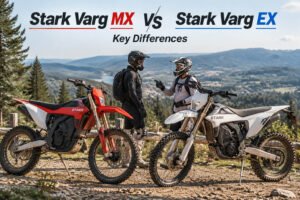
Electric motocross and electric enduro motorcycles can look very similar, and in some cases they even share the same motor,
Electric enduro motorcycles are becoming an increasingly appealing option for riders who want strong acceleration, precise low-speed control, and less
Electric enduro motorcycles are becoming an increasingly appealing option for riders who want strong acceleration, precise low-speed control, and less
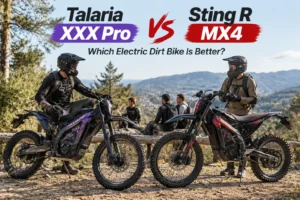
The Talaria XXX Pro and Talaria Sting R MX4 are two popular options for riders looking for a lightweight electric

ALTIS is about more than just bikes. it’s about being fearless, pure, future-focused, and creative. That's what we stand for, and it's what drives everything we do