Electric Motocross vs Electric Enduro: What’s the Difference?
Electric motocross and electric enduro motorcycles can look very similar, and in some cases they even share the same motor,

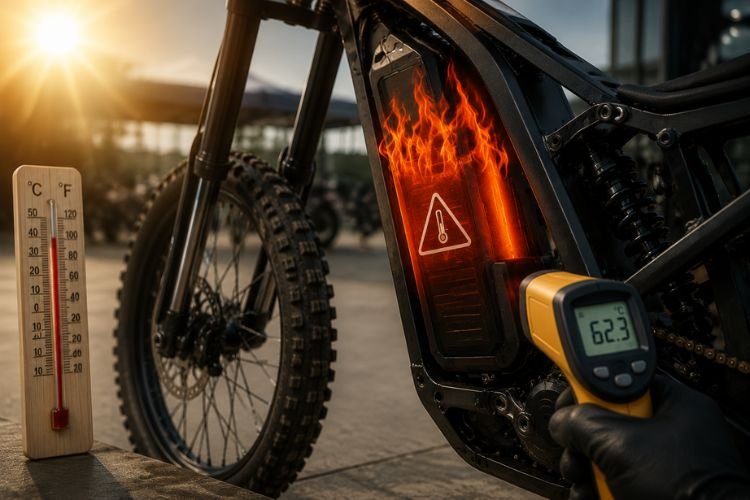
When riders think about protecting an electric dirt bike battery, they often focus on charging habits, storage time, and riding range. However, one factor is frequently overlooked: temperature.
Heat is one of the biggest challenges facing modern lithium-ion batteries.
For electric dirt bikes, this becomes especially important because these machines are often used in demanding environments. A summer trail ride, steep hill climb, high-speed riding, or leaving a bike inside a hot vehicle can expose the battery to temperatures that affect long-term performance.
So, does heat reduce battery life?
Yes. Excessive heat can reduce lithium-ion battery lifespan by accelerating chemical aging, increasing internal stress, and reducing the battery’s ability to store energy over time.
However, this does not mean riding your electric dirt bike on a hot day will immediately damage the battery. Modern battery packs are designed with protection systems, including Battery Management Systems (BMS), temperature monitoring, and safety controls.
The real concern is repeated exposure to high temperatures over months and years.
Understanding how heat affects your battery can help you protect your investment, maintain better riding range, and extend the useful life of your electric dirt bike.
Yes, heat can reduce battery life, especially when a lithium-ion battery is frequently exposed to high temperatures.
High heat can:
For electric dirt bikes, battery health depends on more than just how often you ride. Temperature exposure, charging habits, storage conditions, and riding intensity all influence how long the battery will perform.
A battery stored and operated in reasonable temperatures will generally last much longer than one repeatedly exposed to extreme heat.
Most modern electric dirt bikes use lithium-ion battery packs because they provide an excellent balance of:
However, lithium-ion batteries are complex chemical systems.
Inside each battery cell, electrical energy is stored through controlled chemical reactions. These reactions work best within a specific temperature range.
When temperatures become too high, those chemical processes become less stable.
One of the biggest effects of heat is accelerated aging.
A lithium-ion battery naturally loses some capacity over time, even under ideal conditions. This process is normal.
However, high temperatures can speed up the chemical reactions responsible for battery wear.
Over time, this may lead to:
In simple terms:
Cold temperatures may temporarily reduce performance, but excessive heat can permanently reduce battery lifespan.
To understand why heat matters, it helps to look inside the battery.
A lithium-ion battery cell contains several important components:
During normal operation, lithium ions move between the electrodes as the battery charges and discharges.
Heat affects this process in several ways.
Higher temperatures increase the speed of chemical reactions inside the battery.
While this may sound positive, uncontrolled chemical activity creates additional stress on the cell materials.
Over time, this can contribute to:
As batteries age from heat exposure, internal resistance can increase.
Higher resistance means the battery has more difficulty delivering power efficiently.
The rider may notice:
For electric dirt bikes, this matters because off-road riding often requires high current output during:
Battery capacity refers to how much energy the battery can store.
A degraded battery may still function normally, but it may no longer hold the same amount of energy as when it was new.
For riders, this can mean:
Electric dirt bikes place unique demands on battery systems compared with regular commuter electric bikes.
A commuter e-bike may spend most of its time:
An electric dirt bike often experiences:
These riding conditions require the battery to deliver large amounts of power quickly.
When the rider twists the throttle aggressively, the battery provides more electrical current to the motor.
Higher current flow naturally creates additional heat.
The process looks like this:
Hard Acceleration
        ↓
Higher Current Demand
        ↓
More Electrical Resistance
        ↓
More Heat Generation
        ↓
Higher Battery Temperature
This is why a powerful electric dirt bike ridden aggressively on a hot summer day may experience more battery stress than the same bike used for relaxed trail riding.
Battery temperature is one of the most important factors affecting performance and lifespan.
While exact limits vary depending on battery cells, design, and manufacturer specifications, lithium-ion batteries generally perform best within moderate temperature ranges.
| Temperature Range | General Effect |
|---|---|
| Cold temperatures | Reduced temporary performance |
| Moderate temperatures | Best efficiency and battery health |
| Hot temperatures | Increased battery stress |
| Extreme heat | Higher risk of accelerated degradation |
Many lithium-ion batteries operate most efficiently in a range similar to normal room temperatures.
The exact safe operating range depends on:
Riding in hot weather does not automatically damage your battery.
Modern electric dirt bikes are designed to handle outdoor environments.
The bigger concern is repeated heat stress combined with heavy usage.
For example:
A short summer ride followed by proper cooling and storage is very different from:
The combination of high ambient temperature and high electrical load creates the greatest stress.
One of the most common questions among electric dirt bike riders is whether they should charge the battery immediately after a hot ride.
The short answer is:
Charging a battery while it is still extremely hot can increase stress on lithium-ion cells and may contribute to faster long-term degradation.
This does not mean every warm battery will be damaged by charging. Modern electric dirt bikes use battery management systems that monitor temperature and charging conditions.
However, charging habits can have a significant impact on battery health over hundreds of charging cycles.
A good practice is to allow the battery to cool naturally after demanding rides before connecting the charger.
Charging and discharging are both chemical processes.
During riding:
Battery energy
↓
Electrical current flows to the motor
↓
Energy becomes mechanical power
During charging:
Electricity
↓
Battery cells store energy again
↓
Chemical reactions reverse
Both processes generate some amount of heat.
When a battery is already hot from riding, charging adds another source of thermal stress.
The combination of:
can increase strain on battery cells.
It depends on the riding conditions.
After a light ride on moderate terrain, the battery may only be slightly warm and can often be charged normally.
However, after aggressive riding, especially in hot weather, it is better to allow the battery to cool first.
Examples of high-stress rides include:
A simple cooling period can help reduce unnecessary battery stress.
A practical charging routine looks like this:
For demanding rides:
This small habit can help protect long-term battery performance.
Modern electric dirt bikes are designed with multiple systems to control temperature.
Because high-performance models can draw significant electrical current, manufacturers must carefully manage heat generated by:
Effective thermal management helps maintain:
The Battery Management System, commonly called the BMS, is one of the most important electronic systems inside an electric dirt bike.
The BMS constantly monitors battery conditions and helps prevent unsafe operating situations.
It tracks:
If temperatures become too high, the BMS may reduce available power or temporarily limit certain functions to protect the battery.
When riding aggressively, the battery temperature can rise quickly.
The BMS may respond by:
This can sometimes feel like reduced performance.
For example:
A rider may notice:
This does not necessarily mean the battery is failing.
It may simply mean the protection system is working as designed.
Battery heat does not come only from the battery itself.
The entire electrical system contributes to overall temperature.
The power flow looks like this:
Battery
   ↓
Controller
   ↓
Motor
   ↓
Mechanical Power
   ↓
Rear Wheel
Each stage has efficiency losses that create heat.
When riding conditions require more power, the motor demands more current.
High-load situations include:
More current demand means more energy flowing through the system, which can increase heat generation.
The controller regulates power between the battery and motor.
If the controller becomes too hot, it may reduce output to protect itself.
This is why two bikes with similar motors can perform differently:
One may have:
The other may experience performance reduction sooner.
Both heat and cold affect lithium-ion batteries, but they affect them differently.
Understanding this difference is important for electric dirt bike owners.
Cold weather usually causes temporary performance problems.
Riders may notice:
However, when the battery returns to a normal temperature, performance often improves.
Cold generally slows battery reactions rather than permanently damaging the cells.
Heat is different.
Repeated exposure to excessive heat can accelerate permanent battery aging.
Over time, this may cause:
A simple comparison:
| Condition | Main Effect |
|---|---|
| Cold Weather | Temporary performance reduction |
| Extreme Heat | Faster long-term aging |
This is why heat management is one of the most important factors for extending lithium-ion battery life.
The way you ride directly influences how much heat your battery produces.
Two riders on the same electric dirt bike can experience very different battery temperatures.
High-power riding creates more heat.
Examples:
The battery must deliver more current, increasing electrical stress.
Moderate riding generally creates less heat.
Benefits include:
This does not mean riders should avoid using the bike’s full performance.
Electric dirt bikes are designed for power.
The key is understanding that maximum performance creates additional heat.
Terrain plays a major role in battery workload.
Flat terrain usually requires less continuous power.
The battery can operate more efficiently because the motor does not need to overcome constant climbing resistance.
Climbing is one of the most demanding situations for an electric dirt bike.
During a climb:
Sand is especially challenging because the tires constantly fight resistance.
The motor must work harder to maintain speed, increasing energy consumption and heat generation.
Imagine riding an electric dirt bike on a hot summer afternoon.
Conditions:
During this ride:
The bike is not necessarily damaged, but repeated situations like this without proper cooling and storage can accelerate battery aging.
Electric motocross and electric enduro motorcycles can look very similar, and in some cases they even share the same motor,

Electric enduro motorcycles are becoming an increasingly appealing option for riders who want strong acceleration, precise low-speed control, and less
Electric enduro motorcycles are becoming an increasingly appealing option for riders who want strong acceleration, precise low-speed control, and less
The Talaria XXX Pro and Talaria Sting R MX4 are two popular options for riders looking for a lightweight electric
