Electric Motocross vs Electric Enduro: What’s the Difference?
Electric motocross and electric enduro motorcycles can look very similar, and in some cases they even share the same motor,

Tire pressure is one of the simplest adjustments you can make to an electric dirt bike, yet it’s also one of the most overlooked.
Many riders spend hundreds—or even thousands—of dollars upgrading suspension, tires, or wheels while riding with the wrong tire pressure every weekend.
A difference of just 1–2 PSI can completely change how your bike feels on the trail.
Too much pressure can reduce traction, increase braking distance, and make the suspension feel harsh.
Too little pressure can make steering feel vague, increase the risk of damaging the rim, and reduce battery efficiency because the motor has to work harder.
The challenge is that there isn’t a single “perfect” tire pressure.
The ideal PSI depends on several factors, including:
That’s why experienced riders often adjust tire pressure before every ride instead of leaving it at the same setting all year.
In this guide, we’ll explain how tire pressure affects handling, traction, comfort, battery efficiency, and tire wear. We’ll also recommend practical PSI settings for different riding conditions and show you how to fine-tune your setup based on what your bike is telling you.
For most adult electric dirt bikes, a tire pressure between 12 and 18 PSI offers the best balance of traction, comfort, and rim protection.
Here’s a good starting point.
| Terrain | Front Tire | Rear Tire | Recommended For |
|---|---|---|---|
| Hard Pack | 15 PSI | 17 PSI | Fast trails and firm surfaces |
| Forest Trails | 14 PSI | 16 PSI | Everyday trail riding |
| Rocky Terrain | 13 PSI | 15 PSI | Better grip and rim protection |
| Mud | 12 PSI | 14 PSI | Improved traction |
| Sand | 10–11 PSI | 12 PSI | Maximum flotation |
| Snow | 10 PSI | 12 PSI | Winter trail riding |
These numbers aren’t strict rules.
Instead, think of them as a reliable starting point that you can adjust based on your riding style, tire type, and local trail conditions.
Most riders notice engine performance immediately.
Very few notice tire pressure—until something feels wrong.
In reality, your tires are the only part of the bike that actually touches the ground.
Everything the motor, brakes, and suspension do must pass through two relatively small contact patches.
Changing tire pressure changes the size and shape of those contact patches.
A lower tire pressure allows the tire to flex more, creating a larger contact area with the ground. This generally improves traction, especially on loose surfaces like dirt, sand, mud, and rocks.
Higher pressure creates a smaller contact patch.
That usually reduces rolling resistance and improves stability on firm terrain, but it can also reduce grip on uneven trails.
Finding the right balance is what gives a bike predictable handling.
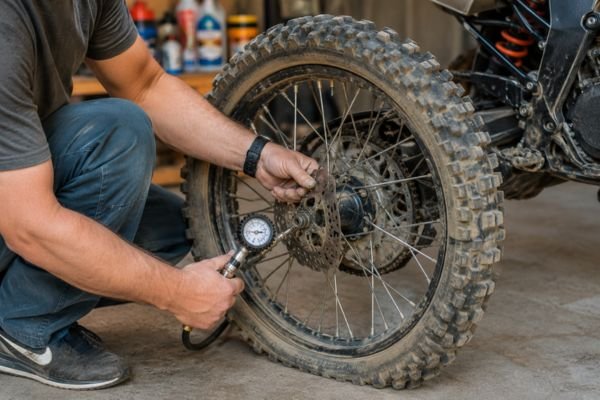
Many riders assume adding more air automatically improves performance.
That’s only true in certain situations.
When tire pressure is too high, the tire becomes stiffer and less able to conform to the terrain beneath it.
Instead of wrapping around rocks or roots, it tends to bounce across them.
Common symptoms include:
Higher pressure can also make the suspension feel firmer than it actually is because the tires absorb less of the trail’s small impacts.
If your bike feels nervous or skips across rough ground, excessive tire pressure may be part of the problem.
Running lower tire pressure can dramatically improve grip, but only up to a point.
If pressure becomes too low, the tire begins moving excessively on the rim.
That creates a different set of problems.
You may notice:
Very low tire pressure also causes the motor to work harder because the tire deforms more as it rolls.
For an electric dirt bike, that means slightly higher energy consumption and reduced riding range.
Lower isn’t always better.
The goal is finding enough pressure to protect the wheel while still allowing the tire to generate maximum traction.
No single PSI works everywhere.
The same pressure that feels perfect on a dry forest trail may perform poorly in deep sand or rocky mountain terrain.
Understanding how different surfaces affect traction helps you make better adjustments before every ride.
Mixed forest trails are where most recreational riders spend their time.
These trails typically include compact dirt, roots, loose gravel, and occasional rocks.
A balanced setup works best.
Recommended Starting Point
This provides predictable steering while maintaining enough grip for changing trail conditions.
Rock gardens place much greater stress on wheels and tires.
Reducing pressure slightly allows the tire to wrap around rocks instead of bouncing over them, improving traction and rider comfort.
However, dropping pressure too far increases the risk of striking the rim.
Recommended Starting Point
This combination offers a good compromise between grip and wheel protection.
Sand is completely different.
Because the surface constantly shifts beneath the tire, increasing the contact patch becomes much more important.
Slightly lower tire pressure allows the bike to “float” more effectively instead of digging into the sand.
Recommended Starting Point
Avoid riding aggressively over rocks with these lower pressures, as rim damage becomes more likely.
Terrain is only one part of the equation.
The other factor many riders overlook is rider weight.
A 140-pound rider and a 220-pound rider place very different loads on the same tires. If both use identical tire pressure, the tires will deform differently, affecting grip, comfort, and handling.
As a general rule, heavier riders usually benefit from slightly higher tire pressure, while lighter riders can often run lower pressures without increasing the risk of rim damage.
Use the chart below as a practical starting point.
| Rider Weight | Front Tire | Rear Tire |
|---|---|---|
| Under 150 lbs (68 kg) | 12–13 PSI | 14–15 PSI |
| 150–180 lbs (68–82 kg) | 13–14 PSI | 15–16 PSI |
| 180–220 lbs (82–100 kg) | 14–15 PSI | 16–17 PSI |
| Over 220 lbs (100+ kg) | 15–16 PSI | 17–18 PSI |
These recommendations assume recreational trail riding with standard off-road tires. If you’re carrying camping gear, tools, or other equipment, increasing pressure by 1 PSI is often a sensible adjustment.
Tire pressure doesn’t stay the same throughout the year.
As temperatures change, so does the air pressure inside your tires.
On a cold winter morning, the pressure you set last weekend may already be lower before you even leave the garage.
Likewise, after riding for an hour on a warm day, tire pressure naturally increases as the air inside the tire heats up.
That’s why experienced riders always check tire pressure before riding, when the tires are still cold.
Here’s a simple guideline.
| Weather | What Happens | Recommended Action |
|---|---|---|
| Cold mornings | PSI drops slightly | Check pressure before riding |
| Hot summer days | PSI increases during the ride | Set pressure with cold tires |
| Large day-to-night temperature changes | Pressure fluctuates | Recheck before every ride |
If you regularly ride during winter, you may also find our guide on Electric Dirt Bike Range in Cold Weather helpful, as lower temperatures affect both battery performance and tire pressure.
One advantage of riding regularly is that your bike begins to “talk” to you.
Small changes in handling often point directly to tire pressure.
Here’s a quick troubleshooting guide.
| Bike Feels Like… | Possible Cause | Try This |
|---|---|---|
| Front tire slides in corners | Front PSI too high | Reduce front tire by 1–2 PSI |
| Rear tire spins easily on climbs | Rear PSI too high | Lower rear tire slightly |
| Bike feels harsh over rocks | Tires overinflated | Reduce both tires by 1 PSI |
| Steering feels slow | Front PSI too low | Increase front tire by 1 PSI |
| Rim strikes rocks frequently | Tire pressure too low | Increase both tires by 1–2 PSI |
| Bike feels unstable at speed | Pressure too low for terrain | Increase pressure slightly |
Avoid making large adjustments all at once.
Changing pressure by 1 PSI and testing the bike again is usually enough to feel a noticeable difference.
Checking tire pressure takes less than a minute, yet many riders rely on nothing more than squeezing the tire with their hand.
Unfortunately, that method isn’t accurate enough for off-road riding.
A quality digital tire pressure gauge is inexpensive and much more reliable.
For the best results:
Developing this simple habit helps eliminate guesswork and makes it easier to fine-tune your setup over time.
Usually, no.
The rear tire supports more weight, transfers power to the ground, and experiences greater acceleration forces.
Because of that, it’s common for the rear tire to run 1–3 PSI higher than the front.
For example:
This setup provides balanced steering while giving the rear tire enough support under acceleration.
Even experienced riders occasionally overlook the basics.
Here are some of the most common mistakes.
Tires naturally lose air over time.
Even if the bike hasn’t been ridden, pressure can gradually decrease.
Checking before each ride helps maintain consistent handling.
Electric dirt bikes operate in completely different conditions.
Street tire pressures are generally much higher than what’s appropriate for off-road riding.
Always adjust your PSI based on terrain, not road-going motorcycles.
A tire setup that works perfectly for one rider may feel completely different for another.
Making small adjustments based on body weight often improves handling immediately.
If something doesn’t feel right, resist the temptation to change pressure dramatically.
Small adjustments—usually 1 PSI at a time—make it much easier to understand how each change affects the bike.
There isn’t a universal “perfect” PSI.
The best setup is the one that gives you confidence on the trails you ride most often.
Start with the recommendations in this guide.
Ride your normal route.
Pay attention to braking, cornering, climbing, and comfort.
If necessary, make one small adjustment and test again.
After a few rides, you’ll develop a tire setup that’s tailored to your bike, your riding style, and your local terrain rather than relying on generic numbers found online.
For most adult electric dirt bikes, a good starting point is:
These settings work well for general trail riding and provide a balance between traction, stability, and rim protection.
If you’re riding in deep sand, mud, or snow, lowering the pressure slightly can improve grip. On faster hard-packed trails, increasing pressure by 1–2 PSI may improve stability.
Usually not.
The rear tire carries more weight and transfers all of the bike’s power to the ground, so it normally requires slightly higher pressure.
A difference of 1–3 PSI between the front and rear tires is common for most trail riders.
Yes—but only to a point.
Lower pressure increases the size of the tire’s contact patch, allowing it to conform better to rocks, roots, and loose terrain. This generally improves grip when climbing, cornering, and braking.
However, running the pressure too low increases the risk of:
The goal is to find the lowest pressure that still adequately protects your wheels.
Yes.
Overinflated tires usually reduce rolling resistance on smooth ground, but they also decrease traction on loose terrain, which can lead to unnecessary wheel spin.
Underinflated tires create excessive rolling resistance, forcing the motor to work harder.
In both situations, battery efficiency can suffer.
Correct tire pressure helps your bike use energy more efficiently, particularly on longer rides.
Ideally, before every ride.
Off-road tires naturally lose a small amount of air over time, and even modest temperature changes can affect PSI.
Checking pressure only takes a minute and helps ensure consistent handling every time you ride.
Always check it before riding, when the tires are cold.
As the tires warm up, the air inside expands and the pressure increases.
Measuring hot tires can give inaccurate readings and lead to incorrect adjustments.
Generally, yes.
Additional rider weight places greater load on the tires.
Increasing pressure by 1–2 PSI often improves stability and reduces the chance of rim damage without sacrificing too much grip.
Not automatically.
Cold weather naturally lowers tire pressure, so always check your PSI before making adjustments.
The right setting depends on the trail conditions rather than the season itself.
If you’re riding on snow or soft ground, a slightly lower pressure may improve traction, but avoid reducing pressure so much that the tire no longer protects the rim.
They can.
Tubeless systems often allow riders to safely run slightly lower pressures because there’s no inner tube to pinch.
Tube-type tires usually require a little more pressure to reduce the risk of pinch flats.
Always follow the recommendations provided by your wheel or tire manufacturer.
Developing a routine is one of the easiest ways to improve both performance and tire life.
Before every ride:
After every ride:
These simple inspections take only a few minutes but can prevent many trail-side problems.
Correct tire pressure can improve handling, but it can’t compensate for worn-out tires.
Consider replacing your tires if you notice:
Fresh tires with the correct PSI often make a bigger difference than expensive suspension upgrades.
Tire pressure is one of the few adjustments that costs nothing yet can dramatically change how an electric dirt bike performs.
Whether you’re riding forest trails, rocky mountain routes, sandy dunes, or muddy single-track, taking a minute to check and adjust your PSI before each ride can improve traction, braking, comfort, and overall control.
Instead of searching for one “perfect” number, think of tire pressure as a tuning tool.
Start with the recommended PSI for your terrain, then make small adjustments based on your weight, riding style, and trail conditions. A change of just 1 PSI can sometimes be enough to transform how the bike feels.
Over time, you’ll develop a setup that works specifically for you—not just a generic recommendation from the internet.
That consistency not only improves confidence on the trail but also helps extend tire life, protect your wheels, and get the best performance from every ride.
Save this as a quick reference before your next ride.
| Terrain | Front PSI | Rear PSI |
|---|---|---|
| Everyday Trail Riding | 14 | 16 |
| Rocky Terrain | 13 | 15 |
| Hard Pack | 15 | 17 |
| Mud | 12 | 14 |
| Deep Sand | 10–11 | 12 |
| Snow | 10 | 12 |
Remember, these are starting points. Fine-tune them based on your bike, your weight, and the conditions you ride most often.
Electric motocross and electric enduro motorcycles can look very similar, and in some cases they even share the same motor,
Electric enduro motorcycles are becoming an increasingly appealing option for riders who want strong acceleration, precise low-speed control, and less
Electric enduro motorcycles are becoming an increasingly appealing option for riders who want strong acceleration, precise low-speed control, and less
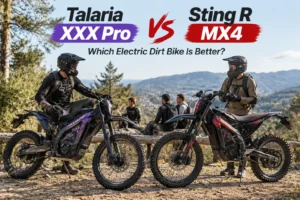
The Talaria XXX Pro and Talaria Sting R MX4 are two popular options for riders looking for a lightweight electric
