Electric Motocross vs Electric Enduro: What’s the Difference?
Electric motocross and electric enduro motorcycles can look very similar, and in some cases they even share the same motor,

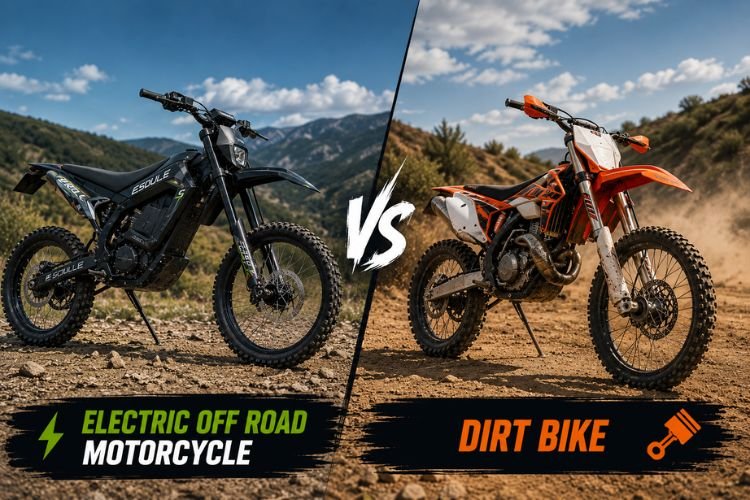
If you’re shopping for your first off-road motorcycle—or thinking about replacing your current one—you’ve probably asked yourself this question:
Should I buy an electric off road motorcycle or a traditional dirt bike?
At first glance, they seem to serve the same purpose. Both are built to tackle trails, climb steep hills, and handle rough terrain. Both offer adrenaline-filled rides and are designed for off-road adventures.
But once you spend time riding both, the differences become obvious.
An electric off-road motorcycle delivers instant torque, quiet operation, and a simpler ownership experience. A gas-powered dirt bike offers unlimited refueling, a familiar riding feel, and decades of proven performance.
Neither is universally better.
The right choice depends on how you ride, where you ride, and what you expect from owning the bike.
In this guide, we’ll compare electric off-road motorcycles and traditional dirt bikes across the areas that matter most—including performance, maintenance, running costs, riding experience, and long-term ownership—so you can make an informed decision.
Both electric off-road motorcycles and gas dirt bikes are designed for off-road riding, but they achieve that goal in very different ways.
An electric off-road motorcycle uses a rechargeable lithium-ion battery and an electric motor to produce instant torque with minimal maintenance and very little noise.
A traditional dirt bike relies on a gasoline engine, transmission, and fuel system, delivering a riding experience that many off-road enthusiasts have enjoyed for decades.
Here’s a quick comparison.
| Feature | Electric Off-Road Motorcycle | Traditional Dirt Bike |
|---|---|---|
| Power Source | Lithium-ion battery | Gasoline engine |
| Torque Delivery | Instant | Builds with engine RPM |
| Noise Level | Very quiet | Loud engine sound |
| Maintenance | Low | Higher |
| Refueling | Recharge battery | Fill fuel tank |
| Clutch & Gears | Usually simplified or automatic | Manual clutch and gearbox |
| Emissions | Zero tailpipe emissions | Produces exhaust emissions |
| Beginner Friendly | Generally easier | Requires more riding technique |
While this table highlights the key differences, choosing the right bike involves much more than comparing specifications.
The overall riding experience is often what makes riders prefer one over the other.
A few years ago, electric off-road motorcycles were considered a niche product.
Today, they’re one of the fastest-growing segments in the powersports industry.
This shift isn’t happening because electric bikes are replacing gas motorcycles overnight.
It’s happening because they solve many of the frustrations riders have experienced with traditional dirt bikes.
Many riders appreciate electric motorcycles because they offer:
For riders who primarily explore trails, ride on private property, or enjoy weekend adventures, these benefits can make ownership noticeably simpler.
At the same time, modern battery technology and more powerful motors have narrowed the performance gap between electric and gas-powered machines.
As a result, choosing electric is no longer just about trying new technology—it’s becoming a practical decision for many riders.
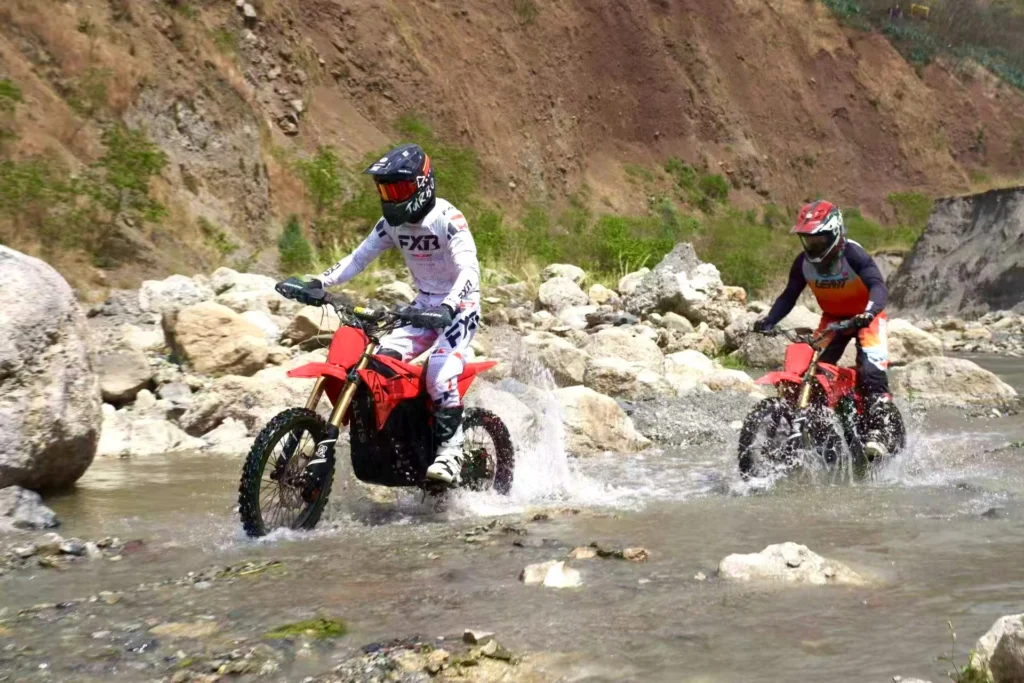
An electric off-road motorcycle is a battery-powered motorcycle designed specifically for riding away from paved roads.
Instead of using a combustion engine, it relies on an electric motor powered by a rechargeable battery pack.
Most modern models include:
When the rider twists the throttle, electricity flows from the battery through the controller to the motor, producing smooth and immediate acceleration.
Unlike a traditional dirt bike, there is usually no need to manage engine speed with a clutch or shift through multiple gears.
For many new riders, this creates a more approachable learning experience because they can focus on body position, braking, and cornering instead of clutch control.
Popular examples include trail-focused electric dirt bikes as well as high-performance electric off-road motorcycles designed for aggressive riding.
A traditional dirt bike uses an internal combustion engine powered by gasoline.
Most off-road motorcycles feature either a two-stroke or four-stroke engine paired with a manual transmission and clutch.
To ride effectively, the rider typically manages:
For experienced riders, this mechanical interaction is part of the appeal.
Many enthusiasts enjoy the sound of the engine, the process of shifting gears, and the feeling of building power as engine speed increases.
Modern dirt bikes are available in a wide range of engine sizes and are used for everything from recreational trail riding to professional motocross competition.
Although gas-powered motorcycles require more routine maintenance than electric models, they remain a popular choice because of their long riding range and fast refueling.
The biggest difference between these two types of motorcycles isn’t found on a specification sheet.
It’s felt the moment you open the throttle.
An electric off-road motorcycle produces maximum torque almost instantly.
Acceleration feels smooth, immediate, and predictable from very low speeds.
On technical trails, this can make climbing rocky sections or navigating tight switchbacks feel surprisingly effortless.
A traditional dirt bike delivers power differently.
The engine builds torque as RPM increases, rewarding riders who understand gear selection and throttle control.
Many experienced riders enjoy this progressive power delivery because it creates a more involved riding experience.
Neither approach is objectively better—they simply offer different personalities.
If you’ve never ridden either type before, an electric motorcycle often feels easier to control during the first few rides.
Gas-powered dirt bikes, however, provide a riding experience that many enthusiasts describe as more engaging and mechanically connected.
When people compare electric and gas motorcycles, top speed is often the first topic that comes up.
In reality, top speed rarely determines how enjoyable a bike feels on the trail.
The riding experience is shaped by many smaller details.
With an electric off-road motorcycle, riders often notice:
Because there’s no engine noise dominating the ride, it’s easier to hear the tires gripping the trail, the suspension working over obstacles, and even conversations with other riders during slower sections.
Gas dirt bikes create a completely different atmosphere.
The sound of the engine, the need to shift gears, and the rhythm of managing RPM become part of the riding experience.
For some riders, that’s an essential part of what makes off-road motorcycling enjoyable.
For others, especially beginners, the simplicity of an electric drivetrain removes distractions and allows them to build confidence more quickly.
Ultimately, the better riding experience depends on what you value most—not just how fast the bike can go.
Electric motocross and electric enduro motorcycles can look very similar, and in some cases they even share the same motor,
Electric enduro motorcycles are becoming an increasingly appealing option for riders who want strong acceleration, precise low-speed control, and less
Electric enduro motorcycles are becoming an increasingly appealing option for riders who want strong acceleration, precise low-speed control, and less
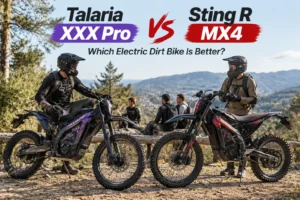
The Talaria XXX Pro and Talaria Sting R MX4 are two popular options for riders looking for a lightweight electric
