Stark Varg MX vs Stark Varg EX: Key Differences
Electric enduro motorcycles are becoming an increasingly appealing option for riders who want strong acceleration, precise low-speed control, and less

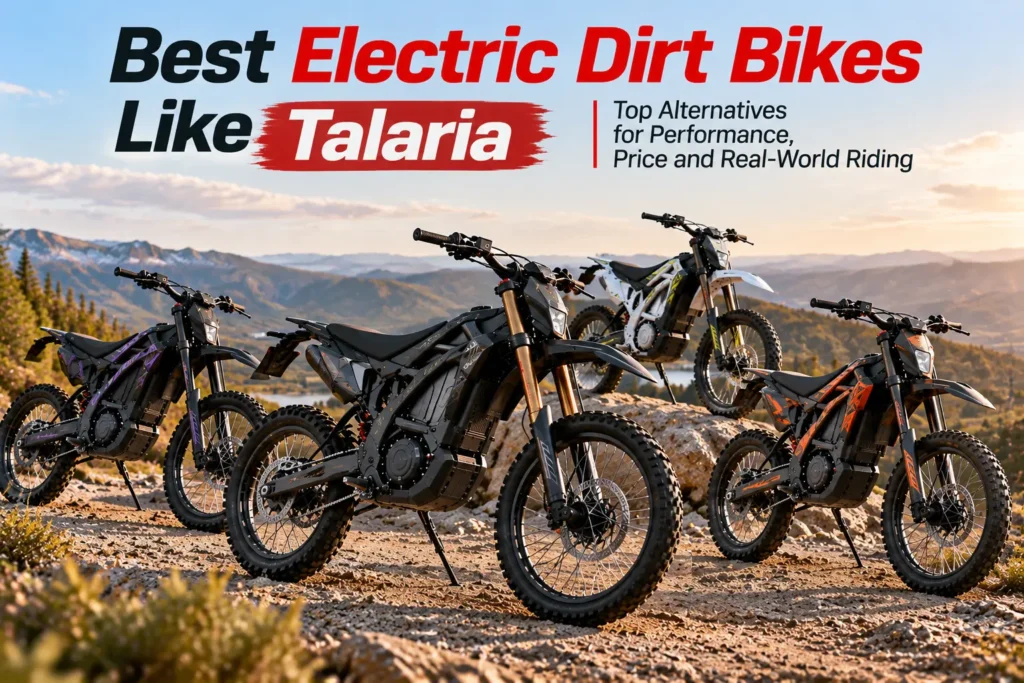
Talaria has become one of the most recognizable names in the lightweight electric dirt bike market, attracting riders with its combination of strong acceleration, removable batteries, off-road handling, and competitive pricing. Models such as the Talaria Sting MX4 and Sting MX5 Pro appeal to adults who want an electric motorcycle that feels more capable than a conventional e-bike without moving directly into the price and size of a full-size electric motocross bike. However, Talaria is no longer the only serious option in this category. Surron, E Ride Pro, Rawrr, 79Bike, Altis, and Segway all offer alternatives that appeal to different types of riders.
The best electric dirt bikes like Talaria are not necessarily cheaper or faster. Some offer a more established aftermarket, while others provide greater peak power, a larger battery, lower weight, or more advanced electronics. For example, the Surron Light Bee X is attractive to riders who prioritize customization and parts availability, the E Ride Pro SS 3.0 offers higher published peak power and battery capacity, and the 79Bike Falcon Pro competes on price and weight. Higher-output options such as the Altis Sigma and Segway Xaber 300 appeal to riders who want to move beyond the traditional lightweight e-moto category.
The right choice depends on which Talaria model you are comparing and what you want to improve. The Sting MX4, Sting MX5 Pro, and other Talaria models do not share identical specifications, so comparing a competitor against the exact model matters. This guide examines the leading alternatives by published performance, battery capacity, approximate price, handling characteristics, and ownership considerations to help you find a motorcycle that fits your budget and riding style.
A useful Talaria alternative should offer a meaningful advantage rather than simply advertise a higher motor-power figure. For many riders, the most important factors are how the motorcycle behaves on trails, whether its battery can support the planned ride, how manageable its weight feels, and whether replacement parts are available when something wears out or breaks.
Talaria’s Sting Pro MX provides a useful reference point. Its official specifications list a 72V 40Ah battery with 2.88 kWh of nominal energy, 13.44 kW peak power, a claimed top speed of 95 km/h, and a weight of 76 kg with the battery installed. These figures make it a strong performer in the lightweight electric dirt bike category. The manufacturer also lists adjustable suspension, hydraulic disc brakes, multiple riding modes, and regenerative braking settings.
A competing motorcycle may beat the Sting Pro MX in one area without being the better overall choice. A lighter bike can be easier to maneuver on tight trails, while a larger battery can provide more energy for longer rides. A more powerful motor can improve acceleration, but it may also consume energy faster and require greater rider skill. Similarly, a well-established aftermarket can be more valuable to a long-term owner than an additional few kilowatts of peak power.
Ownership support deserves particular attention. Before choosing a newer brand, check the availability of batteries, chargers, brake components, controllers, displays, and suspension parts. Find out how warranty claims are handled and whether repairs can be completed locally. A competitive purchase price is useful, but a motorcycle that is difficult to maintain may cost more in time and inconvenience over its lifetime.
The following models cover several reasons riders shop for alternatives: established platform support, higher factory performance, a lower entry price, and more substantial motorcycle hardware. Prices are indicative U.S. listings checked in October 2026, not guaranteed offers. Shipping, dealer fees, taxes, availability, and model year can change the final cost.
| Model | Approximate Listed Price | Published Peak Power | Battery Energy | Best For |
|---|---|---|---|---|
| Surron Light Bee X | $4,499 | 10 kW | About 2.5 kWh | Aftermarket and platform maturity |
| E Ride Pro SS 3.0 | $4,699 plus shipping | 15.8 kW | 3.6 kWh | Higher stock performance |
| 79Bike Falcon Pro | $3,799 plus applicable shipping | 10 kW | 2.52 kWh | Lightweight value |
| Rawrr Mantis X Pro | $3,899 | 15 kW | About 2.52 kWh | Performance for the money |
| Altis Sigma | Around $4,799 listed | Up to 25 kW | 3.402 kWh | High-output riding |
| Segway Xaber 300 | $5,299.99 MSRP | 21 kW | 3.17 kWh | Electronics and dealer-oriented ownership |
These figures are based on manufacturer pages and current comparison listings. The E Ride Pro SS 3.0 page, for example, lists $4,699 plus $300 shipping and currently indicates that the product is sold out. The Altis Sigma listing also shows stock and availability restrictions, so listed prices should not be interpreted as confirmation that a particular configuration is immediately available.
The Surron Light Bee X is one of the closest alternatives to a Talaria Sting because it belongs to the same general lightweight electric motorcycle category. Both platforms appeal to riders who want compact off-road machines with responsive electric acceleration, removable batteries, and room for future modifications. Surron is especially attractive to owners who want access to a large community of riders, established upgrade knowledge, and a broad selection of aftermarket components.
Current comparison listings place the Light Bee X around $4,499, with 10 kW maximum power, a 72V 35Ah battery, approximately 2.5 kWh of nominal energy, and a claimed top speed around 50 mph. Exact specifications can vary by model year and regional configuration.
Compared with the Talaria Sting Pro MX, the Light Bee X has lower published peak power. Its appeal is instead the maturity of its platform and the number of riders and shops familiar with its components. If you plan to customize the suspension, controller, motor, wheels, handlebars, or other parts over several years, that ecosystem can be a meaningful advantage.
The trade-off is that a stock Light Bee X may not provide the same factory power as a current Sting Pro MX. Riders who prioritize immediate acceleration or want to avoid aftermarket upgrades should compare the complete stock motorcycles rather than assuming the Surron is automatically better because its community is larger. Modifications can also increase the purchase cost and may affect warranty coverage.
For technical trail riding, the Light Bee’s relatively low weight is useful. It is easier to maneuver than many larger, more powerful electric motorcycles, particularly when the trail requires frequent changes of direction. Its compact dimensions may not suit every taller adult, however, so rider fit should be checked before buying.
Best for: Riders who want a lightweight electric dirt bike with a mature aftermarket, broad owner knowledge, and long-term customization potential.
The E Ride Pro SS 3.0 is one of the strongest alternatives for riders who want more published peak power and battery capacity than the typical lightweight e-moto offers. Its official product page lists 15.8 kW peak power, a 72V 50Ah swappable battery rated at 3.6 kWh, a claimed top speed of 62 mph, and a weight of 167 pounds. The current listed price is $4,699 plus $300 shipping, although the page currently marks the model as sold out.
The battery is an important part of the comparison. The SS 3.0’s 3.6 kWh pack stores more nominal energy than the 2.88 kWh battery listed for the Talaria Sting Pro MX. That gives the E Ride Pro more energy available for riding, but it does not guarantee a specific range advantage. Speed, terrain, rider weight, temperature, and throttle use affect energy consumption, and aggressive riding can reduce range significantly.
The SS 3.0 is appealing to experienced riders who want strong acceleration without immediately upgrading a lower-powered motorcycle. It may also make financial sense for someone who would otherwise buy a cheaper bike and spend additional money on a battery or controller. However, a higher power rating does not automatically mean better suspension, more predictable handling, or greater durability.
There is also a practical ownership consideration. E Ride Pro’s official listing includes a one-year warranty, but buyers should read the current terms carefully and confirm how service and replacement parts are handled in their region. The SS 3.0’s current stock status should also be checked before making a buying decision.
Best for: Experienced riders who want high stock power, a larger battery, and strong acceleration in a lightweight electric motorcycle format.
The 79Bike Falcon Pro is worth considering if you like the lightweight Talaria concept but want to spend less on the initial purchase. Its current U.S. product listing shows a price of $3,799, 10 kW peak power, a 72V 35Ah LG battery, a claimed top speed of 56 mph, and a weight of approximately 130 pounds. The manufacturer also advertises up to 75 miles of range, although actual riding distance will depend on the conditions under which the motorcycle is used.
The Falcon Pro’s most interesting advantage is its combination of relatively low weight and accessible pricing. A lighter motorcycle can be easier to maneuver on narrow trails, reposition in a garage, and recover after a fall. For riders who prioritize handling over maximum output, these characteristics may matter more than a peak-power comparison.
Its 72V 35Ah battery stores approximately 2.52 kWh of nominal energy. That is less than the Sting Pro MX’s 2.88 kWh pack and the E Ride Pro SS 3.0’s 3.6 kWh battery, so riders planning long sessions should compare their expected energy use rather than relying solely on advertised maximum range. The Falcon Pro’s 10 kW rating also puts it below the Sting Pro MX in published peak power.
Before buying, check the total delivered price and the support arrangements. The current listing notes that standard U.S. freight charges may apply and describes warranty assistance through remote diagnosis, replacement parts, and approved local technician support. It also states that there is no U.S. walk-in service center currently available. Those details matter if you prefer local service rather than remote support.
Best for: Riders who want a relatively light, capable electric dirt bike at a lower initial price and are comfortable confirming parts and service arrangements before buying.
The Rawrr Mantis X Pro competes for buyers who want high published performance without moving into the most expensive electric motocross segment. Rawrr’s current product listing shows a price of $3,899, 15 kW peak power, and a claimed top speed above 65 mph. The model also features adjustable suspension, app-based controls, and a removable battery. The exact battery and equipment should be confirmed against the model version available from the seller.
Its appeal is straightforward: strong published output at a price below many similarly performance-oriented electric motorcycles. For riders comparing Talaria alternatives by power per dollar, the Mantis X Pro deserves a place on the shortlist. It is particularly interesting to someone who wants more peak power than the Sting Pro MX without automatically choosing a more expensive platform.
However, power is only one part of a motorcycle’s real-world capability. Riders should look at braking performance, suspension adjustment, tire grip, throttle control, and battery support before deciding that a higher rating represents better value. More power can also make the motorcycle less forgiving for inexperienced riders, especially on loose soil or steep terrain.
Long-term support should be evaluated carefully. Check replacement battery pricing, charger availability, warranty coverage, and whether commonly needed components are in stock. These details can become more important than a small difference in purchase price after several seasons of riding.
Best for: Experienced riders seeking strong factory performance at a relatively accessible price.
The Altis Sigma is not a direct one-to-one replacement for every Talaria Sting model. It is better understood as a higher-output alternative for riders who want to move beyond the conventional lightweight e-moto performance class. The manufacturer’s current listing describes a 2026 version with a 97.2V 35Ah battery rated at 3.402 kWh, a 25 kW peak motor, and a claimed top speed above 80 mph in the specified configuration. The listed price is around $4,799, but the page currently shows the model as sold out online.
The Sigma’s power rating is substantially higher than the Talaria Sting Pro MX’s published 13.44 kW. That makes it appealing to experienced riders who prioritize aggressive acceleration and high-speed performance. Its larger performance envelope, however, means buyers need to pay close attention to the complete chassis setup, brakes, tires, and suspension rather than treating motor output as the only measure of quality.
Weight is another important factor. Altis lists the 2026 Sigma at approximately 90 kg with the battery installed. That makes it heavier than the 76 kg Sting Pro MX specification, and the difference can influence handling on technical trails. Riders who mainly navigate tight, low-speed routes may find the lighter Talaria easier to manage, even if the Sigma offers substantially more power.
Availability and support deserve particular attention with a newer or less established platform. Before purchasing, confirm that the exact configuration is available, whether replacement batteries and components can be obtained, and how warranty repairs are handled. The Sigma makes the most sense when its higher performance is genuinely useful to your riding rather than simply attractive on a specification sheet.
Best for: Experienced riders who want a substantial step up in peak power and are comfortable checking availability and long-term parts support carefully.
The Segway Xaber 300 is another alternative for riders who want to move beyond the traditional lightweight Talaria-style platform. Segway lists the Xaber 300 at $5,299.99 MSRP, with 21 kW peak power and a weight of 187 pounds. Its published battery configuration is 72V 44Ah, equivalent to approximately 3.17 kWh of nominal energy. The manufacturer classifies the motorcycle as off-road use only.
One of the Xaber 300’s main attractions is its equipment package. It includes adjustable Marzocchi suspension, a Segway-developed controller, multiple riding modes, traction-related electronic features, and connected technology. These features may appeal to riders who want a more technology-focused motorcycle and prefer buying from a company with an established consumer-product and dealer presence.
Its weight is also its most obvious compromise. At 187 pounds, it is substantially heavier than the 130-pound Falcon Pro and the 76 kg Talaria Sting Pro MX. The added mass may suit riders who want a more substantial motorcycle for faster terrain, but it can make tight trails and low-speed maneuvers more physically demanding.
The Xaber 300 is therefore best compared with higher-output electric motorcycles rather than treated as a direct substitute for a lightweight Sting. Its larger chassis and additional electronics may be valuable to one rider and unnecessary to another. The listed MSRP should also be treated as a starting point, because Segway notes that dealers may charge a destination fee of $200 or more.
Best for: Riders who want higher output, modern electronics, and a more substantial off-road motorcycle, and who are comfortable with the additional weight and cost.
The first decision is to identify what you want to improve over your current Talaria or the model you are considering. If your main concern is aftermarket support, the Surron Light Bee X deserves attention. If you want more stock power and battery capacity, the E Ride Pro SS 3.0 is a logical comparison. If price and weight matter most, the 79Bike Falcon Pro is worth examining, while Rawrr offers another performance-oriented option. Altis and Segway appeal to riders who want more substantial output or a different motorcycle platform.
Battery capacity should be compared in watt-hours or kilowatt-hours, not just voltage. A larger battery can store more energy, but real-world range depends on speed, terrain, rider weight, temperature, and riding mode. Manufacturer range claims should be treated as reference points rather than guaranteed distances. If you ride steep trails or use high power frequently, prioritize a realistic reserve rather than planning a route around the maximum advertised figure.
Weight, ergonomics, suspension, and braking deserve equal attention. A lighter motorcycle can be easier to maneuver on tight trails, but it may have less suspension travel or a more compact riding position. A heavier motorcycle can feel more substantial, but it may be harder to lift and reposition. If possible, sit on the exact model and check handlebar reach, seat height, foot-peg position, and the overall riding stance before buying.
Finally, evaluate the complete ownership experience. Compare the final delivered price, warranty terms, replacement battery cost, charging equipment, parts availability, and local service options. A lower purchase price does not necessarily mean lower long-term cost if replacement parts are difficult to obtain. The best Talaria alternative is the one that solves a real problem for your riding rather than simply offering a bigger number on its specification sheet.
Electric dirt bikes require less routine engine maintenance than comparable gas-powered motorcycles because they do not need engine oil changes, spark-plug replacement, or fuel-system servicing. They still require regular attention to tires, brakes, chains, sprockets, wheel bearings, suspension, fasteners, and electrical connections. Riders who use their bikes frequently on muddy or dusty trails should inspect wear items more often.
Battery care is especially important because the battery is one of the most expensive components to replace. Use the approved charger, follow the manufacturer’s storage recommendations, and avoid assuming that a charger is compatible simply because its connector fits. Before purchasing a newer model, check the replacement battery price and availability, along with the warranty conditions for battery capacity and defects.
Charging costs depend on battery energy, local electricity prices, charging losses, and how often you ride. A 3.6 kWh battery requires more energy for a full charge than a 2.52 kWh pack, but the actual cost depends on how much energy is needed to recharge the battery from its current state. For most owners, electricity is only one part of the ownership budget; protective equipment, tires, brake pads, transport, replacement parts, and occasional repairs can be more significant expenses.
The key is to compare purchase price with the entire ownership experience. A motorcycle that offers slightly less peak power but has readily available parts may be more practical than a higher-output bike that is difficult to service. Likewise, a large battery is only valuable if its added weight and cost make sense for the distance and terrain you ride.
The Surron Light Bee X, E Ride Pro SS 3.0, 79Bike Falcon Pro, Rawrr Mantis X Pro, Altis Sigma, and Segway Xaber 300 are all worth comparing. They serve different priorities, from aftermarket support and lower weight to higher power and advanced electronics. The right option depends on which Talaria model you are comparing and what you want to improve.
The Surron Light Bee X is one of the closest direct competitors because it shares the lightweight electric dirt bike format and has a mature aftermarket. The E Ride Pro SS 3.0 is another close comparison for buyers who want more factory power and battery capacity. Neither is universally better, so compare the exact models and current prices.
Not in every situation. Surron has a well-established aftermarket and a large owner community, while Talaria offers competitive factory specifications and a strong range of lightweight electric motorcycles. The best choice depends on stock performance, handling, price, parts availability, and whether you intend to modify the bike.
Among the alternatives in this guide, the 2026 Altis Sigma has one of the highest published peak-power figures at 25 kW. The Segway Xaber 300 lists 21 kW, while the E Ride Pro SS 3.0 and Rawrr Mantis X Pro publish 15.8 kW and 15 kW respectively. These figures are manufacturer specifications, not independent performance-test results.
The 79Bike Falcon Pro and Rawrr Mantis X Pro are worth comparing if your priority is lowering the initial purchase price. The Falcon Pro has a listed price of $3,799, while the Rawrr Mantis X Pro is listed at $3,899. Shipping, availability, warranty support, and the exact model specification should be checked before deciding which offers better value.
There is no single answer that applies to every riding situation. The E Ride Pro SS 3.0 has a 3.6 kWh battery, larger than the listed 2.88 kWh Talaria Sting Pro MX battery, but real-world range depends on riding speed, terrain, rider weight, temperature, and throttle use. Compare battery energy and the conditions behind each manufacturer’s range claim.
Not automatically. Many high-performance electric dirt bikes are sold for off-road use only. Road legality depends on the exact vehicle version, certification, equipment, registration eligibility, insurance, and local laws. The Segway Xaber 300, for example, is explicitly classified by its manufacturer as off-road use only. Confirm the legal status of the exact model before buying for public-road use.
Choose Talaria if its handling, performance, price, and available support match your needs. Consider an alternative if you specifically want a larger battery, more peak power, a lighter chassis, different electronics, or a different ownership-support arrangement. Compare the complete motorcycle and total purchase cost rather than choosing solely by brand reputation.
The best electric dirt bikes like Talaria offer several ways to improve on the lightweight electric motorcycle experience, but no single alternative is best for every rider. The Surron Light Bee X remains a strong option for buyers who value aftermarket support and a mature platform. The E Ride Pro SS 3.0 appeals to riders who want higher stock performance and more battery capacity, while the 79Bike Falcon Pro and Rawrr Mantis X Pro offer compelling alternatives for buyers focused on price and performance.
The Altis Sigma and Segway Xaber 300 serve riders who want to move into a higher-output or more substantial motorcycle category. Their additional power and equipment can be attractive, but weight, availability, parts support, and total ownership cost should be considered just as carefully as the headline specifications.
Before making a decision, compare the exact model year, battery capacity, suspension, brakes, weight, warranty, and delivered price. Think about the terrain you ride most often and whether you value maneuverability, acceleration, range, or ease of maintenance most highly.
The best Talaria alternative is not necessarily the fastest or cheapest motorcycle. It is the one that offers the right combination of performance, handling, support, and value for the way you actually ride.
Electric enduro motorcycles are becoming an increasingly appealing option for riders who want strong acceleration, precise low-speed control, and less
Electric enduro motorcycles are becoming an increasingly appealing option for riders who want strong acceleration, precise low-speed control, and less
The Talaria XXX Pro and Talaria Sting R MX4 are two popular options for riders looking for a lightweight electric
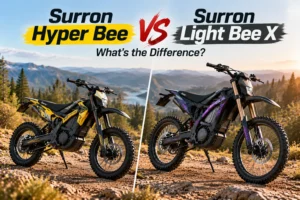
The Surron Hyper Bee and Surron Light Bee X are both high-performance electric dirt bikes, but they are designed for
