Stark Varg MX vs Stark Varg EX: Key Differences
Electric enduro motorcycles are becoming an increasingly appealing option for riders who want strong acceleration, precise low-speed control, and less

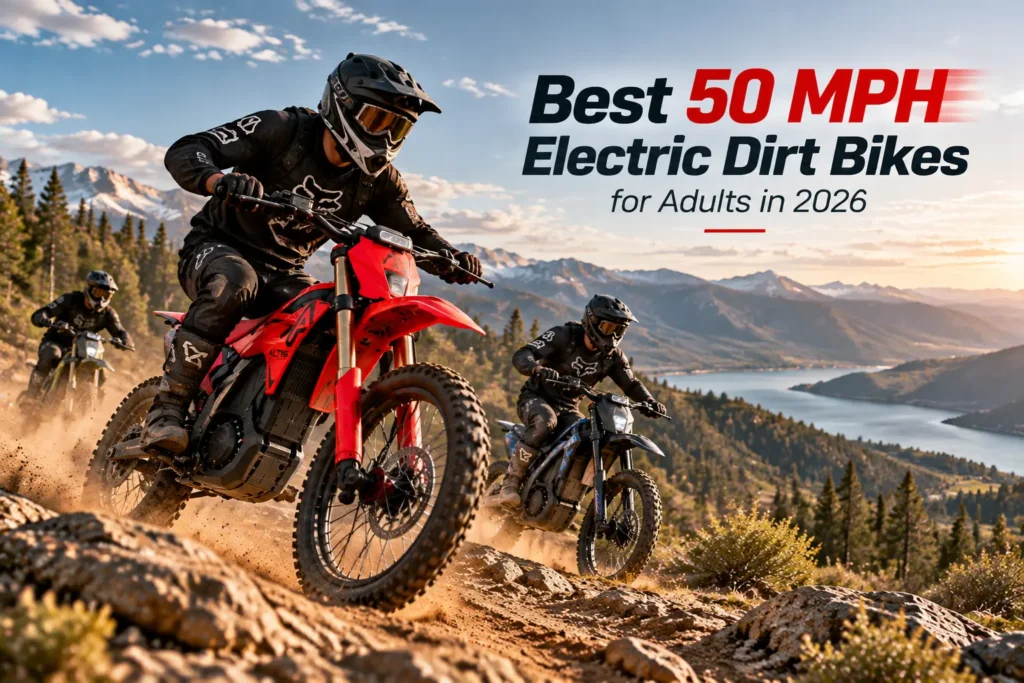
A 50 mph electric dirt bike offers a useful balance of speed, acceleration, and off-road capability for adults who want more performance than a conventional recreational electric bike. At this speed, however, choosing the right motorcycle involves more than checking the top-speed number. Battery capacity, motor output, suspension, braking performance, weight, and replacement-parts availability all influence how well a bike performs on real trails.
The best electric dirt bikes capable of reaching approximately 50 mph include the Surron Light Bee X, Talaria Sting Pro MX, E Ride Pro SS 3.0, 79Bike Falcon Pro, Rawrr Mantis X, and Segway Xaber 300. They occupy different positions in the market. Some prioritize compact dimensions and easy maneuverability, while others offer higher peak power, larger batteries, or more substantial motorcycle hardware.
For many riders, the Surron Light Bee X is a logical starting point because of its established aftermarket and lightweight design. The Talaria Sting Pro MX is a strong alternative for buyers seeking more factory performance, while the E Ride Pro SS 3.0 offers a larger battery and higher published power. Riders with a tighter budget may prefer the Rawrr Mantis X or 79Bike Falcon Pro, while the Segway Xaber 300 appeals to those looking for a heavier, more powerful machine with advanced electronic features.
This guide compares manufacturer-published specifications and available U.S. pricing reviewed in October 2026. These are not independent, instrumented speed tests, and advertised performance can vary by model year, market, configuration, and riding conditions. The goal is to help you understand what each bike offers and decide which one makes the most sense for your riding style.
A motorcycle advertised with a 50 mph top speed is not necessarily capable of maintaining that speed on every trail. Maximum speed is usually a peak-performance figure, while actual riding involves braking, acceleration, corners, hills, loose surfaces, and changes in elevation. A bike that reaches 50 mph on a suitable straight section may spend most of a technical trail ride traveling considerably slower.
The difference between rated power and peak power also matters. Rated power describes a motor’s specified continuous operating output under defined conditions, while peak power describes a higher output available for a limited period. Two electric dirt bikes with the same peak-power rating can behave differently because their controllers, battery discharge capabilities, gearing, motor designs, and power-delivery settings are not identical.
Battery capacity is another important consideration. A 72V 35Ah battery stores approximately 2,520Wh of nominal energy, while a 72V 50Ah battery stores approximately 3,600Wh. The larger battery has more stored energy, but that does not guarantee a proportionally longer ride because power consumption changes with speed, terrain, rider weight, temperature, and acceleration.
It is also important to distinguish lightweight electric dirt bikes from full-size electric enduro motorcycles. Models in the Surron and Talaria category generally emphasize compact dimensions and maneuverability. Larger machines can offer more substantial suspension and chassis hardware, but additional weight may make them harder to move around on tight trails or recover after a fall.
For this comparison, a 50 mph electric dirt bike means a model advertised to reach approximately 50 mph or faster. The list includes several bikes capable of exceeding that threshold because buyers often compare them against the same performance target.
The following table summarizes the main options, including published top speed, peak power, battery capacity, and indicative U.S. pricing. Prices are not guaranteed offers, and delivery fees, dealer charges, taxes, and availability may affect the final purchase price.
| Model | Claimed Top Speed | Published Peak Power | Battery | Approximate Price |
|---|---|---|---|---|
| Surron Light Bee X NA | 50 mph | 10 kW | 72V 35Ah | About $4,400 to $5,500, depending on listing |
| Talaria Sting Pro MX | About 59 mph | 13.44 kW | 72V system | Dealer-dependent |
| E Ride Pro SS 3.0 | 60 mph | 15.8 kW | 72V 50Ah, 3.6 kWh | $4,699 plus $300 shipping |
| 79Bike Falcon Pro | 56 mph | 10 kW | 72V 35Ah | $3,799 listed price |
| Rawrr Mantis X | 50 mph on the listed specification | Model and version dependent | 72V 30Ah, 2.16 kWh | Around $2,999 |
| Segway Xaber 300 | Up to 60 mph | 21 kW | 72V 44Ah, 3.17 kWh | $5,299.99 MSRP |
Sources: Surron, Talaria, E Ride Pro, 79Bike, Rawrr, and Segway.
These models should not be ranked by speed alone. A higher top-speed claim does not automatically indicate better suspension, more predictable handling, better range, or stronger long-term parts support. The best choice depends on how you intend to ride and which compromises you are prepared to accept.
The Surron Light Bee X remains an important benchmark for the lightweight electric dirt bike market. Its appeal comes from a combination of relatively low weight, responsive electric acceleration, compact dimensions, and a large aftermarket community. Riders can find a broad range of replacement and upgrade components, making the platform attractive to people who enjoy customizing their motorcycles over time.
The current North American Light Bee X specification lists a 72V 35Ah battery, 10kW maximum power, a claimed top speed of 50 mph, and a maximum range of 46.6 miles under the manufacturer’s stated test conditions. That range figure should not be interpreted as a promise of 46.6 miles during aggressive riding at maximum speed. Surron’s official specifications provide the current reference point for this model.
The Light Bee X is particularly appealing for technical trails, private-property riding, and riders who want a compact machine that is relatively easy to maneuver. Its established owner community also helps buyers research common modifications, maintenance procedures, and model-specific parts before committing to a purchase.
The main limitation is that some competing bikes now offer more peak power and greater battery capacity from the factory. If you already know you want significantly more performance, upgrading a Light Bee’s battery and controller may increase the total cost substantially. It is worth comparing a stock Surron with a higher-output alternative before deciding to build one.
Best for: Riders who prioritize maneuverability, an established aftermarket, and a proven lightweight electric dirt bike platform.
The Talaria Sting Pro MX is a compelling choice for buyers who want a lightweight electric dirt bike with more published peak power than the current North American Surron Light Bee X. Talaria lists 13.44kW peak power and a claimed top speed of 95 km/h, approximately 59 mph, for the Sting Pro MX. The exact name and equipment can differ between regional versions, so buyers should verify the specific model offered by their U.S. dealer. Talaria’s manufacturer specification page provides the published performance figures.
The attraction is not simply a higher top-speed number. Riders should evaluate the complete motorcycle, including suspension adjustment, frame construction, braking, battery performance, throttle response, and parts availability. A well-matched factory setup can be more useful than a higher-powered bike that needs immediate modifications.
The Sting Pro MX is worth comparing with the Surron if you want stronger stock performance without moving into a substantially larger motorcycle. However, a bike’s behavior on technical terrain depends on more than peak power. Weight distribution, suspension setup, tires, gearing, and how smoothly the controller delivers power can make a significant difference.
Before buying, confirm battery capacity, warranty terms, replacement-battery availability, and local service options for the exact version. Talaria’s specifications and model names have evolved, so older reviews may not describe the current motorcycle accurately.
Best for: Riders who want a lightweight electric dirt bike with strong factory performance and an established alternative to Surron.
The E Ride Pro SS 3.0 is aimed at riders who want substantial performance without immediately investing in major aftermarket upgrades. The manufacturer’s current product page lists 15.8kW peak power, a 72V 50Ah swappable lithium battery with 3,600Wh of nominal energy, and a claimed top speed of 60 mph. Its listed price is $4,699, with an additional $300 shipping charge shown on the product page. See the official E Ride Pro SS 3.0 listing.
The battery is a key part of the comparison. A 3.6kWh pack stores more nominal energy than the 2.52kWh battery in the current Surron Light Bee X NA. This provides more energy to draw from, although actual range still depends on riding conditions and how aggressively the bike is used.
E Ride Pro lists range figures of 62-plus miles at 25 mph and 99-plus miles at 16 mph. Those are manufacturer claims under specified conditions, not expected distances for fast off-road riding. If your regular trails involve steep climbs, loose soil, repeated acceleration, and high power settings, plan for a shorter range.
The SS 3.0 makes the most sense for riders who prioritize acceleration, higher factory output, and battery capacity. Its additional performance also makes proper braking, tire selection, suspension setup, and throttle control especially important.
When comparing prices, remember that shipping is part of the cost. Taxes, accessories, protective gear, and any dealer or assembly fees may increase the final amount.
Best for: Experienced riders who want high stock performance and a relatively large battery in a lightweight electric motorcycle format.
The 79Bike Falcon Pro is worth considering if you want a compact electric dirt bike with a claimed top speed above 50 mph at a lower purchase price than some established performance models. Its current listed specification includes 10kW peak power, a 72V 35Ah battery, a claimed top speed of 56 mph, and a weight of approximately 130 pounds. The current listing shows a price of $3,799, although promotions and delivery costs can change. The current Falcon Pro listing provides the published details.
Its relatively low weight is one of the more important features. For recreational trail riders, a lighter motorcycle can be easier to maneuver through tight sections, reposition in a garage, and recover after a low-speed tip-over. That can matter more than a small difference in peak speed.
The manufacturer also advertises a range of up to 75 miles. As with other electric dirt bikes, this should be treated as a best-case claim rather than a realistic prediction for sustained riding at 50 mph. Ask how range was measured and compare it with the conditions in which you plan to ride.
The most important consideration is long-term support. Before buying a less established platform, confirm how warranty claims are handled, whether replacement batteries and controllers are available, and how quickly common parts can be delivered. The lowest advertised purchase price does not necessarily mean the lowest ownership cost.
Best for: Riders who want a lightweight, performance-oriented electric dirt bike without moving immediately into the higher-priced segment.
The Rawrr Mantis X is an alternative for buyers who want a claimed top speed around 50 mph at a relatively accessible price. The published specification available through the Rawrr support material lists a 72V 30Ah battery with 2,160Wh of nominal energy, a weight of approximately 139 pounds, and a 50 mph top speed. The U.S. model lineup has listed the Mantis X around $2,999. Specifications and advertised speed can differ across model versions, so confirm the exact motorcycle being sold. Rawrr’s model lineup and Mantis X specifications are useful starting points.
The Mantis X may appeal to riders who want to keep the initial purchase price down while still entering the lightweight electric motorcycle category. However, budget should be considered alongside battery quality, braking components, suspension performance, warranty support, and access to replacement parts.
Battery capacity is particularly relevant. Its listed 2.16kWh pack stores less energy than the batteries fitted to the E Ride Pro SS 3.0 or Talaria Sting Pro MX’s commonly listed 2.88kWh configuration. That does not provide an exact range comparison by itself, but it is one factor worth considering when planning longer rides.
Do not assume that a lower-priced bike is automatically less capable, or that a more expensive model will automatically be better for you. Compare the complete specification, try to inspect the motorcycle in person when possible, and research support before making the purchase.
Best for: Buyers seeking an entry into the approximately 50 mph electric dirt bike category while keeping initial spending relatively low.
The Segway Xaber 300 is a different kind of option. It is larger and heavier than the classic lightweight Surron-style e-moto, and it offers more substantial hardware and electronic features. Segway lists an MSRP of $5,299.99, 21kW peak power, a 72V 44Ah battery rated at 3.17kWh, a weight of 187 pounds, and a maximum speed of up to 60 mph in Beast mode. The manufacturer explicitly classifies it as an off-road vehicle. Segway’s official Xaber 300 listing includes its current specifications and pricing.
The Xaber 300 includes adjustable Marzocchi suspension, four-piston hydraulic disc brakes, multiple riding modes, GPS and 4G tracking features, and app-based adjustments to power delivery. Those features may appeal to riders who want more than a simple motor and battery package.
Its weight is an important trade-off. A 187-pound motorcycle may feel more substantial and stable in some situations, but it is not as easy to move around as a much lighter e-moto. Riders who spend most of their time on narrow technical trails should consider whether the larger chassis fits their needs.
The advertised range also requires context. Segway’s published figures vary significantly by riding mode and speed, with much shorter distances expected at maximum performance than at a steady, lower speed. For fast off-road use, battery reserve and route planning remain important.
The Xaber 300 may suit experienced adults who want higher power, modern electronics, and a more substantial chassis. It may be unnecessary for riders who primarily want a compact motorcycle for short, technical trail sessions.
Best for: Riders who want a higher-output off-road motorcycle with advanced electronics and more substantial chassis hardware.
The best buying decision starts with your riding environment rather than the highest number on a specification sheet. A bike intended for tight wooded trails may need to be light, controllable, and easy to maneuver. A rider who spends more time on open private land may place greater value on higher output and a larger battery. Neither approach is universally better.
A 50 mph electric dirt bike can accelerate much more quickly than a conventional bicycle, and some models offer enough power to overwhelm rear-tire traction on loose ground. If you are a beginner, prioritize smooth throttle response, predictable braking, suitable ergonomics, and manageable riding modes. A bike that lets you develop control gradually is more useful than one whose peak performance exceeds your current ability.
Peak power should also be considered alongside the rest of the motorcycle. More output places additional demands on tires, brakes, suspension, drivetrain components, and the rider. A high-powered motor cannot compensate for unsuitable tires or poorly adjusted suspension.
Battery capacity affects how much energy is available for a ride. Compare watt-hours or kilowatt-hours rather than voltage alone, and check whether the battery is removable, how long it takes to charge, and what a replacement costs. A larger battery can provide more flexibility, but it also adds to the purchase price and may increase weight.
Charging support is equally important. Use the supplied charger or a replacement explicitly approved for the exact battery system. Matching connectors do not guarantee that a charger is electrically compatible. Before buying, confirm whether replacement chargers and batteries are available and whether the manufacturer provides clear storage and charging instructions.
Weight can change the riding experience significantly. A lighter bike is often easier to maneuver on tight trails and easier to recover after a fall, while a heavier motorcycle may provide a more substantial platform. The right choice depends on rider strength, experience, terrain, and intended use.
Suspension should be evaluated through more than travel figures. Spring rate, damping adjustment, rider weight, wheel size, and chassis design all influence how the bike handles rough ground. Similarly, brake quality and tire grip become increasingly important as speed rises. A motorcycle capable of 50 mph needs predictable braking and suitable tires, not simply a powerful motor.
Before buying, investigate replacement batteries, brake pads, tires, controllers, displays, suspension components, and model-specific bodywork. Check warranty exclusions and whether repairs can be handled by a local dealer or require remote support and shipped parts. A motorcycle with an attractive sticker price can become expensive if common components are difficult to obtain.
Calculate the total cost of ownership, including shipping, taxes, protective gear, locks, transport equipment, charging equipment, and likely maintenance. If you intend to modify the bike, estimate those costs before choosing a lower-priced model that may need extensive upgrades.
Range is one of the easiest specifications to misunderstand when shopping for an electric dirt bike. Manufacturers may publish maximum distances measured at relatively low, steady speeds, but fast off-road riding requires frequent acceleration and can involve steep climbs, loose terrain, and repeated braking. These conditions can use substantially more energy than a controlled range test.
For example, Surron lists a maximum range of 46.6 miles for the current Light Bee X NA under its stated test conditions. E Ride Pro lists 62-plus miles at 25 mph and 99-plus miles at 16 mph for the SS 3.0. Segway publishes different range figures for the Xaber 300 depending on the selected mode and speed. Those numbers are useful for comparing manufacturer claims, but they should not be treated as directly equivalent tests.
The most useful approach is to plan your first rides conservatively. Start with shorter routes, monitor how much battery remains after different types of riding, and leave a reserve for unexpected detours or difficult terrain. Cold temperatures, rider weight, tire pressure, and battery condition can also affect the distance you can cover.
Electric dirt bikes generally avoid combustion-engine tasks such as oil changes, spark-plug replacement, and fuel-system maintenance. However, they still require attention to tires, brakes, chains, sprockets, bearings, suspension, fasteners, and electrical connections. Battery replacement can also be a major long-term expense, so battery availability and warranty terms deserve attention before purchasing.
Charging costs depend on the amount of energy used and the electricity rate in your area. A 2.52kWh battery and a 3.6kWh battery require different amounts of energy for a full charge, with additional electricity consumed during charging losses. Your electricity bill will also depend on how frequently you ride and how much energy remains in the battery when charging begins.
The key lesson is that advertised range, charging time, and maintenance requirements should be evaluated together. A bike that offers a lower purchase price but lacks accessible replacement parts may not deliver the best long-term value.
A motorcycle capable of reaching 50 mph should be treated as a serious off-road machine, not as an ordinary electric bicycle. Appropriate protective equipment includes a properly fitted motorcycle helmet suitable for off-road riding, goggles, gloves, boots, and protective clothing or body armor. Riders should learn the bike’s throttle response and braking behavior in a controlled environment before attempting fast trails, steep climbs, or technical terrain.
Speed also affects how much distance is needed to recognize a hazard and stop. Loose dirt, sand, mud, wet roots, and gravel can reduce traction, while sudden throttle or brake inputs can destabilize the motorcycle. Beginners should build skills progressively, ride within their ability, and avoid using maximum power simply because it is available.
Street legality requires separate consideration. A claimed top speed of 50 mph does not make an electric dirt bike road legal, and adding lights, mirrors, or turn signals does not automatically establish eligibility for registration. The exact vehicle certification, equipment, registration rules, insurance, licensing, and local requirements must be checked for the motorcycle and jurisdiction in question.
For example, Segway explicitly classifies the Xaber 300 as off-road use only. Other models in this comparison may also be sold primarily for off-road riding, depending on version and market. Before purchasing a motorcycle for road use, confirm its legal status with the manufacturer, dealer, and relevant motor vehicle authority.
The best choice depends on your needs. The Surron Light Bee X is a strong all-around option for riders who value a lightweight chassis and an established aftermarket. The Talaria Sting Pro MX and E Ride Pro SS 3.0 are compelling alternatives for buyers who want stronger factory performance, while the 79Bike Falcon Pro and Rawrr Mantis X may appeal to riders focused on initial purchase price.
Yes. A 50 mph top speed is substantial for a lightweight off-road electric motorcycle. It is enough to make braking, suspension, tire grip, protective equipment, and rider experience important purchasing considerations. Actual top speed and how easily the bike reaches it depend on the model and riding conditions.
Some models are advertised at 50 mph or higher. The Surron Light Bee X NA is listed at 50 mph, the 79Bike Falcon Pro at 56 mph, and the E Ride Pro SS 3.0 at 60 mph. These are manufacturer claims rather than independent test results, and real-world speed can vary with rider weight, battery charge, terrain, settings, and other conditions.
Prices vary by brand and specification. Current examples range from around $2,999 for the Rawrr Mantis X to $4,699 plus shipping for the E Ride Pro SS 3.0 and $5,299.99 MSRP for the Segway Xaber 300. Dealer fees, shipping, taxes, accessories, and model availability can change the final amount.
There is no single answer because range depends on battery capacity, speed, terrain, temperature, rider weight, and riding style. A motorcycle may achieve a long range at a steady, low speed but travel a much shorter distance during aggressive off-road riding. Compare battery energy and the conditions behind each manufacturer’s range claim.
Some 72V electric dirt bikes are advertised at 50 mph or higher, but voltage alone does not determine top speed. Motor output, controller limits, battery discharge capability, gearing, tire size, and software settings also influence performance.
Neither model is universally better. The Light Bee X has a well-established aftermarket and a compact, familiar platform. The Talaria Sting Pro MX publishes higher peak power and a higher claimed top speed. Buyers should also compare suspension, fit, handling, parts availability, warranty, and the exact model year.
Some adults can learn on a suitable electric dirt bike, but a 50 mph top-speed capability should not be the main selection criterion for a beginner. Manageable throttle response, appropriate size and weight, effective brakes, protective equipment, and access to training are more important. Start in a controlled area and build skills before attempting high-speed riding.
Not automatically. Many high-performance electric dirt bikes are designed for off-road use. Street legality depends on the vehicle’s certification, equipment, registration eligibility, and local rules. Confirm the exact model’s status before riding on public roads.
The best 50 MPH electric dirt bikes combine useful speed with predictable handling, effective braking, appropriate battery capacity, and dependable ownership support. The Surron Light Bee X remains a strong all-around option for riders who value a lightweight motorcycle and an established aftermarket. The Talaria Sting Pro MX offers a competitive factory-performance alternative, while the E Ride Pro SS 3.0 is attractive to buyers who want higher output and a larger battery.
The 79Bike Falcon Pro and Rawrr Mantis X deserve consideration for buyers focused on purchase price, while the Segway Xaber 300 offers a more substantial chassis and advanced electronic features. Each model serves a different purpose, and the highest top-speed figure does not automatically make one motorcycle better than another.
Before buying, compare the exact model year, battery capacity, weight, suspension, braking system, warranty, parts availability, and complete delivered price. Think about the terrain you ride most often and the amount of power you can comfortably control. If road use is important, confirm legal eligibility before making a purchase.
The best 50 mph electric dirt bike is the one that delivers the right balance of speed, control, range, and long-term value for your riding needs.
Electric enduro motorcycles are becoming an increasingly appealing option for riders who want strong acceleration, precise low-speed control, and less
Electric enduro motorcycles are becoming an increasingly appealing option for riders who want strong acceleration, precise low-speed control, and less
The Talaria XXX Pro and Talaria Sting R MX4 are two popular options for riders looking for a lightweight electric
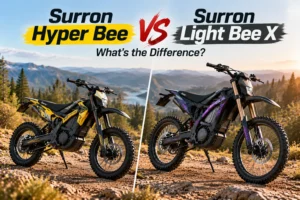
The Surron Hyper Bee and Surron Light Bee X are both high-performance electric dirt bikes, but they are designed for
