Stark Varg MX vs Stark Varg EX: Key Differences
Electric enduro motorcycles are becoming an increasingly appealing option for riders who want strong acceleration, precise low-speed control, and less

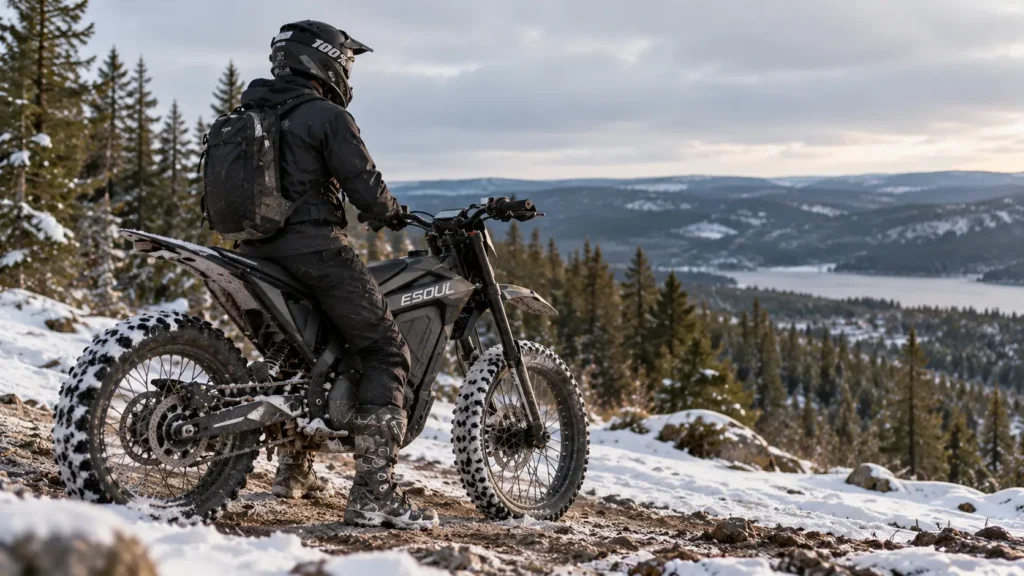
Cold weather can reduce the range and performance of an electric dirt bike, even when there is nothing wrong with the battery. Lithium-ion batteries rely on electrochemical reactions to store and release energy, and those processes become less favorable as battery temperature falls. Internal resistance increases, voltage can sag more under load, and the battery may not deliver energy as effectively as it does at moderate temperatures.
For riders, the effects are usually straightforward: the bike may have less usable range, acceleration may feel weaker, and battery percentage or voltage can appear to fall faster during hard riding. The colder the battery becomes, the more noticeable these effects can be.
There is an important distinction, however, between using a cold battery and charging a cold battery. Reduced performance during a winter ride can be temporary and may improve as battery temperature rises. Charging a lithium-ion battery at temperatures below the limits specified by its manufacturer can be more serious because low-temperature charging can create conditions that accelerate degradation or damage cells. Some battery management systems restrict charging when the pack is too cold for this reason.
That means winter battery care is not simply about keeping an electric dirt bike warm. Riders need to understand how temperature affects discharge, charging, storage, and the difference between temporary cold-weather performance loss and permanent battery aging.
Most modern electric dirt bikes use lithium-ion battery packs. Inside each cell, lithium ions move between the electrodes during charging and discharging. Temperature affects these electrochemical processes, which is why the same battery can behave differently on a warm afternoon and a freezing winter morning.
As temperature falls, ionic transport and reaction kinetics become less favorable, and the battery’s effective internal resistance increases. Under load, a battery with higher internal resistance experiences a larger voltage drop. This is one reason an electric dirt bike may feel less responsive when the battery pack is very cold.
The effect becomes particularly noticeable during high-current demand. Hard acceleration, steep climbs, deep sand, and sustained high-power riding place greater loads on the battery. A cold battery may experience more voltage sag under these conditions than the same pack would at a moderate temperature.
Range can decline for the same reason. A cold battery may not make its stored energy as readily usable within the operating limits of the motorcycle. The bike’s battery management system may also impose protective limits depending on cell temperature and voltage.
This does not mean a battery permanently loses the same percentage of capacity every time the temperature drops. A significant portion of cold-weather performance loss can be temporary. When the battery returns to a more favorable operating temperature, much of its normal performance may return.
That distinction is important when diagnosing an electric dirt bike.
If your bike normally has good range but performs worse only on very cold days, temperature may be contributing to the change. If range remains substantially reduced after the battery has returned to normal operating temperatures, battery aging or another problem may deserve investigation.
There is also no reliable universal rule such as “an electric dirt bike loses exactly 20% of its range below a particular temperature.” Battery chemistry, cell design, pack construction, temperature, state of charge, motorcycle efficiency, riding style, and battery-management strategy all influence the result. A fixed percentage may be useful for describing one tested battery under one set of conditions, but it should not be applied to every electric dirt bike.
Range receives most of the attention, but riders may notice cold weather through the throttle before they notice it through total riding distance.
An electric dirt bike can demand substantial current during acceleration. When the battery is cold and internal resistance is higher, voltage may sag more under that load. Depending on the motorcycle’s battery management and controller strategy, available output may be limited to keep the battery within safe operating conditions.
The result can feel like reduced acceleration or softer power delivery.
This is especially relevant to high-performance electric dirt bikes because their motors and controllers can request large amounts of electrical power. A powerful motor does not eliminate battery limitations. The battery still has to supply the required voltage and current.
Battery state of charge can make the situation more noticeable. A cold battery at a high state of charge and a cold battery near the lower end of its usable charge range do not necessarily behave the same way under heavy load. As pack voltage falls, hard acceleration can create additional voltage sag, and protective limits may be reached sooner.
This helps explain why a bike can feel strong at the beginning of a ride but increasingly reluctant to deliver maximum performance as the battery becomes depleted, particularly in difficult winter conditions.
Tire and terrain conditions can complicate the rider’s perception even further. Cold weather may mean wet soil, frozen ground, snow, or reduced tire grip. What feels like a power problem may sometimes be a traction problem, while unusually low tire pressure can increase rolling resistance and energy consumption.
For this reason, diagnosing winter performance should involve the whole motorcycle rather than the battery alone.
Check tire pressure, riding mode, terrain, state of charge, and battery temperature before concluding that the pack has deteriorated. If the motorcycle displays battery temperature, warning messages, or diagnostic information, those readings can provide useful context.
A gradual and repeatable reduction in cold-weather performance is very different from a sudden fault, warning code, severe imbalance, physical battery damage, or abnormal behavior that continues after the battery has warmed.
For many owners, the most important winter battery rule concerns charging rather than riding.
Lithium-ion batteries generally have more restrictive temperature requirements for charging than for discharging. Charging at sufficiently low cell temperatures can create undesirable electrochemical conditions, including lithium plating on the graphite anode. Lithium plating can reduce battery performance and, under some conditions, contribute to safety and degradation concerns.
This is why riders should never assume that because an electric dirt bike can operate in cold weather, it can also be charged safely at the same temperature.
The correct charging temperature depends on the specific battery and manufacturer. Some battery management systems monitor temperature and prevent or reduce charging when cells are too cold. Others may rely more heavily on the owner following instructions in the manual.
If you return from a winter ride with a very cold battery, the safest general approach is to follow the manufacturer’s charging-temperature requirements and allow the battery to reach an approved charging temperature before beginning a normal charge when required.
Avoid trying to heat the battery rapidly with improvised methods. Direct heaters, heat guns, open flames, or other uncontrolled heat sources can create dangerous temperature gradients or damage the battery enclosure and cells. If a manufacturer provides a specific battery-heating or cold-weather procedure, use that procedure instead.
Condensation also deserves consideration. Moving a very cold bike or removable battery into a warm, humid environment can cause moisture to condense on cold surfaces. Owners should keep charging connectors clean and dry and follow the manufacturer’s instructions before connecting the charger.
The charger itself matters as well. Use the charger specified or approved for the battery system. A battery pack is not defined only by voltage, and a charger should not be considered compatible merely because a voltage number appears similar.
This is particularly important with modified electric dirt bikes. Changing batteries, chargers, controllers, or battery-management components without understanding their electrical and thermal requirements can introduce risks far more serious than reduced winter range.
Winter storage is different from simply leaving the bike parked until spring.
Lithium-ion batteries continue to age even when they are not being used. This is known as calendar aging, and temperature and state of charge can influence the rate of degradation. For long-term ownership, how a battery spends several months in storage can matter as much as how it performs during a single cold ride.
The first rule is to follow the motorcycle or battery manufacturer’s storage instructions. There is no universal storage percentage that should be applied blindly to every electric dirt bike. Manufacturers may specify a particular state-of-charge range, inspection interval, temperature range, or charging procedure for long-term storage.
In general, long-term exposure to extreme temperatures should be avoided when possible. A battery stored in an uncontrolled shed or trailer can experience much greater temperature swings than one kept within its approved storage environment.
Extremely high temperatures are particularly damaging to lithium-ion battery life, but very cold storage creates its own practical concerns, especially if the owner attempts to charge the pack while it remains below its approved charging temperature.
Owners should also remember that a stored battery is not necessarily a battery that can be completely ignored. Battery management electronics and other systems may consume small amounts of energy over time. Depending on the motorcycle, manufacturers may recommend periodic state-of-charge checks during extended storage.
For a removable battery, indoor storage may be possible if the manufacturer permits it and the location meets its safety requirements. The pack should be protected from physical damage, moisture, excessive heat, and unauthorized handling. Large lithium-ion motorcycle batteries contain substantial stored energy, so they should be treated as serious electrical equipment rather than ordinary household batteries.
Before returning a stored electric dirt bike to regular use, inspect the battery and connections for anything unusual. A pack that is physically damaged, swollen, leaking, unusually hot, producing an abnormal odor, or displaying persistent faults should not simply be charged and ridden as normal. Follow the manufacturer’s safety procedure and seek qualified support where necessary.
You cannot change the chemistry of the battery, but you can avoid making cold-weather range worse than it needs to be.
The most effective strategy is to start with realistic expectations. If your usual summer ride consumes most of the available battery, do not assume the same route will leave the same reserve in very cold weather. Plan additional margin until you understand how your particular motorcycle behaves at lower temperatures.
Where the manufacturer allows it, beginning a ride with the battery at a suitable operating temperature can help compared with leaving the bike or removable pack exposed to severe cold for many hours before riding. The key is to keep the battery within its approved temperature range rather than trying to make it artificially hot.
Riding style matters as well. Repeated full-throttle acceleration increases power demand, while high speeds can increase energy consumption substantially because aerodynamic resistance rises quickly with speed. Deep snow, soft mud, sand, and steep climbing can further increase the energy required to move the motorcycle.
Tire pressure should also be checked rather than assumed. Ambient temperature affects tire pressure, and incorrect pressure can change handling, traction, and rolling resistance. Use a pressure appropriate for the motorcycle, tires, terrain, and manufacturer recommendations rather than choosing a universal winter PSI.
If range is critical, pay attention to the motorcycle’s actual energy use rather than focusing only on the percentage shown on the display. Battery percentage is an estimate produced by the battery-management system, and its behavior may appear different under cold, high-load conditions.
A good winter routine is therefore straightforward: keep the battery within approved temperature limits, begin with enough charge for the planned ride, allow additional range margin, monitor performance, and avoid charging outside the manufacturer’s permitted temperature range.
You do not need complicated battery rituals. Consistent, manufacturer-approved habits are more useful than internet rules that claim every lithium battery should be charged, stored, or warmed in exactly the same way.
Cold weather and battery degradation should not be treated as the same thing.
A battery can temporarily provide less usable performance when it is cold and then recover much of that performance after warming. That is different from permanent capacity loss caused by battery aging or damage.
Long-term lithium-ion degradation is influenced by multiple factors, including temperature history, time, state of charge, cycling conditions, depth of discharge, charging behavior, and cell chemistry. No single temperature or number of winter rides can tell you exactly how long an electric dirt bike battery will last.
The more important winter risk is using or charging the battery outside the conditions for which it was designed, particularly charging at excessively low cell temperatures when the manufacturer does not permit it.
Modern battery systems may include temperature sensors and protective software, but riders should not use electronic protection as an excuse to ignore the manual. A battery management system is an additional layer of protection, not permission to deliberately operate outside specified limits.
Battery age also changes how winter performance should be interpreted. As a battery ages, its internal resistance can increase and usable capacity can decline. Cold temperatures may make those limitations more noticeable because the battery already has less performance margin than it did when new.
If an older electric dirt bike suddenly develops unusually severe voltage sag, unexpectedly early shutdowns, charging faults, or substantially reduced range even in moderate temperatures, the issue may no longer be explained by winter weather alone.
In that situation, diagnosis should focus on battery health rather than simply waiting for a warmer day.
Yes. Cold temperatures can increase battery internal resistance and reduce the amount of energy that can be delivered effectively under riding conditions. The amount of range reduction varies by battery, temperature, terrain, riding style, and motorcycle design.
Not necessarily. Some loss of available performance in cold conditions is temporary and can improve when the battery returns to a more favorable temperature. Permanent degradation is a different process influenced by battery age, temperature history, storage, cycling, charging, and chemistry.
That depends on the motorcycle and battery manufacturer’s operating-temperature limits. Some lithium-ion battery systems permit discharge below freezing, but performance may be reduced. Check the manual for your specific bike rather than applying a universal temperature limit.
Do not assume that you can. Low-temperature charging can be more restrictive than low-temperature discharge because of risks such as lithium plating. Follow the battery manufacturer’s minimum charging temperature and any battery-management warnings.
Keeping the battery within its manufacturer-approved operating range can improve cold-weather performance. Do not use uncontrolled heating methods. Follow the manufacturer’s instructions for battery conditioning, storage, and charging.
Cold temperatures can increase battery internal resistance and voltage sag under high current demand. Depending on the bike, the battery management system or controller may also limit output when operating conditions approach defined limits.
Do not automatically store every lithium-ion battery at 100%. Long-term storage recommendations vary by manufacturer and battery system. Follow the specified storage state of charge and inspection schedule for your bike.
Only if the temperature and storage conditions remain within the manufacturer’s specifications. Also consider state of charge, moisture, physical protection, and whether periodic battery checks are required.
Cold weather affects electric dirt bike batteries because lithium-ion cells are temperature-sensitive electrochemical systems. As battery temperature falls, internal resistance increases, voltage sag can become more pronounced, and the pack may deliver less usable energy and power than it does under warmer conditions.
For the rider, that can mean shorter range, softer acceleration, and a battery display that behaves differently during demanding winter riding. Much of this cold-weather performance loss can be temporary rather than evidence that the battery has permanently lost the same amount of capacity.
Charging deserves greater caution.
A battery that can discharge in cold conditions may not necessarily be safe to charge at the same temperature. Low-temperature charging can create damaging electrochemical conditions, which is why manufacturer charging limits and battery-management protections should be taken seriously.
Winter storage matters too. Avoid generic rules that prescribe one exact storage percentage or temperature for every electric dirt bike. Battery chemistry, pack design, BMS behavior, and manufacturer requirements differ. Use the storage state of charge, temperature range, charging procedure, and inspection schedule specified for your motorcycle.
Ultimately, cold weather does not make electric dirt bikes unusable. It simply changes how the battery behaves.
If you understand the difference between cold-weather performance loss and permanent battery degradation, leave additional range margin, respect charging-temperature limits, and store the battery correctly, winter riding can be much easier on both the rider and the battery.
Sources for fact-checking: U.S. Department of Energy battery research and Argonne National Laboratory provide technical background on lithium-ion behavior and degradation, while manufacturer-specific operating, charging, and storage temperature limits should always come from the owner’s manual for the individual electric dirt bike or battery.
Electric enduro motorcycles are becoming an increasingly appealing option for riders who want strong acceleration, precise low-speed control, and less
Electric enduro motorcycles are becoming an increasingly appealing option for riders who want strong acceleration, precise low-speed control, and less
The Talaria XXX Pro and Talaria Sting R MX4 are two popular options for riders looking for a lightweight electric
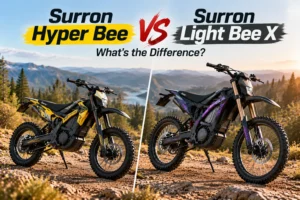
The Surron Hyper Bee and Surron Light Bee X are both high-performance electric dirt bikes, but they are designed for
