Stark Varg MX vs Stark Varg EX: Key Differences
Electric enduro motorcycles are becoming an increasingly appealing option for riders who want strong acceleration, precise low-speed control, and less

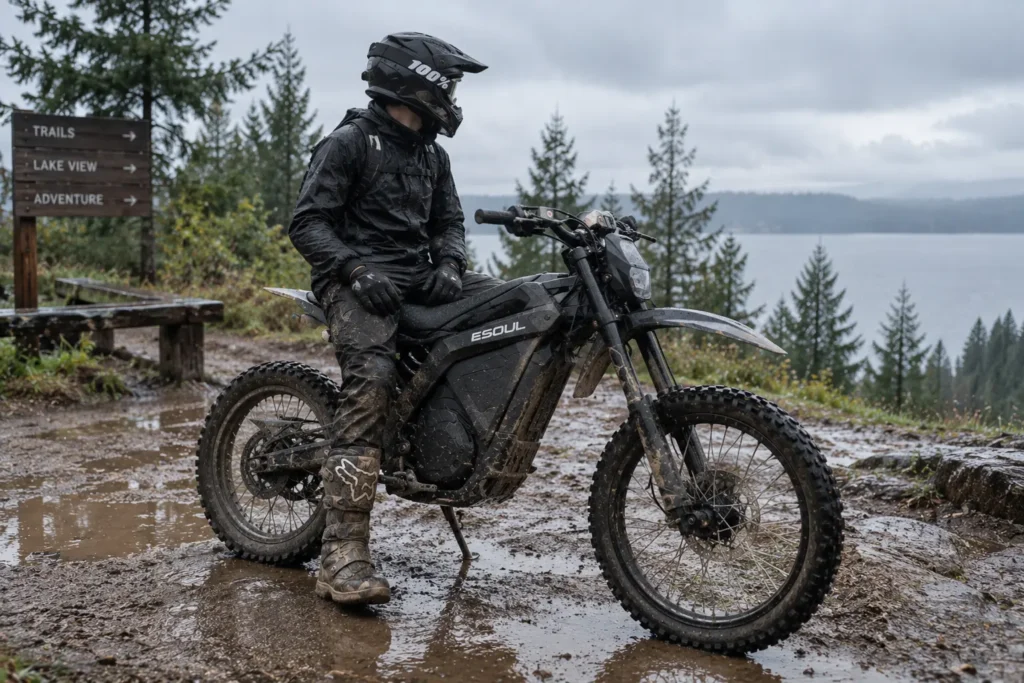
Yes, many electric dirt bikes can be ridden in light rain and on wet trails, but that does not mean every electric dirt bike is waterproof or safe to submerge. The amount of water a bike can safely handle depends on its design, seals, connectors, battery enclosure, motor, controller, published IP ratings, and—most importantly—the manufacturer’s instructions for that specific model.
Rain falling onto a properly designed electric dirt bike is very different from riding through deep water or directing a pressure washer at electrical connectors.
Wet-weather riding also creates risks that have nothing to do with electricity. Tires have less grip, muddy terrain changes handling, visibility may decrease, and wet brake components can temporarily behave differently.
The safest general rule is therefore:
Follow the water-exposure limits in your bike’s owner’s manual, avoid unnecessary submersion, slow down when traction is reduced, and inspect and dry the bike appropriately after a wet ride.
| Situation | General Guidance |
|---|---|
| Light rain | Often acceptable if the manufacturer permits it |
| Wet trail | Usually bike-dependent; ride more cautiously |
| Mud and splashes | Often expected in off-road use, but clean and inspect afterward |
| Shallow puddles | Use caution and follow manufacturer water-depth guidance |
| Deep puddles/streams | Avoid unless the manufacturer explicitly permits that depth |
| Long-term submersion | Not normal riding use |
| Pressure washing | Follow the manual; avoid assuming seals can handle it |
| Charging while wet | Follow manufacturer charging instructions and inspect/dry connections first |
| Leaving bike outside in rain | Avoid prolonged exposure unless specifically permitted |
Those are general principles rather than universal water-depth limits. A motorcycle’s actual owner’s manual should always take priority.
This is the distinction that matters most.
People often use waterproof and water-resistant as though they mean the same thing. They do not.
A bike designed to tolerate rain, splashes, mud, and normal washing may still not be designed for prolonged immersion. Likewise, one component may have a published ingress-protection rating while the complete motorcycle does not share exactly the same rating.
That is why you should never assume:
“It’s an off-road bike, so the whole thing must be waterproof.”
Electric dirt bikes contain multiple areas where water protection matters, including the battery pack and its connectors, motor, controller or inverter, charging interface, display, switches, wiring harness, sensors, and electrical connectors.
Different manufacturers solve these problems differently.
Some use sealed enclosures and connectors specifically designed for wet off-road conditions. Others publish IP ratings for particular components. Some manufacturers provide riding instructions without publishing a single whole-bike IP rating.
An IP rating, or Ingress Protection rating, is a standardized way of describing an enclosure’s protection against solid objects and water.
For a conventional two-digit IP code, the first digit relates to protection against solid particles and the second relates to water ingress. If an “X” appears in place of one digit, that part of the protection has not been specified by that code.
However, there is an important mistake to avoid:
A higher-looking IP number does not give riders unlimited permission to ride underwater.
IP tests are performed under defined laboratory conditions. They do not automatically reproduce every real-world situation involving mud, moving water, crashes, damaged seals, aging connectors, pressure washing, temperature changes, or modifications.
Even more importantly, check what the IP rating actually applies to.
A battery may have one rating while the display, controller, connectors, charger port, or complete motorcycle has another level of protection—or no published rating at all.
For example, some Sur-Ron dealer documentation describes the Light Bee X battery as IP67 and suitable for normal rain and puddles. That tells you something useful about that battery, but it should not be casually converted into a claim that every part of every Sur-Ron can be submerged.
At the other end of the market, Stark Future publishes unusually strong water-protection claims for the VARG platform. Its current VARG EX documentation identifies the motorcycle’s display as IP69K waterproof and shock resistant, while Stark dealers describe the VARG as being engineered around very high water-resistance standards.
That does not mean every electric dirt bike should be treated like a Stark VARG.
Talaria provides a good example of why model-specific instructions matter more than generic internet advice. Talaria’s Sting manual says riders can use the motorcycle carefully in light rain, but advises against heavy rain, prolonged deep-water riding, and high-pressure washing around electronic components.
So instead of asking:
“Are electric dirt bikes waterproof?”
Ask:
“What water exposure does the manufacturer of my exact bike say is acceptable?”
That question is far more likely to keep an expensive battery and electrical system working.
Normal rain is generally less concerning than water entering somewhere it should not.
A properly sealed electrical system is designed to isolate sensitive components from normal environmental exposure. Problems become more likely when water gets past a damaged seal, enters an electrical connector, reaches a vulnerable charging interface, remains trapped where corrosion can develop, or exceeds the water exposure the manufacturer designed the bike to handle.
Deep water adds another problem: submersion.
The difference between a shallow splash and a deep creek crossing is not merely “more rain.”
Submersion can expose seals and enclosures to water from directions and pressures they may not have been designed to withstand. Muddy water can also carry dirt and contaminants into bearings, pivots, connectors, seals, brakes, and drivetrain components.
This is why a universal rule such as “anything below the wheel hubs is safe” is not appropriate for every electric dirt bike.
Some manuals provide specific wading guidance. Others simply tell riders to avoid deep water.
Follow the specification for the actual bike.
Water exposure can also cause mechanical problems even when the high-voltage electrical system remains completely functional.
Wheel bearings, steering bearings, swingarm pivots, suspension linkage, chains, brake components, and fasteners are all exposed to the same mud and water that affect conventional dirt bikes.
A bike can therefore survive a rainy ride electrically while still requiring cleaning, lubrication, inspection, or maintenance afterward.
Brakes deserve particular attention.
Water and contamination on brake components can temporarily change braking behavior. Talaria’s Sting documentation specifically warns that braking effectiveness may be temporarily reduced after washing or riding through water and tells riders to slow down and gently operate the brakes until normal braking returns.
Wet terrain itself also changes how much grip is available.
Mud, wet rocks, roots, painted surfaces, metal surfaces, leaves, and clay can become extremely slippery. Electric motors can respond quickly to throttle input, so aggressive acceleration on a low-grip surface can break rear-wheel traction more easily than expected.
Use smoother throttle inputs, allow more braking distance, and avoid sudden changes in direction or power.
This is particularly important on high-powered electric dirt bikes.
A wet trail does not reduce the motor’s ability to produce torque just because the tire has less ability to transfer that torque to the ground.
The result is simple:
In the rain, traction can become the limiting factor long before motor power does.
Shallow puddles and normal trail splashes may be within the intended use of many off-road electric motorcycles, but puddle depth matters much more than puddle length or appearance.
A shallow puddle that splashes water onto the frame is very different from water deep enough to immerse important electrical components.
If you cannot judge the depth, going around it is usually the smarter choice.
The same principle applies to stream crossings.
Do not assume a bike is safe simply because another rider posted a video riding the same model through deep water. Their motorcycle may have been modified or additionally sealed, the crossing may have been shallower than it appeared, or damage may have developed later.
A successful water crossing is not a manufacturer’s specification.
Washing deserves similar caution.
Electric dirt bikes are built to get dirty, so they obviously need cleaning. But washing mud off a bike and forcing high-pressure water directly into seals or connectors are not the same thing.
Always check the owner’s manual first.
Where high-pressure washing is discouraged, use lower-pressure water, suitable bike-cleaning products, soft brushes, cloths, and careful rinsing instead. Avoid aggressively spraying electrical connectors, charging interfaces, displays, switches, bearing seals, motor interfaces, battery connections, and other sensitive areas.
This is another place where generic rules can be wrong.
For example, Talaria documentation advises against using a high-pressure washer around electronic components. Stark VARG documentation and dealer guidance describe a much higher degree of water resistance and permit more aggressive washing practices, although even Stark guidance cautions against directing a power washer straight at the display.
That difference proves why there should not be one washing rule for every electric dirt bike.
After washing, inspect the motorcycle and allow appropriate areas to dry according to manufacturer guidance.
Pay attention to the chain as well.
Rain, mud, water, and cleaning can remove lubricant and leave contamination on the drivetrain. Once the chain is appropriately clean and dry, lubricate and maintain it according to the bike or chain manufacturer’s recommendations.
Also inspect the brake rotors and pads for contamination. Do not put chain lubricant, silicone products, or oily cleaners anywhere near braking surfaces.
A wet ride should not end with parking a mud-covered bike in a damp corner and ignoring it until next weekend.
Start by switching the motorcycle off and following any post-ride procedure specified by the manufacturer.
Inspect the battery compartment, charging interface, connectors, display, switches, controller area, and wiring for unusual water accumulation, mud, impact damage, or anything that appears out of place.
If the motorcycle uses a removable battery, do not automatically remove it while everything is soaked. Follow the manufacturer’s procedure. Opening a sealed compartment at the wrong time can sometimes introduce water into an area that was previously protected.
Clean mud and debris using the washing method recommended for your bike.
Then deal with the mechanical parts.
Inspect the chain and sprockets. Check brakes. Look around suspension seals and moving pivots. Examine wheels and tires for damage picked up on slippery or hidden terrain.
Before charging, follow the manufacturer’s charging instructions.
Do not casually connect a charger to a visibly wet, contaminated, damaged, or corroded charging interface. Make sure the relevant charging components are in the condition required by the manufacturer.
If water appears to have entered somewhere it should not, or the bike displays an electrical fault after the ride, don’t keep repeatedly turning it on to “see if it fixes itself.”
Consult the owner’s manual or qualified service support.
The same applies after accidental deep-water exposure.
If the battery enclosure has been damaged or you observe abnormal heat, swelling, smoke, unusual odor, sparking, or other signs of battery trouble, stop using the bike and follow the manufacturer’s emergency guidance. A high-energy lithium-ion battery should not be opened or casually repaired by an unqualified owner.
Routine wet-weather care can also improve long-term durability.
Repeated water and mud exposure can be hard on bearings, chains, suspension pivots, fasteners, connectors, and other components even when no immediate electrical failure occurs.
This connects directly with long-term ownership. Our How Long Do Electric Dirt Bikes Last? guide explains why water exposure, contamination, storage, maintenance, battery care, and parts support all influence how long the complete motorcycle remains useful.
Rain itself does not automatically damage a properly protected electric dirt bike battery.
The bigger concern is water entering the battery enclosure or electrical connections, physical damage to the pack, corrosion, improper charging after water exposure, or use beyond the conditions the battery was designed to withstand.
A sealed battery pack should not be opened simply because the outside got wet.
In fact, opening an enclosure unnecessarily can compromise seals or expose the battery to contaminants.
Battery longevity is also influenced by much more than rain. Temperature, cell chemistry, storage state of charge, charging behavior, cycling, current demand, and battery management all influence degradation over time.
Our How to Extend Electric Dirt Bike Battery Life guide covers those factors in more detail.
Temperature after a wet ride also deserves common sense.
If a bike has been ridden in very cold or very hot conditions, follow the manufacturer’s battery temperature limits before charging. Lithium-ion batteries have defined operating and charging temperature ranges, and the correct limits come from the manufacturer of the actual battery system.
Don’t use improvised heating methods to dry or warm a battery.
Likewise, don’t assume that leaving the battery permanently at 100% charge is the best way to protect it after every wet ride. Storage recommendations vary by battery chemistry and manufacturer.
The safest approach remains boring but effective:
Keep the battery physically protected, follow the specified charging procedure, use the correct charger, follow storage guidance, and investigate signs of water intrusion or damage rather than ignoring them.
Being technically possible and being a good idea are not always the same thing.
Even if a motorcycle has excellent water protection, heavy rain creates additional riding hazards: poor visibility, reduced tire grip, deeper hidden puddles, changing trail surfaces, increased braking distances, flowing water, mud, and a greater chance of losing control.
That means the decision is not only about whether the battery gets wet.
It is about whether the complete riding environment remains safe.
If the manufacturer specifically tells you to avoid heavy rain, as Talaria does in its Sting documentation, the answer is simple: follow that instruction.
If another motorcycle is explicitly designed for much more severe water exposure, you still need to account for traction, visibility, trail conditions, rider skill, and local closures or restrictions.
Do not interpret a strong IP rating as a riding-safety rating.
An enclosure may survive water that your tires cannot safely ride through.
Likewise, an electric motorcycle’s ability to physically operate in wet conditions says nothing about whether you are legally permitted to ride at that location. Public trails and roads have separate vehicle-access and registration rules.
For U.S. road use, our Are Electric Dirt Bikes Street Legal? U.S. Laws Explained guide covers the distinction between an off-road e-moto, an e-bike, and a road-legal electric motorcycle.
The practical answer is therefore straightforward:
Light rain on a bike whose manufacturer permits wet-weather use is usually a manageable riding condition. Heavy rain, deep water, flooding, or unknown water depth introduces risks that go far beyond whether the electronics are sealed.
Many electric dirt bikes are designed to tolerate some rain, mud, and splashing, but water resistance varies by model. Check the owner’s manual and any published IP ratings for the exact motorcycle rather than assuming all electric dirt bikes have the same protection.
Some bikes or individual components have strong published water-resistance ratings, but “waterproof” should not be used as a universal description of electric dirt bikes. Water resistance, brief immersion protection, and indefinite submersion are different things.
Talaria Sting documentation says the motorcycle can be ridden carefully and slowly in light rain, while advising riders to avoid heavy rain and prolonged deep-water exposure. Owners should check the manual for their exact Talaria model because specifications and guidance can change.
Some Sur-Ron documentation and dealers describe components such as the Light Bee X battery as water-resistant and suitable for rain and normal puddles. However, owners should follow the manual for the exact bike and should not treat battery water resistance as proof that every component is safe for deep submersion.
Shallow puddles may be acceptable on bikes designed for wet off-road use, but there is no universal safe puddle depth. Follow the manufacturer’s wading limits. Avoid deep or unknown water that could submerge electrical components or exceed the bike’s specified protection.
It depends on the motorcycle. Some manufacturers warn against high-pressure washing around electronic components, while bikes designed to higher water-resistance standards may permit it under specific conditions. Always follow the cleaning instructions for your exact model.
Follow the manufacturer’s charging instructions and make sure the charging interface and relevant electrical connections are in the condition required before connecting the charger. Do not connect a charger to visibly wet, contaminated, damaged, or corroded charging components.
Turn the bike off and follow the manufacturer’s wet-weather or water-ingress procedure. Inspect for water where it should not be, clean and dry the motorcycle as directed, and do not charge or repeatedly power it on if you suspect water has entered the electrical system. Seek qualified service support when necessary.
Normal rain should not ruin a battery designed and sealed for wet-weather use. The greater concern is water entering the enclosure or connectors, physical damage, corrosion, or charging when components are not in the condition specified by the manufacturer.
It can be when the motorcycle is designed for those conditions and the trail remains safe, but wet terrain reduces traction and can affect braking. Slow down, use smoother throttle and braking inputs, and be particularly careful on wet roots, rocks, mud, leaves, clay, and other slippery surfaces.
So, can you ride an electric dirt bike in the rain?
For many modern electric dirt bikes, the answer is yes—within the water-exposure limits specified by the manufacturer.
Light rain, mud, and wet trails are normal conditions for many off-road motorcycles. But that does not make every electric dirt bike waterproof, and it definitely does not mean every bike can be submerged.
The key distinction is between rain, splashing, pressure, and immersion.
A sealed electrical system may easily tolerate water falling onto the motorcycle while riding. Deep water can expose seals and connectors to very different conditions. A pressure washer can direct water at components with far more force than ordinary rainfall.
That is why IP ratings and owner’s manuals matter.
Check whether the rating applies to the complete motorcycle or only a particular component. Follow the manufacturer’s maximum water-exposure guidance. Don’t copy another rider’s creek crossing simply because their bike survived it.
And remember that wet-weather safety is not only an electrical question.
Rain reduces traction. Mud changes handling. Water can temporarily affect braking. Hidden puddles can conceal rocks, holes, and unexpected depth.
After the ride, clean the bike using the recommended method, inspect the drivetrain and electrical areas, maintain the chain, check the brakes, and make sure charging components are in the proper condition before connecting the charger.
Electric enduro motorcycles are becoming an increasingly appealing option for riders who want strong acceleration, precise low-speed control, and less
Electric enduro motorcycles are becoming an increasingly appealing option for riders who want strong acceleration, precise low-speed control, and less
The Talaria XXX Pro and Talaria Sting R MX4 are two popular options for riders looking for a lightweight electric
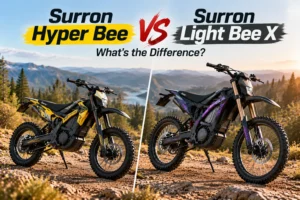
The Surron Hyper Bee and Surron Light Bee X are both high-performance electric dirt bikes, but they are designed for
