Stark Varg MX vs Stark Varg EX: Key Differences
Electric enduro motorcycles are becoming an increasingly appealing option for riders who want strong acceleration, precise low-speed control, and less

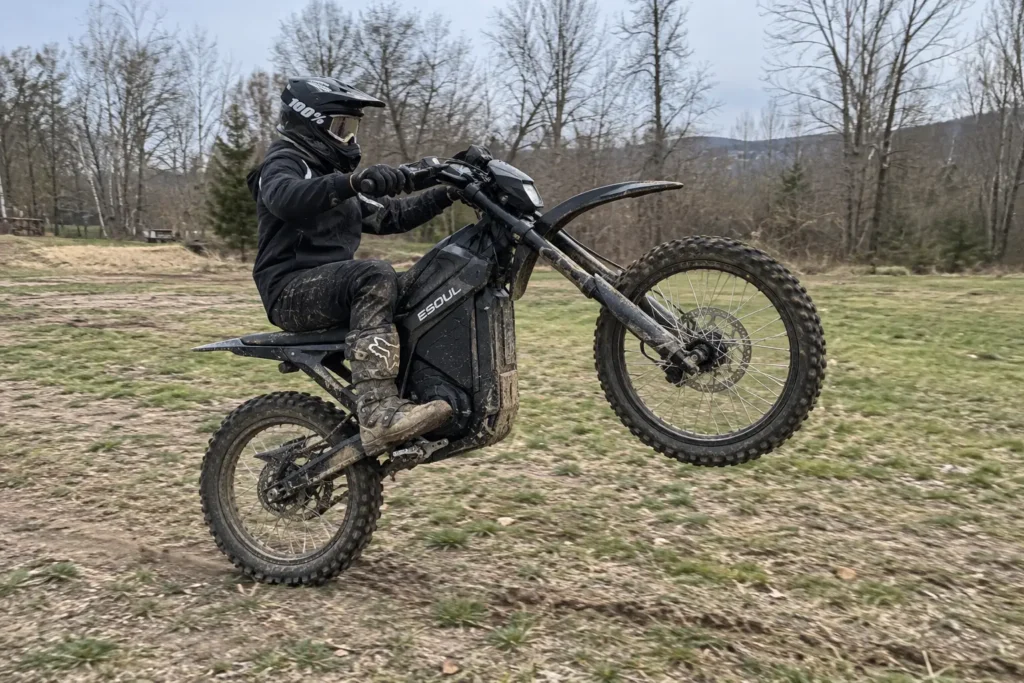
A well-built electric dirt bike can remain useful for many years, but there is no single number that accurately describes the lifespan of every bike. An electric dirt bike is made from components that age at very different rates. The battery gradually loses capacity, tires and brakes wear out, suspension needs servicing, bearings can eventually require replacement, and electronics can fail, while the frame and motor may remain usable much longer.
That means asking “How long do electric dirt bikes last?” is slightly different from asking how long a phone or other sealed electronic product lasts.
An electric dirt bike is a serviceable vehicle.
A worn tire does not mean the bike is finished. Neither does a worn chain, leaking fork seal, tired bearing, or even a battery that no longer provides enough range for the rider. Those components can potentially be serviced or replaced if parts remain available and the repair makes financial sense.
For many owners, the battery is therefore more important than an arbitrary whole-bike lifespan. Lithium-ion batteries age both through use and simply through time, and their rate of degradation depends on factors including chemistry, temperature, state of charge, cycling, storage conditions, and operating demands.
The more useful way to think about electric dirt bike longevity is:
| Component | What Usually Determines Its Life |
|---|---|
| Battery | Chemistry, temperature, cycles, storage SOC, charging and discharge conditions |
| Motor | Heat, bearings, seals, contamination, load and design |
| Controller | Heat, moisture, electrical load and component quality |
| Frame | Crashes, fatigue, corrosion, design and rider use |
| Suspension | Riding hours, contamination, service intervals and terrain |
| Bearings | Water, mud, loads, seals and maintenance |
| Chain & sprockets | Dirt, lubrication, alignment, tension and riding style |
| Brakes | Terrain, rider weight, speed and braking style |
| Tires | Terrain, compound, pressure, power and riding style |
This is why claims such as “every electric dirt bike lasts five years” or “every battery lasts 1,000 cycles” should be treated carefully. Different bikes, batteries, riders, climates, and maintenance histories can produce very different outcomes.
The battery gets the most attention because it is both essential to the bike’s range and potentially expensive to replace.
It is also where lifespan discussions become most misleading.
You will often see electric vehicle and e-bike batteries described using a certain number of charge cycles. A cycle is better understood in terms of cumulative energy use rather than simply counting every time the charger is connected. Using part of a battery and charging it again does not necessarily mean the pack has experienced the equivalent of one complete full-depth cycle.
But cycle count is only one part of battery aging.
Lithium-ion batteries can degrade while they are being used, known broadly as cycle aging, and they can also degrade while sitting unused, known as calendar aging.
That second point matters enormously.
A lightly used electric dirt bike battery does not stay chemically frozen simply because the motorcycle is parked in a garage.
Research into commercial lithium-ion cells has shown that calendar aging depends on factors including temperature, state of charge, cell chemistry, and time. Long-term research has also demonstrated meaningful variation between different commercial cell types, making it difficult to reduce lithium-ion lifespan to one universal formula.
For an electric dirt bike owner, this means the question:
“How many years will my battery last?”
cannot be answered responsibly from cycle count alone.
Two riders can own the same motorcycle for the same number of years and end up with batteries in very different condition.
One may ride frequently but store and charge the battery under favorable conditions. Another may ride less often but leave the pack for extended periods in conditions that accelerate degradation.
Temperature is particularly important. Prolonged exposure to high temperatures can accelerate lithium-ion battery aging. Storage state of charge also influences calendar degradation, although the exact relationship varies with battery chemistry and cell design.
This is why generic internet advice should never override the battery-storage instructions from the motorcycle manufacturer.
Another important distinction is that a battery does not normally transition overnight from “healthy” to “dead.”
Capacity generally declines over time.
If a battery originally provided enough usable energy for a long trail session, degradation may eventually mean the rider notices less range or greater voltage sag under load. At some point, the reduced performance may no longer satisfy that rider’s needs.
But that does not necessarily mean the battery has zero usable energy.
In other words, battery end-of-life is partly an engineering definition and partly a practical ownership question.
A rider who only needs short recreational sessions may continue using a degraded battery that would already be unacceptable to someone who relies on nearly all of the bike’s original range.
This is also why battery size matters to ownership. Understanding Ah and Wh makes it much easier to evaluate what a replacement battery actually offers. Our Electric Dirt Bike Battery Ah vs Wh guide explains why watt-hours are generally more useful than Ah alone when comparing nominal energy across different voltage systems.
Before buying any electric dirt bike, ask four questions:
What is the battery warranty? Is a replacement battery available? What does a replacement cost today? And does the manufacturer provide clear storage and charging instructions?
Those answers can tell you more about long-term ownership than a vague claim that the battery will “last for years.”
The good news is that battery degradation does not mean the rest of the motorcycle wears out at the same rate.
An electric motor is mechanically different from an internal-combustion engine. It does not have pistons, combustion chambers, valves, spark plugs, or an engine oil system. That eliminates many engine-specific wear and maintenance items.
But “fewer moving parts” should not be translated into “the motor lasts forever.”
Electric motors still operate under load and generate heat. Depending on the design, they may contain bearings, seals, magnets, windings, shafts, cooling features, sensors, and other components that can be affected by heat, contamination, manufacturing quality, excessive loads, water ingress, crash damage, or modifications.
The controller or inverter is another important part of the system.
It manages electrical power between the battery and motor and may be exposed to substantial current and heat during aggressive riding. Cooling design, component quality, waterproofing, connectors, software calibration, battery voltage, motor setup, and riding conditions can all affect the stress placed on the system.
This becomes especially relevant when bikes are modified.
Installing a higher-output controller does not magically make the original battery, motor, wiring, connectors, drivetrain, and cooling system capable of safely handling every additional power level the controller can request.
More power can mean more electrical and thermal stress.
If longevity matters, modifications should be considered as a complete-system engineering problem rather than a race to the largest peak-kW number.
Our Electric Dirt Bike Cooling Systems: Air vs Liquid Cooling guide explains why thermal management becomes increasingly important as sustained power demand rises.
The frame has a completely different aging problem.
A good frame does not have a battery-style charge-cycle limit. Its condition depends more on design, material, fatigue loading, crashes, corrosion, rider weight, jumps, modifications, and the severity of off-road use.
A carefully ridden recreational bike and a bike repeatedly landed hard from jumps can have completely different chassis histories even if both are three years old.
This is one reason age alone is a poor way to judge a used electric dirt bike.
A two-year-old competition bike may have experienced far more mechanical stress than a five-year-old recreational bike.
Suspension, bearings, brakes, chains, sprockets, and tires should be treated as serviceable or consumable components rather than evidence that the complete motorcycle has reached the end of its life.
Fork and shock performance changes with use and contamination. Seals and fluids require attention. Brake pads and tires naturally wear. Bearings can develop play. Chains stretch and sprockets wear.
The exact service interval depends on the component manufacturer, bike, riding conditions, rider, and use.
A rider who regularly encounters mud, water, dust, sand, jumps, and aggressive braking will generally put more stress on these components than someone riding gently on clean, dry trails.
The important point is:
Electric power does not eliminate motorcycle maintenance. It changes the maintenance profile.
Compared with a gas dirt bike, many electric dirt bikes eliminate engine oil changes, spark plugs, gasoline fuel-system maintenance, and conventional combustion-engine valve service. But the chassis is still a dirt bike, and dirt remains extremely good at wearing out moving components.
If two riders buy identical bikes on the same day, their motorcycles may look very different several years later.
Riding conditions are one reason.
Mud and water can contaminate bearings, pivots, connectors, chains, brakes, and suspension components. Fine dust can work its way into moving parts. Sand increases resistance and can demand substantial power from the drivetrain. Rocks can damage cases, wheels, rotors, battery enclosures, and frames.
Aggressive riding also changes the mechanical load.
Repeated hard acceleration places more demand on the battery, motor, controller, drivetrain, and rear tire. Hard braking increases brake wear. Jumps and rough terrain increase suspension and chassis loads.
That doesn’t mean you should ride an off-road motorcycle gently forever. It means maintenance should match the severity of use.
Heat deserves particular attention because it can affect both battery aging and powertrain performance.
Batteries, motors, and controllers all operate within designed temperature ranges. Sustained high-power riding, high ambient temperatures, inadequate cooling, modifications, deep sand, and long climbs can increase thermal stress.
Well-designed systems may reduce output as temperatures approach protective limits. This is commonly called thermal derating. A temporary reduction in available power can be an intentional protection strategy rather than evidence that the bike is permanently damaged.
Storage conditions matter even when the bike isn’t moving.
A rider who parks an electric dirt bike for several months should follow the manufacturer’s instructions for storage state of charge, charging checks, temperature, and battery connection or removal where applicable.
Avoid assuming that “100% charged is always best for storage” or that every lithium battery should be stored at exactly the same percentage. Battery chemistry and manufacturer recommendations differ.
Cleaning practices matter too.
A dirt bike obviously needs cleaning, but high-pressure water directed at bearings, seals, electrical connectors, displays, battery interfaces, or other sensitive areas can create problems. Follow the motorcycle manufacturer’s washing instructions and avoid assuming that a water-resistance rating makes every component suitable for aggressive pressure washing or deep-water exposure.
Crashes are another obvious but important variable.
A battery enclosure deserves inspection after a significant impact. Physical deformation, puncture, unusual heat, odor, smoke, swelling, or other signs of battery damage should be treated seriously. Follow manufacturer guidance rather than continuing to charge or ride a battery that may have been compromised.
Finally, poor-quality or incompatible modifications can shorten component life.
A more powerful controller, larger battery, different gearing, oversized tire, or motor upgrade can change loads elsewhere in the motorcycle. The bike should be considered as a system.
More power is easy to advertise.
Reliable power is harder to engineer.
Long-term ownership is less about finding one secret battery trick and more about consistently taking care of the complete motorcycle.
Start with the manufacturer’s manual.
Follow its battery charging, storage, temperature, inspection, cleaning, torque, lubrication, and service recommendations. If those instructions conflict with generic advice found online, the instructions for the actual battery and motorcycle should take priority.
Battery care is particularly important.
Avoid unnecessary exposure to excessive heat. Don’t leave the battery neglected for long periods without following the manufacturer’s storage procedure. Use the correct charger and inspect charging connectors for damage or contamination. If the manufacturer specifies temperature limits for charging, follow them.
Our How to Extend Electric Dirt Bike Battery Life guide goes deeper into battery storage and charging practices.
After riding, inspect the bike rather than simply plugging it in and forgetting about it.
Look for loose fasteners, damaged spokes, unusual bearing play, chain problems, tire damage, brake wear, leaking suspension seals, damaged cables or connectors, and evidence of impacts around the battery enclosure.
Keep the drivetrain properly maintained. A dirty, dry, incorrectly adjusted chain does not become maintenance-free simply because an electric motor turns it.
Pay attention to changes in the motorcycle.
New noises, vibration, reduced range, unusual heat, intermittent power, charging problems, brake changes, suspension leaks, or looseness in wheels and steering are easier to address when noticed early.
Suspension should also be serviced according to the component manufacturer’s requirements and your riding conditions. Our Electric Dirt Bike Suspension Travel Explained guide explains why good suspension performance depends on much more than the travel number printed on a specification sheet.
And resist the temptation to judge maintenance only by calendar time.
A bike ridden aggressively every weekend may need attention much sooner than an identical bike used occasionally.
Hours, terrain, riding intensity, weather, and component condition matter alongside years of ownership.
Perhaps most importantly, choose a motorcycle with a realistic long-term parts ecosystem.
A durable motor is not very useful if a proprietary controller fails and no replacement exists. A good chassis loses value if the battery becomes unavailable. Before buying, check whether the manufacturer or seller supports replacement batteries, chargers, controllers, brake components, plastics, bearings, and other important parts.
This is one reason the cheapest electric dirt bike is not always the cheapest bike to own for a long time.
Our How Much Does an Electric Dirt Bike Cost? guide discusses why parts availability and eventual battery replacement should be considered alongside the original purchase price.
A used electric dirt bike should be judged by condition rather than age alone.
For the battery, ask about its charging and storage history where possible. Check current range relative to what would reasonably be expected for the bike and riding conditions. Make sure the correct charger is included and inspect battery connectors and the enclosure for damage.
Find out whether a replacement battery is still available before buying.
Then inspect the motorcycle like an off-road vehicle, not just an electronic product.
Check the frame for cracks, damage, suspicious repairs, or deformation. Look at wheels, spokes, brake rotors, pads, tires, chain, sprockets, suspension, steering bearings, wheel bearings, and swingarm or linkage components where applicable.
Test the bike for unusual motor noise, inconsistent throttle response, error messages, excessive vibration, or charging problems.
Modifications deserve special attention.
Ask what controller, battery, motor, gearing, software, or wiring changes have been made. A modified bike is not necessarily unreliable, but you need to understand what was changed and whether the components were designed to work together.
A three- or four-year-old electric dirt bike with a healthy battery, good chassis, available parts, and careful maintenance may be a much better purchase than a newer bike that has been crashed, poorly modified, stored badly, or neglected.
This is also why resale value is closely connected to manufacturer support.
As electric dirt bikes age, buyers will increasingly care about whether replacement batteries and electronics remain available. Brands that support older motorcycles can therefore make long-term ownership much easier.
There is no universal number. A quality electric dirt bike can remain usable for many years because tires, brakes, suspension components, bearings, batteries, and other parts can be serviced or replaced. Its practical lifespan depends on build quality, riding intensity, crashes, maintenance, battery condition, and continued parts availability.
Battery lifespan varies with chemistry, temperature, storage state of charge, charging behavior, cycle use, discharge demands, and battery management. Avoid assuming every battery lasts a fixed number of years or cycles. Use the warranty and battery-care guidance for the exact motorcycle as your primary reference.
Lithium-ion batteries experience calendar aging even when they are not being cycled. Storage temperature, state of charge, chemistry, and time can affect degradation. Follow the manufacturer’s long-term storage instructions rather than leaving the battery fully charged or discharged based on generic advice.
Possible signs include substantially reduced useful range or performance compared with the rider’s needs, charging problems, abnormal behavior, or diagnostic indications from the battery management system. Physical damage, swelling, unusual heat, odor, or other safety-related symptoms require immediate attention according to manufacturer guidance.
Yes, electric motors can eventually fail or require repair. Bearings, seals, windings, sensors, shafts, magnets, and cooling-related components can be affected by heat, contamination, load, water ingress, damage, or manufacturing issues. However, electric motors eliminate many moving and service components found in combustion engines.
There is no universal winner. Electric dirt bikes have fewer combustion-engine maintenance requirements, while gas dirt bikes benefit from a mature service and parts ecosystem. Either type can remain in service for many years when properly maintained and supported with replacement parts. For a broader comparison, see our Electric Dirt Bike vs Gas Dirt Bike guide.
Routine powertrain maintenance can be relatively simple, but older bikes may eventually need a battery, controller, bearings, suspension work, brakes, drivetrain components, or other repairs. The cost depends heavily on the model and parts availability. Battery replacement is one of the most important potential long-term expenses to investigate before purchase.
It can be. If the frame, motor, suspension, controller, and other components remain in good condition and a compatible replacement battery is available at a reasonable cost, replacing the battery can extend the useful life of the motorcycle. Compare the replacement cost with the bike’s condition, value, and the price of a suitable newer motorcycle.
It is possible for an electric dirt bike to remain usable for 10 years, but that should not be treated as a guaranteed lifespan. Keeping one in service that long may involve replacing batteries, tires, brakes, bearings, drivetrain parts, suspension components, or electronics along the way. Long-term parts support becomes increasingly important as the motorcycle ages.
There is no single factor for the entire motorcycle. Battery longevity is strongly affected by battery design, temperature, storage, and usage, while mechanical longevity depends heavily on riding conditions and maintenance. Long-term replacement-parts availability can ultimately determine whether repairing an older bike remains practical.
So, how long do electric dirt bikes last?
There is no responsible universal answer such as five, eight, or ten years.
An electric dirt bike is a collection of components with different aging mechanisms. Tires and brake pads are consumables. Chains, sprockets, bearings, and suspension components require maintenance and eventual replacement. Motors and frames can potentially remain useful far longer. Controllers and other electronics depend on design, thermal conditions, environmental exposure, and component quality.
The battery deserves special attention because lithium-ion cells lose capacity through both cycling and calendar aging.
That means even battery lifespan cannot be predicted accurately from years or charge cycles alone. Chemistry, temperature, storage state of charge, usage, charging, discharge demands, and battery management all influence degradation.
For buyers, this changes the question.
Don’t ask only:
“Will this electric dirt bike last 10 years?”
Ask:
“Can I maintain and repair this bike for as long as I want to own it?”
Before buying, check the battery warranty. Find the current price and availability of a replacement battery. Look for replacement controllers and chargers. Investigate parts support. Follow the manufacturer’s maintenance and storage instructions. Inspect the chassis and electrical system after hard riding, crashes, mud, and water exposure.
Most importantly, don’t treat a battery replacement or suspension rebuild as proof that the entire motorcycle has reached the end of its life.
A well-supported electric dirt bike can remain useful through multiple sets of tires, brake pads, chains, bearings, suspension services, and potentially even a replacement battery.
The true lifespan of an electric dirt bike is therefore determined less by one expiration date and more by whether its major components remain safe, serviceable, replaceable, and economically worth maintaining.
For riders planning to keep a bike for years, that makes build quality and long-term parts support just as important as top speed, peak power, and advertised range.
Electric enduro motorcycles are becoming an increasingly appealing option for riders who want strong acceleration, precise low-speed control, and less
Electric enduro motorcycles are becoming an increasingly appealing option for riders who want strong acceleration, precise low-speed control, and less
The Talaria XXX Pro and Talaria Sting R MX4 are two popular options for riders looking for a lightweight electric
The Surron Hyper Bee and Surron Light Bee X are both high-performance electric dirt bikes, but they are designed for
