Electric Motocross vs Electric Enduro: What’s the Difference?
Electric motocross and electric enduro motorcycles can look very similar, and in some cases they even share the same motor,

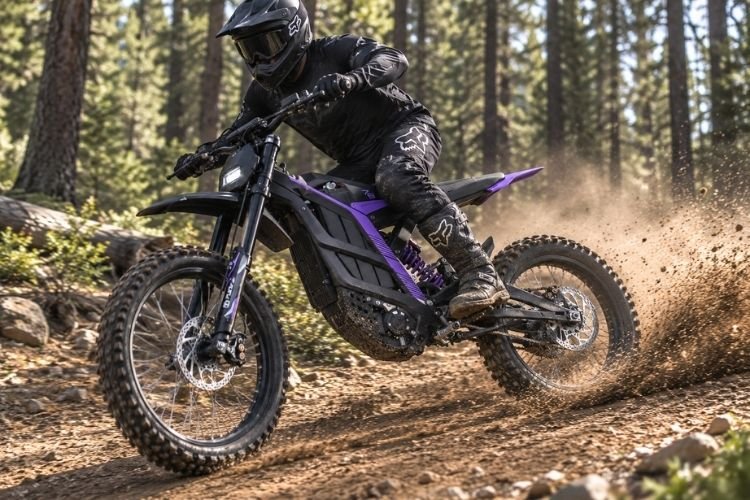
The lightweight electric dirt bike market has changed dramatically. A few years ago, choosing a high-performance e-moto often meant shopping among a relatively small group of familiar names. Today, riders can choose from increasingly powerful machines from Sur Ron, Talaria, E Ride Pro, Altis, 79Bike, and several other manufacturers.
That makes the 79Bike Falcon Pro interesting—but it also makes it harder to judge.
A big motor number and a 72V-class battery may look impressive on a product page, but neither tells you whether an electric dirt bike is actually good to ride. Power delivery, battery behavior, chassis balance, suspension, brakes, weight, reliability, and replacement-parts support matter just as much once the bike leaves the garage.
So this 79Bike Falcon Pro Review is built around a more useful question:
Does the Falcon Pro offer a genuinely competitive riding and ownership package, or is it simply another high-spec electric dirt bike competing on numbers?
The answer matters even more in 2026 because buyers aren’t comparing the Falcon Pro in isolation. They’re comparing it against increasingly mature alternatives from Talaria, Sur Ron, E Ride Pro, and other performance-focused brands.
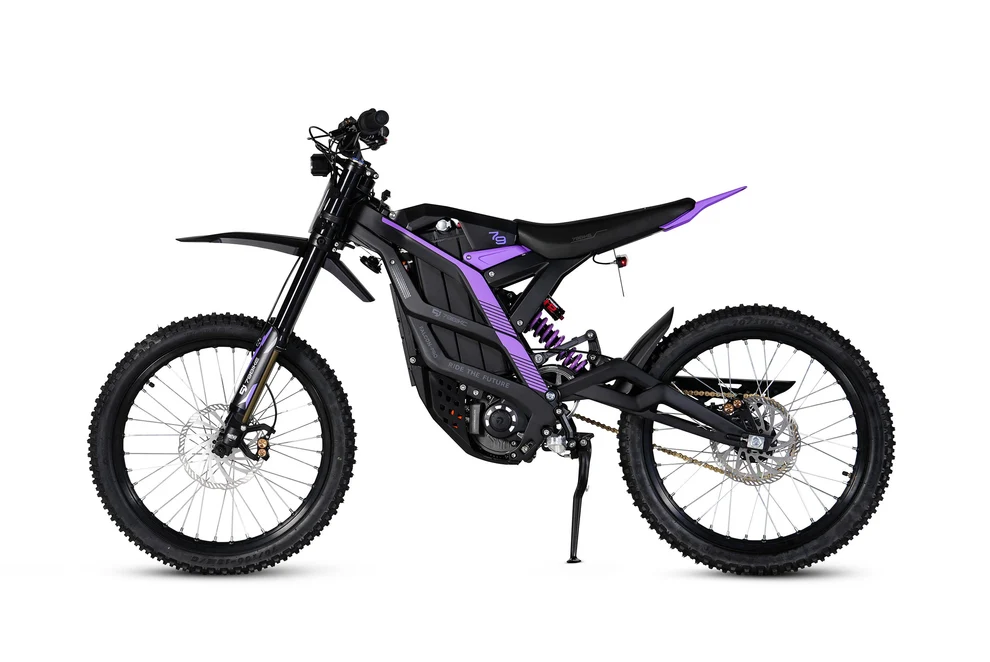
The 79Bike Falcon Pro is worth considering if you want a modern, high-performance lightweight e-moto and are willing to look beyond the most established names in the category.
Its appeal is straightforward: strong electric performance, a 72V-class architecture, off-road-oriented hardware, and the kind of compact riding experience that attracts people to lightweight electric dirt bikes in the first place.
But specifications alone shouldn’t close the sale.
The biggest question surrounding a bike like the Falcon Pro is whether the complete ownership experience—suspension setup, braking, battery behavior, durability, replacement parts, dealer support, and long-term reliability—is as convincing as the performance figures.
That’s particularly important when competing bikes already have larger owner communities and more developed aftermarket ecosystems.
Our early verdict is therefore positive, but conditional:
Buy the Falcon Pro because its complete package fits your riding—not simply because one number on its spec sheet is higher than a competitor’s.
For the right rider, that package could make it a very interesting alternative to the usual Sur Ron and Talaria choices.
Exact specifications should be checked against the current 79Bike model-year configuration before purchasing because equipment, software, battery configuration, and regional versions can change.
For evaluating the Falcon Pro, these are the categories that matter most:
| Category | 79Bike Falcon Pro |
|---|---|
| Bike Type | Lightweight high-performance electric e-moto |
| Electrical Architecture | 72V-class |
| Motor Layout | Mid-drive electric motor |
| Drivetrain | Single-speed reduction drive |
| Main Appeal | High performance in a compact platform |
| Riding Character | Lightweight, responsive, off-road focused |
| Best Use | Recreational trail and mixed off-road riding |
| Key Competitors | Talaria, Sur Ron, E Ride Pro and similar e-motos |
| Main Buying Question | Does the complete bike match its strong specifications? |
Notice that we’re deliberately not turning this into a competition over one peak-power number.
There is a reason for that.
Electric dirt bike specifications can be surprisingly difficult to compare directly. One manufacturer may emphasize peak motor output while another publishes rated or nominal output. Different controller settings, battery states, temperatures, test methods, and software configurations can also change what the rider actually receives.
Peak power tells you what a system may be capable of producing. It doesn’t tell you how well the motorcycle uses that power.
That’s where the real review begins.
The Falcon Pro belongs to the increasingly important category between electric mountain bikes and full-size electric motorcycles.
It isn’t best understood as a conventional pedal e-bike, nor should it be evaluated against a full-size competition motorcycle such as a Stark VARG.
Instead, think of it as a lightweight electric off-road motorcycle.
That distinction explains much of its appeal.
A full-size dirt bike can provide tremendous suspension capability, stability, and rider room, but its physical size and weight can be unnecessary for someone riding tighter recreational terrain.
At the other extreme, a bicycle-derived platform may be extremely light but struggle to provide the chassis, braking, suspension, and drivetrain capability required once motor performance rises.
The Falcon Pro tries to occupy the useful middle ground: enough motorcycle to handle serious electric performance without becoming a full-size dirt bike.
That formula is already proven.
It’s one of the reasons Sur Ron became so popular and why Talaria, E Ride Pro, Altis, and other manufacturers continue competing heavily in this segment.
The challenge for 79Bike isn’t proving that riders want this type of motorcycle.
It’s proving that the Falcon Pro is one of the versions worth buying.
Electric dirt bike buyers naturally look at motor output first.
That’s understandable. Electric motors can deliver torque extremely quickly, and strong acceleration is one of the most memorable parts of riding a performance e-moto.
But comparing two bikes by peak kilowatts alone is poor engineering analysis.
What the rider feels depends on the entire powertrain:
Battery → BMS → Controller → Motor → Reduction Drive → Rear Wheel
The battery needs to supply the required current. The battery management system needs to allow that current safely. The controller determines how electrical energy reaches the motor. The motor converts it into mechanical torque, and the drivetrain determines how that torque reaches the rear tire.
Then traction decides how much of it actually moves the motorcycle forward.
A high peak-output claim is therefore only useful if the rest of the system can support it effectively.
The Falcon Pro’s 72V-class architecture gives it a strong foundation for performance. Higher system voltage can help deliver a given amount of power with less current than a lower-voltage system, although voltage alone does not make one bike automatically faster.
For example:
Power = Voltage × Current
Delivering 10,000 watts at 50 volts theoretically requires about 200 amps.
Delivering the same 10,000 watts at 72 volts theoretically requires about 139 amps.
Real motorcycles involve losses, voltage sag, controller limits, and other factors, but the principle helps explain why higher-voltage systems have become common in performance-focused electric motorcycles.
What matters to the rider, however, is not the equation.
It’s what happens when you open the throttle.
A lightweight electric motorcycle can feel extremely quick without needing the enormous output of a full-size electric motocross bike.
That’s because the motor isn’t accelerating itself—it needs to accelerate the combined mass of the motorcycle and rider.
This makes power-to-weight ratio especially important.
Put strong electric torque into a relatively light chassis and the result can feel immediate. There is no conventional clutch engagement or multi-speed gearbox interrupting acceleration. Twist the throttle and the controller can deliver motor torque almost instantly.
That characteristic should make the Falcon Pro particularly entertaining at the speeds where lightweight e-motos spend much of their time.
On a trail, though, controllability matters more than maximum output.
If the rear tire is already spinning on loose dirt, another few kilowatts don’t necessarily make the motorcycle climb faster. They may simply produce more wheelspin.
Good power delivery should allow the rider to meter torque accurately when crossing roots, rocks, loose climbs, or tight corners.
That is why throttle calibration deserves nearly as much attention as peak output.
The best controller isn’t the one that delivers maximum current every time you touch the throttle. It’s the one that gives the rider the amount of torque requested in a predictable way.
For a trail-focused electric dirt bike, that predictability creates confidence.
Acceleration is likely to be one of the Falcon Pro’s strongest selling points.
Electric motors produce a different experience from small gasoline engines because the rider doesn’t need to keep the engine inside a narrow rpm range or manage gear changes to access useful torque.
That makes acceleration feel simple:
throttle input → motor torque → rear-wheel acceleration.
But actual acceleration still changes with rider weight, battery state of charge, tire grip, terrain, controller mode, temperature, and gearing.
A lighter rider on hard-packed ground with a full battery may experience noticeably stronger acceleration than a heavier rider climbing loose terrain at a low state of charge.
Battery voltage can also sag under heavy load. When a large amount of current is demanded, the voltage available from the pack temporarily drops. Battery chemistry, temperature, state of charge, cell quality, and pack design all influence this behavior.
This is one reason two bikes advertising similar peak output can feel different during repeated hard acceleration.
The Falcon Pro therefore shouldn’t be judged by one drag race.
More useful questions are:
Does acceleration remain predictable? Does performance stay consistent as the battery drops? Can the rider control torque on loose terrain? Does the system manage heat effectively during repeated hard use?
Those questions tell us much more about a performance electric motorcycle.
Top speed is one of the most searched specifications for almost every electric dirt bike, but it is also one of the easiest numbers to misuse.
Maximum speed can change with gearing, tire diameter, rider weight, battery state, controller settings, wind, terrain, electronic restrictions, and regional configuration.
Modified motorcycles create even more confusion.
A YouTube video showing a Falcon Pro reaching a particular speed after controller, battery, gearing, or software changes does not establish the top speed of a stock production motorcycle.
For that reason, buyers should verify the current unrestricted or market-specific factory configuration directly with 79Bike or the authorized seller rather than relying on an isolated speed test.
More importantly, ask yourself how often top speed actually matters.
On tight trails, you may spend almost no time near maximum velocity. Throttle response, traction, suspension behavior, braking, and low-speed balance will influence nearly every minute of the ride.
On open terrain, higher speed becomes more useful—but it also exposes chassis weaknesses more quickly.
A motorcycle that feels playful at 25 mph needs enough stability, suspension control, tire performance, and braking capability to remain confidence-inspiring as speeds increase.
So the Falcon Pro’s top-speed capability should always be evaluated alongside its chassis.
A 72V label sounds impressive, but voltage doesn’t tell you how far a motorcycle will travel.
For range, battery energy capacity matters.
A simplified calculation is:
Watt-hours (Wh) = Voltage × Amp-hours (Ah)
For example, two hypothetical 72V batteries could be very different:
| Battery | Approximate Energy |
|---|---|
| 72V × 30Ah | 2,160Wh |
| 72V × 40Ah | 2,880Wh |
| 72V × 50Ah | 3,600Wh |
All three are “72V batteries,” but the largest stores substantially more energy.
This is why shoppers comparing the Falcon Pro with a Talaria, Sur Ron, or E Ride Pro should look beyond voltage.
Compare usable energy capacity, battery weight, cell quality, discharge capability, thermal behavior, BMS protection, and replacement cost.
Those factors determine far more about ownership than the 72V badge by itself.
Real-world range is rarely one number.
Consider two Falcon Pro owners starting with identical batteries.
The first weighs 150 pounds and rides flowing dirt roads at moderate speeds on relatively flat terrain.
The second weighs 220 pounds and repeatedly accelerates up steep, loose climbs.
They should not expect identical range.
Energy consumption rises with harder acceleration, climbing, higher speeds, soft terrain, low tire pressure, greater total mass, and repeated wheelspin. Cold temperatures can temporarily reduce battery performance, while extreme heat can increase long-term battery aging.
A more useful way to think about range is by riding condition:
| Riding Style | Expected Energy Use |
|---|---|
| Relaxed, moderate-speed riding | Lowest |
| Mixed recreational trail riding | Moderate |
| Stop-and-go aggressive riding | Moderate to high |
| Repeated steep climbing | High |
| Deep sand or soft terrain | High |
| Sustained high-speed riding | High |
| Repeated full-power acceleration | Very high |
This is why we would be skeptical of any review that promises every rider one exact mileage figure.
For the Falcon Pro, the important question isn’t whether someone achieved a particular number of miles once.
It’s whether the available battery energy comfortably covers the riding you actually plan to do.
If your normal trail session uses 60% of the battery, you have useful reserve.
If every ride ends at 5%, range anxiety becomes part of the ownership experience regardless of what the brochure claims.
High performance and long range compete for the same stored energy.
Suppose a battery contains roughly 3 kWh of usable energy.
If the motorcycle averages 1 kW during relaxed riding, that energy could theoretically support much longer operation than if the bike averages 5 kW during aggressive riding.
Real-world calculations are more complicated, but the principle is unavoidable:
Every hard acceleration takes energy out of the same battery you want to carry you home.
That doesn’t make high power bad.
It simply means buyers should stop treating peak performance and maximum range as if both can occur simultaneously.
The Falcon Pro can be fun precisely because electric power is available immediately. Riders who use that performance constantly should expect the battery percentage to fall faster.
That is normal behavior, not necessarily a battery problem.
Based on its overall positioning, yes—the Falcon Pro deserves consideration.
But the standard for being competitive has risen.
A modern performance e-moto can no longer succeed simply because it has a 72V battery and a strong motor. Talaria, Sur Ron, E Ride Pro, Altis, and other manufacturers have pushed buyers to expect more complete motorcycles.
The Falcon Pro therefore needs to succeed in five areas:
Power that is strong but controllable. Battery capacity that supports real riding. A chassis that can handle the motor. Brakes and suspension that match the speed. Ownership support that continues after the sale.
The first two make an electric motorcycle exciting during a test ride.
The last three determine whether you’re still happy with the purchase a year later.
Once the initial excitement over power and acceleration wears off, handling becomes one of the most important parts of owning an electric dirt bike. You may use maximum power for a few seconds at a time, but you feel the bike’s weight and balance through almost every corner, climb, descent, and low-speed maneuver.
This is where the 79Bike Falcon Pro needs to prove that it is more than a powerful electrical system mounted inside an e-moto chassis.
Lightweight electric dirt bikes are attractive because they can provide meaningful motorcycle performance without the mass of a full-size dirt bike. Lower weight can make a bike easier to change direction, easier to transport, and less physically demanding when riding technical terrain.
But the number on the scale is only part of the story.
Weight distribution matters almost as much as total weight.
An electric motorcycle carries one of its heaviest components—the battery—near the center of the chassis. Where that battery sits relative to the motor, wheels, rider, and suspension can significantly affect how the motorcycle changes direction.
A well-balanced bike can feel lighter than its actual weight suggests. A poorly balanced bike can feel awkward even if its published weight looks competitive.
For the Falcon Pro, the ideal setup is one that keeps battery mass centralized and allows the rider to move naturally around the motorcycle rather than constantly fighting it.
That matters especially when trails become tight.
A high-performance lightweight e-moto doesn’t need to behave like a full-size motocross bike to be useful.
In fact, trying to make every electric dirt bike feel like a 250 or 450 can miss the point of this category.
On narrow trails, the Falcon Pro’s compact architecture should be an advantage. Quick left-right transitions, switchbacks, low-speed obstacles, and awkward trail corrections all reward a motorcycle that doesn’t carry unnecessary mass.
This becomes even more noticeable when something goes wrong.
Miss a line halfway up a technical climb and you may need to stop, balance the motorcycle, reposition it, or pick it up. At that moment, another few kilowatts of motor power won’t help very much.
Manageable size will.
This is one reason lightweight e-motos remain attractive even as more powerful and larger electric motorcycles enter the market.
For recreational riders, ease of control can create more usable performance than additional horsepower.
The other side of lightweight handling appears as speed increases.
A motorcycle that feels extremely agile at low speed also needs enough stability to remain predictable when riding faster terrain. Geometry, wheel size, suspension setup, tires, frame stiffness, rider position, and weight distribution all influence that behavior.
This is particularly important for the Falcon Pro because strong electric acceleration can quickly push the motorcycle into speeds where chassis weaknesses become easier to notice.
A good high-performance e-moto should not feel nervous every time the trail opens up.
The rider should be able to accelerate through faster sections without constantly correcting the bars or feeling that the rear of the motorcycle is struggling to follow the front.
That doesn’t mean the Falcon Pro should be judged against a full-size enduro motorcycle. They are different classes.
It does mean the chassis needs to match the performance level 79Bike is asking riders to use.
This principle applies to every performance electric dirt bike:
Motor power determines how quickly you reach speed. Chassis quality determines how comfortable you are once you get there.
Suspension is one of the easiest components to overlook during online shopping because motor and battery numbers are easier to compare.
But on an actual trail, suspension can have a greater effect on confidence than a small difference in peak output.
The front fork and rear shock have several jobs happening at once. They need to absorb impacts, maintain tire contact with the terrain, control chassis movement under braking and acceleration, and provide enough support to prevent excessive bottoming.
If the suspension is too soft, the motorcycle may dive under braking or use too much travel on larger impacts.
If it is too stiff, the wheels may skip across smaller bumps instead of following the terrain.
Neither condition is ideal.
The correct setup also depends heavily on rider weight and riding style. A 145-pound recreational rider and a 220-pound aggressive rider are asking the same suspension to do very different jobs.
This is why riders should resist immediately assuming that aftermarket suspension is necessary.
Start with setup.
Check sag where appropriate, understand available compression and rebound adjustments, and make changes one step at a time. If the suspension still cannot support your riding after proper adjustment, then an upgrade becomes easier to justify.
Imagine accelerating hard toward a rough section.
The motor gets you there quickly, but now the suspension needs to control repeated impacts while the tires maintain traction.
If the fork moves too quickly through its travel, the front can become unsettled. If the rear shock rebounds too aggressively, the rear wheel may kick upward after an impact. If damping is poorly matched to rider weight, the motorcycle can become tiring even if nothing is technically “broken.”
This is why we don’t judge the Falcon Pro purely by how hard it accelerates.
A genuinely good performance package needs to remain composed after the acceleration run ends.
For riders planning larger jumps or aggressive high-speed trail riding, suspension capability becomes even more important. Lightweight e-motos are extremely fun, but they should not automatically be treated as scaled-down motocross race bikes.
Ride within the design limits of the chassis and upgrade only when your actual riding consistently exceeds those limits.
Strong acceleration gets attention. Strong braking prevents that performance from becoming a liability.
The Falcon Pro’s braking system needs to provide more than enough initial bite. It also needs useful modulation.
Modulation is the rider’s ability to control how much braking force is applied.
On pavement, maximum braking force can be extremely useful because the tire has substantial grip. On loose dirt, too much abrupt braking can lock a wheel before the motorcycle reaches the theoretical limit of the brake hardware.
That means bigger brakes don’t automatically produce shorter stops on every surface.
Tire traction, suspension behavior, rider technique, weight transfer, and terrain all matter.
Front braking becomes especially important because deceleration transfers weight toward the front wheel. As the front tire becomes more heavily loaded, it can generate a large portion of the motorcycle’s stopping force.
The rear brake remains valuable for stability, low-speed control, and adjusting the motorcycle’s attitude on loose terrain.
A well-balanced Falcon Pro should allow the rider to use both predictably rather than making the controls feel like simple on/off switches.
Tires may be the most underrated performance modification on an electric dirt bike.
The motor, brakes, and suspension all ultimately depend on two small contact patches connecting the motorcycle to the ground.
A tire poorly matched to the terrain can make a powerful motorcycle feel disappointing.
On loose soil, an appropriate tread pattern can improve drive under acceleration. On hard surfaces, a different compound and tread design may provide more predictable grip. In mud or soft terrain, the ability to clear material from the tread becomes important.
Tire pressure changes behavior too.
Lower pressure can increase the contact patch and improve compliance on some terrain, but going too low increases the risk of rim damage, instability, or tire-related problems. Higher pressure may reduce rolling resistance and provide more rim protection but can reduce traction and comfort.
There is no universal “best” tire pressure for every Falcon Pro owner.
Rider weight, tire construction, terrain, speed, and riding style all need to be considered.
Before spending heavily on motor upgrades, many riders would benefit more from making sure the tires actually suit where they ride.
The Falcon Pro’s natural environment should be recreational off-road riding.
That includes forest roads, private riding areas, moderate singletrack, dirt trails, open recreational terrain, and technical sections where low weight and immediate torque can be useful.
Electric power is particularly enjoyable off-road because the rider doesn’t need to manage clutch engagement and repeated gear changes.
On a conventional gasoline motorcycle, technical terrain may require coordinating throttle, clutch, and gear selection while simultaneously managing balance, braking, and body position.
The Falcon Pro simplifies that process.
The rider can focus more directly on:
Throttle control. Braking. Line choice. Balance. Traction. Body position.
That simplicity doesn’t automatically make technical riding easy, but it reduces the number of mechanical tasks competing for attention.
For newer riders, that can shorten the learning curve.
For experienced riders, it allows greater concentration on the terrain.
Technical trails reveal whether electric power is actually controllable.
Maximum output matters less when you’re moving slowly over rocks, roots, narrow climbs, or loose switchbacks. In these situations, precise torque delivery becomes much more valuable than outright acceleration.
Too much rear-wheel torque can break traction.
Once the rear tire begins spinning, the motorcycle may stop moving forward even though the motor is producing substantial power.
The rider therefore needs a predictable relationship between wrist movement and rear-wheel response.
This is where controller tuning and throttle calibration become important.
A well-calibrated Falcon Pro should let the rider feed power progressively rather than forcing a choice between “not enough” and “too much.”
Its relatively compact e-moto format also helps here. Lower mass can make it easier to correct a line or recover after stopping in an awkward location.
For many trail riders, this is the type of performance that matters far more than a maximum-speed run.
Electric motors are excellent at producing torque, which makes steep climbing one of the most entertaining ways to use a performance e-moto.
But torque only works when the tire can transfer it into the ground.
On a hard-packed climb with strong traction, additional motor output can help maintain speed.
On loose dirt, gravel, mud, or wet roots, opening the throttle further may simply increase wheelspin.
Rider position becomes critical.
Moving weight appropriately can help the rear tire find traction while keeping enough load on the front wheel for steering control. Momentum also matters. Entering a climb with the correct speed can reduce the amount of sudden torque needed halfway up.
The Falcon Pro’s electric drivetrain gives the rider immediate access to power, but good technique determines whether that power becomes forward motion.
This leads to a useful rule:
On technical terrain, controllable power is usually faster than maximum power.
This depends on what you mean by “jumps.”
Small recreational jumps and trail features are very different from repeatedly hitting motocross-sized jumps.
Landing forces need to be absorbed by the tires, wheels, suspension, frame, and rider. As jump size and speed increase, those loads rise substantially.
A lightweight e-moto can feel playful in the air, but riders shouldn’t assume that low weight means unlimited jumping capability.
For occasional recreational use, correct suspension setup and good technique are essential.
For repeated large jumps or track-style riding, riders should realistically evaluate whether a lightweight e-moto is the right platform at all. A larger motorcycle designed specifically for motocross or hard enduro may be more appropriate.
This isn’t a weakness unique to the Falcon Pro.
It’s about using the correct class of motorcycle for the job.
Specifications rarely tell you whether a motorcycle actually fits your body.
Handlebar height, peg position, seat shape, cockpit length, and standing posture all influence comfort and control.
A compact e-moto can be excellent for smaller and average-sized riders because it feels manageable. Taller riders may prefer modifications to bars, risers, pegs, or seating position depending on the stock setup.
But ergonomic modifications should be approached carefully.
Changing handlebar position can alter steering feel. Moving controls can affect standing posture. Raising the front excessively can change weight distribution.
The goal shouldn’t be to make the Falcon Pro look different.
It should be to allow the rider to remain relaxed and balanced while seated and standing.
A rider who is fighting the cockpit becomes tired faster, and fatigue eventually reduces riding accuracy.
Potentially, but with an important qualification.
The lack of a clutch and multi-speed gearbox makes an electric motorcycle mechanically simpler to operate. A beginner can focus on balance, braking, throttle control, and line selection rather than learning several drivetrain controls simultaneously.
Its lightweight e-moto format can also make low-speed maneuvering less intimidating than a full-size dirt motorcycle.
But simplicity does not mean harmless.
A high-performance electric motor can deliver significant torque immediately. A beginner who grabs too much throttle can get into trouble quickly.
New riders should use lower-power riding modes where available, practice in a controlled environment, and build throttle discipline before exploring maximum performance.
Protective equipment matters too.
A proper motorcycle helmet, gloves, boots, eye protection, and appropriate body protection should be considered part of the purchase—not optional accessories added after the first crash.
One major attraction of the Falcon Pro is the simplified electric drivetrain.
There is no gasoline engine requiring oil changes, spark plugs, fuel-system service, or valve adjustments.
That can substantially reduce routine engine-related maintenance.
But the rest of the motorcycle still experiences wear.
Owners should regularly inspect:
The drivetrain deserves particular attention because strong electric torque can place significant loads on chains and sprockets.
A dirty, dry, poorly adjusted chain increases wear and wastes energy. Excessively tight chain adjustment can also place unnecessary stress on drivetrain components and bearings.
Basic maintenance is cheaper than replacing neglected parts.
The battery is one of the most expensive components on any electric dirt bike, so how it ages matters.
Lithium-ion batteries naturally lose capacity over time. That process cannot be completely prevented, but temperature, storage habits, charging behavior, and usage can influence the rate of degradation.
Heat is particularly important.
High temperatures accelerate chemical aging inside lithium-ion cells. Aggressive riding can also warm the battery because high current creates internal heat.
Owners should follow 79Bike’s official charging and storage instructions rather than applying random battery advice from unrelated electric vehicles.
For longer storage periods, leaving a battery completely empty is generally undesirable. Likewise, repeatedly exposing a pack to extreme temperatures can accelerate aging.
The battery management system helps protect the pack against dangerous operating conditions, but a BMS cannot make poor storage conditions irrelevant.
Think of battery care as part of ownership, just like checking tires or lubricating the chain.
Reliability is one of the areas where a newer or less-established platform deserves more careful evaluation than an impressive launch specification.
This doesn’t mean the Falcon Pro is unreliable.
It means buyers should separate evidence from internet noise.
A single Reddit post about a failed controller doesn’t prove that Falcon Pro controllers commonly fail. Likewise, one owner reaching thousands of trouble-free miles doesn’t prove every motorcycle will do the same.
Useful reliability analysis asks whether the same problem appears repeatedly across independent owners and whether the manufacturer or dealer has identified a consistent cause or solution.
For a high-performance electric motorcycle, long-term concerns generally fall into several categories:
Battery health, electrical connectors, controller and motor behavior, bearings, suspension wear, brakes, drivetrain wear, crash damage, and modification-related failures.
Modifications deserve special attention.
Increasing controller current, replacing the battery, changing gearing, or fitting a more powerful motor can alter loads throughout the motorcycle.
When a heavily modified bike fails, the failure should not automatically be attributed to the stock platform.
This may be one of the most important questions surrounding the Falcon Pro.
Sur Ron’s biggest advantage isn’t simply the motorcycle itself. Years of popularity have created a large ecosystem of owners, replacement components, aftermarket upgrades, tutorials, and specialist knowledge.
Talaria has developed a substantial ecosystem as well.
For 79Bike, the question is whether owners can obtain the parts they need without turning a simple repair into weeks of searching.
Before buying, ask practical questions:
Who handles warranty claims? Are replacement brake, suspension, drivetrain, battery, controller, display, and electrical components available? How quickly can important parts be shipped? Does the seller provide technical support after the purchase?
A motorcycle with slightly better specifications but poor support can become worse value than a slightly slower bike that is easy to keep running.
This is also where purchasing from a seller with real product support can matter more than finding the lowest advertised price.
This is the question 79Bike ultimately needs to answer.
Calling every lightweight electric motorcycle a “Sur Ron alternative” is becoming less useful because the category has matured.
Buyers now have enough options to choose motorcycles based on their own strengths rather than simply asking whether they resemble a Light Bee.
The Falcon Pro’s opportunity is to combine a modern high-voltage powertrain, strong factory performance, manageable dimensions, and trail-focused usability into one package.
If it can do that while providing reliable parts and ownership support, then buyers don’t need to view it as a substitute for something else.
It can stand on its own.
And that’s an important distinction for 2026 buyers.
A motorcycle should not be purchased because it is “almost a Talaria” or “cheaper than a Sur Ron.”
It should be purchased because its particular balance of power, battery, weight, handling, hardware, support, and price matches the rider better than the alternatives.
For many buyers, the Falcon Pro isn’t being considered by itself. The real shopping list often includes familiar names such as the Sur Ron Light Bee X and Talaria Sting MX5.
That makes this comparison important—but simply putting three peak-power figures next to each other doesn’t tell you which bike is the better purchase.
These motorcycles represent slightly different buying philosophies.
The Sur Ron Light Bee X remains attractive because of its low weight, proven platform, enormous aftermarket, and large owner community. The Talaria MX5 pushes harder toward modern factory performance, giving riders more capability without requiring immediate major upgrades. The 79Bike Falcon Pro attempts to compete by combining a modern high-voltage performance platform with the compact, playful character riders expect from a lightweight e-moto.
The decision therefore looks more like this:
| Buyer Priority | Strongest Reason to Consider |
|---|---|
| Established platform and aftermarket | Sur Ron Light Bee X |
| Modern factory performance | Talaria MX5 |
| Alternative high-performance 72V-class platform | 79Bike Falcon Pro |
| Extensive modification options | Sur Ron Light Bee X |
| Strong performance without building from scratch | MX5 / Falcon Pro |
| Large owner knowledge base | Sur Ron Light Bee X / Talaria |
| Something outside the usual Sur Ron/Talaria choices | Falcon Pro |
This table isn’t intended to declare one universal winner. Instead, it shows the challenge facing the Falcon Pro.
It needs to offer enough factory capability and value to compensate for the fact that Sur Ron and Talaria have had more time to build recognizable ecosystems.
For some buyers, that’s an acceptable trade.
For others, parts availability and aftermarket support may matter more than another performance advantage.
The Sur Ron Light Bee X remains one of the most important motorcycles in the lightweight e-moto category. Its influence is one reason newer bikes such as the Falcon Pro exist at all.
But being the established option creates both strengths and weaknesses.
The Light Bee X has an enormous modification ecosystem. Riders can change suspension, wheels, brakes, controllers, batteries, motors, handlebars, seats, pegs, bodywork, and almost every other major part of the motorcycle.
That makes it an excellent platform for someone who enjoys building a personalized bike.
However, the market has moved quickly.
Modern competitors increasingly arrive with stronger electrical systems and higher factory performance, reducing the need to replace expensive components immediately after purchase.
That is where the Falcon Pro can make its case.
A buyer should ask:
Do I want a proven platform that I can build, or do I want more of the performance package already included from the factory?
If modifying is part of the hobby, the Light Bee X remains extremely attractive.
If the goal is to buy a modern high-performance e-moto and spend more time riding than upgrading, the Falcon Pro becomes easier to justify.
This distinction also changes total ownership cost.
A cheaper motorcycle can become the more expensive motorcycle after a battery, controller, suspension, brake, and wheel build.
Purchase price is only the first number.
The Talaria MX5 is a more difficult comparison because it also targets buyers who want stronger factory performance rather than starting with a lower-output platform and rebuilding it.
Both motorcycles appeal to riders who look at a traditional lightweight e-moto and think:
“I like the size, but I want more performance without immediately replacing half the bike.”
That means the Falcon Pro needs to compete on more than voltage or peak power.
The buying decision should include battery energy, power delivery, suspension quality, braking hardware, weight, ergonomics, dealer support, warranty coverage, replacement parts, and current purchase price.
The MX5 has the advantage of Talaria’s broader recognition and an increasingly established owner and parts ecosystem.
The Falcon Pro’s opportunity is value.
If the current Falcon Pro configuration gives the buyer the battery, controller performance, chassis hardware, and riding experience they want at a competitive final price, there is no rule saying the more familiar badge is automatically the better purchase.
But buyers should include support in that value calculation.
Saving money at checkout becomes less attractive if a replacement component is difficult to obtain six months later.
For that reason, Falcon Pro vs MX5 may ultimately be decided as much by the seller and ownership support as by the motorcycles themselves.
This question cannot be answered by MSRP alone.
Electric dirt bike pricing changes with market, distributor, shipping, promotions, and model-year updates. Buyers should therefore compare the actual delivered price of the current Falcon Pro with the exact competing models available at the time of purchase.
Then compare what needs to happen after purchase.
Suppose Bike A costs less but immediately needs $1,500 of upgrades to meet your expectations. Bike B costs more initially but already includes the performance and hardware you wanted.
Bike B may be the better value.
The opposite is also true.
If you’re a casual trail rider who never uses the extra performance, paying more for hardware you don’t need doesn’t create value.
The Falcon Pro makes the strongest financial argument when its stock configuration already matches your intended riding.
The fewer major components you need to replace after purchase, the easier it is to justify the original price.
That is a much better way to evaluate value than calculating dollars per kilowatt.
Long-term buyers should also think beyond the first year.
The battery is one of the most expensive components in an electric motorcycle. Eventually, every lithium-ion battery loses some usable capacity as it ages.
That doesn’t mean the battery suddenly becomes unusable after a fixed number of years. Degradation is gradual and depends on cell chemistry, temperature, charging behavior, storage, usage, and how hard the pack is regularly discharged.
But replacement cost matters.
Before purchasing a Falcon Pro, buyers should understand whether replacement batteries are available, what warranty applies to the battery, and how battery service is handled.
The same logic applies to the controller, motor, display, charger, and other proprietary electrical components.
Traditional wear items such as brake pads, chains, tires, and bearings are relatively easy to understand.
Proprietary electronics are where manufacturer and dealer support become much more important.
The Falcon Pro’s factory performance may reduce the urgency for major power modifications, which is a good thing.
Many riders assume modifying an electric dirt bike begins with making it faster.
It shouldn’t.
Start by riding the motorcycle.
If traction is poor, better tires may produce more usable performance than additional motor power. If the bike feels unstable, suspension setup may matter more than a controller upgrade. If the cockpit feels cramped, ergonomic changes may improve riding more than another few kilowatts.
Good modifications solve problems.
Poor modifications create impressive specifications without improving the motorcycle.
For many Falcon Pro owners, sensible upgrades may include terrain-specific tires, controls, pegs, protection, brake components when required, and suspension setup for rider weight.
Power modifications should come later and should be considered as a system.
Increasing electrical output can increase heat and place additional stress on the battery, connectors, motor, controller, drivetrain, brakes, and tires.
More power is only an upgrade when the rest of the motorcycle can use it safely and effectively.
The Falcon Pro makes the most sense for someone who already understands why lightweight e-motos are appealing.
You want something more substantial than an ordinary e-bike but don’t necessarily want the size and mass of a conventional full-size dirt motorcycle.
You value immediate electric torque, low-noise riding, compact dimensions, and simple operation.
At the same time, you want enough factory performance that your first thought after buying the motorcycle isn’t a complete battery-and-controller replacement.
The 79Bike Falcon Pro is particularly worth considering if you:
That final point deserves emphasis.
With a less established platform, where you buy can matter almost as much as what you buy.
The Falcon Pro isn’t automatically the right answer just because its specifications are competitive.
A Sur Ron Light Bee X may still make more sense if your main goal is building a highly customized motorcycle and you want the broadest possible aftermarket.
A Talaria may be preferable if established parts availability and a larger existing owner community are major priorities.
If you regularly ride aggressive motocross tracks, large jumps, or extremely fast rough terrain, a full-size off-road motorcycle may be a more appropriate platform altogether.
Likewise, if you need very long backcountry riding with rapid energy replenishment, electric may not yet be the easiest solution for your use case.
The Falcon Pro may not be ideal if you:
If the last point describes you, calculate the complete build cost before buying.
You may discover that a different motorcycle already provides what you’re trying to create.
| Pros | Cons |
|---|---|
| Strong factory performance potential | Smaller support ecosystem than the most established brands |
| 72V-class electrical architecture | Long-term parts availability deserves investigation |
| Compact lightweight e-moto format | Real-world range depends heavily on riding style |
| Immediate electric torque | High performance can consume battery quickly |
| Simple single-speed electric drivetrain | Not a replacement for a full-size motocross bike |
| Good potential for recreational trail riding | Current pricing/value depends on seller and market |
| Alternative to common Sur Ron/Talaria platforms | Fewer years of broad owner history than older platforms |
| Reduced gasoline-engine maintenance | Battery and proprietary electronics remain expensive components |
The cons need context.
For example, “smaller aftermarket” does not necessarily mean poor aftermarket support. It means buyers should investigate availability instead of assuming the same ecosystem exists as it does for a long-established Sur Ron platform.
Likewise, limited range during aggressive riding isn’t unique to 79Bike. High output requires energy, regardless of the brand printed on the frame.
It can be, but new riders should respect its performance.
Electric motorcycles are mechanically simple to operate because there is no conventional clutch or multi-speed transmission. That can make the learning process more approachable.
But immediate torque also means throttle mistakes can have immediate consequences.
A beginner should start with reduced-power riding modes where available, learn braking and body position in a controlled area, and gradually increase performance as skills improve.
Don’t confuse “easy to operate” with “slow.”
They’re completely different things.
A rider transitioning from mountain bikes may also need time to adjust to motorcycle-level weight, braking forces, acceleration, and protective equipment.
Proper riding gear should be part of the purchase budget.
This is one area where buyers need to be particularly careful.
A high-performance electric motorcycle does not automatically become a legally defined electric bicycle because it uses a battery and motor.
In the United States, vehicle classifications and registration requirements can vary by state and sometimes by local jurisdiction. Equipment requirements may also differ depending on where and how the vehicle is operated.
Therefore, don’t rely on statements such as:
“It looks like an e-bike, so it’s legal.”
Physical appearance doesn’t determine legal classification.
Before using a Falcon Pro on public roads, check the applicable state DMV or other relevant government authority and verify the exact configuration being purchased.
Private-property and designated off-road use involve different rules depending on location.
Yes, it is worth considering if you want a high-performance lightweight e-moto and have access to dependable dealer, warranty, and replacement-parts support. Its strongest appeal is providing modern electric performance without moving into a full-size dirt-bike platform.
Top speed can vary with model configuration, controller settings, gearing, battery state, rider weight, terrain, and regional restrictions. Verify the current stock specification with 79Bike or the authorized seller rather than relying on modified-bike videos.
The Falcon Pro belongs to the 72V-class performance category. Buyers should verify the exact current battery capacity and cell/configuration information for the model being purchased. When comparing batteries, look at total watt-hours rather than voltage alone.
There is no single real-world range that applies to every rider. Moderate-speed riding on easier terrain consumes much less energy than repeated full-throttle acceleration, steep climbing, deep sand, or sustained high-speed riding. Rider weight, temperature, tire pressure, elevation, and battery condition also affect range.
It depends on what you value. The Sur Ron has a major advantage in platform maturity, owner knowledge, and aftermarket support. The Falcon Pro can be more appealing to buyers looking for a modern high-performance factory package rather than starting with a platform they intend to modify extensively.
Neither is automatically better. Compare the exact current configurations for battery capacity, power delivery, weight, suspension, brakes, price, warranty, and replacement-parts support. The better motorcycle is the one that requires fewer compromises for your riding style.
Its lightweight e-moto format is well suited to recreational trail riding, where manageable weight, immediate torque, and compact dimensions can be valuable. Tire choice, suspension setup, rider skill, and terrain will strongly influence how well it performs.
It eliminates many gasoline-engine maintenance tasks, but it still requires normal motorcycle care. Owners should inspect brakes, tires, chain, sprockets, bearings, suspension, wheels, fasteners, electrical connectors, and battery condition regularly.
Yes, depending on available aftermarket components, but modifications should solve an actual riding problem. Tires, ergonomics, protection, brakes, and suspension setup can sometimes improve the riding experience more than simply adding motor power.
Do not assume it is street legal everywhere. Laws and vehicle classifications vary by jurisdiction and exact vehicle configuration. Check the applicable government authority before riding on public roads.
The 79Bike Falcon Pro is worth considering in 2026, but not simply because it offers impressive electrical specifications.
The lightweight e-moto market is too competitive for that.
A good modern electric dirt bike needs to combine motor performance with battery capacity, predictable power delivery, balanced handling, useful suspension, strong braking, and an ownership ecosystem capable of supporting the motorcycle after the sale.
The Falcon Pro’s biggest opportunity is that it doesn’t need to be another Sur Ron clone.
It can appeal to riders who already like the lightweight e-moto formula but want a modern high-performance package without automatically choosing the two or three brands everyone else rides.
Against the Sur Ron Light Bee X, the Falcon Pro makes the most sense for someone who values stronger factory performance more than having the largest possible modification ecosystem.
Against the Talaria MX5, the decision becomes closer. Current price, battery configuration, chassis hardware, dealer support, warranty coverage, and replacement-parts availability can matter more than a small difference in peak performance.
And that leads to our most important buying recommendation:
Don’t buy the Falcon Pro because one specification is bigger. Buy it if the complete stock motorcycle already does most of what you want.
If you want a compact electric dirt bike for recreational trails, enjoy strong acceleration, prefer electric simplicity, and have access to reliable product support, the Falcon Pro deserves a place on your shortlist.
If your priority is the deepest aftermarket and longest-established platform, Sur Ron still has a powerful argument. If you prefer another mature high-performance factory package, Talaria deserves consideration. And if your riding requires true full-size motocross capability, move up a motorcycle class rather than forcing a lightweight e-moto to become something it was never designed to be.
For the right rider, though, that’s exactly why the Falcon Pro is interesting.
It doesn’t need to be the most powerful electric dirt bike on paper. It needs to deliver the right combination of power, weight, range, handling, price, and support in the real world.
Before publishing current specifications or purchasing, verify the exact model-year configuration through 79Bike’s official website or the authorized seller. For comparisons, use current manufacturer information from Sur Ron and Talaria for hard specifications rather than relying on older dealer listings or modified-bike videos.
For legal questions in the United States, use the relevant state DMV or government transportation authority because road-use requirements can differ significantly by jurisdiction.
Electric motocross and electric enduro motorcycles can look very similar, and in some cases they even share the same motor,
Electric enduro motorcycles are becoming an increasingly appealing option for riders who want strong acceleration, precise low-speed control, and less

Electric enduro motorcycles are becoming an increasingly appealing option for riders who want strong acceleration, precise low-speed control, and less
The Talaria XXX Pro and Talaria Sting R MX4 are two popular options for riders looking for a lightweight electric
