Electric Motocross vs Electric Enduro: What’s the Difference?
Electric motocross and electric enduro motorcycles can look very similar, and in some cases they even share the same motor,

If you’re shopping for a high-performance electric bike, one of the first questions you’ll probably ask is:
How fast can a 6000W ebike go?
It’s an easy question—but the answer isn’t as simple as quoting one top-speed number.
A 6000W electric bike is capable of impressive performance, but its actual speed depends on much more than motor wattage. Battery voltage, controller settings, rider weight, wheel size, terrain, wind resistance, and even tire pressure all play a role in determining how fast the bike can travel.
In ideal conditions, many 6000W ebikes can reach 45–60 mph (72–97 km/h), while some purpose-built off-road models with optimized components may exceed that range on private property. However, real-world riding speeds are often lower because trail conditions, elevation changes, and safety considerations naturally limit how fast riders travel.
This guide explains what you can realistically expect from a 6000W ebike, what factors influence its performance, and whether this power level is the right choice for your riding style.
A properly configured 6000W ebike typically reaches a top speed of 45–60 mph (72–97 km/h) under ideal conditions.
However, actual performance depends on several important variables, including:
For most riders, everyday trail speeds are considerably lower than maximum top speed, especially on technical off-road terrain.
| Configuration | Estimated Top Speed |
|---|---|
| 60V System | 35–45 mph |
| 72V System | 45–55 mph |
| 84V High-Performance Setup | 50–60+ mph |
| Optimized Off-Road Build | Up to 65 mph* |
*Actual results vary depending on controller settings, gearing, terrain, and local riding conditions.
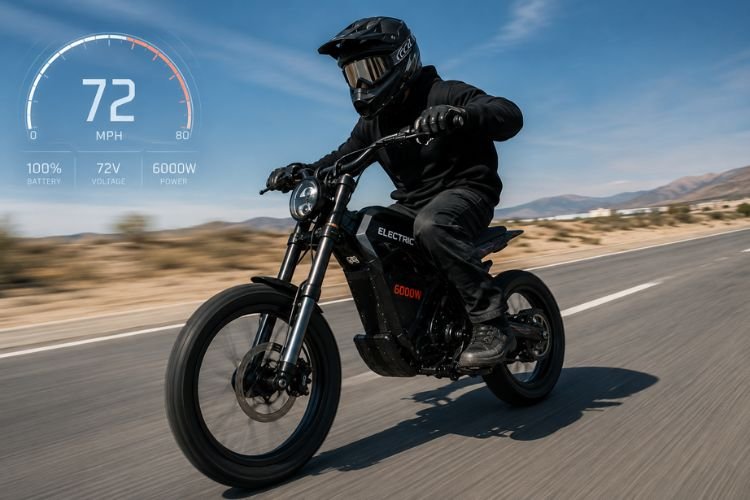
One of the biggest misconceptions is that motor wattage directly determines top speed.
It doesn’t.
A 6000-watt motor refers to the amount of power available to propel the bike. More power generally improves acceleration, climbing ability, and the bike’s ability to maintain speed under load—but it doesn’t automatically guarantee a specific maximum speed.
Think of horsepower in a car.
Two vehicles may have identical horsepower figures yet produce very different top speeds because of differences in gearing, aerodynamics, and overall design.
The same principle applies to electric bikes.
A well-designed 5000W bike can sometimes outperform a poorly configured 6000W model if the rest of the drivetrain is optimized more effectively.
That’s why experienced riders evaluate the entire power system rather than focusing on motor wattage alone.
Motor power is only one piece of the performance equation.
Here are the factors that have the greatest influence on real-world speed.
Battery voltage has one of the biggest impacts on top speed.
Higher-voltage systems allow the motor to spin faster, which generally results in higher maximum speeds.
For example:
Higher voltage doesn’t necessarily increase torque, but it significantly influences the motor’s maximum RPM.
The controller regulates how much electrical current reaches the motor.
A restrictive controller can limit performance even when paired with a powerful motor.
Conversely, a high-performance controller allows the motor to deliver more of its available power—provided the battery can safely supply the required current.
Not all 6000W motors are created equal.
Performance varies based on factors such as:
Two bikes with identical wattage ratings may deliver noticeably different riding experiences.
Weight has a measurable impact on acceleration and top speed.
A lighter rider generally allows the bike to accelerate more quickly and maintain higher speeds, while heavier riders place greater demand on the motor—especially during hill climbs.
Although modern 6000W systems have plenty of power, total load still affects overall performance.
Where you ride matters just as much as what you ride.
A smooth stretch of pavement provides ideal conditions for reaching maximum speed.
Technical trails tell a different story.
Loose gravel, mud, rocks, steep climbs, and sharp corners naturally reduce average riding speeds regardless of how powerful the motor is.
Aerodynamic drag increases rapidly as speed rises.
Above roughly 35 mph, wind resistance becomes one of the biggest forces working against the bike.
That’s why reaching 60 mph requires significantly more power than reaching 40 mph—even though the speed difference appears relatively small.
Most riders spend very little time at maximum speed.
Instead, actual riding speeds depend on the terrain and riding style.
| Riding Condition | Typical Speed |
| Flat pavement | 45–60 mph |
| Hard-packed dirt roads | 35–50 mph |
| Forest trails | 25–40 mph |
| Rocky terrain | 20–35 mph |
| Deep sand | 15–30 mph |
| Steep hill climbs | 15–25 mph |
These figures better reflect what riders experience during normal use than laboratory top-speed tests.
It’s easy to compare bikes based on maximum speed, but experienced riders know that performance is about much more than the highest number on the display.
A strong 6000W ebike offers advantages beyond outright speed, including:
For off-road riding, these characteristics often matter more than an extra five miles per hour of top speed.
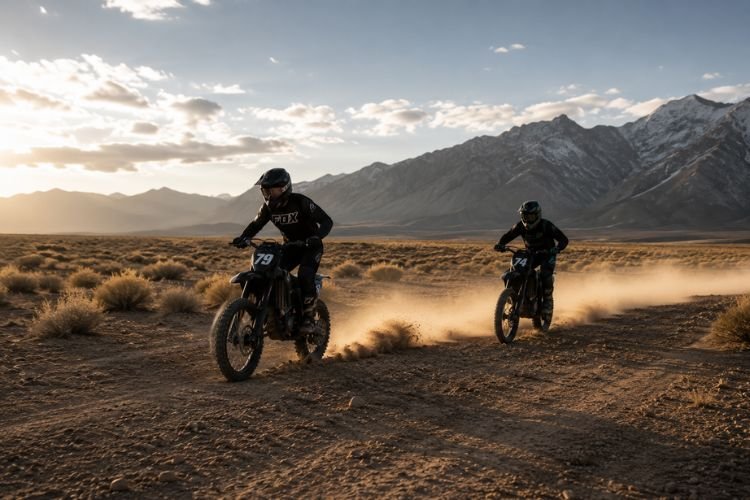
Motor wattage is one of the easiest specifications to compare, but it’s not the only indicator of performance. Battery voltage, controller tuning, motor efficiency, and bike weight all influence how a bike rides.
Still, comparing common power levels provides a good starting point for understanding where a 6000W ebike fits in the market.
| Motor Power | Typical Top Speed | Best For |
|---|---|---|
| 1000W | 20–30 mph | Commuting, bike paths, light trails |
| 2000W | 25–35 mph | Recreational trail riding |
| 3000W | 35–45 mph | Aggressive trail riding |
| 5000W | 40–55 mph | Advanced off-road riding |
| 6000W | 45–60 mph | High-performance trail and open terrain |
| 8000W+ | 55–70+ mph* | Competition or private-property riding |
*Actual speeds vary based on setup, local conditions, and applicable regulations.
For many experienced riders, 6000W offers an excellent balance between acceleration, top speed, and controllability. It delivers noticeably stronger performance than a typical 3000W system without reaching the extreme power levels of some custom-built 8000W or 12000W machines.
Top speed is only one measure of performance.
In everyday riding, acceleration often has a greater impact on how fast and enjoyable a bike feels.
A 6000W motor produces strong torque from low speeds, allowing the bike to:
Unlike gasoline engines that need to build RPM, electric motors provide near-instant torque, making throttle response feel immediate.
For technical off-road riding, this responsive power delivery can be more valuable than achieving the highest possible top speed.
Yes—but not every 6000W ebike will.
Reaching 60 mph depends on a combination of factors, including:
A well-designed 72V or 84V system with an appropriately matched controller is more likely to approach 60 mph under ideal conditions than a lower-voltage setup.
It’s also important to remember that manufacturers may quote theoretical top speeds achieved under controlled testing conditions. Real-world riding often results in lower speeds because of terrain, weather, and safety considerations.
Absolutely.
Hill climbing is one area where a 6000W motor truly stands out.
Instead of struggling on long inclines, a high-power system can maintain speed more effectively while reducing the amount of throttle required.
Performance still depends on several variables, such as:
On steep or technical climbs, traction often becomes the limiting factor before motor power does.
Choosing the right tires and maintaining proper tire pressure can improve climbing performance just as much as increasing motor power.
Rider weight influences more than acceleration.
It also affects:
Here’s a general example of how weight can influence performance.
| Rider Weight | Expected Top Speed |
|---|---|
| Under 150 lb (68 kg) | 50–60 mph |
| 150–200 lb (68–91 kg) | 47–58 mph |
| 200–250 lb (91–113 kg) | 44–55 mph |
| Over 250 lb (113 kg) | 40–52 mph |
These figures are estimates only. Bike setup and riding conditions remain equally important.
Even the fastest electric bike won’t reach its maximum speed on every ride.
Different terrain presents different challenges.
Smooth pavement provides the least rolling resistance and allows the bike to achieve its highest speeds.
Compact dirt roads usually allow relatively high speeds while maintaining good traction.
Trees, corners, roots, and uneven surfaces naturally reduce average riding speed.
Large rocks require careful line selection and slower speeds to maintain control.
Deep sand dramatically increases rolling resistance, requiring more power while reducing both speed and battery range.
Understanding these differences helps set realistic expectations before purchasing a high-powered ebike.
One of the most overlooked aspects of performance is how quickly battery consumption increases at higher speeds.
While riding slowly allows the battery to deliver maximum range, sustained high-speed riding demands significantly more power.
The relationship isn’t linear.
For example:
| Average Riding Speed | Estimated Impact on Range |
|---|---|
| 20 mph | Maximum range |
| 30 mph | Slight reduction |
| 40 mph | Moderate reduction |
| 50+ mph | Significant reduction |
Wind resistance rises rapidly as speed increases, forcing the motor to work much harder to maintain pace.
For riders planning longer trail rides, maintaining a moderate cruising speed often provides a better balance between performance and battery life.
This is one of the most common misconceptions among new riders.
The answer is:
Not necessarily.
Battery capacity (Ah or kWh) primarily determines how far you can ride—not how fast.
Top speed is influenced more by:
A larger-capacity battery simply stores more energy, allowing you to ride longer before recharging.
However, if two batteries have different voltages, the higher-voltage system may support higher motor RPM and potentially increase top speed.
For many new riders, the answer is possibly.
A 6000W ebike delivers rapid acceleration and substantially higher speeds than entry-level models.
Experienced riders often appreciate this extra performance, especially when riding on open trails or tackling steep climbs.
Beginners, however, may feel more comfortable learning on lower-powered bikes before transitioning to a 6000W system.
If you do choose a high-power ebike as your first bike, consider these tips:
Power is most enjoyable when paired with experience and good riding habits.
This is one of the most frequently asked questions—and one of the most misunderstood.
The short answer is:
It depends on where you ride.
In many countries and U.S. states, the legal definition of an electric bicycle (e-bike) includes limits on motor power and assisted speed. A 6000W ebike typically exceeds those limits, meaning it may not qualify as a street-legal e-bike under local regulations.
Instead, it may be classified as another type of vehicle, such as an off-road motorcycle or moped, depending on the applicable laws.
Before riding on public roads, bike paths, or shared trails, always check the regulations in your city, state, or country.
Many riders use 6000W bikes on:
Understanding the rules before you ride can help you avoid fines and ensure a safer experience.
A 6000W ebike isn’t designed for every rider.
Its combination of high speed, rapid acceleration, and strong hill-climbing performance makes it best suited to riders who want serious off-road capability.
Choosing the right power level depends on where you ride just as much as how fast you want to go.
A 6000W motor provides impressive performance, but it also demands responsible riding.
A few simple habits can make a significant difference.
At higher speeds, protective equipment becomes even more important.
Recommended gear includes:
Electric motors deliver torque instantly.
Applying full throttle too quickly—especially on loose terrain—can reduce traction and make the bike harder to control.
Smooth throttle inputs help improve stability and rider confidence.
A quick pre-ride inspection only takes a few minutes.
Check:
Routine inspections reduce the chance of mechanical problems on the trail.
Most well-configured 6000W ebikes reach 45–60 mph (72–97 km/h) under ideal conditions. Actual speeds depend on battery voltage, controller settings, rider weight, terrain, weather, and other factors.
Yes.
Some high-performance 72V and 84V systems can approach or exceed 60 mph under favorable conditions. However, many production models are tuned for a balance of speed, reliability, and battery efficiency rather than achieving the highest possible top speed.
Definitely.
A 6000W motor provides excellent torque for climbing steep hills, especially when paired with suitable tires and a properly matched battery and controller.
On technical terrain, traction often becomes the limiting factor before motor power.
Yes.
Heavier riders generally experience slightly slower acceleration and lower top speeds because the motor must move more weight.
That said, a properly configured 6000W system still offers strong performance for a wide range of rider sizes.
Many high-performance 6000W ebikes use 72V systems, while some custom or competition-focused builds use 84V configurations.
Higher voltage can support higher motor speeds, but overall performance also depends on controller settings and motor design.
Range varies significantly based on:
Aggressive riding at high speeds consumes energy much faster than moderate trail riding.
They can be, but they aren’t designed primarily for commuting.
Their power and speed are better suited to off-road riding or private property than crowded urban environments.
For many daily commuters, a lower-powered e-bike offers a better balance of efficiency, practicality, and compliance with local regulations.
It depends on the specific model and modifications.
Many stock Sur-Ron models have lower peak power than a dedicated 6000W setup, but actual performance varies depending on battery voltage, controller upgrades, motor tuning, rider weight, and riding conditions.
So, how fast can a 6000W ebike go?
In real-world conditions, 45–60 mph is a realistic expectation for most properly configured 6000W systems, with some high-performance builds capable of going even faster under ideal circumstances.
However, top speed tells only part of the story.
What makes a 6000W ebike truly impressive is its combination of rapid acceleration, strong hill-climbing ability, and the power to maintain speed across demanding terrain. Whether you’re riding open fire roads, climbing steep trails, or exploring private off-road property, this level of performance offers a noticeable step up from lower-powered models.
That said, more power isn’t always the better choice.
If you’re new to high-performance electric bikes or primarily ride in areas with strict e-bike regulations, a lower-powered model may better suit your needs. Experienced riders, on the other hand, are more likely to appreciate the responsiveness and versatility that a 6000W system can provide.
Ultimately, the best ebike isn’t simply the fastest one—it’s the one that matches your riding style, local regulations, and the terrain you ride most often.
Electric motocross and electric enduro motorcycles can look very similar, and in some cases they even share the same motor,
Electric enduro motorcycles are becoming an increasingly appealing option for riders who want strong acceleration, precise low-speed control, and less
Electric enduro motorcycles are becoming an increasingly appealing option for riders who want strong acceleration, precise low-speed control, and less
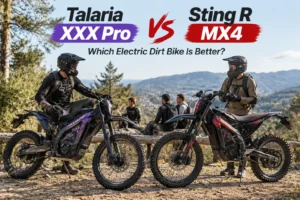
The Talaria XXX Pro and Talaria Sting R MX4 are two popular options for riders looking for a lightweight electric
