Electric Motocross vs Electric Enduro: What’s the Difference?
Electric motocross and electric enduro motorcycles can look very similar, and in some cases they even share the same motor,

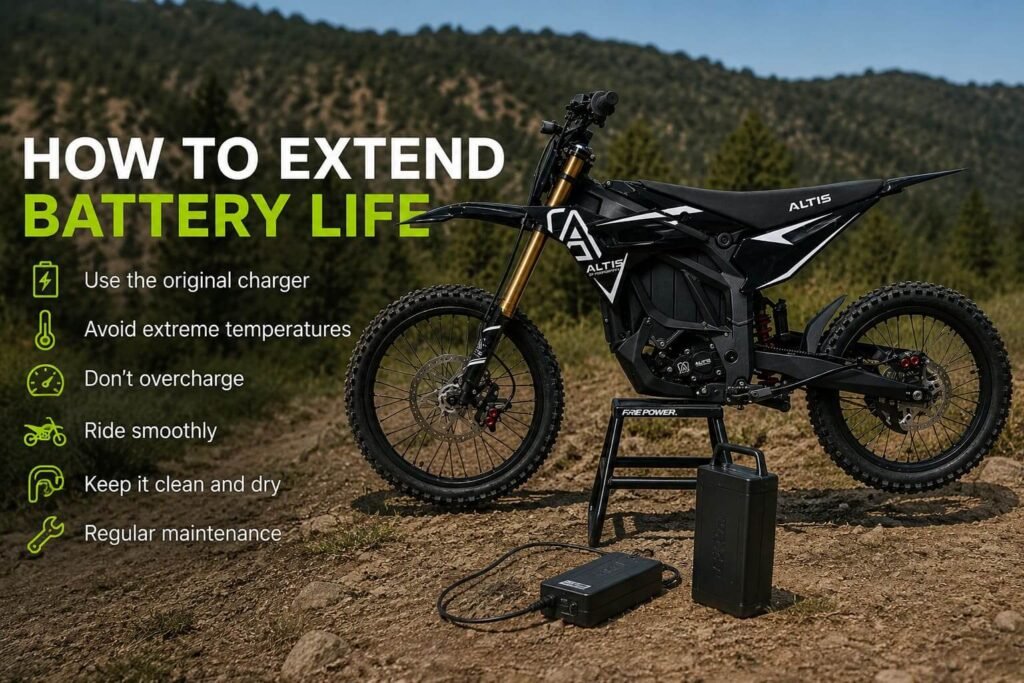
For most electric dirt bike owners, the battery is the single most valuable component on the bike. It powers every ride, influences performance, and represents one of the most expensive parts to replace. Yet despite its importance, battery care is often misunderstood.
Many riders assume that simply plugging the bike in after every ride is enough to keep the battery healthy. Others believe fully discharging the battery before charging it again will improve its lifespan—a habit that was common with older battery technologies but is no longer recommended for modern lithium-ion systems.
The truth is that battery longevity depends on a combination of charging habits, storage conditions, riding style, and routine maintenance. Small changes in how you use and care for your battery can significantly improve both its lifespan and its day-to-day performance.
Whether you own an entry-level electric dirt bike or a high-performance model, understanding how your battery works will help you get the most from every ride while reducing the likelihood of expensive replacements in the future.
In this guide, we’ll explain the science behind lithium-ion batteries, highlight the most common mistakes riders make, and share practical tips that can help maximize battery life without sacrificing riding enjoyment.
By the end of this article, you’ll know how to:
Whether you’re riding forest trails every weekend or simply enjoying occasional off-road adventures, these recommendations will help you keep your electric dirt bike performing at its best.
Unlike tires, brake pads, or chains, a battery isn’t considered a routine wear item that can be replaced inexpensively. It is the heart of your electric dirt bike, supplying power to the motor and influencing acceleration, range, and overall riding experience.
Because lithium-ion battery packs contain hundreds of individual cells managed by a sophisticated Battery Management System (BMS), their health depends on more than just how often they’re charged. Temperature, charging habits, storage conditions, and riding style all affect how quickly the battery ages over time.
A well-maintained battery doesn’t just last longer—it also performs more consistently. Riders often notice that a healthy battery delivers smoother power, more reliable range, and better performance under demanding conditions.
On the other hand, poor maintenance habits can gradually reduce usable capacity. Even if the battery appears to function normally, you may begin to notice shorter rides, slower charging efficiency, or reduced power output during steep climbs.
The good news is that most of these problems develop gradually and can often be minimized through proper care.
Before discussing maintenance tips, it’s helpful to understand what happens inside a modern electric dirt bike battery.
Nearly every performance-oriented electric dirt bike today uses a lithium-ion battery, chosen for its high energy density, relatively low weight, and long service life compared with older battery technologies.
Unlike traditional lead-acid batteries, lithium-ion batteries do not benefit from being completely discharged before charging. In fact, repeatedly draining the battery to extremely low levels places additional stress on the cells and may shorten their lifespan over time.
Instead, lithium-ion batteries perform best when they operate within a moderate state of charge.
Think of the battery like a marathon runner rather than a sprinter.
Consistently pushing it to absolute limits—whether through frequent full discharges, constant fast charging, or prolonged exposure to extreme temperatures—accelerates wear.
Keeping the battery within healthy operating conditions allows it to maintain performance over hundreds or even thousands of charging cycles.
Every modern electric dirt bike battery relies on a Battery Management System (BMS) to monitor and protect the battery pack.
The BMS continuously measures:
Without this electronic monitoring system, lithium-ion batteries would be significantly more vulnerable to overheating, overcharging, and permanent damage.
While the BMS provides an important layer of protection, it cannot fully compensate for poor maintenance habits.
For example, repeatedly storing a fully charged battery in a hot garage may still accelerate long-term degradation even though the BMS prevents immediate damage.
Good battery care works together with the BMS—not in place of it.
Many riders assume that battery lifespan is determined only by the number of charging cycles.
In reality, several different factors influence long-term battery health.
Heat is one of the biggest enemies of lithium-ion batteries.
Leaving your bike inside a vehicle on a hot summer day or storing the battery near direct sunlight exposes the cells to unnecessary thermal stress.
Even if no immediate damage occurs, repeated exposure to excessive heat gradually reduces battery capacity over time.
Whenever possible, store batteries in a cool, dry location away from direct sunlight.
Modern batteries dislike being completely emptied.
Occasionally riding until the battery is nearly depleted won’t instantly ruin it, but making this a regular habit increases stress on the cells.
Whenever practical, recharge before the battery reaches critically low charge levels.
Charging to 100% isn’t harmful when you’re preparing for a ride.
However, leaving the battery fully charged for days or weeks without riding increases chemical stress inside the cells.
If you won’t be riding for an extended period, storing the battery at a moderate charge level is generally healthier than leaving it completely full.
Low temperatures temporarily reduce battery efficiency.
Riders often notice shorter riding range during winter because the battery cannot deliver energy as efficiently when cold.
Rather than charging a frozen battery immediately after riding, allow it to return to room temperature before connecting the charger.
One common misunderstanding is confusing battery lifespan with daily riding range.
Although related, they are not the same.
Battery lifespan refers to how many years—or charging cycles—the battery remains healthy before significant capacity loss occurs.
Battery performance refers to how well the battery delivers power during today’s ride.
For example, a battery may still be in excellent long-term health while producing slightly reduced range during cold weather.
Similarly, aggressive riding, steep terrain, or carrying additional weight may shorten today’s riding distance without causing any permanent battery damage.
Understanding this distinction helps riders avoid unnecessary concern while focusing on habits that truly improve long-term battery health.
Now that you understand how lithium-ion batteries work and what affects their longevity, it’s time to focus on the practical habits that make the biggest difference.
Many battery problems don’t happen overnight. Instead, they develop gradually after months—or even years—of poor charging habits, improper storage, or unnecessary exposure to heat and cold.
Fortunately, most of these issues are preventable.
The following tips are based on widely accepted lithium-ion battery best practices and real-world riding experience. While no battery lasts forever, adopting these habits can help maximize both battery lifespan and day-to-day performance.
One of the most common misconceptions about rechargeable batteries is that they should be fully discharged before every recharge.
While this advice once applied to older battery technologies such as nickel-cadmium (NiCd), it does not apply to modern lithium-ion batteries.
Deep discharging places additional stress on battery cells, particularly when the battery remains at a very low state of charge for extended periods.
Instead of waiting until the battery reaches 0%, it’s generally better to recharge after a normal ride while some charge remains.
This simple habit reduces stress on the battery and helps the Battery Management System (BMS) maintain healthier cell balance over time.
Best Practice
Expert Insight
Think of your battery like a fuel tank you don’t want to run dry. Consistently operating within a moderate charge range is one of the easiest ways to extend battery longevity.
Charging to 100% before heading out on a ride is perfectly normal.
The problem occurs when a fully charged battery remains unused for days or even weeks.
Keeping lithium-ion cells at maximum voltage for extended periods increases chemical stress inside the battery, which may gradually reduce overall capacity over time.
If you’re riding tomorrow morning, charging to full the night before is generally fine.
If you won’t ride for several weeks, consider storing the battery at a more moderate charge level instead.
Best Practice
Expert Insight
The goal isn’t to avoid 100% charging altogether—it’s to avoid unnecessary time spent sitting at 100%.
Storage habits have a surprisingly large impact on battery health.
If your electric dirt bike will sit unused for several weeks or months, storing the battery completely full—or completely empty—isn’t ideal.
Instead, aim for a moderate state of charge before long-term storage.
This reduces internal stress while giving the Battery Management System enough reserve capacity to continue protecting the cells.
Just as important as charge level is checking the battery periodically.
Lithium-ion batteries naturally lose a small amount of charge over time, even when they’re not being used.
Best Practice
Expert Insight
Seasonal riders who properly store their batteries during the off-season often see noticeably better long-term battery health than those who simply park the bike and forget about it.
Temperature is one of the biggest factors affecting battery performance and longevity.
Excessive heat accelerates chemical aging inside lithium-ion cells, while freezing temperatures temporarily reduce available power and riding range.
Neither condition is ideal for long-term battery health.
During summer, avoid leaving the bike inside a closed vehicle or in direct sunlight for long periods.
During winter, allow a cold battery to gradually warm toward room temperature before charging.
These small precautions help reduce unnecessary stress on the battery.
Best Practice
Expert Insight
Many riders assume cold weather permanently damages batteries. In reality, the larger long-term concern is repeated exposure to excessive heat.
Not all chargers are created equal.
While third-party chargers may appear compatible, differences in charging voltage, current output, and safety features can affect battery performance or even damage the Battery Management System.
Using the original charger—or a manufacturer-approved replacement—helps ensure the battery receives the correct charging profile.
Quality chargers also include important safety protections such as temperature monitoring and automatic shutoff once charging is complete.
Best Practice
Expert Insight
Saving a small amount of money on a low-quality charger isn’t worth risking one of the most expensive components on your bike.
Battery maintenance isn’t limited to charging habits.
The electrical contacts connecting the battery to the bike should also remain clean and protected.
Dust, mud, moisture, and corrosion can interfere with electrical connections, potentially causing inconsistent performance or charging problems.
After riding through muddy or wet conditions, inspect the battery compartment and connectors.
If necessary, gently clean them using a dry, lint-free cloth.
Avoid spraying high-pressure water directly at electrical components during washing.
Best Practice
Expert Insight
Routine visual inspections take only a few minutes but can prevent many avoidable electrical issues over the life of the bike.
Before moving on to the next six expert tips, here’s a quick checklist you can use after every ride or before storing your bike.
Following this simple routine can help preserve battery performance while reducing unnecessary wear over time.
A high-quality lithium-ion battery is designed to provide years of reliable performance—but only if it’s treated properly. While batteries naturally lose some capacity over time, most premature failures are caused by avoidable mistakes rather than manufacturing defects.
In this final section, we’ll cover the habits that shorten battery life, answer the questions riders ask most often, and provide a simple maintenance routine you can follow throughout the year.
Even experienced riders can unknowingly develop habits that reduce battery performance over time. The good news is that most of these mistakes are easy to avoid once you know what to look for.
Charging your battery to 100% before a ride is perfectly normal.
Leaving it fully charged for several days—or even weeks—without riding is a different story.
Lithium-ion batteries experience more internal stress when stored at maximum voltage for extended periods. While doing this occasionally won’t ruin your battery, making it a regular habit may gradually reduce long-term capacity.
Better practice: Charge your battery shortly before you plan to ride rather than days in advance.
Temperature has a much greater impact on battery health than many riders realize.
Parking your bike in direct sunlight during the summer or leaving the battery inside a hot vehicle exposes it to unnecessary heat, which accelerates battery aging.
Cold weather presents a different challenge. While low temperatures temporarily reduce range and performance, repeatedly charging a battery that is still extremely cold isn’t ideal.
Whenever possible:
A charger does far more than simply deliver electricity.
Quality chargers communicate correctly with the battery management system and provide a controlled charging profile designed to protect the battery.
Low-quality aftermarket chargers may not offer the same level of protection.
Whenever possible, use the charger recommended by the manufacturer or an approved replacement.
Battery maintenance isn’t complicated.
In fact, one of the best habits is simply taking a minute before each ride to inspect the battery.
Look for:
Finding a small issue early is much easier than dealing with a larger repair later.
The internet is full of battery advice, but not all of it applies to modern electric dirt bikes.
Let’s clear up a few common misconceptions.
False.
This advice comes from older battery technologies, not modern lithium-ion batteries.
Regular deep discharges create additional stress on the cells. Recharging before the battery becomes completely empty is generally better for long-term battery health.
False.
Topping up the battery after a normal ride is perfectly acceptable and is often preferable to letting the battery sit nearly empty.
The important thing is avoiding unnecessary long-term storage at either 100% or 0%.
Not necessarily.
Manufacturer-approved fast charging systems are designed with battery protection in mind.
However, frequent fast charging generates more heat than standard charging, so if you aren’t in a hurry, normal charging may place less stress on the battery over time.
Usually not.
Cold temperatures mainly reduce temporary performance and riding range.
Heat—not cold—is generally the larger long-term concern for lithium-ion battery longevity.
One of the questions riders ask most often is:
“How many years will my battery last?”
There isn’t a single answer because battery lifespan depends on several factors, including:
For riders who follow good charging and storage practices, a quality lithium-ion battery can deliver dependable performance for many years before noticeable capacity loss becomes a concern.
The goal isn’t to prevent battery aging altogether—that’s impossible.
The goal is to slow the aging process as much as possible through consistent maintenance.
Every battery gradually loses capacity with age, but certain symptoms deserve closer attention.
Watch for:
If you notice any of these issues, stop using the battery until it has been inspected by the manufacturer or an authorized service center.
Following a simple routine throughout the year is one of the easiest ways to protect your investment.
| Time | Recommended Maintenance |
|---|---|
| Before Every Ride | Inspect battery, connectors, and mounting points. |
| After Every Ride | Allow the battery to cool before charging if necessary. Remove dirt and moisture. |
| Monthly | Inspect charging cable, clean battery contacts, and check for signs of corrosion. |
| Before Winter Storage | Store in a cool, dry place with a moderate charge level. Check periodically during storage. |
| Spring Riding Season | Inspect the battery thoroughly before returning to regular riding. |
These habits take only a few minutes but can help preserve both performance and long-term reliability.
Yes. In most cases, charging after a ride is perfectly acceptable. Just avoid leaving the battery fully charged for extended periods if you don’t plan to ride soon.
Many modern chargers automatically stop charging once the battery is full. Even so, it’s a good practice to follow the manufacturer’s recommendations and avoid leaving the battery connected for significantly longer than necessary.
Many electric dirt bikes are designed to handle wet riding conditions, but they are not intended to be submerged in water. After riding in wet conditions, inspect and dry the battery area and electrical connectors before storage.
Aggressive riding increases energy consumption and generates more heat, which can contribute to faster battery wear over time. Smooth throttle control is generally more efficient and easier on the battery.
If your manufacturer recommends removing the battery for storage, doing so can help protect it from unnecessary environmental exposure. Store it indoors in a cool, dry location with a moderate charge level.
Leaving the battery in extreme temperatures—especially excessive heat—is one of the most common mistakes. Combined with poor storage habits, it can significantly reduce long-term battery health.
Extending the life of your electric dirt bike battery doesn’t require expensive tools or complicated maintenance. It comes down to building a few consistent habits: charging at the right time, storing the battery correctly, keeping it clean, and avoiding unnecessary exposure to extreme temperatures.
Think of your battery as a long-term investment rather than a disposable component. A little attention after each ride can help preserve range, maintain consistent performance, and delay the need for a costly replacement.
If you’re shopping for a new electric dirt bike, battery quality should be just as important as motor power or top speed. A well-designed battery pack paired with an effective Battery Management System (BMS) will deliver more reliable performance and a better ownership experience over the life of the bike.
Electric motocross and electric enduro motorcycles can look very similar, and in some cases they even share the same motor,

Electric enduro motorcycles are becoming an increasingly appealing option for riders who want strong acceleration, precise low-speed control, and less

Electric enduro motorcycles are becoming an increasingly appealing option for riders who want strong acceleration, precise low-speed control, and less
The Talaria XXX Pro and Talaria Sting R MX4 are two popular options for riders looking for a lightweight electric
