Stark Varg MX vs Stark Varg EX: Key Differences
Electric enduro motorcycles are becoming an increasingly appealing option for riders who want strong acceleration, precise low-speed control, and less

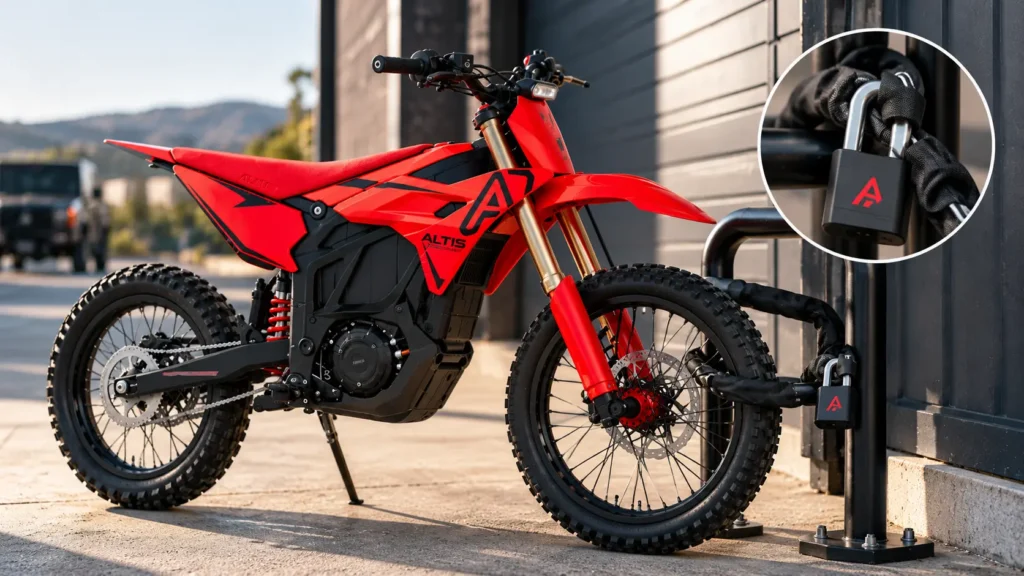
The best way to prevent electric dirt bike theft is to use several security layers at the same time: secure the bike to an immovable object with a strong lock or chain, add a second immobilizer such as a disc lock or alarm, keep the motorcycle out of sight whenever possible, use a hidden tracker, and record the bike’s identifying information before anything happens.
No single lock makes an electric dirt bike impossible to steal.
That matters particularly with lightweight electric motorcycles such as Surron, Talaria, E Ride Pro, Rawrr, and similar e-motos. A thief does not necessarily need to start the motor or defeat the electronic ignition if the entire motorcycle can be physically moved or loaded into another vehicle. Traditional steering locks, electronic keys, NFC cards, or app-based immobilizers can all add friction, but they do not physically attach the motorcycle to the ground.
This is why official motorcycle-theft guidance consistently recommends layering security rather than relying on one device. The National Insurance Crime Bureau recommends using a heavy-duty lock connected to a fixed object, parking in visible areas, adding alarms or additional immobilizers, concealing the motorcycle with a cover, and using GPS tracking. Police guidance similarly warns that steering locks alone should not be treated as sufficient protection.
The goal is not to create an imaginary theft-proof motorcycle. The goal is to make your electric dirt bike slower, noisier, more difficult, and riskier to steal than an unsecured alternative.
The most important security mistake electric dirt bike owners make is confusing immobilizing the motorcycle with anchoring the motorcycle.
A disc lock may stop a wheel from rotating. An electronic immobilizer may stop the motor from powering up. A steering lock may prevent normal steering. None of those measures prevents two people from lifting a relatively lightweight motorcycle and placing it in a van or pickup.
That is why the primary physical layer should be a strong chain, U-lock, or other suitable motorcycle-grade lock connected to a genuinely immovable structure.
At home, the ideal anchor may be a properly installed ground or wall anchor suitable for the structure. When parking away from home, it may be a substantial fixed rack or other permitted structure that cannot simply be lifted, unscrewed, or cut away easily. NICB specifically recommends securing motorcycles to fixed, immovable objects, while police guidance recommends using a chain through the motorcycle and keeping it tight rather than leaving excess chain on the ground.
Whenever the design of the motorcycle allows it, secure a structural part of the bike rather than relying only on a removable wheel. A wheel can potentially be removed while the rest of the motorcycle is taken. Routing the lock through the frame or another substantial non-removable section makes that strategy more difficult.
Lock positioning also matters. A heavy chain lying loosely on the ground gives a thief more room to position tools and use the ground for leverage. Police motorcycle-security guidance specifically recommends keeping chains relatively taut and off the ground where practical.
Then add a second type of security.
A disc lock is useful because it prevents the wheel from rotating and can be compact enough to carry while riding. Alarmed versions add noise when the motorcycle is disturbed. The important point is that a disc lock should normally be treated as a second layer, not the entire security system. Electric dirt bike security guides reach the same conclusion: an immobilized lightweight motorcycle can still be physically lifted if it is not anchored.
For a high-value electric dirt bike, a sensible security setup is therefore usually:
Using different security layers also creates redundancy. If one device is defeated, the motorcycle is still not immediately free.
Cable locks can still have a role for securing accessories or creating an additional visual deterrent, but a lightweight cable should not normally be the primary protection for a valuable electric motorcycle.
The same principle applies to the factory ignition system. Always remove the key, activate the factory steering lock or electronic immobilizer if the motorcycle has one, and enable any available PIN, NFC, app, or alarm security features. But those features should complement a physical anchor rather than replace it.
Owners often think theft prevention matters only when leaving an electric dirt bike outside a store or restaurant.
That can create a false sense of security at home.
NICB recommends locking motorcycles even when they are stored in a garage, and police guidance similarly recommends a ground anchor, alarm, CCTV, and improved garage-door security for motorcycles stored at home.
A closed garage door hides the motorcycle, which is useful, but the garage itself becomes the first security barrier. If someone can gain access to the garage and the bike is sitting inside with the key nearby and no physical lock, the motorcycle may become easy to remove.
Treat home storage as two separate layers: secure the building, then secure the motorcycle inside it.
A locked garage or shed should ideally be combined with a fixed anchor and a strong chain through the motorcycle. Keys, NFC cards, spare keys, and removable security devices should not be stored beside the bike in an obvious location. If the motorcycle has a removable battery, consider whether removing it during extended storage makes sense for your particular model and manufacturer instructions.
Removing a battery can reduce the motorcycle’s immediate usefulness to a thief and removes one valuable component from the bike, but it should not be treated as a complete anti-theft solution. The frame, motor, controller, suspension, wheels, and other components may still have substantial value, and the motorcycle can still be carried away without the battery.
A cover is another surprisingly useful layer. NICB recommends motorcycle covers because they hide the make and model from view, while police guidance notes that a cover introduces another inconvenience for someone trying to quickly identify or access a bike.
For an electric dirt bike, a plain cover may be preferable to one covered with Surron, Talaria, or other recognizable branding. There is little benefit in advertising exactly what is underneath it.
Outdoor home storage deserves even more caution. A bike repeatedly visible from the street can reveal not only what motorcycle you own but where it is stored every night. If indoor storage is impossible, physical anchoring becomes especially important, and lighting, cameras, alarms, and a cover can create additional layers around it.
Social media habits can also unintentionally reveal storage information. Posting detailed photographs of an expensive modified electric dirt bike is not inherently a problem, but avoid publicly showing your home address, garage access, regular storage position, keys, or predictable daily routine. Owners of highly modified bikes should be especially conscious that visible aftermarket batteries, controllers, motors, and suspension can make the total value much higher than the original purchase price.
The best lock is less useful when the bike is parked in an isolated location for hours.
When you need to leave an electric dirt bike unattended, choose a location that is visible, populated, and, where possible, covered by legitimate surveillance. NICB recommends well-lit, populated parking locations and monitored areas, while NYPD guidance similarly emphasizes visible locations and reducing the amount of time a bike remains unattended.
Visibility does not guarantee safety, but it changes the environment in which someone would have to attack the locks.
Avoid leaving the motorcycle unlocked because you are “only going inside for a minute.” Theft does not require a long unattended period when the bike is already powered on, the key is present, or no physical security needs to be defeated. NICB repeatedly advises riders to remove keys and lock the motorcycle even during apparently low-risk situations.
If you routinely park in the same location, consider whether your habits are making the motorcycle predictable. Police guidance recommends varying parking habits where practical.
Transport creates another weak point.
Many electric dirt bike owners carry their motorcycles in pickup beds, trailers, hitch carriers, or vans. Transport straps are designed to keep the bike stable; they should not automatically be treated as theft protection. If the motorcycle will be left unattended while loaded, secure the frame with an appropriate lock to a substantial vehicle or trailer anchor as well.
An enclosed and locked van or trailer can conceal the bike, but the trailer itself must also be secured. A highly visible trailer covered in electric dirt bike branding can advertise valuable equipment inside, so discreet transportation can sometimes be an advantage.
Hotels, race events, campgrounds, trailheads, and riding areas deserve particular attention because owners may be away from their normal home-security setup. Bring portable locks that are actually capable of securing the motorcycle, rather than discovering at the destination that the only available security is the steering lock.
The same applies when riding with friends. Multiple bikes can sometimes be secured together or to a common fixed object, creating more physical mass and complexity. NICB recommends additional physical security rather than relying entirely on factory locks.
One other habit is easy to overlook: never leave ownership documents with the motorcycle. NICB specifically advises motorcycle owners not to store the title with the bike. For electric dirt bikes that may not have conventional motorcycle titles in every situation, the broader principle still makes sense: keep purchase records and proof of ownership somewhere secure rather than leaving your only documentation with the vehicle.
Locks are designed primarily to prevent or delay theft. Trackers and documentation are mainly about what happens when prevention fails.
A hidden GPS or cellular tracker can be useful because it may provide location information after the motorcycle is moved. NICB includes GPS tracking among its recommended motorcycle security measures, and NYPD motorcycle guidance has also recommended tracking devices as part of theft prevention and recovery planning.
The tracker should be discreetly installed in a location that does not interfere with the motorcycle’s electrical system, cooling, suspension movement, or battery safety. Dedicated motorcycle or vehicle trackers may provide live location through a cellular service, but coverage, subscription requirements, battery life, and installation requirements vary.
Bluetooth item trackers can provide an additional recovery layer, but they should not be treated as the same thing as a dedicated GPS/cellular tracker. Their location capability depends on nearby devices and ecosystem design, and anti-stalking features may eventually notify someone that an unknown tracker is traveling with them. They can still be useful as a backup, but they should not be the only recovery strategy for a high-value electric motorcycle.
More importantly, do not personally confront someone because a tracker shows your motorcycle at a particular location. Give location information, identifying information, and evidence of ownership to law enforcement.
Documentation should be prepared before the bike disappears.
Keep photographs showing the complete motorcycle and distinctive modifications. Record the frame number, VIN where applicable, battery serial number, motor number if one is provided, controller information, and receipts for major upgrades. NICB specifically recommends documenting unique markings and keeping photographs that can help identify a stolen motorcycle.
For highly modified electric dirt bikes, this can be especially important. A stock Light Bee, Talaria, or E Ride Pro may later be fitted with a different controller, battery, suspension, wheels, brakes, and bodywork. Current photographs and receipts can establish what was actually on the motorcycle at the time it disappeared.
Insurance is the final financial layer.
Whether theft is covered depends on the type of motorcycle, how it is classified, the policy, where it is stored, and the coverage purchased. Progressive, for example, notes that motorcycle comprehensive coverage can provide theft protection, but policy conditions and exclusions still apply.
Electric dirt bike owners should therefore verify coverage rather than assume homeowners, renters, e-bike, off-road vehicle, or motorcycle insurance automatically applies.
This is particularly important for bikes that sit in the gray area between conventional e-bikes and motorcycles. A powerful throttle-controlled e-moto may not fit the insurer’s definition of a bicycle, even if riders casually call it an e-bike.
When asking about coverage, describe the exact model, powertrain, intended use, modifications, and storage arrangement. If the bike has thousands of dollars in aftermarket parts, verify whether those upgrades are covered as well.
If a motorcycle is stolen, contact local law enforcement and the insurer promptly. NICB notes that quick reporting can improve the possibility of recovery. Provide the serial or VIN information, photographs, tracker location if available, and proof of ownership.
The best setup is not one lock. It is a system.
For a lightweight electric dirt bike stored at home, a strong configuration would combine secure indoor storage, a properly installed fixed anchor, a hardened physical lock through the motorcycle, a second immobilizer or alarm, a discreet tracker, and documented identifying information.
For short public stops, the same principle applies on a smaller scale: anchor the motorcycle to something substantial, use a second locking method, choose a visible location, activate factory security, and avoid leaving the bike unattended longer than necessary.
For longer public parking, particularly overnight, simply adding more small locks may not solve the problem. Moving the motorcycle to secure indoor storage or a genuinely controlled parking area can be more effective than leaving a valuable lightweight electric motorcycle outside for hours.
This is also why the security budget should make sense relative to the motorcycle.
A rider may spend $4,000, $6,000, or considerably more on the bike and modifications, then rely on a lightweight cable lock designed for a low-cost bicycle. That is an obvious mismatch.
Security equipment should be selected around the value of the motorcycle, the theft risk where it will be stored, how long it will be left unattended, and whether the entire motorcycle can be physically lifted.
You do not need to turn every five-minute stop into a complicated security ritual. But you should have a repeatable system that is strong enough to prevent an opportunistic theft from becoming easy.
Use layered security. Physically anchor the motorcycle to an immovable object, add another lock or alarm, park or store it out of sight where possible, activate factory immobilization features, and use a hidden tracking device for recovery.
A disc lock can prevent the wheel from rotating, but it does not attach the motorcycle to the ground. Lightweight electric dirt bikes can potentially be lifted and transported, so a disc lock is better used together with a chain, U-lock, or another device that anchors the bike to a fixed object.
Removing a removable battery can reduce the bike’s immediate usability and protects an expensive component, but it does not make the motorcycle theft-proof. The frame, motor, controller, suspension, and other parts remain valuable, and the bike can still be physically carried away.
A tracker mainly assists with locating a motorcycle after it has been moved; it does not physically prevent theft. GPS or cellular tracking should be treated as a recovery layer used alongside strong physical security.
No. Factory steering locks and electronic immobilizers are useful additional layers, but official motorcycle-security guidance recommends additional physical locks because motorcycles can be moved even when they cannot be started normally.
Lock the garage, improve door security, keep keys separate from the motorcycle, anchor the bike to a fixed ground or wall point where appropriate, use a strong chain or lock, and consider an alarm, camera, cover, and tracker. NICB recommends locking motorcycles even when stored in a garage.
A plain cover can be useful because it prevents someone from immediately identifying the motorcycle, its brand, or its modifications. Both NICB and police motorcycle-security guidance include covers as part of a layered security approach.
Both can be effective when properly selected and used. What matters most is that the lock is strong enough for the risk level and that it secures the motorcycle to an immovable object. A large chain may be more practical at home, while a U-lock or compact secondary lock may be easier to carry.
Keep the VIN or frame serial number where applicable, battery serial information, clear photographs, purchase receipt, distinctive markings, and receipts or photographs of major modifications. Store those records somewhere separate from the motorcycle.
Coverage varies. Some motorcycle comprehensive policies can cover theft, but an electric dirt bike may be classified differently depending on the model and policy. Verify coverage directly with the insurer rather than assuming a homeowners, renters, e-bike, or motorcycle policy applies.
The most effective way to prevent electric dirt bike theft is not to search for one “unbreakable” lock.
It is to build several security layers around the motorcycle.
Start by physically attaching the bike to something that cannot move. Add an independent wheel or disc lock, steering lock, or alarm. Store the motorcycle indoors whenever possible, and secure it even inside a garage or shed. Keep it covered and avoid advertising where an expensive modified electric dirt bike is stored.
Then prepare for the possibility that the physical security still fails.
Use a discreet tracker. Record the motorcycle’s serial or VIN information, battery details, photographs, unique markings, and upgrade receipts. Confirm whether your insurance actually covers theft and aftermarket parts. If the bike is stolen, report it quickly and give tracker information to law enforcement rather than trying to recover the motorcycle yourself.
Lightweight electric dirt bikes create a particular security challenge because electronic immobilization does not stop someone from physically moving the motorcycle. That is why a Surron, Talaria, E Ride Pro, or similar electric dirt bike should never rely only on its ignition system or a small wheel lock.
The strongest approach is simple:
Anchor it. Immobilize it. Hide it. Track it. Document it.
No security system can promise that an electric dirt bike will never be stolen, but combining those layers can make your motorcycle a much harder target and give you a far better recovery plan if theft still occurs.
Electric enduro motorcycles are becoming an increasingly appealing option for riders who want strong acceleration, precise low-speed control, and less
Electric enduro motorcycles are becoming an increasingly appealing option for riders who want strong acceleration, precise low-speed control, and less
The Talaria XXX Pro and Talaria Sting R MX4 are two popular options for riders looking for a lightweight electric
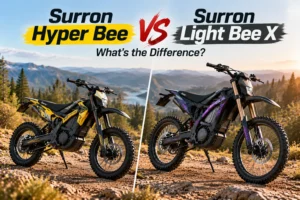
The Surron Hyper Bee and Surron Light Bee X are both high-performance electric dirt bikes, but they are designed for
