Stark Varg MX vs Stark Varg EX: Key Differences
Electric enduro motorcycles are becoming an increasingly appealing option for riders who want strong acceleration, precise low-speed control, and less

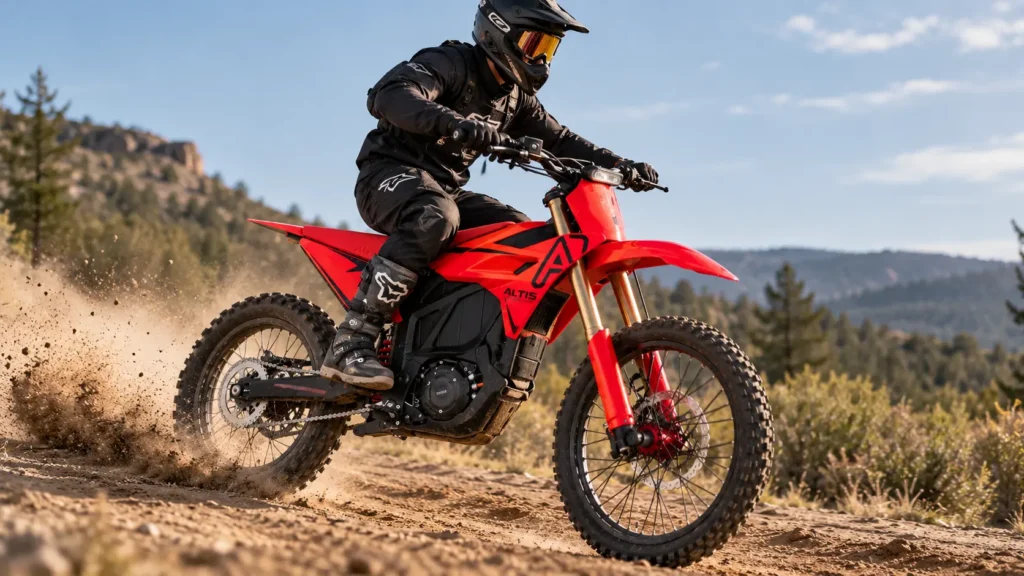
A Surron is a lightweight electric motorcycle made by Surron, a manufacturer best known for off-road electric bikes such as the Light Bee and Ultra Bee. Surrons use rechargeable lithium-ion batteries and electric motors instead of gasoline engines, giving them quick throttle response, quiet operation, and a riding experience that sits somewhere between a mountain bike and a traditional dirt bike.
That middle ground is a major reason Surrons became so recognizable.
A typical bicycle-style e-bike is built around bicycle geometry and usually includes functional pedals. A full-size gas dirt bike is considerably heavier and uses a combustion engine, transmission, fuel system, and exhaust. Models such as the Surron Light Bee helped establish another category: lightweight, throttle-controlled electric machines with off-road suspension, strong acceleration, motorcycle-inspired frames, and no need for a conventional gas engine.
You will often hear riders call them Surrons, Sur-Rons, electric dirt bikes, e-motos, or even e-bikes. Those terms are frequently used casually, but they are not necessarily interchangeable from a legal standpoint.
That distinction becomes particularly important in the United States. Calling a Surron an “e-bike” does not automatically make it an electric bicycle under federal, state, or local rules. Where you can legally ride one depends on the specific model, its equipment and classification, and the laws that apply where you ride.
So if someone asks, “What is a Surron?” the simplest answer is:
A Surron is a lightweight electric motorcycle or electric off-road bike that combines electric power with dirt-bike-style performance and relatively low weight.
But there is much more to understand before deciding whether one is right for you.
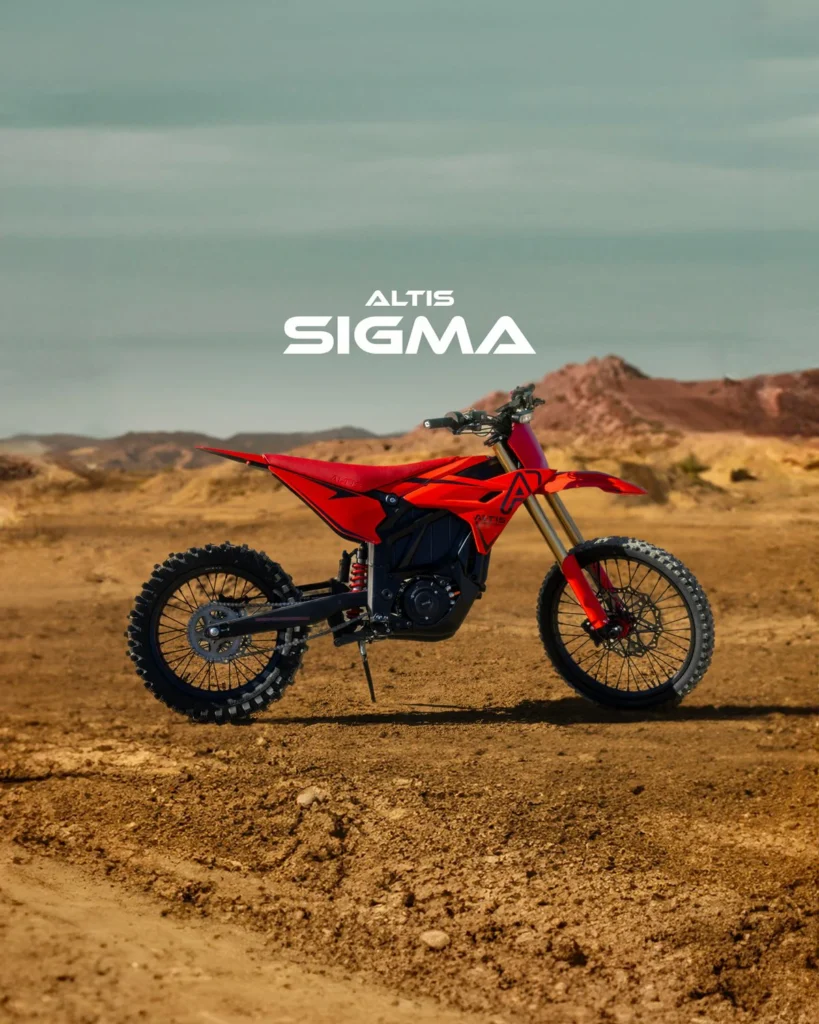
Surron’s popularity makes more sense when you look at what these bikes changed about off-road riding.
One of the biggest differences is the electric drivetrain. Instead of starting a gasoline engine, selecting the correct gear, managing a clutch, and keeping an engine in its useful RPM range, many electric off-road motorcycles provide a much simpler control experience. The rider powers the bike on and controls acceleration primarily through the throttle.
That simplicity does not mean the bike itself is slow or basic.
Electric motors can deliver strong torque from low motor speeds, producing the immediate response that has become one of the defining characteristics of electric dirt bikes. There is no conventional multi-speed gearbox on bikes such as the Light Bee X, so acceleration feels different from a traditional gas dirt bike.
Noise is another major difference. Electric powertrains are considerably quieter than combustion engines because there is no engine combustion or exhaust system. The tires, chain, drivetrain, suspension, and motor still make sound, so a Surron is not silent, but the riding experience is very different from a gasoline motorcycle.
The physical size of models such as the Light Bee has also contributed to the brand’s popularity. The Light Bee occupies an unusual space between bicycles and conventional motorcycles. That can make it easier to transport and maneuver than many full-size dirt bikes while providing far more performance than an ordinary pedal-assist bicycle.
Then there is customization.
Surron developed a large enthusiast and aftermarket community. Riders modify wheels, tires, brakes, suspension, handlebars, gearing, batteries, controllers, motors, seats, foot pegs, and other components. For some owners, upgrading the motorcycle becomes almost as important as riding it.
This combination of low weight, electric torque, relatively simple controls, off-road capability, and customization helped Surron become one of the recognizable names in the lightweight electric motorcycle market.
But popularity has also created confusion. Because Surrons look smaller than conventional motorcycles and are often called e-bikes online, new buyers sometimes assume they can be ridden anywhere a bicycle or conventional Class 1, 2, or 3 e-bike can go.
That should never be assumed.
This is probably the most important question for someone learning about Surron for the first time.
Physically, some Surron models blur the line between categories. The Light Bee in particular has a slim frame and relatively low weight compared with conventional motorcycles, while its suspension, foot pegs, throttle, powertrain, and off-road focus make it feel much closer to a lightweight electric dirt bike than an ordinary bicycle.
This is why you will find Surrons described online using several different names.
From a practical riding perspective, electric dirt bike or lightweight electric motorcycle/e-moto is often a more useful description than conventional e-bike for the higher-performance Surron models.
Legal classification is more complicated.
In the United States, electric bicycles are governed by specific definitions, and state laws can add their own requirements and classifications. Power, speed, pedals, equipment, registration, intended use, and other characteristics may all matter depending on the jurisdiction.
That means the word “e-bike” on a product listing, social-media post, or forum does not determine how authorities will classify the vehicle.
The same principle applies to street legality.
A headlight does not automatically make an off-road Surron street legal. Neither do mirrors, turn signals, a license-plate bracket, or an aftermarket pedal kit by themselves. Road use depends on whether the vehicle satisfies the applicable classification, equipment, registration, licensing, insurance, and operating requirements in that jurisdiction.
Rules for trails are separate again. Public off-highway vehicle areas, bicycle trails, private property, state parks, national forests, and local trail systems can have different vehicle restrictions.
If you are buying a Surron primarily because you want to commute on public roads or ride bicycle trails, check the applicable local rules before purchasing rather than assuming the bike will be treated like a normal e-bike.
For private property and permitted off-road riding, the category question becomes less confusing. That is where Surron’s electric dirt-bike characteristics make the most obvious sense.
Mechanically, the basic idea behind a Surron is straightforward.
A rechargeable battery stores electrical energy. When the rider opens the throttle, an electronic controller regulates power from the battery to the electric motor. The motor converts that electrical energy into mechanical rotation, and the drivetrain transfers it to the rear wheel.
There is no gasoline tank, combustion chamber, carburetor, exhaust system, or engine oil-change routine associated with a conventional four-stroke dirt bike engine.
That changes both the riding experience and maintenance requirements.
The battery is one of the most important components because it influences how much energy the motorcycle can carry. Battery specifications are commonly described using voltage and amp-hours, but watt-hours are especially useful when comparing the nominal energy stored in batteries with different voltages.
The simplified relationship is:
Watt-hours = Volts × Amp-hours
The motor and controller determine how that stored electrical energy is converted into performance. A high-capacity battery does not automatically make a Surron faster, just as a powerful motor does not automatically give the bike long range. Battery voltage, battery current capability, controller limits, motor design, gearing, software, temperature, and motorcycle weight all interact.
This is one reason comparing Surrons based on a single specification can be misleading.
The same applies to range.
Manufacturers may publish range figures under particular test conditions, but off-road range changes dramatically with terrain and riding style. Repeated hard acceleration, steep climbing, deep sand, mud, high speeds, rider weight, temperature, tire setup, and elevation can all increase energy consumption.
A Surron ridden gently on firm ground may therefore travel much farther on one charge than the same bike ridden aggressively on technical trails.
Electric does not mean maintenance-free either.
Surrons still have tires, brakes, suspension, bearings, wheels, fasteners, seals, and drivetrain components that require inspection and service. Chain-driven models still need drivetrain attention. Suspension components still wear. Brake pads still need replacement.
What electric power removes are many of the combustion-engine-specific service requirements.
That difference is one of the major reasons riders interested in simpler powertrain maintenance are attracted to electric dirt bikes.
When someone says “a Surron,” they are often referring to the Light Bee, but Surron is a brand rather than a single motorcycle.
The Light Bee is the model most closely associated with the Surron name. Its relatively compact dimensions and lightweight electric-motorcycle layout helped establish the category that many riders now call lightweight e-motos. It is commonly used for recreational off-road riding and has become a popular platform for modifications.
The Ultra Bee moves closer to conventional dirt-bike territory. It is a larger, heavier, and more performance-focused motorcycle than the Light Bee platform. The additional size changes the riding experience as much as the additional performance does. Riders moving from a Light Bee to an Ultra Bee should therefore think of it as a different class of motorcycle rather than simply a faster version of the same machine.
Surron has also produced larger and different off-road platforms, and its lineup has evolved over time. This is why buyers should verify the current manufacturer’s specifications for the exact model and model year they are considering rather than relying on an older article or assuming every Surron shares the same battery, motor, range, weight, or top speed.
That is particularly important because older Surron content remains highly visible online.
A specification quoted for an earlier Light Bee battery, for example, should not automatically be applied to the current version. Battery capacity, controller tuning, motor output, suspension components, brakes, and other specifications can change between markets and model years.
Instead of asking which Surron has the largest number on its specification sheet, think about what size of motorcycle you actually want.
A lighter platform can be attractive for technical riding, transportation, and riders who value maneuverability. A larger platform can provide a more motorcycle-like chassis and additional performance for riders whose terrain and experience justify it.
Neither approach is automatically better.
The riding experience is one of the reasons Surrons attracted so much attention.
Turn the bike on, select the appropriate riding mode where applicable, and throttle response is available without managing a conventional clutch or multi-speed gearbox. For riders coming from bicycles, the performance can feel surprisingly strong. For riders coming from gas dirt bikes, the absence of engine noise, clutch work, and gear changes creates a noticeably different experience.
Low-speed control is especially important.
Electric motors can respond quickly to throttle inputs, which is useful on technical terrain but also means new riders should not confuse simple controls with low performance. A motorcycle can be easy to operate while still requiring skill to ride safely.
Weight contributes heavily to the Surron experience as well. Lightweight electric motorcycles can feel agile through tight terrain and easier to maneuver than heavier full-size machines. But actual handling depends on much more than total weight. Suspension setup, wheel size, tires, geometry, rider position, battery placement, and weight distribution all affect how the motorcycle behaves.
The lack of combustion-engine noise changes trail riding in another way. Riders can hear tires interacting with the ground, chain and drivetrain noise, suspension movement, and the surrounding environment more clearly. For some owners, this quieter riding experience is one of the biggest attractions of electric off-road motorcycles.
It should not, however, be confused with permission to ride anywhere.
Low noise does not override land-use restrictions, trail rules, or vehicle laws. Responsible Surron ownership includes knowing where motorized electric vehicles are permitted.
The biggest advantage of a Surron is the combination of electric performance and a relatively lightweight off-road platform.
Throttle response is immediate, there is no conventional clutch and gearbox to manage on models such as the Light Bee, and the electric drivetrain eliminates many combustion-engine components. There is no gasoline to carry, no exhaust system, and no engine oil change associated with a four-stroke combustion engine.
The bikes are also highly customizable, and popular platforms have substantial aftermarket ecosystems.
But there are tradeoffs.
Battery range is finite, and restoring energy takes longer than filling a gasoline dirt bike with fuel unless a practical battery-swapping solution is available. Range can also vary significantly with terrain, speed, temperature, and riding style.
Battery replacement is another long-term consideration. Lithium-ion batteries age with both use and time, and a replacement pack can represent a substantial ownership expense. Buyers should check replacement battery availability before purchasing, not several years afterward when they suddenly need one.
Charging access matters too. Electric dirt bikes make the most sense when riders have a convenient way to charge them between rides. For long-distance backcountry riding where rapid energy replenishment is essential, gasoline can remain more practical.
Street legality is another disadvantage for buyers who assume a Surron can replace a conventional street-legal motorcycle or ordinary e-bike without additional considerations. Depending on the model and jurisdiction, public-road use may involve restrictions or requirements that do not apply to standard electric bicycles.
Finally, the simplicity of electric power does not eliminate normal motorcycle wear. Tires, brakes, suspension, bearings, chains, sprockets, and other mechanical components still need attention.
A Surron can require less powertrain maintenance than a gas motorcycle without being maintenance-free.
A Surron makes the most sense for someone who understands what kind of vehicle they are buying.
For off-road riders, a lightweight electric motorcycle can be an appealing way to explore permitted trails and private riding areas. Riders who value quick electric response, lower noise, and relatively simple controls may find the experience particularly attractive.
A Surron can also appeal to experienced mountain bikers looking for something significantly more powerful, although the transition should be treated seriously. Motorcycle-level speed and acceleration require appropriate protective equipment, braking technique, throttle control, and awareness of the additional mass involved.
Gas dirt-bike riders may appreciate the reduced noise and different maintenance profile, but should consider battery range and charging logistics carefully. An electric motorcycle that is excellent for a two-hour local riding session may be less suitable for an all-day remote trip where adding gasoline takes minutes and charging is unavailable.
For beginners, the absence of clutch and gear shifting can reduce some of the complexity of learning to ride. That does not automatically make every Surron beginner-friendly. Motorcycle size, weight, power, throttle response, terrain, and rider maturity still matter.
The wrong way to buy a Surron is to assume that because it looks smaller than a conventional dirt bike, it behaves like a bicycle.
The better approach is to treat it as a powered off-road vehicle and choose a model that matches your size, experience, terrain, and legal riding options.
Surron is the name of an electric motorcycle manufacturer. Riders also commonly use “Surron” as shorthand for one of the company’s electric off-road motorcycles, particularly the Light Bee.
You will see both spellings online, especially in older content and among riders. The current brand styling is commonly presented as Surron. Searchers also frequently use variations such as Sur Ron.
Surrons are frequently called e-bikes in casual conversation, but higher-performance Surron models are better understood as lightweight electric motorcycles or electric dirt bikes. In the United States, whether a particular vehicle legally qualifies as an electric bicycle depends on applicable definitions and laws, not what riders casually call it.
Popular off-road Surron motorcycles such as the Light Bee are designed around motorcycle-style foot pegs rather than functioning as conventional pedal bicycles. Aftermarket modifications do not automatically change the vehicle’s legal classification.
Many riders describe Surron models as electric dirt bikes because they use off-road suspension, motorcycle-style controls, electric motors, and dirt-oriented chassis designs. Specific Surron models vary considerably in size and capability.
There is no single answer that applies to every Surron in every state. Public-road legality depends on the exact model, vehicle classification, equipment, registration requirements, licensing rules, and state and local law. Do not assume an off-road model is street legal because it has lights.
It depends on the model, market, model year, controller programming, gearing, battery state, rider, and riding conditions. Because Surron’s lineup and specifications change over time, check the current manufacturer’s specifications for the exact model rather than applying one top-speed figure to every Surron.
Range varies substantially by model and riding conditions. Battery capacity, speed, rider weight, terrain, elevation, temperature, tire setup, and acceleration all affect energy consumption. Manufacturer range figures should be understood in the context of their stated test conditions.
Yes. Electric power eliminates many engine-related maintenance tasks, but tires, brakes, chains and sprockets where applicable, suspension, bearings, wheels, fasteners, and other mechanical components still require inspection and service.
Some Surron platforms can be easier to operate than a clutch-equipped gas dirt bike because there is no conventional clutch or multi-speed transmission to manage. However, power, speed, motorcycle weight, rider size, terrain, and experience still need to be considered. Easy controls do not make a high-performance motorcycle risk-free.
A Surron is best understood as a lightweight electric motorcycle or electric dirt bike rather than simply a conventional e-bike.
Its appeal comes from a combination that was relatively unusual when lightweight electric motorcycles first began gaining popularity: strong electric acceleration, low noise, off-road suspension, rechargeable batteries, relatively low weight, simple controls, and a platform that riders can extensively customize.
The Light Bee became the model most people associate with the Surron name, but Surron is a manufacturer with multiple electric motorcycle platforms. Larger models such as the Ultra Bee move further toward traditional dirt-bike territory, so specifications and riding characteristics should always be checked for the exact model being considered.
Electric enduro motorcycles are becoming an increasingly appealing option for riders who want strong acceleration, precise low-speed control, and less
Electric enduro motorcycles are becoming an increasingly appealing option for riders who want strong acceleration, precise low-speed control, and less
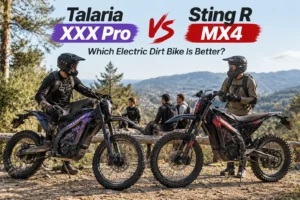
The Talaria XXX Pro and Talaria Sting R MX4 are two popular options for riders looking for a lightweight electric
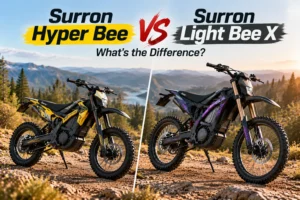
The Surron Hyper Bee and Surron Light Bee X are both high-performance electric dirt bikes, but they are designed for
